
I’ll never forget the ‘Blue Steak Incident’ of 2021. I was hosting my brother-in-law—a guy who thinks a steak should be exactly 135 degrees—and I was grilling on my beautiful new deck under what I thought was ‘enough’ ambient light from the back porch. I flipped the meat, looked at the sear, and felt like a pro. Five minutes later, under the harsh kitchen lights inside, we realized the middle was basically still cold. My outdoor kitchen was a masterpiece of stone and steel, but I had completely ignored the functional lighting. I was literally cooking in the dark. It’s a common trap when we get caught up in the 3-foot rule for planning your outdoor kitchen layout and forget that the sun actually goes down.
Stop Guessing if Your Steak is Actually Done
Lighting isn’t just about ‘vibes’ or making your neighbors jealous (though that’s a nice perk). It’s about safety, precision, and actually being able to see the grease fire before it becomes a problem. My early mistake was thinking one big, bright floodlight would solve everything. All it did was create massive shadows and make my guests feel like they were under interrogation. If you’ve ever felt like you’re juggling a flashlight in one hand and a spatula in the other, you know exactly what I’m talking about. Today, I’m breaking down how to layer light so your dedicated zone for the grill looks like a high-end bistro rather than a construction site.
Does Fancy Lighting Really Make a Difference?
You might be wondering if adding all these fixtures is just an expensive way to attract more moths. I get it. But according to the American Lighting Association, proper task lighting can significantly reduce outdoor accidents, which is a huge deal when you’re dealing with sharp knives and 500-degree surfaces. We aren’t just talking about string lights here; we are talking about integrated systems. I’ve learned the hard way that you need to hide electrical wiring inside aluminum railing posts or beneath the counters to keep that modern, clean look without the tripping hazards. Have you ever tried to prep a salad in the dark and ended up with a ‘mystery ingredient’ from the garden? Tell me, have you ever faced a total blackout right when the guests arrived?
We’re going to dive into the specifics—from under-counter LEDs that make your stone pop to those essential grill-mount lights that change the game. Let’s make sure your next dinner party doesn’t require night-vision goggles.
Illuminate Your Workspace Like a Surgeon
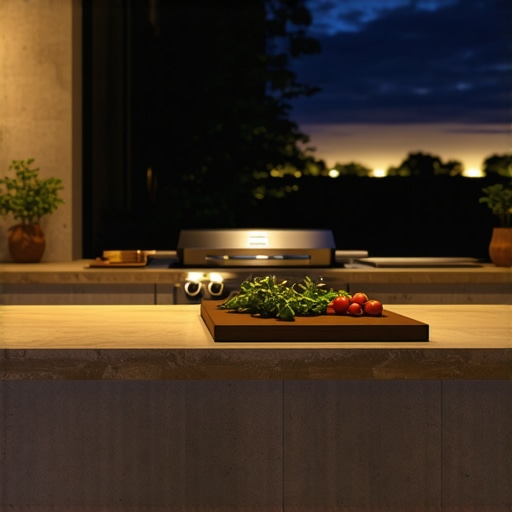
When you’re at the grill, you aren’t just cooking; you’re performing a high-heat operation. To avoid another ‘Blue Steak Incident,’ your task lighting needs to be focused and intense. Think of it as the headlights on a car—you don’t need the whole road glowing, just the part you’re driving on. I recommend installing directional LEDs under the eaves of your house or integrated into a structure like a pergola. I once tried to cheat by using battery-powered puck lights under my grill hood. Halfway through a rack of ribs, the heat melted the adhesive, and I watched in horror as the light fell into the flames. Lesson learned: always use hard-wired, heat-rated fixtures designed for a dedicated zone for the grill.
Where to Tuck the Tangle of Wires
Nothing kills the ‘luxury retreat’ vibe faster than a mess of orange extension cords snaking across your modern composite decking. It’s a tripping hazard and, frankly, it looks amateur. The pros know the secret is in the bones of the structure. If you are currently picking out the perfect railing system for every deck, look for hollow-post designs. You can hide low voltage wires inside aluminum railing posts with almost zero effort. I did this on my last project, and the result was a clean, wireless look that made the lights seem to float in mid-air. It also protects your wiring from the elements, ensuring you don’t have a short circuit after a heavy spring rain.
Layering the Glow for Safety and Style
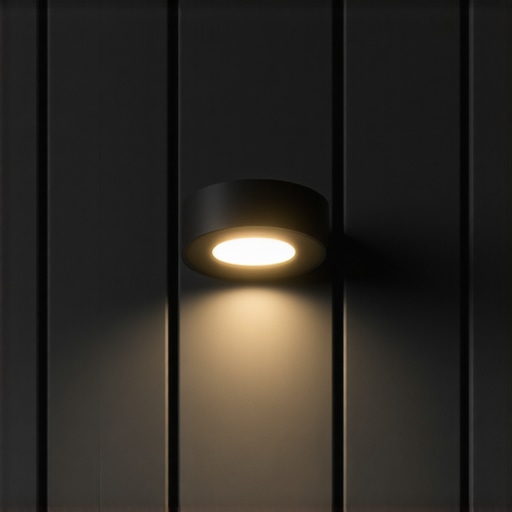
If you only light the grill, the rest of your deck will feel like a dark void. You need a transition. This is where ‘under-cap’ lighting comes in—tiny LEDs tucked under the lip of your stone counters or the top rail of your railing systems for safety and style. This creates a soft wash of light that hits the floor, showing people exactly where the edge of the deck is without ruining their night vision. When I moved from pressure-treated wood to capped composite, I noticed how much better these low-voltage systems integrated. The dark, sleek colors of black aluminum railings actually disappear at night, so having those tiny marker lights is the difference between a smooth stroll and a stubbed toe. You’re building a sanctuary, not a spotlight. By using dimmers on these layered zones, you can go from ‘high-visibility prep mode’ to ‘moody wine-sipping mode’ with a single click.
Use Your Pergola as a Lighting Rig
For those with overhead structures, your pergola is the ultimate lighting rig. Instead of just hanging string lights (which are fine for a dorm room but maybe not your dream kitchen), consider recessed ‘can’ lights in the crossbeams. This provides a clean downlight that mimics a high-end indoor kitchen. I’ve seen too many DIY jobs fail because they used indoor-rated bulbs that popped the first time a storm blew through. Integrating these into your deck design strategies from day one ensures that you aren’t trying to drill into finished beams later, which can compromise the structural integrity of the wood or composite boards.
Everyone tells you to flood your deck with light to stay safe. In my experience, that’s actually the fastest way to trip over a stray dog or a loose chair. We have this obsession with brightness, but ‘more’ isn’t ‘better’—it’s just more glare. According to a study by the Lighting Research Center, excessive glare significantly reduces visual performance in older adults, making high-contrast shadows more dangerous than a dimly lit, evenly balanced space. When you blast a 100-watt floodlight, your pupils constrict, making the areas just outside that beam look like an impenetrable void. The hidden nuance is that light color and reflection matter as much as placement. If you choose black aluminum railings, they absorb that light rather than reflecting it, which can leave the walkway looking like a black hole if you don’t use subtle wash lighting.
Stop Blasting Your Deck with Blindly Bright Lights
The trick to a professional-grade look is using ‘layered’ lighting that highlights the texture of your modern composite decking without blinding your guests. I always aim for a ‘moonlight’ effect—overhead light filtered through a pergola or high-mounted spots—complemented by low-voltage task lights. But here is a trap I see all the time: installing recessed lights or heavy fixtures without accounting for board movement. If you’re working with synthetics, you have to remember these boards are living, breathing things—at least in terms of thermal expansion. I’ve seen beautiful lighting setups literally pop out of the deck because the owner didn’t know why dark composite boards need extra expansion space. When those boards grow in the July sun, they’ll crush anything in their path that isn’t properly gapped. I always leave a 1/8-inch buffer around any lighting housing to prevent the board from buckling or the fixture from cracking.
The Invisible Force That Breaks High-End Boards
Beyond the lights, let’s talk about the ‘Oops’ factor with deck fasteners. Most DIYers think the most expensive hidden fastener is the best. But in high-traffic areas, those clips can actually become points of failure if the subframe is still green wood. You are managing physics, not just aesthetics. Whether you’re learning composite decking secrets for longevity or figuring out how to mount a light on a railing, the devil is in the details of movement and contrast. A deck that looks perfect in July might literally tear itself apart in February if you don’t respect the expansion cycles of the different materials involved.
Why do your cable railings lose their tension every winter?
It’s the most common complaint for people who invest in high-end railing systems for safety and style. You spend a fortune on stainless steel cables, and by January, they’re sagging like laundry lines. Most people think the cable stretched. It didn’t. Usually, the issue is that the end posts weren’t braced for the literal tons of cumulative pressure the cables exert when the metal contracts in the cold. You need to understand the 3 mistakes that make your cable railing sag every winter to prevent this. It’s almost always about the ‘hidden bracing’ inside the post or the lack of a proper sub-rail, not the tensioner itself. Have you ever fallen into the trap of over-lighting or ignoring thermal expansion? Let me know in the comments.
I’ve spent thousands of hours on my knees on various decks, and if there’s one thing I’ve learned, it’s that your hands are only as good as your gear. People ask me all the time why my lines look so much straighter than theirs, and it usually comes down to the $20 tool that makes deck board spacing perfect. It’s a simple plastic spacer, but it stops the ‘drift’ that happens when you’re 20 feet out from the ledger. I also never step onto a job site without a high-torque impact driver and a specialized board bender. If you’re working solo, a board bender is like having a second set of superhuman hands to pull a stubborn piece of capped composite into alignment. And please, for the sake of your finish, use a rubber mallet for seating composite boards. A metal hammer will leave ‘love taps’ that you’ll see every time the sun hits the deck at a low angle.
How Can I Keep My Composite Looking Fresh for Decades?
Maintenance is the part everyone ignores until the first big BBQ disaster. I’ve seen homeowners freak out over a dropped burger, but you really just need to know how to clean red wine stains off composite decking fast before they set. The secret isn’t some harsh chemical. In fact, you should never use bleach on composite decks because it can break down the UV inhibitors in the capping. If you do get a minor scratch from moving a chair, you can actually learn how to fix scuffs on dark composite boards with a heat gun. It sounds terrifying, but a gentle pass of heat brings the factory oils to the surface and blends the mark away. For the skeleton of the deck, I always use the joist tape secret for doubling your deck’s life. It’s a butyl adhesive that prevents water from sitting on top of the wood, which is where 90% of rot starts. According to the North American Deck and Railing Association (NADRA), structural failure often begins at these hidden connection points, so a $50 roll of tape is the best insurance policy you’ll ever buy.
The Future of Outdoor Spaces is Getting Smarter
As we look toward 2026, the ‘dumb’ deck is becoming a thing of the past. I’m already seeing a shift toward ‘smart structural’ components. Imagine sensors embedded in your ledger board that alert your phone if moisture levels stay too high for too long, or railing systems for safety and style that have built-in perimeter alarms. We are moving toward a world where your composite decking secrets for longevity aren’t just about cleaning, but about integrated tech. I predict we’ll soon see photovoltaic decking boards that charge your house while you tan. For now, focus on the basics of solid construction. Go grab a roll of joist tape and apply it to your next repair—it’s the single most effective move you can make for your deck’s future.
I’ll never forget the ‘Blue Steak Incident’ of 2021. I was hosting my brother-in-law—a guy who thinks a steak should be exactly 135 degrees—and I was grilling on my beautiful new deck under what I thought was ‘enough’ ambient light from the back porch. I flipped the meat, looked at the sear, and felt like a pro. Five minutes later, under the harsh kitchen lights inside, we realized the middle was basically still cold. My outdoor kitchen was a masterpiece of stone and steel, but I had completely ignored the functional lighting. I was literally cooking in the dark. It’s a common trap when we get caught up in the 3-foot rule for planning your outdoor kitchen layout and forget that the sun actually goes down.
Stop Guessing if Your Steak is Actually Done
Lighting isn’t just about ‘vibes’ or making your neighbors jealous (though that’s a nice perk). It’s about safety, precision, and actually being able to see the grease fire before it becomes a problem. My early mistake was thinking one big, bright floodlight would solve everything. All it did was create massive shadows and make my guests feel like they were under interrogation. If you’ve ever felt like you’re juggling a flashlight in one hand and a spatula in the other, you know exactly what I’m talking about. Today, I’m breaking down how to layer light so your dedicated zone for the grill looks like a high-end bistro rather than a construction site.
Does Fancy Lighting Really Make a Difference?
You might be wondering if adding all these fixtures is just an expensive way to attract more moths. I get it. But according to the American Lighting Association, proper task lighting can significantly reduce outdoor accidents, which is a huge deal when you’re dealing with sharp knives and 500-degree surfaces. We aren’t just talking about string lights here; we are talking about integrated systems. I’ve learned the hard way that you need to hide electrical wiring inside aluminum railing posts or beneath the counters to keep that modern, clean look without the tripping hazards. Have you ever tried to prep a salad in the dark and ended up with a ‘mystery ingredient’ from the garden? Tell me, have you ever faced a total blackout right when the guests arrived?
We’re going to dive into the specifics—from under-counter LEDs that make your stone pop to those essential grill-mount lights that change the game. Let’s make sure your next dinner party doesn’t require night-vision goggles.
Illuminate Your Workspace Like a Surgeon
When you’re at the grill, you aren’t just cooking; you’re performing a high-heat operation. To avoid another ‘Blue Steak Incident,’ your task lighting needs to be focused and intense. Think of it as the headlights on a car—you don’t need the whole road glowing, just the part you’re driving on. I recommend installing directional LEDs under the eaves of your house or integrated into a structure like a pergola. I once tried to cheat by using battery-powered puck lights under my grill hood. Halfway through a rack of ribs, the heat melted the adhesive, and I watched in horror as the light fell into the flames. Lesson learned: always use hard-wired, heat-rated fixtures designed for a dedicated zone for the grill.
Where to Tuck the Tangle of Wires
Nothing kills the ‘luxury retreat’ vibe faster than a mess of orange extension cords snaking across your modern composite decking. It’s a tripping hazard and, frankly, it looks amateur. The pros know the secret is in the bones of the structure. If you are currently picking out the perfect railing system for every deck, look for hollow-post designs. You can hide low voltage wires inside aluminum railing posts with almost zero effort. I did this on my last project, and the result was a clean, wireless look that made the lights seem to float in mid-air. It also protects your wiring from the elements, ensuring you don’t have a short circuit after a heavy spring rain.
Layering the Glow for Safety and Style
If you only light the grill, the rest of your deck will feel like a dark void. You need a transition. This is where ‘under-cap’ lighting comes in—tiny LEDs tucked under the lip of your stone counters or the top rail of your railing systems for safety and style. This creates a soft wash of light that hits the floor, showing people exactly where the edge of the deck is without ruining their night vision. When I moved from pressure-treated wood to capped composite, I noticed how much better these low-voltage systems integrated. The dark, sleek colors of black aluminum railings actually disappear at night, so having those tiny marker lights is the difference between a smooth stroll and a stubbed toe. You’re building a sanctuary, not a spotlight. By using dimmers on these layered zones, you can go from ‘high-visibility prep mode’ to ‘moody wine-sipping mode’ with a single click.
Use Your Pergola as a Lighting Rig
For those with overhead structures, your pergola is the ultimate lighting rig. Instead of just hanging string lights (which are fine for a dorm room but maybe not your dream kitchen), consider recessed ‘can’ lights in the crossbeams. This provides a clean downlight that mimics a high-end indoor kitchen. I’ve seen too many DIY jobs fail because they used indoor-rated bulbs that popped the first time a storm blew through. Integrating these into your deck design strategies from day one ensures that you aren’t trying to drill into finished beams later, which can compromise the structural integrity of the wood or composite boards.
Everyone tells you to flood your deck with light to stay safe. In my experience, that’s actually the fastest way to trip over a stray dog or a loose chair. We have this obsession with brightness, but ‘more’ isn’t ‘better’—it’s just more glare. According to a study by the Lighting Research Center, excessive glare significantly reduces visual performance in older adults, making high-contrast shadows more dangerous than a dimly lit, evenly balanced space. When you blast a 100-watt floodlight, your pupils constrict, making the areas just outside that beam look like an impenetrable void. The hidden nuance is that light color and reflection matter as much as placement. If you choose black aluminum railings, they absorb that light rather than reflecting it, which can leave the walkway looking like a black hole if you don’t use subtle wash lighting.
Stop Blasting Your Deck with Blindly Bright Lights
The trick to a professional-grade look is using ‘layered’ lighting that highlights the texture of your modern composite decking without blinding your guests. I always aim for a ‘moonlight’ effect—overhead light filtered through a pergola or high-mounted spots—complemented by low-voltage task lights. But here is a trap I see all the time: installing recessed lights or heavy fixtures without accounting for board movement. If you’re working with synthetics, you have to remember these boards are living, breathing things—at least in terms of thermal expansion. I’ve seen beautiful lighting setups literally pop out of the deck because the owner didn’t know why dark composite boards need extra expansion space. When those boards grow in the July sun, they’ll crush anything in their path that isn’t properly gapped. I always leave a 1/8-inch buffer around any lighting housing to prevent the board from buckling or the fixture from cracking.
The Invisible Force That Breaks High-End Boards
Beyond the lights, let’s talk about the ‘Oops’ factor with deck fasteners. Most DIYers think the most expensive hidden fastener is the best. But in high-traffic areas, those clips can actually become points of failure if the subframe is still green wood. You are managing physics, not just aesthetics. Whether you’re learning composite decking secrets for longevity or figuring out how to mount a light on a railing, the devil is in the details of movement and contrast. A deck that looks perfect in July might literally tear itself apart in February if you don’t respect the expansion cycles of the different materials involved.
Why do your cable railings lose their tension every winter?
It’s the most common complaint for people who invest in high-end railing systems for safety and style. You spend a fortune on stainless steel cables, and by January, they’re sagging like laundry lines. Most people think the cable stretched. It didn’t. Usually, the issue is that the end posts weren’t braced for the literal tons of cumulative pressure the cables exert when the metal contracts in the cold. You need to understand the 3 mistakes that make your cable railing sag every winter to prevent this. It’s almost always about the ‘hidden bracing’ inside the post or the lack of a proper sub-rail, not the tensioner itself. Have you ever fallen into the trap of over-lighting or ignoring thermal expansion? Let me know in the comments.
I’ve spent thousands of hours on my knees on various decks, and if there’s one thing I’ve learned, it’s that your hands are only as good as your gear. People ask me all the time why my lines look so much straighter than theirs, and it usually comes down to the $20 tool that makes deck board spacing perfect. It’s a simple plastic spacer, but it stops the ‘drift’ that happens when you’re 20 feet out from the ledger. I also never step onto a job site without a high-torque impact driver and a specialized board bender. If you’re working solo, a board bender is like having a second set of superhuman hands to pull a stubborn piece of capped composite into alignment. And please, for the sake of your finish, use a rubber mallet for seating composite boards. A metal hammer will leave ‘love taps’ that you’ll see every time the sun hits the deck at a low angle.
How Can I Keep My Composite Looking Fresh for Decades?
Maintenance is the part everyone ignores until the first big BBQ disaster. I’ve seen homeowners freak out over a dropped burger, but you really just need to know how to clean red wine stains off composite decking fast before they set. The secret isn’t some harsh chemical. In fact, you should never use bleach on composite decks because it can break down the UV inhibitors in the capping. If you do get a minor scratch from moving a chair, you can actually learn how to fix scuffs on dark composite boards with a heat gun. It sounds terrifying, but a gentle pass of heat brings the factory oils to the surface and blends the mark away. For the skeleton of the deck, I always use the joist tape secret for doubling your decks life. It’s a butyl adhesive that prevents water from sitting on top of the wood, which is where 90% of rot starts. According to the North American Deck and Railing Association (NADRA), structural failure often begins at these hidden connection points, so a $50 roll of tape is the best insurance policy you’ll ever buy.
The Future of Outdoor Spaces is Getting Smarter
As we look toward 2026, the ‘dumb’ deck is becoming a thing of the past. I’m already seeing a shift toward ‘smart structural’ components. Imagine sensors embedded in your ledger board that alert your phone if moisture levels stay too high for too long, or railing systems for safety and style that have built-in perimeter alarms. We are moving toward a world where your composite decking secrets for longevity aren’t just about cleaning, but about integrated tech. I predict we’ll soon see photovoltaic decking boards that charge your house while you tan. For now, focus on the basics of solid construction. Go grab a roll of joist tape and apply it to your next repair—it’s the single most effective move you can make for your deck’s future.
What Your Contractor Might Not Tell You About Nighttime Safety
One of the hardest lessons I learned is that symmetry in lighting is often the enemy of functionality. We want our decks to look like a showroom, but a perfectly symmetrical row of lights often ignores where you actually stand to cut a steak or pour a drink. I’ve realized that composite decking secrets for longevity aren’t just about the boards themselves, but about ensuring the environment around them—including the heat from lighting fixtures—is balanced. Another lightbulb moment? Darker boards require more lumens because they don’t reflect light back at you. If you go for a deep charcoal deck, you might need 20% more lighting than your neighbor with a light gray setup just to achieve the same level of safety.
Tools That Make the Difference Between Amateur and Pro Results
If you’re serious about building a space that stands the test of time, you need more than just a standard drill. I personally swear by these resources for every build:
- The Structural Bible: The NADRA (North American Deck and Railing Association) manuals are the only place to get real data on deck safety and code compliance.
- Frame Protection: Never skip the joist tape secret for doubling your decks life; it’s the difference between a 15-year frame and a 40-year frame.
- Precision Spacing: I never start a run without the $20 tool that makes deck board spacing perfect to ensure thermal expansion doesn’t ruin the aesthetics later.
Build a Backyard That Lasts Through Every Season
Taking the time to plan your lighting and structural integrity today saves you from the frustration of repairs tomorrow. Whether you are looking for innovative deck design ideas for 2025 or simply trying to fix a wobbly rail, remember that your deck is an extension of your home’s soul. It’s where the best stories are told and where the best meals are shared—provided you can actually see what you’re cooking. Don’t be afraid to experiment with low-voltage zones until you find that perfect, welcoming glow. Have you ever accidentally turned your deck into a landing strip with too many floodlights, or are you struggling to find the right balance for your grill zone? Let me know in the comments!