
I remember the morning I stepped out onto my first Ipe project with a cup of coffee and a heart full of pride. It was a $15,000 masterpiece, looking more like a high-end interior floor than an outdoor deck. Then, I heard it. A sharp, metallic ping followed by a muffled thwack. One of the hidden clips had snapped under the sheer force of a board trying to move. Within six months, three more had failed, and my perfectly level surface looked like a rolling sea. It was a humbling, expensive lesson that changed how I look at tropical hardwoods forever. Today, I’m going to share why those sleek, invisible clips you see in the glossy magazines are often the fastest way to ruin a premium hardwood deck, and what you should be doing instead to ensure your investment actually lasts.
Why Your Tropical Hardwood Deck is Trying to Tear Itself Apart
Tropical hardwoods like Ipe, Cumaru, and Garapa are essentially nature’s version of iron. They are incredibly dense, oily, and possess a structural memory that makes domestic woods like cedar or pine look like sponges. When the humidity shifts or the sun beats down, these boards expand and contract with a physical force that is difficult to fathom until you’ve seen a stainless steel clip sheared in half. While many longevity tips for a lasting deck focus on rot prevention, with hardwoods, the primary enemy is the wood’s own strength. Because these species are so dense, they don’t just compress when they grow; they push. If you’ve used hidden fasteners, that pressure is focused entirely on a tiny groove in the side of the board. According to data from the Forest Products Laboratory, the internal stresses generated by drying hardwoods can reach levels that far exceed the pull-through resistance of most clip-based systems. This is often why hidden fasteners pop up in extreme summer heat, leaving you with a dangerous, uneven walking surface. I made the mistake of thinking aesthetics trumped physics once; I won’t make it again.
Are Hidden Fasteners Really That Dangerous for Your Investment?
You might be thinking that I’m just being old-fashioned. After all, everyone wants that seamless look without screw heads everywhere, right? But here is the reality: tropical hardwoods need to be held down by more than just a friction-fit clip. When you skip face-fastening, you lose the structural ‘tie’ that keeps the board from cupping or twisting. I have seen Ipe boards literally pull their clips out of the joists because the wood wanted to bow and the fastener didn’t have the mechanical grip to stop it. This is a far cry from why professional builders prefer capped composite, which is much more dimensionally stable. If you are investing in a wood that can last 40 years, why would you use a fastening system that might fail in four? Have you ever noticed your deck boards starting to ‘spring’ or feel loose when you walk on them during the hottest part of July? Using the specific screw type designed for hardwoods is usually the only way to avoid this heartbreak. We need to talk about the physical reality of moisture movement before you spend a dime on those ‘invisible’ kits.
Lock Your Deck Down for Good with Pro-Level Fastening
To handle the immense power of Ipe or Cumaru, you have to move past the ‘easy’ DIY kits and adopt a structural mindset. These boards are not just floor coverings; they are heavy-duty natural elements that want to return to their original shape as soon as they encounter moisture or direct UV rays. This is specifically why hidden fasteners fail on high traffic areas where the constant vibration of foot traffic combined with natural wood movement loosens those small, singular contact points. Instead of relying on a thin metal lip, you should be face-fastening with high-grade stainless steel screws and using matching wood plugs. This method provides the mechanical leverage needed to counteract the ‘coiled spring’ effect of the timber. 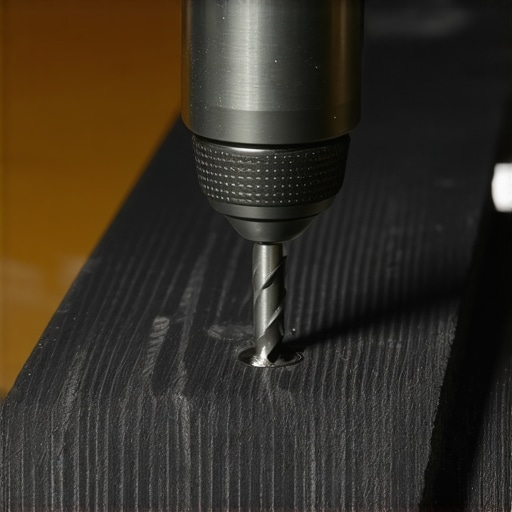
The Pre-Drilling Protocol That Prevents Splintering
I remember a Cumaru project back in 2018 where I tried to shortcut the process by eyeballing the depth of my pilot holes without a stop-collar. Halfway through the first row, I had snapped two expensive bits and created a jagged, splintery crater in a board that cost me over a hundred dollars. It was a nightmare. That is when I learned that using the drill bit trick for splinter-free wood railing installs is a non-negotiable rule for the entire deck surface. You need a dedicated countersink bit with a rotating stop-collar. This ensures every screw sits at the exact same depth, allowing the wood plug to sit flush and disappear into the grain once sanded. Without this precision, you risk splitting the ends of these incredibly expensive boards, which is an error you cannot easily hide.
Protect the Foundation Where the Screws Bite
Before you even lay the first board, you have to address the framework. Because hardwoods are so dense and oily, they tend to trap moisture against the joists longer than domestic softwoods. This is why your deck joists need tape to prevent rot. If you skip this step, the screws will eventually lose their ‘bite’ as the pressure-treated wood underneath softens over time from trapped water. Applying the joist tape secret for doubling your decks life creates a waterproof barrier that keeps your fasteners anchored in solid timber for decades. You also have to remember that the reality of why pressure-treated wood still warps under composite decking applies here too; the frame moves and the hardwood moves, so the connection between them must be absolutely uncompromising.
Maintain the Gap for Critical Airflow
Finally, never guestimate your spacing. Use the 20-tool that makes deck board spacing perfect to maintain a consistent 3/16-inch gap between every single board. This is not just about the aesthetics of straight lines; it is about providing the essential airflow that explains how to stop deck board cupping before the season ends. Without that gap, the bottom of the board stays damp while the top bakes in the sun, creating a moisture imbalance that forces the wood to curl like a potato chip, regardless of how many screws you use.Moving from the raw power of Ipe to the engineered world of composite doesn’t mean you can leave your tools in the truck. In fact, the biggest mistake I see professionals and homeowners alike make is assuming ‘low maintenance’ means ‘low attention to detail.’ While you won’t be staining every year, you are now fighting a war against specific heat and thermal expansion. Many builders learn too late that why dark composite colors are a mistake for south-facing decks isn’t just about burnt feet—it’s about the physical distortion of the board itself. If you don’t follow composite decking secrets for a lasting deck, you’ll find that your ‘forever deck’ looks like a warped mess in three years. Have you ever noticed your boards pushing against the house siding? That’s thermal expansion in action, and it requires knowing how to fix gaps between composite boards and your house before they cause structural damage. According to research by the University of Maine’s Advanced Structures and Composites Center, wood-plastic composites can expand significantly more than natural timber over a 50-degree temperature swing, which makes the layout phase arguably more critical than the installation itself.
Why Does Your Composite Surface Feel Soft Underfoot?
It’s not just in your head. One of the nuances advanced builders track is that composite lacks the internal ‘stiffness’ of natural timber. This is exactly why your composite boards feel spongy under heavy furniture or even just a brisk walk. While local building codes might allow for 16-inch joist spacing, a truly premium install demands 12 inches on center. This increased support density is a core part of stunning deck design strategies that prioritize tactile feel as much as visual appeal. You are investing in high-end materials; do not undermine them with a flexible foundation. I always say you can have the most expensive car in the world, but it will drive like a clunker if the tires are flat. The same logic applies to your joist framework and the importance of the joist tape secret for doubling your decks life.  The ‘oops’ factor often extends beyond the floor and into the sky. I have walked onto dozens of job sites where a homeowner wanted to save space and asked for a pergola attached to the shingles. I tell them the same thing every time: why you should never bolt a pergola directly to your roof comes down to mechanical leverage. A pergola is essentially a massive sail; during a windstorm, it can lift and compromise your home’s weather envelope or even structural integrity in seconds. Instead, look into custom railing systems for safety and style that integrate with a free-standing structure. According to the North American Deck and Railing Association (NADRA), the vast majority of deck-related failures are due to poor ledger or improper structural attachment connections. Don’t let your desire for shade become a structural liability. Have you ever fallen into this trap? Let me know in the comments.I’ve learned that the real work starts the day the last screw is driven. If you want a deck that still looks like a showroom piece in 2035, you have to treat it like a machine that needs tuning. I’ve seen too many $20,000 installations ruined because someone used a pressure washer like a bazooka or let organic debris turn into a compost pile in the gaps. We need to talk about the ‘forever’ phase of your project.
How do I keep my deck and railing looking new for decades?
The first rule of thumb is to throw away the bleach. Whether you have natural timber or the latest polymer-capped boards, harsh chemicals are the enemy. I’ve seen homeowners try to scrub away mildew only to realize why you should never use bleach on composite decks the hard way—it breaks down the UV inhibitors and leaves the surface brittle. For organic stains, stick to pH-neutral cleaners and a soft-bristle brush. If you have an accidental spill during a weekend BBQ, you need to know how to clean red wine stains off composite decking fast before the tannins set into the texture. Beyond cleaning, the most overlooked maintenance task is managing the gaps. I keep a thin putty knife or a dedicated crevice tool in my kit specifically for the secret to preventing leaf rot between deck boards. When leaves get trapped and damp, they create a ‘wet blanket’ effect that can rot even the most resilient joists from the top down. 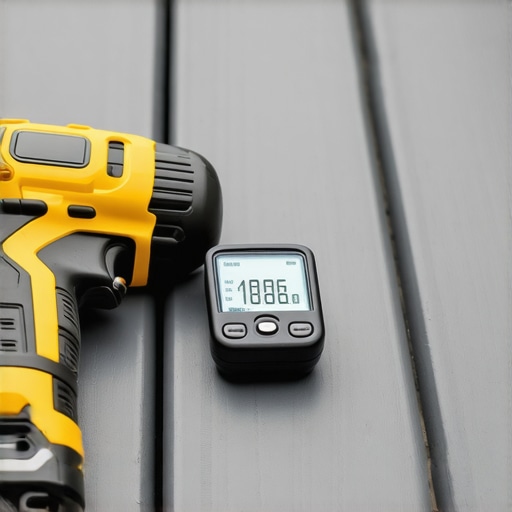 For professional-grade inspections, I don’t just look at the surface; I go underneath. I swear by the flashlight trick for finding hidden joist rot at night. By shining a high-lumen beam parallel to the wood fibers in the dark, any soft spots or ‘fuzzing’ from fungal growth cast long, dramatic shadows that you would never see in broad daylight. It’s a five-minute check that can save you a full structural failure. According to the technical guidelines in ASTM D7032-17, which governs the performance ratings for wood-plastic composites, the cumulative effect of moisture absorption is the leading cause of fastener withdrawal over time. This is why I always check my hardware every spring. I want you to go out to your deck right now and try the 3-second push test for wobbly railing systems. If there is more than a half-inch of deflection at the top rail, your lag bolts are likely loosening or the wood is softening, and you need to address it before the next big gathering. Looking ahead, I see the industry moving toward fully integrated ‘smart decks.’ We are already seeing composite decking trends shifting toward boards with built-in sensors to detect structural strain and heating elements to prevent ice buildup. The goal is to move from ‘low maintenance’ to ‘predictive maintenance,’ where your outdoor space tells you exactly when it needs a tune-up before a problem ever becomes visible. For now, following these composite decking secrets for a lasting deck remains the best way to protect your investment.
Secrets From the Job Site I Won’t Ignore Again
After decades of sawdust and splinters, I’ve realized that even the most expensive materials can’t save a flawed plan. First, always assume the wood is stronger than your hardware; I’ve personally seen Ipe shear 316-grade stainless steel like it was brittle plastic because the builder didn’t account for why hidden fasteners fail on high traffic areas. Second, composite isn’t ‘set and forget’—it is a thermal engine that breathes with the sun, requiring you to learn how to stop composite boards from bowing in direct heat before you lay your first row. Finally, the foundation is the only part you can’t easily fix later; if you skip the weather-proofing on the frame, you’re essentially building a legacy on a ticking clock.
#IMAGE_PLACEHOLDER_E#
Tools That Make Exotic Woods Behave
I don’t step onto a project without a few specific items that turn a nightmare installation into a precision masterpiece. I swear by the Camo Lever tool; it acts as a second set of hands to force bowed hardwood into submission. To ensure the framework lives as long as the boards, I apply the joist tape secret for doubling your decks life to every horizontal surface. For consistent aesthetics, I rely on the 20-tool that makes deck board spacing perfect to prevent the dreaded ‘wavy line’ look. These aren’t just gadgets; they are the difference between a deck that looks professional for forty years and one that fails in five.
Your Vision Deserves a Rock-Solid Foundation
Creating an outdoor space is more than a home improvement project; it is about building the stage for your family’s future memories. Whether you choose the raw, iron-like power of Cumaru or the advanced engineering of modern polymers, success lies in the details that remain invisible to the naked eye. By implementing stunning deck design strategies and respecting the physical movement of your materials, you ensure your deck design remains as safe as it is visually striking. Don’t be afraid to take your time on the structural layout—it is the skeleton that carries your entire investment. If you ever feel stuck, reach out to our team via the contact page for expert guidance. Have you ever seen an Ipe board pull a screw right out of a joist, or are you just planning your first hardwood build? Let me know in the comments below!