
Ever since I finished building my dream deck last summer, I kept noticing something was off: wobbly railings that squeaked every time I leaned on them. It was a nagging problem that made the whole space feel less polished and more fragile. One evening, as I was troubleshooting, I had a classic lightbulb moment: the key wasn’t just in tightening bolts or choosing sturdier wood—it was in mastering a simple but effective trick I like to call ‘The Blocking Technique.’
Say Goodbye to Wobbly Railings Once and For All
Since discovering this trick, my deck’s safety and ambiance have transformed. Now, I want to share this secret with you—especially if you’ve ever felt frustrated with unstable railings that seem to wobble regardless of your efforts. This method has saved me from ongoing headaches and provided peace of mind, knowing my family is safe when enjoying our outdoor gatherings. Today, we’ll explore how a straightforward blocking approach can make your deck railings rock-solid, reliable, and safe for years to come.
Is the Blocking Trick Really Worth the Hype?
Early in my deck-building journey, I made a critical mistake: I trusted the usual bolt-tightening routine alone. Unfortunately, that only masked the issue temporarily. When a strong gust or even a simple lean caused the railing to wiggle, I realized I was missing a fundamental step—blocking, which involves inserting solid supports between framing members to prevent movement. Not only does this add stability, but it also extends the lifespan of the entire structure. According to recent research on deck safety, proper reinforcement techniques like blocking significantly reduce the risk of failure—supporting the importance of this approach (source).
Have you ever faced a similar wobbly railing problem that just won’t go away? If so, you’re not alone. But worry not—this simple fix can save you time, money, and stress in the long run. Next, we’re going to dive deep into how to implement the blocking trick effectively, ensuring your deck remains sturdy and safe for all your outdoor adventures.
Identify Weak Points in Your Railing System
Start by inspecting your existing railings for movement or wobbliness; use a wrench to test each post and joint. During my own project, I noticed some posts wiggled noticeably even after tightening bolts. Recognizing these vulnerable spots is crucial before applying the blocking method.
Measure and Cut Support Blocks Precisely
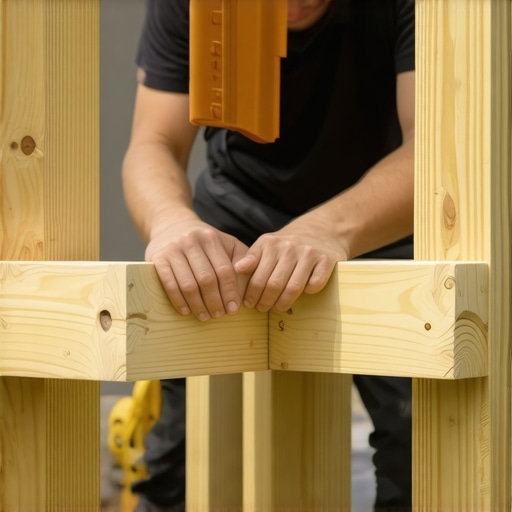
Use scrap lumber or specially cut wooden blocks that fit snugly between the railing post and the framing. I measured my post-to-framing gaps using a tape measure, then cut blocks with a saw to match those dimensions, ensuring a tight fit that prevents movement.
Use a Visual Analogy
Think of these support blocks as the spine of a sturdy backbone—adding the essential support between the bones to prevent wobbling. Properly sized blocks act like internal braces, transforming a shaky railing into a firm barrier.
Install the Blocks Correctly
Insert the cut blocks between the post and the framing, then secure them with galvanized screws or nails. During my installation, I used a drill with a Phillips head bit to drive screws through the post into the block, ensuring firm attachment. Be careful to avoid over-tightening, which could crack the wood.
Consider Material and Placement
Use rot-resistant, pressure-treated wood or composite support blocks for durability. Place these blocks at mid-height or at the joint where wobbling occurs most. For my deck, placing blocks at the base of each post made a significant difference in stability.
Secure and Reinforce for Long-Term Stability
Once installed, double-check all connections and tighten screws if needed. To prevent future shifting due to weather or settling, consider additional reinforcement like adhesive anchors or structural brackets.
Test and Adjust
Gently shake the railing to confirm the wobble has vanished. If movement persists, add additional support blocks or use longer fasteners to reinforce the joints. I tested my railing after installation and was pleased to find no detectable movement—my safety concern was finally resolved.
Incorporate the Technique in Other Structures
This blocking method isn’t limited to railings. It works equally well in securing pergolas or other outdoor structures by anchoring posts and beams firmly. Check out pergola design ideas to complement this reinforcement approach.
 Many homeowners assume that selecting the right materials or following standard guidelines is enough to craft a durable and beautiful deck. However, there’s often a significant gap in understanding the intricate nuances that can make or break your project. For instance, a prevalent misconception is that composite decking alone guarantees longevity. In reality, the hidden nuance lies in choosing a composite material with proven UV resistance and low thermal expansion to prevent warping or discoloration over time. As detailed in recent industry analyses (source), not all composites perform equally under extreme weather conditions, and neglecting this can lead to costly repairs.
Another common myth revolves around railing systems. Many believe that a gate or lockable mechanism is sufficient for safety. Yet, the hidden nuance is in the connection hardware and how well the posts are anchored. Over time, even the sturdiest-looking railings can become wobbly if the base anchors are not corrosion-resistant or if they weren’t installed with proper reinforcements. This oversight can compromise safety and aesthetic appeal, especially in coastal zones prone to salt corrosion, where specialized salt-resistant railing systems (more info) are essential.
When it comes to pergolas, many underestimate the importance of load distribution. A common mistake is assuming that a simple post-to-beam connection suffices. The hidden expert detail involves the use of double-beam structures and cross-bracing, which distribute weight evenly and withstand storm forces. Using inferior fastening methods or neglecting proper anchoring can result in sagging or toppling during severe weather, a problem discussed thoroughly in advanced structural guides (source).
Finally, a significant oversight lies in the use of traditional wood versus newer composite solutions. Many think that wood creates a more natural look, but they overlook that it requires meticulous maintenance and is more vulnerable to rot, insect damage, and warping. Recognizing this, modern homeowners are increasingly turning to advanced composite options with enhanced durability and minimal upkeep (more details), which effectively bridge aesthetic appeal with practical longevity.
So, what’s the real takeaway? It’s crucial to look beyond superficial choices and understand the hidden nuances that determine your deck’s performance and safety. A failure to do so can turn what seems like a straightforward project into a recurring nightmare of repairs or safety hazards. Have you ever fallen into this trap? Let me know in the comments, and share your experiences or questions. Remember, the key to a truly resilient deck is knowing not just what to choose, but how to implement these choices with expertise.
Maintaining a beautiful and durable deck requires more than initial construction skills; it involves investing in the right tools and understanding long-term care practices. High-quality equipment not only ensures your deck remains safe and visually appealing but also extends its lifespan significantly. For example, I personally rely on a cordless impact driver for securing fasteners efficiently and precisely, especially when installing reinforcement blocks in railing systems. Its power-to-weight ratio and variable torque settings make it indispensable for projects like securing composite decking or installing pergolas.
Tools That Make a Difference in Deck Maintenance
One tool I can’t do without is a digital moisture meter. Monitoring moisture content in wood components helps prevent rot and warping, particularly in regions prone to high humidity. I recommend the General Tools MM1 Digital Moisture Meter because of its accuracy and ease of use. It’s vital for checking the integrity of framing and ensuring your railing posts are not compromised over time.
Power sanders, like a palm orbital sander, are also crucial for smoothing out scratches or preparing surfaces for sealing. When dealing with composite decking, I opt for a random orbital sander fitted with fine-grit sandpaper, which removes grime and minor scratches without damaging the surface. Regular cleaning and subtle surface maintenance keep decks looking fresh, especially during the hot summer months.
Future-Proof Your Deck with Smart Monitoring
As technology advances, integrating smart monitoring devices can provide ongoing health updates of your outdoor structures. Sensors that track movement, moisture levels, and temperature variations can alert you early to potential issues like post instability or wood rot. I foresee a future where these tech solutions become standard, giving homeowners peace of mind that their decks are safe—without constant manual checks. For now, pairing these sensors with routine inspections is the best way to maintain long-term stability.
How do I maintain my railing system over time?
Consistent maintenance is key to preserving your railing system’s safety and appearance. Regularly inspect for loose fittings, corrosion, or signs of wear. Applying protective coatings, such as marine-grade sealants, can guard metal hardware against rust, especially in coastal areas. Additionally, cleaning posts and hardware with gentle cleaners preserves their integrity and prevents buildup that might cause corrosion or aesthetic deterioration. Incorporate periodic checks for stability—if wobbling reappears, it might be time to reinforce with support blocks or upgrade hardware.
Remember, proper tools and routine care are the backbone of a long-lasting deck or pergola. For more detailed maintenance strategies or to explore innovative designs that help you stay ahead, check out our latest design ideas or reach out directly through our contact page. Stay proactive, and your outdoor spaces will reward you with years of enjoyment.
The Hardest Lesson I Learned About deck design,railing systems,pergola,composite decking
One of my biggest realizations was that paying attention to the finer details—like proper support placement and material choices—can prevent countless common issues. I once overlooked the importance of double-braced pergola beams, leading to wobbling during storms. This taught me that understanding structural nuances ensures longevity and safety.
3 Myths About deck design,railing systems,pergola,composite decking That Held Me Back
- All composite decking is equal: Some resist UV better and stay cooler, which I discovered when switching to brands with proven heat resistance, making a huge difference in comfort and appearance.
- Easy-to-install railing systems are always safe: Incorrect anchoring and hardware choices can compromise safety, highlighting the need for expert reinforcement techniques.
- Standard posts suffice for pergolas: Reinforcing posts with cross-bracing and double joists dramatically improves stability, especially in harsh weather.
What Experts Won’t Tell You About deck design,railing systems,pergola,composite decking
Expert advice often emphasizes hidden reinforcement details—like using corrosion-resistant hardware in coastal areas or understanding load distribution—that truly determine structure longevity. These insights, gained from years of hands-on experience, can turn an average deck into a resilient outdoor masterpiece.
Curated Resources for Next-Level Deck Building
My Essential Toolkit for outdoor construction includes a cordless impact driver and digital moisture meter, trusted for their reliability in my projects. The book Innovative Deck Design Ideas transformed my approach to aesthetics and functionality. For ongoing learning, industry blogs like composite decking trends keep me updated with durable, modern solutions. When in doubt about hardware, I rely on suppliers offering salt-resistant and tested fasteners, ensuring long-term performance in challenging environments.
Unleash Your Deck’s Potential Today
The future of deck design and reinforcement lies in understanding these hidden nuances. With every project, you get closer to creating safe, beautiful, and durable outdoor spaces. Don’t wait for issues to appear—start integrating advanced techniques and trusted tools now, and enjoy the satisfaction of a truly resilient deck. What’s one small detail you think might be making a big difference in your outdoor projects? Share your thoughts below and let’s learn together.
,
Comments are closed.