
How to Stabilize a Wobbly Stair Railing with One Bracket

There was a time I almost took a tumble because my stair railing wobbled just enough to catch my attention—but not enough to panic immediately. It’s that sneaky kind of instability that makes you realize how crucial a sturdy railing truly is. I know firsthand how frustrating it can be to trust your outdoor spaces only to find a wobbly railing threatening to turn a casual step into a trip hazard. If you’ve ever experienced that feeling, you’re not alone—and I want to share a solution that’s simple, cost-effective, and surprisingly reliable.

Tackling the Wobble: My Lightbulb Moment

One day, after a quick glance at my deteriorating railing, I discovered a loose bracket that was barely holding on. Instead of calling a pro right away, I fiddled with it for a bit—just enough to realize that sometimes, a single supportive fix can make all the difference. This wasn’t about tearing everything apart but about focusing on that one critical point—hence, my mission to stabilize with just one bracket. It’s amazing how a tiny adjustment can restore confidence and safety to your outdoor setup. Curious how I did it? Stick around, because I’ll walk you through a proven method that can save your steps and your nerves.

Common Mistakes That Wobble Your Railing

Early in my DIY journey, I made the mistake of assuming all brackets are created equal. That’s a rookie error. Not all brackets are designed to withstand outdoor conditions or the weight of a busy household. Plus, I underestimated the importance of proper installation—using the wrong type of screw or not anchoring into solid framing can turn a simple fix into a recurring nightmare. If you’ve had similar missteps, don’t worry; I’ve been there, too, and learned from every slip-up. Understanding what *not* to do is just as vital as knowing the right steps. For a broader look at choosing the perfect railing system, this comprehensive guide might be helpful.

Is a Single Bracket Really Enough to Stabilize My Rail?

I’ll be honest—initially, I was skeptical. Can one bracket truly do the job? Well, after some experimentation, I found that the key lies in selecting the right bracket and installing it correctly. The core idea is to focus on the problem spot and reinforce it optimally. It’s like giving your railing a mini makeover—stronger at the point of most strain. If you want to explore other innovative design ideas for your deck or pergola that can complement this fix, check out some of the latest trends—like modern to classic pergola designs.

So, are you tired of that annoying wobble threatening your outdoor relaxing moments? Let’s dive into how you can make a quick, lasting fix—that one simple bracket could be your new best friend in ensuring safety and peace of mind on your steps.

Identify the Looseness and Prepare Your Tools

Start by inspecting the railing closely to locate the wobble source—often a loose bracket or screw. Gather essential tools: a screwdriver (preferably a power drill for efficiency), a level, replacement screws or brackets if needed, and optionally, a wood glue if joints are tight but squeaky. For example, I once discovered a loose bracket on my staircase’s handrail after a gentle shake, which became my first target. Clear the area below the railing for safety and easy access.

Detach and Clean the Problematic Area

Carefully remove the loose bracket or screw, taking note of how it was installed. Use the screwdriver to unscrew it fully. Clean the hole of any debris, old glue, or rust to ensure a tight fit for the new fastener. I learned this the hard way when residual debris caused my new screw to wobble just after installation, requiring me to redo the process. Proper cleaning is vital for a durable fix.

Choose the Right Fixing Material

Select the appropriate bracket or screw system. For wood railings, galvanized or stainless-steel fasteners resist outdoor corrosion better. If the original bracket is damaged, opt for a heavier-duty replacement, akin to replacing a flimsy hook with a sturdy clamp for better support. Think of it like replacing a weak link in a chain—strength matters. For extended durability, consider using a high-quality epoxy or wood glue along the joint, especially if the wood is cracked or splintered.

Install the New Bracket or Screw

Align the new bracket precisely, using a level to make sure your railing is straight—visualize your railing as a tightrope, so precision avoids future wobbles. Screw in the fastener gradually, tightening in small turns to prevent splitting or misalignment. I once under-tightened the screws, which caused the wobble to return after a week, highlighting the importance of firm, even fastening. Recheck with the level, then give the assembly a gentle shake to ensure stability.

Reinforce Critical Points

If the wobble persists, add additional support. Installing a mid-span support or an extra bracket can distribute the load more evenly—like adding a brace in a tent for extra stability. This is especially useful on longer sections or for high-traffic areas. For a more robust fix, consider adding a vertical post if your railing spans a wide area, similar to supporting beams in a building. For tailored advice, check out this comprehensive guide to railing support systems.
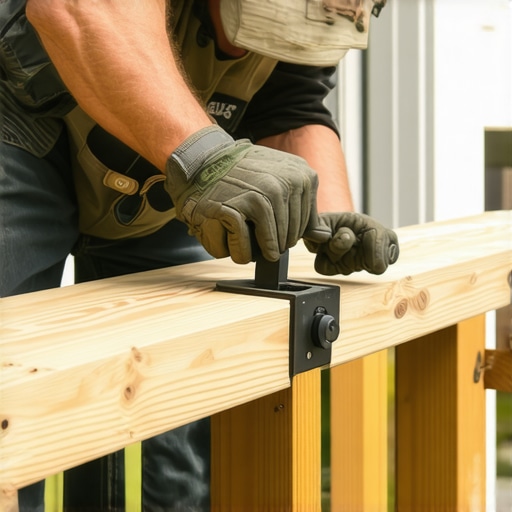
Someone tightening a metal bracket on a deck railing to prevent wobbling.Many homeowners assume that selecting a railing system or a pergola is simply about matching style and basic durability. However, this overlooks the nuanced realities that can lead to costly mistakes. For instance, a common misconception is that all composite decking is equally resilient; in truth, some trends compromise longevity for aesthetics, leading to warping or fading over time. By understanding the advanced nuances, you can avoid pitfalls that undermine safety and appearance. A critical yet often overlooked aspect is the importance of proper load calculations—many underestimate the forces involved, especially in large pergolas or expansive decks, which can result in structural failure. For expert insight, consulting with a specialist in deck structures can help you fine-tune your design for maximum stability and longevity. When it comes to railing posts, many rely on standard spacings, but optimal placement considers wind load and dynamic forces, which can vary significantly based on your location—see this guide on railing support systems. Furthermore, the myth that any fastener will suffice in outdoor environments is dangerously false. High-quality, corrosion-resistant fasteners are essential, especially near pools or saltwater, as inferior hardware can weaken rapidly, risking safety. A subtle mistake is ignoring the expansion and contraction of materials; for example, composite decks can expand several millimeters in hot weather, which, if unaccounted for, causes buckling or loosening. To prevent this, use appropriate spacing and fastening techniques as recommended in composite decking trends. In the realm of design, many assume simplicity is best, but intricate patterns and innovative features, like diagonal bracing or curved edges, demand precise planning and execution. Overlooking these details can lead to structural weaknesses or unsightly gaps. Incorporating these advanced considerations ensures your outdoor space isn’t just visually appealing, but resilient over the years. Want to see how these nuances can elevate your project? Check out these pergola design ideas for inspiration. Make sure your deck isn’t compromised by hidden mistakes—it’s worth the attention. Have you ever fallen into this trap? Let me know in the comments.

How do I maintain my outdoor structures with ease

Keeping your railing systems, pergolas, and decks in top shape over time requires the right tools and a consistent maintenance approach. Personally, I rely heavily on a high-quality cordless impact driver. Its power and convenience make replacing fasteners or installing brackets faster and more accurate, especially when working with composite materials that demand precise torque. For detailed work, I prefer a digital caliper—this keeps me aware of exact measurements on joist spacing and deck board gaps, ensuring uniformity that not only looks professional but also maintains structural integrity.

A keen eye for detail is essential, and I also use a moisture meter to monitor wood health periodically. Outer conditions like humidity can quietly accelerate decay, leading to wobbling or rot if unchecked. Routine inspections combined with these tools save a lot of time and expense down the line. My recommendation is to develop a quarterly maintenance routine, checking fasteners and applying protective sealants where necessary. This proactive approach extends the lifespan of your outdoor structures considerably.

Why consistent upkeep is key to durability

Over the years, I’ve observed that structures treated with regular care outperform those that are neglected. For example, applying a corrosion-resistant coating to metal brackets and fasteners can prevent rust and loosening. I favor spray-on coatings like zinc-rich primers, which I apply annually using a simple spray gun—this method ensures even coverage, saving me from future headaches due to rust or freeze-thaw cycles. For wood components, sealing with a high-quality, UV-resistant stain helps prevent cracking and fading. Using a paint sprayer for this task speeds up the process without sacrificing coverage or adhesion. Additionally, adding a few minutes of inspection and maintenance to your schedule can catch issues early—like loose railing posts or warped boards—before they become costly problems.

Tools I recommend for ongoing maintenance

The secret to long-lasting outdoor structures lies in the right equipment. For maintaining composite decks, I recommend a soft-bristle brush paired with a gentle cleaner—avoiding harsh chemicals preserves the protective polymers. I particularly like using an oscillating tool fitted with a microfiber pad; it effectively cleans tight corners and surface scratches without damaging the surface. For fixing loose railings or replacing worn fasteners, a cordless impact driver with adjustable torque controls is invaluable—personally, I use a model from DeWalt that offers excellent battery life and precision control. When it’s time to secure loose posts or reinforce framing, a cordless cordless nailer or stapler capable of handling corrosion-resistant fasteners can make the job quicker and more secure.

Looking ahead: The future of outdoor maintenance

As technology advances, I predict that smart monitoring systems will become standard in outdoor structures. Sensors embedded in decks and pergolas could alert homeowners about issues like moisture buildup, frame movement, or fastener loosening via smartphone notifications. Drones might even assist in inspections, offering close-up views of hard-to-reach areas—saving time and enhancing safety. Adopting these innovations early can ensure your outdoor investments remain durable and aesthetically pleasing for years to come. For now, integrating simple tools like impact drivers and moisture meters into your routine will set you on the path to mastery.

Questions for longevity: How do I keep my deck and pergola working smoothly?

Regular checks and preventive care are the foundation of a resilient outdoor space. Try implementing a maintenance schedule that includes tightening fasteners, sealing surfaces, and inspecting for signs of wear. Remember, the best maintenance is proactive—don’t wait for a wobble or a crack to happen. For expert insights and tailored recommendations, check out this contact us. Ready to take your deck to the next level? Start by using a moisture meter to monitor your wood’s health, and consider upgrading your fasteners with corrosion-resistant options for peace of mind. Your outdoor living space deserves the best tools and care—invest now to enjoy durability and beauty for years to come.

The Hardest Lesson I Learned About railing systems, pergola, composite decking, deck design

One of the most valuable insights I gained was that no matter how sleek your design is, overlooking foundational stability can undermine your entire project. I once focused solely on aesthetics, only to face a wobbly railing that jarred the whole space. That taught me to prioritize durable support—sometimes, a small reinforcement can save you from costly repairs later. It’s a reminder that in outdoor design, strength and beauty go hand in hand, but strength must come first.

3 Misconceptions About deck support, staining, and maintenance That Held Me Back

I used to believe that applying a single coat of stain would protect my deck for years, but I soon realized that no finish lasts forever without periodic touch-ups. Similarly, I thought all fasteners were created equal—until I saw rusted brackets causing instability. Lastly, I underestimated the importance of proper joist spacing, which led to uneven decking surface over time. Correcting these myths has made my outdoor space more resilient and enjoyable, and I hope it does the same for you.

What Experts Won’t Tell You About pergola design, custom railing, and long-term outdoor upkeep

Behind the scenes, professionals understand that selecting appropriate materials based on climate is critical. For instance, stainless steel fasteners are often overlooked but are vital in salty environments to prevent corrosion. Similarly, simple tricks like using spacer blocks during installation can ensure uniform spacing and a polished look. These insights might not be in every DIY guide, but they are the secret weapons for lasting quality. Dive into some of the modern pergola designs to see how sophisticated support methods elevate your outdoor aesthetic.

My Essential Toolkit for railing, deck, and pergola projects

Over time, I’ve found that a high-quality impact driver is indispensable for installing fasteners swiftly and securely. A digital caliper helps me measure joist and post spacing precisely, preventing uneven gaps. A moisture meter alerts me to hidden rot in wood components before it becomes visible. For finishing touches, a spray applicator ensures even coating of sealants, keeping the wood protected from the elements. Trust me, investing in these tools will transform your DIY approach from guesswork to confidence.

Your Turn to Let Stability Shine

Achieving a safe and stylish outdoor space isn’t just about aesthetic choices—it’s about implementing smart, small fixes that sustain the beauty and safety over time. Each project you undertake builds confidence and brings your outdoor environment closer to the retreat you’ve imagined. Ready to apply these insights and improve your railing, pergola, or deck? Remember, the right support and maintenance can turn any outdoor space into a lasting masterpiece.

What’s the biggest challenge you’ve faced with outdoor structures, and how did you handle it? Share your experience below—I’d love to hear your story!

Scroll to Top