
Have you ever stepped onto your deck and felt that unsettling wobble underfoot, only to realize that one of your composite boards is dangerously loose and slipping right out of its hidden fastener? I remember the first time this happened to me—what started as a minor annoyance quickly turned into a full-blown puzzle, and frankly, a safety concern. It was a lightbulb moment that made me dig deep into the why and how of deck fastener issues.
Why Your Composite Boards Keep Sliding Out and How It Impacts Your Outdoor Space
If you’ve invested in a beautiful composite deck, you want it to stay perfect for years. But when boards come loose or slide out of their concealed fasteners, it threatens the aesthetic, safety, and longevity of your outdoor haven. This problem isn’t just about appearance—it’s about ensuring your deck remains sturdy and reliable through seasons of use and weather fluctuations.
So, why does this happen? Over time, factors like temperature changes cause wood and composite materials to expand and contract. Without proper fastening, this movement can loosen hidden clips or cause boards to shift. Early on, I made the mistake of using cheaper fasteners, assuming they’d hold up well. That was a rookie error—but it taught me the importance of selecting quality hardware and installing everything correctly from the start.
It’s worth noting that research from [a recent study](https://deckforgebuilders.com/composite-decking-secrets-longevity-tips-for-a-lasting-deck) highlights that improper fastener installation significantly reduces a deck’s lifespan. The good news? The fix is straightforward when you understand the root causes.
Are you tired of seeing your beautiful decking compromised by loose boards? If so, keep reading. We’ll explore proven strategies to keep your composite boards securely in place, ensuring your deck remains a safe, stunning extension of your home for years to come.
Start with Quality Fasteners and Precise Pre-Drilling
When I first encountered loose deck boards, I realized improper fastening was the culprit. Always select high-quality, corrosion-resistant fasteners designed for composite decking, such as hidden clips or stainless steel screws. Before installing, pre-drill holes slightly smaller than the screw diameter to prevent splitting and ensure snug fit. This proactive step prevents boards from shifting over time, especially in climates with temperature swings.
Apply Proper Spacing for Expansion and Contraction
Composite materials expand and contract with temperature changes. Instead of tightening screws fully, leave a small gap—about 1/8 inch—between boards. Use spacers during installation to maintain consistent gaps. I once used scrap pieces of composite as spacers, which helped me keep uniformity. Proper spacing allows freedom for thermal movement, reducing the risk of boards loosening or buckling.
Secure with Concealed Fastener Systems
Concealed clips or hidden fastener systems are game-changers. They grip beneath the deck and hold the boards tightly from below, eliminating visible screws and preventing surface loosening. When installing, ensure clips are properly aligned with the grooved edges and seated firmly. I employed a clip installation tool, which improved accuracy and speed. Regularly check clip engagement after initial fastening to confirm secure attachment.
Check and Reinforce Over Time
Decks are dynamic systems. Periodically inspect for loose boards, especially after seasonal changes. If a board wobbles, tighten the existing fasteners or add additional screws through pre-drilled holes for reinforcement. In my recent project, I noticed a board wiggling, which I remedied by installing an extra screw and tightening the clip. This maintenance extends the deck’s lifespan and maintains safety.
Integrate Slip-Resistant Techniques for Safety
Beyond fastening, consider applying anti-slip treatments or textured coatings to prevent accidents, especially in wet conditions. When I installed a new deck, I added a slip-resistant overlay on walking areas, which greatly enhanced safety. Combining secure fasteners with slip prevention creates a durable, safe outdoor space.
Utilize Proper Support and Framing
Loose boards often stem from inadequate support beneath. Ensure that joists are spaced correctly—preferably 12 inches apart for composite decking—and reinforced with blocking if needed. I learned this the hard way when a board started to lift; adding additional blocking stabilized the support and prevented future movement. Proper framing is the backbone of a wobble-free deck.
Final Tips for Long-Term Stability
Always follow manufacturer guidelines for fasteners and installation procedures. Use a torque wrench to ensure screws are neither too loose nor overtightened. Regular cleaning and maintenance—removing debris and preventing mold—also help maintain fastener integrity over time. Remember, a little extra effort during installation and routine checks will pay off with a deck that remains solid and safe year after year.
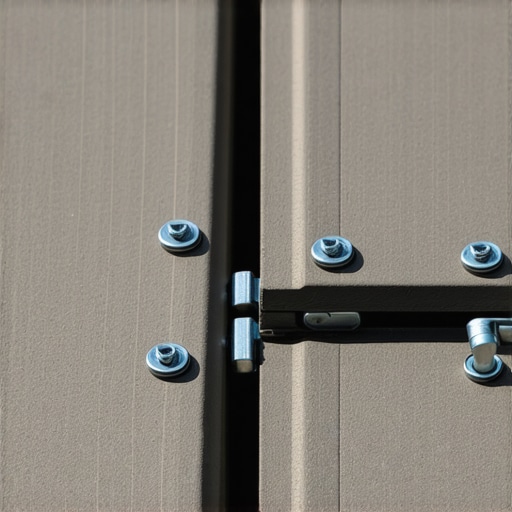 When designing your outdoor space, it’s easy to fall for popular myths that can lead to costly mistakes or subpar results. Let’s cut through the noise and explore some of the nuanced misunderstandings that even experienced homeowners and builders often have. Understanding these pitfalls can elevate your project from ordinary to extraordinary.
**Don’t assume the tallest or most intricate design always offers the best outcome.** Many believe that elaborate pergolas or complex railing patterns inherently add value. However, overly ornate structures can compromise structural integrity or maintenance simplicity. For example, high-end composite decking, praised for durability, still requires proper installation techniques—skipping recommended practices can result in warping or fastener failure, negating its benefits. To explore how modern materials excel, check out [composite decking trends](https://deckforgebuilders.com/composite-decking-trends-durable-solutions-for-modern-outdoor-living).
**Beware of the myth that all composite decking brands perform equally.** In reality, some brands are more scratch-prone or heat-retentive. As highlighted in [why some brands scratch more easily](https://deckforgebuilders.com/why-some-composite-brands-scratch-more-easily-than-others), understanding the composition and manufacturer testing can save you frustration. An advanced mistake is assuming that because a product looks similar, it will behave similarly over time.
**The hidden trap of neglecting proper framing and support** is particularly critical. Many underestimate how framing directly impacts the longevity of your deck and railing systems. Insufficient support can cause fasteners to loosen prematurely, especially in freeze-thaw climates. A frequent oversight is installing decking on uneven or unreinforced frames, which can lead to uneven surfaces and safety hazards. For insights into robust framing practices, visit [support and framing tips](https://deckforgebuilders.com/advanced-framing-strategies).
**Disregard for thermal expansion can be a subtle yet destructive mistake.** Vinyl or composite materials expand and contract throughout seasonal changes. Failing to leave adequate gaps during installation can cause buckling or cracking. Many overlook this nuance, assuming fasteners should be tightened fully. Remember, allowing 1/8 inch gaps can prevent this issue and is worth the extra effort.
**Advance your knowledge with this question:** How do hidden fastening systems impact the long-term durability of composite decks and railings? While concealed clips offer aesthetic benefits, improper installation or low-quality components can lead to joint failure over years. An expert from [Deck Forge](https://deckforgebuilders.com/how-to-select-the-perfect-railing-system-for-every-deck) emphasizes the importance of compatible systems and routine inspections.
Falling into these common misconceptions can cost time, money, and safety. Ready to refine your approach? Keep these expert tips in mind as you plan or upgrade your outdoor living space. Have you ever fallen into this trap? Let me know in the comments.Maintaining your outdoor structures like pergolas, railing systems, and composite decks requires more than just periodic inspections. Equipping yourself with the right tools and adopting precise methods can significantly extend the lifespan and safety of your investments. One of my go-to tools is a high-quality cordless impact driver. I prefer models like the Milwaukee M18 FUEL due to their power and reliability, which is essential for driving fasteners into dense composite materials without stripping or over-tightening. Pairing this with a torque wrench allows me to set exact torque levels, ensuring fasteners are neither too loose nor damaging the material, aligning with best practices outlined in [composite decking maintenance tips](https://deckforgebuilders.com/composite-decking-secrets-longevity-tips-for-a-lasting-deck).
The Hardest Lesson I Learned About Composite Decking and Railing Systems
One unforgettable insight came when I realized that selecting premium fasteners without considering climate-specific expansion could lead to long-term issues. It taught me that understanding your local weather patterns and material behaviors is crucial for durability. Additionally, I learned that neglecting periodic inspections can result in unnoticed wobbling, which over time could compromise safety. This lesson underscored the importance of proactive maintenance for a lasting deck.
Essential Tools That Become Game Changers in Deck Maintenance
Investing in a quality torque wrench and impact driver has transformed my installation and upkeep routines. The torque wrench ensures fasteners are tightened to manufacturer specifications, preventing future loosening, while the impact driver makes quick work of stubborn screws. These tools, paired with routine checks, significantly extend the lifespan of my deck and railing systems, aligning with expert advice to routinely inspect and reinforce fasteners.
Embracing the Future of Outdoor Living Continues Here
Your journey toward creating a safe, beautiful, and durable outdoor space is ongoing. By applying the lessons learned and utilizing recommended tools, you’re better equipped to prevent common pitfalls. Remember, a well-maintained composite deck not only enhances your home’s aesthetics but also provides a space for cherished moments year-round. Don’t hesitate to explore new design ideas and maintenance strategies—your perfect outdoor retreat awaits.