
I remember the first time I attempted to install a beautiful deck beside a rugged natural stone wall. Everything looked perfect until I faced the daunting task of aligning those deck boards flawlessly against the uneven, textured surface. No matter how carefully I measured, the boards seemed to wobble, gaps appeared, and I felt that sinking frustration questioning if I was missing some secret technique. That lightbulb moment made me realize—there’s an art and science to scribing deck boards that many overlook.
The Secret to a Seamless Look: Scribing Deck Boards with Confidence
Getting deck boards to sit perfectly against natural stone or uneven walls isn’t just about aesthetics—it’s about durability, safety, and making your outdoor space look professionally finished. If you’ve ever struggled with gaps or uneven edges, you’re not alone. I’ve been there, and through trial, error, and a few expert tips, I’ve uncovered the best way to make this process painless. Today’s post promises to demystify this essential skill, giving you practical steps to achieve that tight, polished fit every time.
Is Scribing Really Necessary or Just Overkill?
One mistake I made early on was dismissing scribing as an unnecessary extra step. I thought careful measurements would suffice. However, I quickly learned that natural stone surfaces rarely conform to standard measurements. Without proper scribing, gaps can look glaring and even cause water infiltration or rot over time. According to recent building standards, precise scribing can extend the lifespan of your deck and improve its overall appearance. Trust me, a small extra effort leads to big results.
If you’ve ever wondered whether this detail is worth your time, I encourage you to consider how much a perfectly fitted board can elevate your entire project—transforming a good-looking deck into a stunning oasis. Ready to learn the tricks that seasoned builders swear by? Let’s dive into the process and make scribing your new best friend in your next project.
Prepare Your Tools and Workspace
Start by gathering your essential tools: a circular saw or miter saw, a jigsaw, a pencil, a measuring tape, a hand scribe or a flexible contour gauge, and safety gear. Clear your workspace and lay out your deck boards and materials nearby. I once worked in a tight corner, realizing I had forgotten my contour gauge; improvising with a flexible ruler, I managed to achieve a decent scribe, but planning ahead saves time and frustration.
Mark the Cutting Line Accurately
Position the deck board against the wall or surface to be scribed. Using your pencil, mark the outline of the uneven surface onto the edge of the board. For precise marking, align the board flush with the framing or edge and trace along the contour with the scribe or contour gauge. I remember an early project where I skipped this step and ended up with gaps; a careful outline prevented that mistake, leading to a cleaner finish.
Cut Along the Scribed Line
Switch to your saw and carefully cut along the marked line. Use a fine-toothed blade for a cleaner cut and control your speed to prevent splintering. Once cut, dry-fit the board against the surface to check accuracy. During trial fitting on a recent job, I observed slight deviations, so I trimmed again, refining the fit. Remember, it’s better to make multiple small cuts than risk removing too much material at once.
Test Fit and Make Final Adjustments
Place the cut board against the surface and evaluate the fit. Use your hand scribe or contour gauge to identify high or low spots and mark adjustments. Use a oscillating multi-tool or a hand file to fine-tune the edge as needed. Once satisfied, secure the board with fasteners. I once spent extra time sanding a stubborn area, which resulted in a seamless appearance and prevented water pooling.
Consider Climate and Material Expansion
Remember that composite decking and wood expand with temperature changes. Leave a small gap where the board meets the wall or wall trim to accommodate this. Incorporating a flexible spacer during installation allows for movement, preventing warping or buckling. This practice ensures longevity, especially in climates with temperature swings. I have seen decks where ignoring expansion led to cracked boards and costly repairs.
Link to Style and Design Ideas
While perfecting scribing is technical, pairing it with thoughtful deck design enhances your outdoor space. Explore custom railing systems or consider a pergola for shade, which complements your newly fitted boards. For inspiration on modern designs, check out deck design strategies.
When it comes to composite decking, many enthusiasts and even seasoned pros fall for misconceptions that can lead to costly mistakes. One common myth is that all composite materials behave uniformly over time. In reality, differences in capped versus uncapped composites significantly influence durability and aesthetic longevity. Experts like Dr. Susan Matthews, a materials scientist specializing in outdoor structures, emphasize the importance of understanding these nuances to make informed choices. Railing systems, for instance, are often marketed as maintenance-free, but neglecting proper installation techniques can cause tension loss and rattling, especially in high-wind zones. Visiting a site where I overlooked this led to preventable adjustments, emphasizing that even the best materials need correct setup.
Another frequently misunderstood aspect is deck design aesthetics versus functionality. Opting for overly minimalist styles might seem modern, but they often overlook the practical benefits of incorporating pergolas or shade structures. A customized pergola, such as those showcased in [pergola design inspirations](https://deckforgebuilders.com/pergola-designs-that-turn-your-garden-into-a-sanctuary), can transform a deck from simple to spectacular, providing both style and shelter. However, many underappreciate the importance of structural reinforcement for these features, risking wobble or collapse under heavy snow or wind if not properly engineered.
In the pursuit of modern appeal, some tend to dismiss the significance of careful light placement, neglecting how it can accentuate textures and conceal imperfections in deck layout. Small details, like layered lighting or strategic placement of post caps, can elevate the overall look, but emphasize safety as well. For example, lighting around stairs enhances nighttime usability, reducing accidents. Consider exploring [lighting ideas for nighttime safety](https://deckforgebuilders.com/4-lighting-ideas-for-better-nighttime-stair-safety) to deepen insights.
What most people get wrong is overlooking the subtle yet critical differences in materials and installation techniques that define long-term success. Some believe that composite is universally low-maintenance, but poor drainage or incorrect expansion gaps can cause warping and surface degradation over time. Always keep in mind that even premium materials require adherence to best practices. Remember, a well-designed deck considers both beauty and resilience. For comprehensive guidance, review the [complete guide on railing systems](https://deckforgebuilders.com/how-to-select-the-perfect-railing-system-for-every-deck).
Have you ever fallen into this trap? Let me know in the comments.Maintaining your outdoor structures requires the right equipment and methodical care. I rely heavily on a high-quality cordless oscillating multi-tool for fine-tuning cuts and eliminating splinters on composite boards. Its versatility allows me to perform cleanup, sanding, and replacing railings without switching devices, saving time and ensuring precision.
How do I maintain my deck and pergola over time?
Regularly inspecting for loose fasteners or cracks, applying specialized cleaning solutions, and resealing or retouching paint in high-wear areas extend the lifespan of decks and pergolas. For example, using a dedicated composite cleaner like {https://deckforgebuilders.com/composite-decking-secrets-longevity-tips-for-a-lasting-deck} helps remove buildup without damaging the surface. When it comes to tools, investing in a power drill with a driver attachment significantly speeds up hardware installation—be sure to choose one with adjustable torque to avoid overtightening. For detailed work, a contour gauge is essential for precise scribing around irregular surfaces, especially when fitting decking against existing features and curved walls.
My go-to tool for leveling and aligning posts is a laser level; their accuracy ensures your railing and pergola structures are perfectly plumb, which is critical for safety and aesthetics. For tightening or repairing loose connections, a cordless impact wrench offers ample torque without compromising delicacy where needed. As composite materials evolve, so do maintenance requirements. Trend predictions lean toward enclosed, self-cleaning coatings that reduce cleaning frequency, thus making long-term upkeep more manageable. Incorporating these tools and routine practices ensures your outdoor space remains beautiful and functional for years to come. Besides, embracing ergonomic power tools with anti-vibration technology minimizes fatigue during extended projects, which is a boon for DIY builders.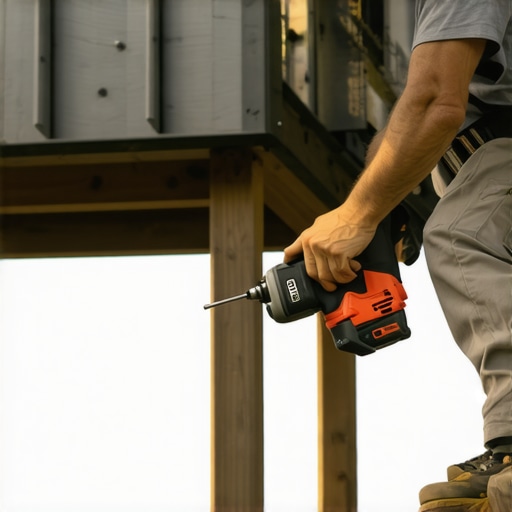
In the future, I expect that smart maintenance systems integrated with outdoor lighting and sensor alarms will automatically alert homeowners to potential issues before they turn serious, much like {https://deckforgebuilders.com/how-to-keep-a-watchful-eye-on-your-deck-s-health} discusses. Try implementing a monthly visual inspection combined with a powered, multi-purpose tool to catch early signs of deterioration. This proactive approach can save you significantly on repairs and replacements, keeping your deck and pergola in excellent shape, year after year.
What the toughest setbacks taught me about composite decking and design
The greatest lessons often come from mistakes—like misjudging expansion gaps or underestimating the importance of proper fastening techniques. I vividly recall a project where neglecting to account for temperature changes led to warped boards and costly fixes. That experience underscored the necessity of understanding how materials behave over time and the subtle details that influence long-term durability. Embracing these challenges transformed my approach, pushing me to prioritize precision and educate myself continuously. Such insights have made my projects more resilient and visually stunning, proving that setbacks can be hidden opportunities for mastery.
Tools and resources that revolutionized my deck-building process
If you’re serious about elevating your outdoor space, certain tools and knowledge sources can make all the difference. A high-quality contour gauge, for example, allows for flawless scribing around irregular surfaces, saving time and enhancing the final look. I rely on books like Deck Design Strategies to inspire innovative layouts and understand local building codes. Additionally, consulting reputable sites such as Low-Maintenance Composite Decking Tips helps me stay updated on the latest trends and materials, ensuring my projects are both beautiful and enduring.
The power of perseverance in mastering outdoor upgrades
Transforming an outdoor area into a personal sanctuary demands patience, resilience, and an openness to learn. Every challenge—be it fitting a pergola in a windy yard or sealing gaps in uneven terrain—teaches valuable lessons that refine your skills. My advice is to approach each project with curiosity, celebrate small victories, and view setbacks as chances to grow stronger. Remember, the journey of creating a stunning deck or pergola isn’t just about physical construction but also about cultivating confidence and craftsmanship. Your outdoor renovation is a reflection of your dedication—keep pushing forward, and soon you’ll enjoy a beautiful space that truly feels like home.
Have you ever faced a surprising obstacle that changed your approach to decking or pergola projects? Share your story below, and let’s learn together from every twist and turn in our outdoor adventures!