
It was a bright Saturday morning when I discovered a stubborn red wine stain on my beautiful composite deck, and my heart sank. No matter how many times I scrubbed with soap and water, that ominous mark refused to budge. I had anticipated a minor inconvenience, but this was a lightbulb moment—that the common myth I’ve always heard might be misleading. You see, many believe that composite decking is virtually maintenance-free, especially when it comes to stains; I used to think a simple wash would do the trick. But as I learned early on, this isn’t always the case, and trying to treat stains with just soap and water can often lead to frustration.
Why Soap and Water Is Not Enough for Real Stains
After countless attempts to clean that persistent stain, I realized I needed a different approach. The truth is, composite decks are incredibly durable, but they’re not stain-proof. The myth that soap and water alone can handle all messes has led many homeowners astray—believing they can avoid specialized cleaning solutions altogether. But studies show that certain stains, especially from red wine, coffee, or food dyes, penetrate the resin surface of composite boards and require targeted treatments for effective removal.
Early in my journey, I made the critical mistake of assuming that abrasive scrubbing wouldn’t hurt the surface. Turns out, aggressive scrubbing can scratch the composite surface, making stains more noticeable and even damaging your deck’s appearance. Learning this lesson the hard way encouraged me to explore more effective, safe techniques, which I will share below. If you’ve ever been in my shoes, you know that trusting your instincts without proper knowledge can complicate the cleaning process—a mistake I want you to avoid.
Ever Wondered if Cleaning Without the Right Products Is Worth It?
Many homeowners hesitate to try specialized stain removers, fearing they might damage their deck’s surface. I was skeptical at first too. But I’ve found that choosing the right cleaning strategies, based on advice from experts (like consulting this comprehensive guide on how to clean red wine stains off composite boards), can make all the difference. The key is understanding which products are safe for your specific composite type and avoiding common pitfalls such as using bleach or harsh chemicals that can discolor or degrade the material.
Before jumping into solutions, remember—knowing the nature of your stains and your deck’s composition is crucial. So, have you ever faced stubborn stains that soap and water couldn’t handle? If so, stay tuned. I’ll walk you through proven methods that will help you restore your deck’s beauty without risking damage.
Getting stains out of composite decking doesn’t have to be a mystery. With the right tools and techniques, you can enjoy a spotless, inviting outdoor space. Let’s move beyond myths and discover what really works. Ready to transform your deck’s look? Keep reading for practical, tested tips that I personally use and recommend.
Prepare Your Cleaning Arsenal
Start by gathering the right supplies: a soft-bristle brush, a garden hose, a bucket, mild dish soap, and a specialized deck cleaner formulated for composite surfaces. Remember, using harsh chemicals like bleach can damage your deck, so opt for environmentally friendly and deck-safe solutions. When I tackled a stubborn wine stain last summer, I found that a gentle cleaner combined with patience yields better results than aggressive scrubbing.
Test Cleaning Products First
Before applying any cleaner extensively, test it on a small, inconspicuous area. This step prevents potential discoloration or surface damage. I once used a new stain remover on a tiny corner and confirmed it didn’t cause any color change, giving me confidence to proceed confidently across the entire stain.
Apply the Cleaner Carefully
Spray or apply the cleaner directly onto the stained area. Use a soft cloth or brush to gently work the solution into the stain—avoid abrasive scrubbing that could scratch the surface. For example, when removing a coffee spill, I applied the cleaner and let it sit for a few minutes, softening the stain before gentle agitation. This approach minimizes damage and maximizes stain lift.
Allow Time for Penetration
Let the cleaner sit for 5-10 minutes, especially on stubborn stains like red wine. During this time, avoid walking on the deck to prevent spreading the stain or smudging cleaned areas. Patience here pays off; I once rushed the process and had to redo part of the cleaning, which lengthened the overall effort.
Gentle Scrubbing and Rinsing
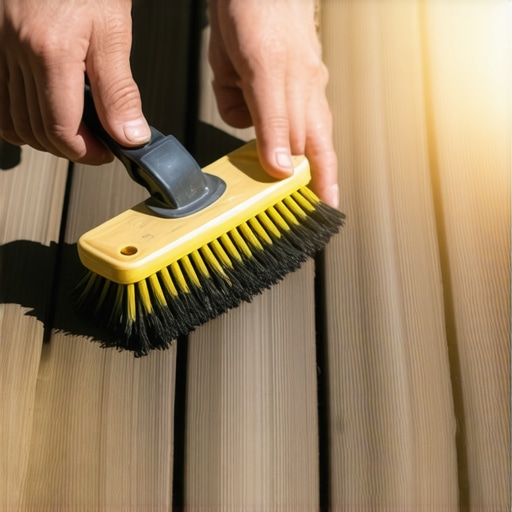
Using your soft brush, gently scrub the stained area in a circular motion. This action dislodges the stain without scratching the composite surface. After scrubbing, rinse thoroughly with a garden hose, ensuring all residue is washed away. When I cleaned a wine stain, thorough rinsing prevented streaking and left the deck looking fresh.
Repeat as Necessary
Some stains require multiple treatments. If the red wine remains after the first attempt, reapply the cleaner and repeat the process. Don’t be discouraged; persistent stains often respond well to patience. I once repeated the cleaning twice before the stain disappeared completely, and the deck looked like new.
Prevent Future Stains
To minimize future issues, consider applying a protective sealant or running a deck maintenance routine regularly. Also, promptly cleaning spills prevents them from setting in. For added style and functional protection, explore pergola designs that can shield your deck from direct sun or rain, reducing stain risks and extending its lifespan.
Use a spray bottle and soft cloth to apply a cleaning solution on a composite deck surface, demonstrating the proper cleaning method for stains.
Remember, consistent and gentle cleaning extends the life of your composite decking and keeps it looking pristine. Following these concrete steps will empower you to tackle stains effectively without risking damage to your deck’s surface.
Many homeowners and even some professionals fall prey to misconceptions when planning outdoor spaces, particularly with composite decking, pergolas, and railing systems. While mainstream advice often promotes simplicity and cost-effectiveness, there are subtle nuances that can significantly impact the longevity, safety, and aesthetic appeal of your deck. Let’s explore some overlooked complexities and myths that could trip you up, ensuring your project stands the test of time.
First, a common misconception is that all composite decking is created equal. Many assume that because it’s low-maintenance, it doesn’t require careful planning or quality selection. However, the *trend toward thinner, cheaper boards* can lead to sagging, warping, or even failure under heavy use or extreme weather. According to a study by the composite decking trends report, choosing the right thickness and material grade is crucial for durability.
Additionally, many underestimate the importance of proper framing and substructure design. An improperly spaced or weak frame can cause your deck surface to develop unsightly gaps or premature wear, especially with heavier materials like stone or furniture. Advanced builders account for environmental factors and load capacities, often incorporating features like *hidden supports* or reinforcement to enhance stability.
When it comes to pergolas, a mistake I’ve noticed repeatedly involves overlooking *the significance of diagonal bracing*. While many see pergolas as simply aesthetic structures, neglecting proper bracing can cause wobbly or leaning frames over time—especially in windy areas. Modern design strategies include not only aesthetic elements but also structural enhancements, like *integrated beams* that support both style and stability. For inspiration on how to blend form with function, check out these pergola designs.
Why do some railing systems fail despite appearing strong?
This often relates to overlooked detail such as the choice of fasteners and their corrosion resistance. Using standard galvanized screws on salt-exposed coastlines can lead to *premature rusting and failure*, undermining safety and aesthetic. Experts recommend stainless-steel hardware for durability in harsh environments, which significantly extends the lifespan of your railing system. For installation insights, see this comprehensive railing guide.
Furthermore, many project planners neglect to consider future maintenance or upgrades. Think beyond the initial build—how will your materials age? Will components be compatible for modifications or extensions? Anticipating such needs can prevent costly re-dos down the line. For example, modular railing systems allow for easy upgrades and repairs, saving time and money.
Lastly, a trap worth avoiding is the temptation to cut corners with quick fixes like superficial sealing or skimping on quality fasteners. These shortcuts may seem economical upfront but often result in expensive repairs or replacements later. Always invest in proven, high-quality materials and techniques learned from trusted sources like this detailed design strategy.
Have you ever fallen into this trap? Let me know in the comments. By understanding these nuanced aspects of deck design, you’ll be better equipped to plan a safe, attractive, and long-lasting outdoor space that truly elevates your home’s value and appeal.Maintaining a deck, pergola, and railing systems over time requires precision, the right tools, and a systematic approach. Having invested years in outdoor carpentry, I’ve identified specific equipment and software that truly make a difference. One of the most reliable tools I swear by is the Bosch GLL 3-80 Laser Level. Its high accuracy and rotating laser enable me to ensure perfect alignment when installing pergolas or adjusting railing heights, saving hours of manual measuring and reducing errors. Additionally, I always rely on the DeWalt DWST08201 ToughSystem Organizer to keep all fasteners, screws, and small tools sorted, which is vital when working on multi-component projects like composite decks where loose parts can cause delays or errors. For power cleaning, I prefer the Sun Joe SPX3000 Pressure Washer, as it offers adjustable pressure settings that are gentle enough for composite surfaces yet powerful enough to remove dirt, algae, or stains effectively, preventing build-up that accelerates wear. When it’s time to evaluate long-term results, I utilize the iHandy Spirit Level app on my tablet; it’s surprisingly precise and helps identify uneven surfaces or subsidence issues early before they become costly repairs. As for software, I recommend using SketchUp for drafting modifications or scale models of your deck expansion or pergola redesigns — it allows you to visualize changes in 3D, saving time and preventing costly miscalculations. Looking ahead, trends suggest an increasing integration of automated sensors and IoT devices that monitor structural stability and environmental conditions, making ongoing maintenance more proactive. For example, installing moisture sensors on critical joints can alert you before rot or mold develop, aligning with insights from experts at the University of California Cooperative Extension. To get started on a maintenance upgrade, try using the Bosch laser level next time you adjust your pergola — calibrating your structures with precise tools ensures long-term stability and safety. Want to learn more about the best practices for keeping your deck functional and beautiful? Reach out through our contact page, and I can help you develop a tailored maintenance plan.
The Hardest Lesson I Learned About deck design, composite decking, pergolas, and railing systems
- Trusting cheap materials for long-term durability was my biggest mistake. I realized that investing in quality, like selecting higher-grade composite boards and corrosion-resistant hardware, pays off over time and saves money on repairs.
- Skipping detailed planning for environmental factors led to unexpected issues—like warping or instability. Now, consulting expert guides and considering climate influences ensures resilient structures that stand the test of time.
How I Discovered the Power of Proper Support and Design
Initially, I underestimated the importance of diagonal bracing in pergolas and correct framing in decks. Learning to incorporate these elements, inspired by top pergola designs, transformed my projects into resilient, beautiful spaces that withstand wind and weather.
Curated Tools That Changed My Deck-Building Approach
- Bosch GLL 3-80 Laser Level: Precision in alignment saves hours and guarantees accuracy in installations, preventing uneven surfaces that cause safety hazards.
- DeWalt DWST08201 ToughSystem Organizer: Keeps fasteners organized, which is crucial when working with multiple components like composite decking fasteners and railing hardware.
- Sun Joe SPX3000 Pressure Washer: Gentle yet effective cleaning ensures removal of stains and deck maintenance without damaging surfaces.
- SketchUp Software: Visualizing modifications helps prevent costly mistakes, especially when upgrading or expanding your deck or pergola.
Believe in Your Craft, Build with Confidence
p>Transforming your outdoor space is not just about following plans—it’s about refining your skills, learning from mistakes, and investing in the right tools and materials. Every project is an opportunity for growth; embracing this mindset turns challenges into victories. Remember, a well-designed deck with sturdy pergolas and protective railing systems can elevate your home’s beauty and functionality. Keep learning, keep building, and don’t hesitate to reach out via our contact page for guidance or support on your next outdoor project.