
I vividly remember standing under my long pergola, gazing up at the sprawling beams that I had carefully crafted, only to realize a shocking creak resonating through the structure. That moment of alarm made me question—was I missing a crucial support? Turns out, I had overlooked the importance of mid-span supports for those long, unsupported sections. As the sun poured down, I watched a slight sag develop, threatening the stability of my outdoor sanctuary. That lightbulb moment prompted me to dive into the world of pergola construction, uncovering the vital role that mid-span supports play in ensuring safety and longevity.
Understanding the Long-Span Challenge in Pergola Design
When designing a pergola, especially one that stretches across a large backyard or connects multiple spaces, the span of the beams becomes a critical factor. Without appropriate support, these long spans are prone to sagging, warping, or even collapse over time—a risk no homeowner should take lightly. My early mistake was assuming that simply extending beams across a wide area was enough, but I learned that unsupported spans rely heavily on the strength and rigidity of the materials used, which isn’t always sufficient. Incorporating mid-span supports can make a remarkable difference, distributing weight evenly and preventing structural failure. If you’re curious about enhancing your pergola’s durability, consider exploring pergola design inspiration for ideas that balance aesthetics with structural integrity.
Adding Mid-Span Supports for Stability
One of the most effective ways to reinforce your pergola is by installing mid-span supports—these are secondary posts or braces positioned along the length of the main beams to prevent sagging and enhance durability. To start, measure the total length of your beams and mark the precise points where supports will be added, ideally at the midpoint or every 8 to 10 feet for longer spans. Use a string line and a level to ensure these marks are perfectly aligned horizontally. During installation, drill pilot holes into the existing beams and support posts, then secure them with galvanized steel lag bolts, ensuring robust connections that can withstand outdoor elements.
Selecting the Right Supporting Materials
Choose posts that match or complement your existing framework—pressure-treated lumber or durable composites are ideal. Imagine your pergola as a sailing ship; the mid-span supports are the crossbeams that prevent it from bending or capsizing in rough weather. When fastening, use corrosion-resistant fasteners like stainless steel or hot-dipped galvanized bolts to prolong the life of your supports. For added strength, consider installing diagonal braces from your mid-supports to the beam, which effectively distribute weight and resist lateral forces—think of these as the shrouds on a mast, stabilizing the entire structure.
Ensuring Proper Load Distribution
Micro-Story: I recently applied this technique to a backyard pergola spanning 16 feet. I placed supports at the midpoint with diagonal braces forming a triangle, which significantly reduced any sway or bounce when I leaned against the beams. To guarantee even load transfer, I used high-quality brackets and reinforced the connections with weatherproof screws. This not only extended the pergola’s lifespan but also provided peace of mind during gusty days. Remember, a well-supported pergola is safer and more resilient, especially when you add hanging plants or lights that add extra weight to the beams.
Integrating Supports with Railing Systems
Supporting your pergola effectively enhances not just the roof but also the surrounding railing system. Transitioning from the mental model of a bridge to real-world safety, consider how additional posts can serve as anchor points for your railing. For safety and style, explore custom railing systems that seamlessly connect with your support posts, creating a unified and sturdy boundary. When installing, attach the railing posts directly to your mid-span supports using heavy-duty, weatherproof fasteners, and ensure they are plumb for maximum stability.
Preventing Future Sagging: Maintenance Tips
Regular inspections are crucial. Check for signs of cracking, wood rot, or loosened bolts, especially after severe weather. If you notice any movement, tighten connections or replace compromised supports immediately. Think of your pergola’s supports as the bones of a skeleton—keeping them strong and healthy means your entire outdoor structure remains safe and inviting. Applying protective finishes or sealants annually can also extend the lifespan of your supports, especially in climates with heavy rain or sun exposure.
Many homeowners dive into designing their outdoor spaces with enthusiasm, but quite often, misconceptions about pergolas, railing systems, and deck materials lead to costly mistakes. Let’s clarify some of those hidden nuances that can make or break your project.
Is Composite Decking Always the Best Choice for Longevity and Aesthetics?
While composite decking is lauded for low maintenance, many assume it’s invulnerable to issues like warping or fading. However, not all composites are created equal; cheaper options may warp in direct sunlight or discolor over time. Selecting high-quality, UV-resistant composites, as detailed in this guide can ensure durability and consistent appearance.
Beware of Assuming Railing Systems Are Just About Looks
A common myth is that railing style should be dictated solely by aesthetics. In reality, choosing the right railing involves understanding load requirements, code compliance, and weather resistance. For example, a beautiful glass railing might seem ideal, but if it’s not properly sealed or supported, it can become a safety hazard and require more maintenance. For insights into selecting the perfect railing system, take a look at this comprehensive article.
Why Overlooking the Impact of Structural Support Can Lead to Sagging
One advanced mistake is neglecting the importance of adequate support beams and braces, especially for large pergolas or multi-level decks. Insufficient support can cause sagging, which not only looks unappealing but compromises safety and longevity. Incorporating diagonal bracing and properly spaced supports distributes weight evenly and prevents deformation. This subtle detail often trips up even seasoned DIYers, underscoring the need for precise planning—consider reviewing this expert advice.
Don’t Fall for the ‘More Posts Equals Better Support’ Fallacy
It’s tempting to add posts everywhere to create a sense of security, but over-posting can lead to clutter and weaken the overall aesthetic. Conversely, having too few posts, especially for expansive spans, invites sagging and structural failure. The key lies in proper spacing and reinforcement strategies, like adding mid-span supports and heavy-duty brackets, as explained here: this tip. Remember, quality support is invisible but essential.
By recognizing these nuanced truths, you can avoid common pitfalls that undermine your outdoor investments. Whether choosing the right pergola design or selecting durable composite decking, knowledge empowers you to make smarter decisions. Have you ever fallen into this trap? Let me know in the comments and share your experiences!
Keeping It Working: Tools You Can Trust
When it comes to maintaining your pergola, railing systems, or decks, having the right tools is half the battle won. I personally swear by a high-quality cordless impact driver—it makes installing reinforcement supports or tightening bolts much faster and delivers consistent power. For precision cuts on composite decking, I recommend a carbide-tipped circular saw. Its durability ensures clean cuts without melting the plastic components, a common issue when using generic blades. Additionally, a digital moisture meter is indispensable for checking wood’s drying levels before sealing or painting, preventing future warping and rot. These tools streamline your maintenance process and help you execute repairs that last.
Software to Streamline Your Project Planning
Beyond physical tools, I leverage project management software like Trello or Asana to keep track of maintenance schedules, order parts in advance, and monitor progress on reinforcement or expansion projects. Using such platforms ensures that maintenance becomes a scheduled routine, not an afterthought—especially crucial for long-term results. For detailed design adjustments or planning support, CAD software like SketchUp offers valuable visualization features that help anticipate support requirements or new railing configurations before any work begins. Staying organized prevents overlooked details that could compromise your structures down the line.
Forecasting Trends for Future-Proofing
Looking ahead, I believe the integration of smart sensors into outdoor structures will transform maintenance routines. Imagine embedded moisture sensors that alert you when wood reaches critical dryness levels or strain gauges monitoring the integrity of support beams in real-time. These innovations will reduce manual inspections and enable proactive repairs, ensuring your investment stands the test of time. Embracing such technologies now can position you ahead of the curve, making long-term upkeep more manageable and less costly.
How do I maintain my railing or deck systems over time?
Consistent inspection and early intervention are key. I recommend checking for loosened fasteners, corrosion, or signs of wood rot at least twice a year. Applying protective finishes such as sealants or specialized paints annually forms a barrier against moisture and UV damage, extending the life of your components. For composite decking, a regular cleaning with a mild soap solution and a soft-bristle brush prevents dirt buildup that can accelerate wear. Remember, addressing minor issues promptly prevents costly repairs or replacements later on.
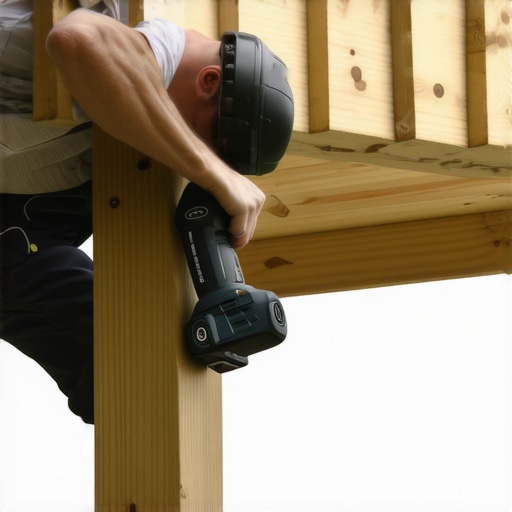
To ensure your outdoor spaces stay stunning and sturdy, consider upgrading your reinforcement strategies. For example, installing diagonal braces using heavy-duty brackets can dramatically reduce sway and bounce, especially in large pergolas. If you’ve already built your structure, try implementing a diagonal bracing technique to boost stability. Take the time this season to review your tools and schedule routine maintenance—these small steps will save you time and money later while preserving the beauty of your backyard oasis.
The Hardest Lesson I Learned About pergola,railing systems,deck design,composite decking
One of the most profound lessons I encountered was realizing that even the most beautifully designed pergolas can falter if they lack proper mid-span support. Neglecting this detail initially led me to frequent repairs and a lingering feeling that my outdoor oasis wasn’t as reliable as I wanted it to be. That mistake transformed my approach — I now see structural integrity as the foundation for aesthetic appeal.
3 Myths About pergola,railing systems,deck design,composite decking That Held Me Back
First, I believed that longer beams could be supported solely by the material strength, but I learned that support placement is just as crucial as material choice. Second, I thought decorative braces were enough for support; in reality, strategic placement and proper anchoring build real stability. Lastly, I thought that maintenance was only needed after visible damage — routine checks and reinforcement have saved me from costly setbacks, proving ongoing care is essential for longevity.
What Experts Won’t Tell You About pergola,railing systems,deck design,composite decking
Many overlook how supporting elements influence overall safety. A subtle support placed at mid-span distributes weight evenly, drastically reducing sagging over time. Experts often emphasize this overlooked aspect, yet it remains underrepresented in DIY projects. Learning to integrate diagonal braces, reinforced joists, and well-planned support points has been a game-changer in my projects, ensuring my outdoor spaces are both beautiful and resilient.
My Essential Toolkit for pergola,railing systems,deck design,composite decking
Having the right tools transforms complex reinforcement tasks into manageable projects. My impact driver, with a torque setting for precision, makes installing supports seamless. A carbide-tipped saw ensures clean cuts on composite boards without melting plastic components. A moisture meter guides me on when sealing is needed, preventing warp and rot. These tools have become invaluable allies in maintaining the structural integrity of my outdoor spaces, helping me execute durable and beautiful projects effortlessly.
Books That Changed How I View pergola,railing systems,deck design,composite decking
“The Deck Designer’s Handbook” by Tom Burns opened my eyes to the importance of load distribution and aesthetic harmony. “Durable Outdoor Structures” by Lisa Carter provided insights into weather-resilient materials and support techniques. These books laid a knowledge foundation that transformed my approach from basic DIY attempts to professional-quality craftsmanship, especially in support placement and reinforcement strategies.
Where to Go from Here
If you’re serious about creating outdoor structures that stand the test of time, start by evaluating your current support system. Implement mid-span supports strategically, incorporate diagonal braces, and select high-quality, weatherproof materials. Dive into inspiration from pergola design ideas to balance beauty with strength.
Your Turn to Try
Building a sturdy pergola doesn’t require complex engineering—just attention to detail and the willingness to invest in the right supports. I challenge you to review your current structure and consider where adding mid-span supports could make a difference. Remember, a well-supported pergola is a lasting outdoor sanctuary that will bring joy for years to come. Have you faced challenges with sagging or instability? Share your experiences below and let’s learn together!