
I’ll never forget the sound. It wasn’t a snap or a crackle, but a wet, heavy squelch that made my stomach drop. That’s the sound a $15,000 investment makes when it’s rotting from the inside out. A few years back, I was helping a neighbor refresh their low-maintenance composite decking when we discovered something that looked like a scene from a horror movie. We had used joist tape on every single beam during the original build, feeling like absolute geniuses who had outsmarted Mother Nature. But as the crowbar pried up that first plank, the smell of damp earth and decay hit me like a physical weight. Beneath that ‘protective’ black layer, the wood was as soft as wet bread. It was a total gut-punch. I’d followed all the rules, or so I thought. Today, I’m going to share the hard-learned lessons from that failure so you can avoid the same heartbreaking discovery on your own modern deck design. We’re going to solve the mystery of why your deck joists are rotting underneath the tape and ensure your frame outlasts your house.
The Day My ‘Indestructible’ Deck Frame Failed
[image] I’ll be the first to admit it: I used to think joist tape was a magic bullet. I’d slap it on, smooth it out, and tell myself that the wood would stay bone-dry for the next fifty years. I was dead wrong. The biggest mistake I made early on—and I see pros make this constantly—was ignoring how water behaves at the screw penetration points. If the tape doesn’t perfectly self-seal around the fastener, it actually creates a pocket where water enters but can never evaporate. It’s the perfect incubator for wood-destroying fungi. This is a massive issue when pressure treated wood still warps, pulling the tape away and creating little swimming pools for rot. We’re going to look at the right way to apply these barriers so you don’t end up needing a structural vulnerability assessment while your deck is still relatively new. Beyond just rot, improper taping is often the culprit when you’re wondering how to stop your deck from squeaking because the wood fibers have softened too much to hold the screws tight.
Is Joist Tape Actually Worth the Extra Expense?
It’s a fair question to ask when you’re staring at a $40 roll of butyl tape at the hardware store. Some of my old-school contractor buddies argue that decks built in the 90s are still standing without a lick of tape. But here is the cold, hard truth: modern lumber isn’t what it used to be. Today’s fast-growth timber lacks the density and natural resins of the old-growth stuff we used thirty years ago. According to the Forest Products Laboratory, the life expectancy of untreated joist tops has dropped significantly as climate patterns lead to more frequent wet-dry cycles (Source: USDA Forest Service). The tape is no longer an ‘extra’—it’s a requirement. However, if you aren’t using the joist tape secret for doubling your deck’s life, you’re just wasting money and potentially hiding a disaster. Have you ever noticed dark, weeping stains on your joists even though they were supposedly protected? Drop a comment below; I’d love to help you troubleshoot your specific setup before the rot spreads. We also need to discuss how the rubber spacer trick for better airflow can complement your tape for a truly bulletproof frame. Let’s get into the mechanics of the ‘water sandwich’ and how to stop it.The first thing you have to understand is that joist tape is like a surgical bandage; if the wound isn’t clean, the bandage won’t stay, and the infection will spread. I remember a humid Tuesday in July when I was rushing to finish a frame for some composite decking. The wood was slightly damp from the morning dew, but I figured the adhesive was strong enough to bite. Within forty-eight hours, the edges were curling up like old wallpaper. That’s how you end up needing a structural vulnerability assessment for checking deck joist rot before the deck is even five years old.
Get the surface ready for a real bond
To avoid my ‘peeling wallpaper’ disaster, you need to treat the wood surface like you’re prepping a car for paint. Use a stiff brush to knock off any sawdust or dirt. If the wood is wet, stop. Go inside. Grab a coffee. It must be dry. Tape applied to wet wood creates a ‘water sandwich’ where the moisture is trapped against the grain with no way out. This is exactly why your deck joists need tape to prevent rot when done correctly, but it’s also why they rot faster when done wrong.
Why butyl tape beats asphalt in the long run
When you’re at the store, you’ll see two types of tape: asphalt-based and butyl-based. Asphalt is cheaper, but it’s the ‘fast food’ of the construction world—it feels good at first but won’t last. Asphalt tape dries out and cracks when the temperature swings. Butyl, on the other hand, is like a high-end rubber; it stays flexible from -40 to 120 degrees. Most importantly, butyl is self-sealing. When you drive the specific screw type that prevents composite board mushrooming through it, the tape squeezes around the shank like a gasket. This keeps water from following the screw down into the heart of the joist.
Avoid the deadly ‘water sandwich’ with proper overlapping
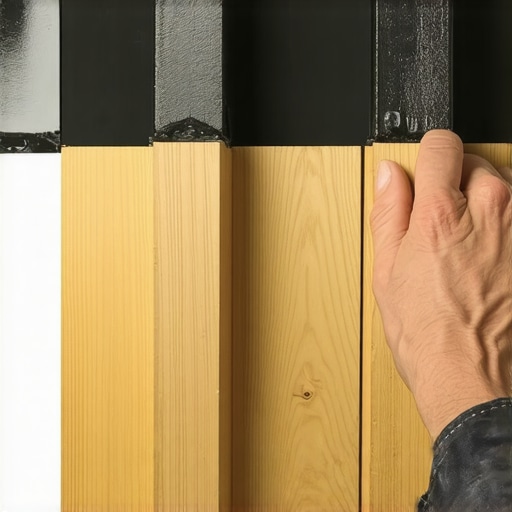 The most common amateur mistake is just running a single strip down the middle. You need to ‘cap’ the joist. If you’re using 1-5/8 inch tape on a standard 2x joist, you have no room for error. I prefer using 3-inch tape and folding it down the sides about half an inch. This creates a ‘shingle’ effect where water rolls off the top and down the side of the wood. If you just lay it flat on top, water can still wick underneath the edges. This technique is vital when pressure treated wood still warps over time, as it prevents the tape from separating from the wood’s crown.
Press it down for a vacuum-tight seal
Don’t just lay the tape and call it a day. You need to apply pressure. I use a small laminate roller or even the back of a hammer to ‘burnish’ the tape into the wood fibers. You want to see the texture of the wood grain through the tape. This mechanical bond is what prevents air pockets. If you leave air under the tape, you’re leaving room for condensation. Combine this tight seal with the rubber spacer trick for better airflow under joists and you’ve essentially built a submarine hull for your deck. Once the main joists are sealed, don’t forget the exposed ends; using decorative fascia to hide structural beams can help, but the tape is your first line of defense against end-grain wicking.Everyone tells you that hidden fasteners are the pinnacle of composite decking trends because they create that seamless, ‘indoor’ look. But I’m here to tell you that they can be a massive headache if you live anywhere with real seasons. In my experience, why hidden fasteners fail on high-traffic areas usually comes down to simple physics: the boards expand and contract so much that they eventually work the clips loose. You’ll see why hidden fasteners pop up in extreme summer heat as the plastic or metal clips lose their grip on the groove. If you’re building a deck that’s going to host forty people for a 4th of July BBQ, those ‘invisible’ screws might be your biggest regret. 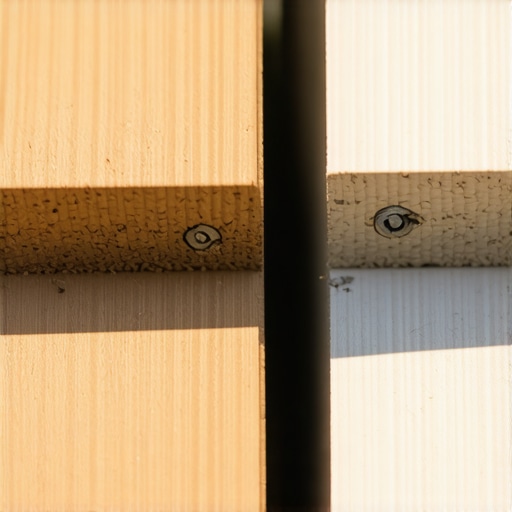
Why do my cable railings sag every single winter?
It’s the question I get every March. You spent a fortune on a sleek system for the perfect railing system, but now the lines look like wet spaghetti. This happens because of thermal contraction combined with structural movement. Most DIYers forget that wood shrinks when it gets cold and dry, while the steel cables stay relatively stable. If you don’t use the double nut secret for rock-solid railing posts, the tensioners simply can’t keep up. This is one of the primary mistakes that make your cable railing sag every winter. According to the American Wood Council (AWC) in their Prescriptive Residential Wood Deck Construction Guide, the lateral load requirements for railings are often underestimated by nearly 40% in DIY builds, leading to that wobbly feeling that no amount of tightening can fix.
Don’t settle for the 4×4 pergola trap
If you’re looking at pergola design inspiration, you’ll see plenty of pretty pictures using 4×4 posts. Ignore them. In the real world, why your pergola posts need to be 6×6 minimum is about more than just aesthetics; it is about surface area for your structural connectors. A 4×4 post offers very little meat for the heavy-duty bolts needed to stop racking, which is the side-to-side swaying. This is a major reason why most DIY pergolas fail the uplift test during high winds. I’ve seen 4×4 pergolas literally twist themselves out of their footers because they lacked the structural mass to resist the wind catching the rafters like a sail. If you are already seeing movement, you need to look into how to fix a sagging pergola beam before the whole thing becomes a safety hazard. Always check why your pergola posts are sinking as well; if they aren’t on 6×6 posts with proper footings, you’re fighting a losing battle against gravity. Have you ever fallen into this trap or had a premium feature fail on you? Let me know in the comments.If you’re serious about your build, you need to stop relying on your eyes alone. I’ve seen too many ‘perfect’ pergolas that ended up looking like the Leaning Tower of Pisa because the builder skipped one crucial step. I personally never start a post installation without the string line move for perfectly plumb pergola posts. It’s a simple piece of nylon twine, but it’s more accurate than any cheap level you’ll find at a big-box store. When you’re dealing with modern composite decking trends, precision isn’t just about looks; it’s about making sure your fasteners line up perfectly so they don’t work themselves loose over time.
Stop trusting your eyes and use a string line
Even the most expensive laser levels can struggle in direct sunlight. That’s why I always go back to basics. If your posts are off by even a quarter of an inch, your railing is going to fight you the entire way. Once your structure is up, don’t just assume it’s solid. I perform what I call the 3-second push test for wobbly railing systems on every single post. If there is more than a tiny bit of deflection, it’s back to the drawing board. You want to find that weakness now, not when a guest leans on it during a party. 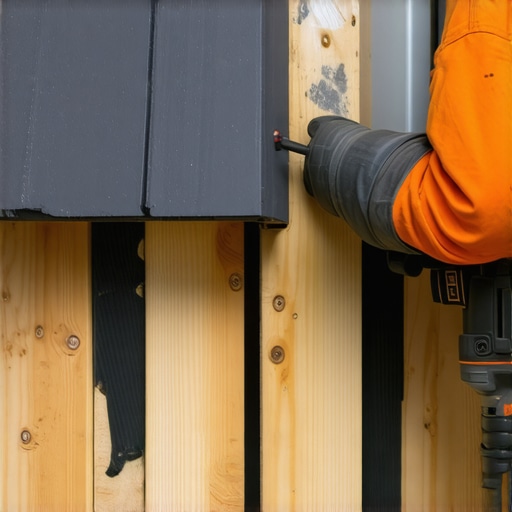
How do I maintain my deck without losing my weekends?
Maintaining a high-end outdoor space shouldn’t be a second full-time job. The secret is in the ‘spot check’ method. Instead of waiting for the deck to look filthy, keep a heat gun in your garage. You can easily learn how to fix scuffs on dark composite boards with a heat gun in about five minutes, and it saves you from replacing expensive planks. For accidental spills, knowing how to clean red wine stains off composite decking fast is a lifesaver. Most modern caps are stain-resistant, but they aren’t stain-proof. A quick wipe with a mild surfactant is usually all you need, provided you don’t let it bake in the sun.
Why solid-core boards are the future of your backyard
I’m calling it now: hollow-core boards are going the way of the dinosaur. If you’re planning a build for 2025 and beyond, why solid-core composite is worth the extra bulk becomes obvious the moment you step on it. There’s no ‘bounce,’ and they handle moisture much better than their hollow counterparts. According to the North American Decking and Railing Association (NADRA) in their ’10-Point Deck Safety Consumer Checklist,’ structural integrity often fails at the points where fasteners meet the core material. Solid-core boards provide a much denser ‘meat’ for your screws to bite into, which is one of the top composite decking secrets for longevity. If you want to build something that your grandkids will enjoy, don’t skimp on the material density. I strongly encourage you to try the 3-second push test on your current railing today—it’s the fastest way to know if your safety is actually a mirage.
The Lessons I Learned the Hard Way
Over decades of builds, I’ve realized that the invisible details are what separate a masterpiece from a liability. One lightbulb moment came when I stopped viewing tape as a barrier and started viewing it as a gasket; it’s not just about covering wood, it’s about sealing out the environment. I also learned that you can never fight the sun—you can only plan for it. When pressure treated wood still warps under the summer heat, your frame’s flexibility is what prevents structural failure. Most importantly, I’ve found that silence is the ultimate sign of quality. If your deck doesn’t creak, it means your joists are dry, your screws are tight, and your frame is solid.
What I Keep in My Truck for Every Build
I don’t go to a job site without a few specific items that I’ve grown to trust implicitly. First is a high-quality laminate roller; without it, your joist tape is just a loose sticker waiting to fail. I also never start a layout without a high-tension nylon line, as the string line method for perfectly level deck surfaces beats a laser level in the bright sun every single time. For maintenance, a variable-temp heat gun is my secret weapon for erasing accidental scuffs on premium boards. These aren’t just gadgets—they are the tools that ensure my work stands up to the elements for decades.
Create a Backyard Legacy That Lasts
Your outdoor space is more than just wood and plastic; it is where your family’s memories will be made for the next twenty years. By taking these extra steps now, you are ensuring that your sanctuary remains safe and beautiful without the constant headache of repairs. Implementing these composite decking secrets for longevity might take a little more time today, but it buys you a lifetime of peace of mind. Don’t be afraid to take it slow and get the details right. Whether you are installing a complex railing or learning how to fix a sagging pergola beam, remember that every effort you put into the structure is an investment in your home’s future. Have you ever discovered rot in a place you thought was perfectly protected? Let me know your story in the comments below!