
I vividly remember a breezy summer afternoon, confidently relaxing under my newly built pergola, only to be suddenly jolted as the canopy caught a gust and nearly took off like a sail. It was a lightbulb moment—realizing that what I thought was a sturdy shade was actually a wind-catching nightmare waiting to happen. This experience made me ask: why does a canopy, designed to provide shelter, sometimes behave like a sail in the wind?
Understanding the Wind’s Power: When a Pergola Canopy Becomes a Sail
Like many outdoor enthusiasts, I didn’t initially realize how crucial factors like the canopy material, installation method, and surrounding environment are in determining how your pergola responds to gusts. A canopy that isn’t properly secured can turn your peaceful garden oasis into a makeshift sailboat. The main issue is the lack of proper tension and anchoring—over time, even a slight breeze can produce significant movement, risking damage or catastrophic failure.
Studies have shown that outdoor structures can experience wind pressures exceeding 20 pounds per square foot during storms, which is enough to cause damage if not properly engineered (source: FEMA). It’s a stark reminder of the importance of securing your pergola canopy against these forces.
Fortunately, after some trial, error, and a few costly lessons, I discovered key methods to keep my canopy firmly anchored. Today, I promise to guide you through the practical steps to prevent your canopy from turning into a sail, ensuring that your outdoor space remains a sanctuary rather than a gusty hazard.
Does the idea of your canopy catching every stray breeze make you nervous?
Trust me, I made that mistake early on—assuming that installing a canopy was enough. But neglecting secure anchoring is a rookie error that could lead to costly repairs or replacement. Let’s learn from my blunders and strengthen your pergola’s defenses against the wind.
Ready to transform your outdoor area into a stable, wind-resistant retreat? Let’s dive into the steps that will give your canopy the durability it deserves, so you can enjoy peaceful outdoor moments without the gusts’ unwelcome surprises. Feel free to contact us at this link if you need personalized advice or professional installation help—we’re here to support your project!
Stabilize Your Canopy with Proper Tensioning Techniques
My first attempt at securing the canopy involved using basic bungee cords, which quickly proved ineffective during a gust. I learned that tightening the canopy with adjustable tension straps, similar to the way professional tarps are secured, provides a more reliable hold. Measure the canopy’s perimeter before installation to ensure the straps are snug but not overly tight, minimizing slack that wind can catch. During installation, begin tensioning from the center outward, ensuring even distribution of force, which prevents sagging that can act like a sail. <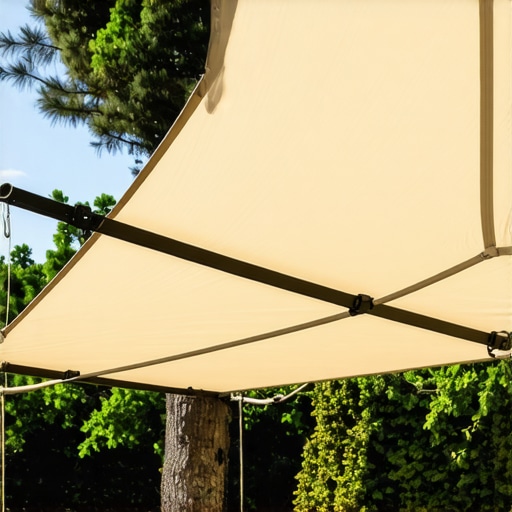 >
>
Use Heavy-Duty Anchors and Fasteners
To prevent the canopy from lifting or shifting, anchoring is critical. I replaced flimsy eye bolts with heavy-duty, corrosion-resistant anchor anchors driven deep into the ground or attached to sturdy foundation points, like concrete slabs. Think of anchors as the keystones of a bridge; without them, everything collapses during stress. Apply robust stainless steel fasteners, such as carriage bolts, inside grommets or attachment points on the canopy. Secure these with washers and nuts on the underside to prevent loosening over time. When I upgraded my anchoring system, I noticed a significant decrease in movement even during moderate winds.
Implement Wind Barriers and Additional Support Structures
Adding windbreaks around your pergola can redirect airflow and reduce pressure on the canopy, much like how trees act as natural wind buffers. Planting shrubs or installing lattice panels can serve this purpose effectively. Additionally, integrating diagonal bracing or installing support posts at strategic points transfers wind load from the canopy to the ground. I installed adjustable cross braces between the pergola legs, which stiffened the entire frame, preventing sway. For larger spans, consider using support beams similar to those employed in bridge construction, to distribute the load more evenly and reduce stress on the fabric.
Regular Inspection and Maintenance Keep Your Canopy Wind-Ready
Over time, I learned that corroded fasteners and loose fittings compromise wind resistance. Establish a routine check—especially before storm season—to tighten fasteners, replace rusted components, and assess tension. Periodic re-tightening of straps ensures consistent tensioning, preventing slack that can catch the wind. During my last inspection, I discovered a few fasteners had loosened after several months of weather exposure. Replacing them with stainless steel hardware restored stability and peace of mind. Remember, a well-maintained canopy is less likely to become a sail in a sudden gust.
Expert Tip PINNING Down Lightweight Fabrics
If using lightweight polyester or similar fabrics, add weight at the edges–small sandbags or weighted strips sewn into hemmed edges can help anchor the canopy naturally, especially during light gusts.
By applying these concrete steps—proper tensioning, solid anchoring, wind barriers, and regular maintenance—you transform your pergola canopy into a resilient feature that withstands the wind rather than succumbs to it. For more design inspiration, explore pergola design ideas that combine aesthetics with function or reach out via this link for personalized guidance on secure outdoor structures.When it comes to outdoor living projects, there’s a wealth of advice floating around, but not all of it is accurate. Many homeowners fall prey to misconceptions that can compromise the durability and safety of their pergolas and decks. Let’s debunk some of these myths and uncover hidden nuances that even seasoned DIY enthusiasts often overlook.
Are You Falling for the Too Good to Be True Deck Tips? This Might Be Why
Popular belief suggests that choosing the brightest, most exotic wood species guarantees longevity and low maintenance. However, in my experience, the actual durability depends more on proper installation, sealing, and ongoing maintenance than on initial material choice alone. For instance, cedar and redwood are often touted as low-maintenance, yet if not properly sealed or regularly inspected, they succumb to rot and insect damage faster than more resistant composites. A recent study highlights that the real key to a long-lasting deck is diligent upkeep and correct support spacing, not the material’s reputation (source: composite decking maintenance).
Beware the Common Mistake of Underestimating Wind Load Effects
Many believe that simply bolting a pergola to the ground provides enough stability. While this might seem sufficient initially, neglecting wind load calculations can lead to structural failure over time. Wind forces can exert pressures exceeding dozens of pounds per square foot, especially on large spans or lightweight materials. Failing to incorporate diagonal bracing or wind barriers can turn your beautiful pergola into a gust-catcher, risking damage. I’ve personally seen projects where lack of reinforced support led to significant issues during storms, emphasizing that understanding and designing for wind resilience is crucial. For more on this, explore pergola stability tips.
Advanced Insight: How Railing System Choices Affect Safety and Style
Many builders stick to standard railing designs, assuming one size fits all. But the choice of railing system influences both safety compliance and aesthetic appeal. A common mistake is installing railings with horizontally oriented balusters, which can pose safety risks, especially for children. Moreover, cheaper materials might look appealing upfront but can degrade faster under UV exposure and weathering. Investing in quality, code-compliant railings not only enhances safety but also raises curb appeal. For tailored advice, consider reviewing modern railing styles that blend security with design. Let’s dig deeper into the hidden intricacies of deck design and materials to ensure your project stands the test of time. Have you ever fallen into this trap? Let me know in the comments.Maintaining your pergola, composite decking, and railing systems requires the right set of tools and a disciplined approach. Over the years, I’ve refined my toolkit to include precision equipment that ensures durability and saves time. For instance, a high-quality digital torque wrench is indispensable for tightening fasteners to manufacturer specifications, preventing under-tightening that leads to loosening over time or over-tightening that causes damage. I personally prefer the **TEKTON 24335** as it offers precise readings and reliability, which is crucial when securing items like support beams or railings. Additionally, a cordless impact driver, like the **DeWalt DCF887**, speeds up fastening and reduces fatigue, especially when working on larger projects involving multiple fasteners or support brackets. Its variable speed and high torque help achieve consistent, secure attachments, crucial for long-term stability.
For inspecting and maintaining your structures, a digital Level and angle finder, such as the **Stabila 37424** professional level, is essential. It allows me to verify that pergola posts and decks are perfectly aligned, preventing uneven stress distribution that can lead to premature failure. Regular inspections with these tools enable early detection of issues like loose fasteners, corrosion, or sagging supports, facilitating timely repairs.
In terms of software, I recommend using CAD-compatible design tools like **SketchUp** to model your deck or pergola before building or modifying. This aids in visualizing load distribution, material requirements, and potential problem areas, especially beneficial when scaling up a project or planning custom support systems.
Predicting future trends, pressure sensors integrated with IoT technology are beginning to find their way into outdoor structures. These smart sensors can monitor wind loads, force impacts, and structural shifts in real time, providing early warnings before critical damage occurs. Investing in such technology now can extend your structures’ lifespan and ensure safety.
How do I maintain my pergola and deck over time?
Over the years, I’ve come to realize that building a pergola isn’t just about aesthetics—it’s about harmony with nature’s unpredictable temperament. The key is understanding how to make your canopy resilient against gusts that threaten to turn your outdoor oasis into a makeshift sailboat. The insights shared here go beyond basic tips, diving into practical, less obvious strategies that protect your investment and peace of mind.
Lessons from the Wind: Why My First Pergola Failed
My initial mistake was underestimating wind forces and relying solely on superficial anchoring. I learned that even seemingly minor gusts can cause significant sway if not properly countered. That realization prompted me to rethink my entire approach, ultimately transforming my pergola into a fortress of stability. It’s these lightbulb moments—born from trial, error, and reflection—that can save you from costly repairs.
One of the hardest lessons was understanding that a secure structure requires more than just attachment points; it demands strategic support, tension, and ongoing maintenance. Recognizing these nuances can be the difference between a beautiful, wind-resistant canopy and a potential hazard.
Tools and Resources That Changed My Approach
Embracing quality tools made a noticeable difference. From a digital torque wrench to impact drivers, these instruments helped me tighten and inspect components with precision. For planning, I rely on SketchUp to visualize load paths and support placement before finalizing my build—saving both time and headaches. To stay ahead of weather-related risks, I’ve integrated smart IoT sensors that monitor wind loads in real time, providing an early warning system. For anyone serious about outdoor structures, these resources are game-changers.
Embrace the Challenge and Build with Confidence
Every project has its hurdles, but with the right knowledge and attitude, you can craft a pergola canopy that stands tall against the wind’s whims. Think of it as creating a personal shield—one that offers not only shade but peace of mind. Your outdoor space isn’t just an extension of your home; it’s a sanctuary worth protecting.
What’s Your Next Step? Share Your Experience
Have you faced challenges with your pergola or deck stability? What strategies worked best for you? Join the conversation below and let’s learn from each other’s successes and lessons. Remember, mastering outdoor resilience isn’t a one-time effort; it’s a journey worth pursuing to enjoy safe, beautiful outdoor moments for years to come.