
I’l l n e v e r f o r g e t t h e s i n k i n g f e e l i n g i n m y g u t w h e n I s a w t h a t f i r s t p u d d l e . I t w a s a S a t u r d a y m o r n i n g , j u s t a f t e r a h e a v y s p r i n g r a i n . I s t e p p e d o u t o n t o m y b r a n d – n e w c e d a r d e c k , c o f f e e i n h a n d , e x p e c t i n g t o s e e a d r y , w e l c o m i n g s u r f a c e . I n s t e p , a m a s s i v e p o o l o f w a t e r w a s s i t t i n g r i g h t a g a i n s t t h e h o u s e s i d i n g , s o a k i n g i n t o t h e w o o d . I h a d s p e n t t h r e e w e e k s o f s w e a t a n d t h o u s a n d s o f d o l l a r s o n m a t e r i a l s , b u t I’d m i s s e d t h e m o s t b a s i c r u l e o f d e c k b u i l d i n g : w a t e r a l w a y s f i n d s t h e l o w p o i n t . I s t o o d t h e r e f o r t w e n t y m i n u t e s , w a t c h i n g t h e w a t e r r i s e . I t w a s n’t j u s t a n u i s a n c e ; i t w a s a s t r u c t u r a l t h r e a t . M o s t p e o p l e t h i n k a d e c k i s j u s t a p l a t f o r m . I l e a r n e d t h e h a r d w a y i t’s a w a t e r m a n a g e m e n t s y s t e m . I f y o u i g n o r e t h e f l o w , y o u’r e b a s i c a l l y i n v i t i n g r o t i n t o y o u r w a l l s . I e n d e d u p h a v i n g t o p u l l u p f o u r r o w s o f b o a r d s j u s t t o s h i m t h e j o i s t s . I t w a s b a c k b r e a k i n g w o r k t h a t c o u l d h a v e b e e n a v o i d e d w i t h f i v e m i n u t e s a n d a g a r d e n h o s e . T o d a y , I’m s h o w i n g y o u h o w a s i m p l e g a r d e n h o s e c a n b e m o r e v a l u a b l e t h a n a t h o u s a n d – d o l l a r l a s e r l e v e l f o r e n s u r i n g y o u r o u t d o o r s p a c e l a s t s f o r d e c a d e s . W e a r e g o i n g t o f i x y o u r r u n o f f i s s u e s b e f o r e t h e y t u r n i n t o a s t r u c t u r a l n i g h t m a r e .
The Day I Realize d My Dec k Wa s a Bathtu b
[i m a g e p l a c e h o l d e r ] W h e n I f i r s t s t a r t e d b u i l d i n g , I t h o u g h t a b u b b l e l e v e l w a s t h e e n d – a l l – b e – a l l . I w a s w r o n g . E v e n a p e r f e c t l y l e v e l d e c k c a n h a v e m i c r o – d i p s o r s u r f a c e t e n s i o n i s s u e s t h a t t r a p m o i s t u r e . W a t e r i s p e r s i s t e n t . I f i t d o e s n’t m o v e a w a y f r o m y o u r h o u s e , i t w i l l e v e n t u a l l y f i n d a w a y i n . T h i s i s e x a c t l y h o w t h e l e d g e r f l a s h i n g m i s t a k e t h a t c a u s e s i n t e r i o r h o u s e m o l d < / a > b e g i n s . I’v e s e e n b e a u t i f u l h o m e s r u i n e d b e c a u s e a d e c k w a s p i t c h e d j u s t a f r a c t i o n o f a n i n c h t h e w r o n g w a y . I t’s n o t j u s t a b o u t t h e b o a r d s ; i t’s a b o u t p r o t e c t i n g y o u r h o m e’s f o u n d a t i o n a n d f r a m i n g . I f y o u d o n’t c a t c h t h e s e i s s u e s e a r l y , y o u’l l f i n d t h a t y o u r d e c k j o i s t s n e e d t a p e t o p r e v e n t r o t < / a > m u c h s o o n e r t h a n y o u t h i n k . T h i s i s n’t j u s t a b o u t a e s t h e t i c s ; i t’s a b o u t t h e v e r y b o n e s o f y o u r h o u s e .Is t h i s g a r d e n h o s e t e s t r e a l l y b e t t e r t h a n p r o f e s s i o n a l t o o l s ? < / h 3 > Y o u m i g h t b e s k e p t i c a l . W h y u s e a h o s e w h e n y o u h a v e h i g h – t e c h g e a r ? T h e a n s w e r i s s i m p l e : t h e g a r d e n h o s e p r o v i d e s a r e a l – w o r l d s i m u l a t i o n . W h i l e a l e v e l m e a s u r e s a n a n g l e , t h e h o s e s h o w s t h e a c t u a l p a t h o f t r a v e l . A c c o r d i n g t o t h e I n t e r n a t i o n a l A s s o c i a t i o n o f C e r t i f i e d H o m e I n s p e c t o r s ( I n t e r N A C H I ) , m o i s t u r e – r e l a t e d i s s u e s a r e r e s p o n s i b l e f o r o v e r 9 0 % o f d e c k – r e l a t e d s t r u c t u r a l f a i l u r e s . A l a s e r l e v e l t e l l s y o u w h a t i s f l a t ; a h o s e t e l l s y o u w h e r e t h e w a t e r a c t u a l l y g o e s . I o n c e i g n o r e d a s l i g h t p o o l i n g i s s u e o n a c o m p o s i t e p r o j e c t , a n d w i t h i n t w o s e a s o n s , w e h a d t o d e a l w i t h g a p s b e t w e e n c o m p o s i t e b o a r d s a n d t h e h o u s e < / a > t h a t w e r e f u n n e l i n g r a i n d i r e c t l y o n t o t h e r i m j o i s t . I t w a s a n e x p e n s i v e l e s s o n i n h u m i l i t y . H a v e y o u e v e r n o t i c e d w a t e r s i t t u b b o r n l y o n y o u r d e c k l o n g a f t e r t h e r a i n s t o p s ? D r o p a c o m m e n t b e l o w ; I w a n t t o h e a r i f y o u’v e s p o t t e d a n y s u s p i c i o u s p u d d l e s l a t e l y .G r a v i t y N e v e r T a k e s a D a y O f f < / h 2 > T h e b e a u t y o f t h e g a r d e n h o s e t e s t i s i t s b r u t a l h o n e s t y . Y o u t u r n o n t h e t a p , s o a k t h e s u r f a c e , a n d w a t c h . I f t h e w a t e r h a n g s o u t n e a r t h e d o o r t h r e s h o l d , y o u h a v e a p r o b l e m . P r o p e r d r a i n a g e i s t h e s e c r e t s a u c e o f l o n g e v i t y . W h e t h e r y o u a r e u s i n g l o w – m a i n t e n a n c e c o m p o s i t e d e c k i n g < / a > o r t r a d i t i o n a l p r e s s u r e – t r e a t e d l u m b e r , t h e g o a l i s t h e s a m e : m o v e t h e l i q u i d a w a y . T o p r e v e n t t h e w o o d f r o m d r i n k i n g u p t h a t s i t t i n g w a t e r , m a n y p r o s u s e t h e d r i p e d g e t r i c k f o r p r o t e c t i n g d e c k l e d g e r b o a r d s < / a > , w h i c h a c t s a s a l a s t l i n e o f d e f e n s e w h e n t h e p i t c h i s n’t q u i t e p e r f e c t .Turn Your Garden Hose into a Diagnostic Tool
Grab your hose and turn it to a medium spray. You aren’t trying to blast the wood; you’re simulating a steady April downpour. Start at the house-side ledger and work your way out across the framing. If the water hangs back for more than thirty seconds near the house, your pitch is too flat. I remember a job back in 2018 where the homeowner insisted the deck was perfectly level. I ran the hose for ten minutes and showed him a two-inch deep lake forming against his back door. We had to rethink the entire joist layout on the fly because he’d forgotten that the the string line method for perfectly level deck surfaces is only half the battle; you actually need a slight downward slope away from the structure. Water management is the silent killer of outdoor spaces. Even if you maximize outdoor living with low maintenance composite decking, the structure underneath remains vulnerable to standing water.
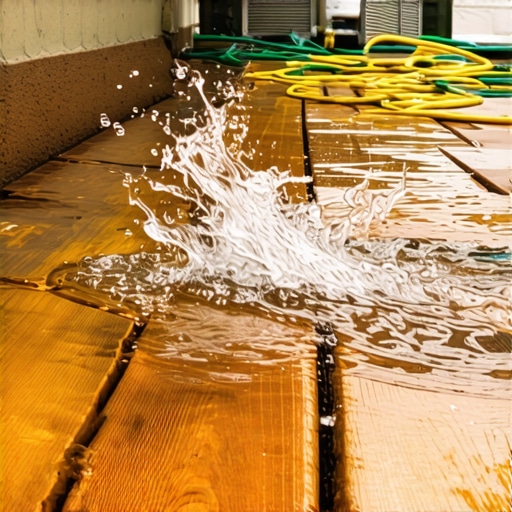
Watch Where the Puddles Form
As you spray, keep a close eye on the tops of the joists and the ledger board. If you see water clinging to the wood instead of rolling off, you’re looking at a future rot pocket. This moisture-trapping effect is the primary reason how to stop deck board cupping before the season ends starts with what’s happening underneath the boards, not just on top of them. Surface tension allows water to ‘wick’ into the tiny gaps between your decking and the joists. If that water stays there, it creates a humid micro-climate that eats wood for breakfast. When I’m building, I treat every horizontal surface like a potential gutter. If it doesn’t have a clear exit path, it’s a failure waiting to happen.
Shield Your Framing Before the Boards Go Down
Once you’ve identified where the water wants to sit, it’s time for preventative surgery. You cannot rely on pressure treatment alone to survive decades of wet-dry cycles. I always recommend using the joist tape secret for doubling your decks life. This butyl-based tape acts as a waterproof gasket. When you drive a screw through the decking and into the joist, the tape seals around the shank, preventing water from entering the heart of the wood. If you skip this, why your deck joists need tape to prevent rot becomes painfully obvious the moment you see mushrooms growing out of your frame five years down the road. It’s a small investment that pays off in decades of structural integrity.
Flash the Ledger Correctly to Save Your Siding
The most dangerous area of any deck is the connection point to the house. If water gets behind that ledger board, it’s not just your deck that’s at risk; it’s your kitchen floor and your foundation. the ledger flashing mistake that causes interior house mold is one of the most common calls I get for repairs. To fix this, you must ensure your Z-flashing is tucked behind the house siding and over the top of the ledger. I also suggest employing the drip edge trick for protecting deck ledger boards, which forces water to fall vertically away from the house rather than creeping backward into the framing. Whether you are building a simple platform or looking at the specific angle you need for drainage on a flat pergola roof, the physics of gravity remain your best friend or your worst enemy.
Most builders will tell you that a level deck is the gold standard of craftsmanship. They’ll pull out their four-foot bubble levels and obsess over every joist. In my experience, chasing a perfectly level surface is the quickest way to guarantee a short lifespan for your outdoor space. If a deck is truly, perfectly level, it doesn’t drain; it puddles. I’ve seen innovative deck design ideas that elevate your homes curb appeal turn into swampy nightmares because the builder forgot that gravity is the only contractor that never sleeps. You need a slight pitch—at least 1/8 inch per foot—to ensure that water moves away from the ledger and toward the perimeter. Without this, even the most expensive materials will eventually succumb to the standing water that professional levels are designed to hide.
Stop Chasing the Bubble and Start Thinking About Flow
The biggest nuance that beginners miss is the difference between ‘visually level’ and ‘functionally sloped.’ When you’re integrating composite decking secrets longevity tips for a lasting deck, you have to account for the fact that synthetic materials don’t ‘breathe’ like cedar. If water gets trapped in the tight gaps of a level composite surface, it stays there, creating a slime layer that degrades the fasteners and the joists below. I always tell my clients: if the water isn’t moving, the rot is starting. Have you ever fallen into this trap of building a perfectly flat deck only to find puddles the next morning? Let me know in the comments.
The Tension Trap That Ruins Railing Posts
Another advanced mistake occurs when homeowners upgrade to modern aesthetics. Everyone wants that sleek, invisible look, but how to select the perfect railing system for every deck involves more than just picking a style. The ‘Oops’ factor here is the extreme lateral load of cable systems. A single cable tensioned to look ‘sharp’ can exert 300 to 400 pounds of force. Multiply that by ten cables, and you are putting thousands of pounds of pressure on your end posts. I’ve visited dozens of job sites where the posts are bowing inward like a drawn bow because the builder didn’t use the hidden blocking move for supporting heavy pergola beams or reinforced corner posts. This is exactly why cable railing tensioners fail and how to prevent it; it isn’t the hardware that gives out, it’s the wood frame that collapses under the silent pressure.
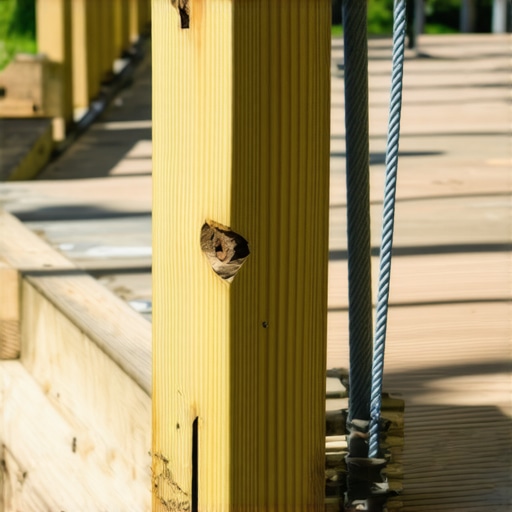
How Much Expansion Space Does Your Composite Actually Need?
Sophisticated builders know that composite decking behaves more like a liquid than a solid over a twenty-year span. While wood shrinks across its width, composite expands and contracts significantly along its length. If you butt those boards tight against the house or a rim joist in the middle of a cool autumn morning, they will buckle and ‘hump’ by the time July hits. This is specifically why dark composite boards need extra expansion space—they absorb more solar heat, reaching internal temperatures that can exceed 160 degrees Fahrenheit. The North American Decking and Railing Association (NADRA) highlights that nearly half of all existing decks require major repair or replacement due to overlooked structural nuances like lateral load stresses and thermal movement. If you aren’t leaving at least a 3/16-inch gap at the ends of long runs, you’re essentially building a ticking time bomb for your fasteners.
Why Bigger is Always Better for Your Pergola Support
When it comes to vertical structures, the common myth is that a 4×4 post is sufficient for a standard pergola. It might hold the weight, but it won’t hold the wind. A 4×4 post has a tendency to twist and warp as it seasons, which can throw your entire roofline out of alignment. That is why your pergola posts need to be 6×6 minimum for stability. The extra mass doesn’t just look better; it provides the surface area needed for heavy-duty notched connections that prevent the structure from racking during a storm. I’ve seen gorgeous pergola designs that turn your garden into a sanctuary literally lean over after a single season because the homeowner prioritized the cost of lumber over structural rigidity. Don’t be the builder who saves fifty dollars on posts only to spend five thousand on a total teardown three years later.
Most homeowners assume that once the last screw is driven, the work is over. But a deck is a living thing—even the plastic ones. I’ve found that the most important tool in my kit isn’t the heavy-duty impact driver; it’s a simple $20 moisture meter. If I’m inspecting a project three years later and that meter reads above 19% in the framing, I know we have a drainage failure, regardless of how ‘dry’ the surface looks. This is the only way to catch the early stages of why your deck joists are rotting underneath the tape before the damage becomes structural. For older structures, I always revert to the basics: the ice pick test for checking joist strength on older decks. If the wood yields like butter, the structure is compromised. According to the American Wood Protection Association (AWPA) U1 standard, even ‘Ground Contact’ rated lumber can fail prematurely if it is subjected to constant saturation without adequate airflow. This is why I am obsessed with the rubber spacer trick for better airflow under joists to ensure the wood can actually breathe.
How do I keep my outdoor space looking brand new for twenty years?
Maintenance isn’t about a massive, back-breaking weekend of scrubbing every spring; it’s about small, surgical strikes. For my composite clients, I always warn them: why you should never use bleach on composite decks is because the harsh chemicals can strip the UV inhibitors right out of the plastic. Instead, if you get a nasty scratch from moving a heavy grill, learn how to fix scuffs on dark composite boards with a heat gun. It feels like magic to watch the plastic ‘heal’ itself under the heat. If you have followed the complete guide to choosing railing systems for safety style, make it a habit to check your cable tension every winter. Temperature swings cause metal to contract, which is why 3 mistakes that make your cable railing sag every winter usually boil down to ignoring these seasonal shifts.
Precision Tools That Separate Pros from Amateurs
When you scale from a simple platform to a multi-level masterpiece, the stakes for your layout increase exponentially. I stopped using standard fiberglass tape measures for my final layouts years ago. Now, I rely on a 100-foot steel tape and a transit level because cloth tapes can stretch up to a half-inch in the summer heat. That tiny error over forty feet is what makes your stairs feel like a funhouse. If you are hunting for innovative deck design ideas that elevate your homes curb appeal, you need that surgical precision. I always employ the layout move that saves 15 percent on lumber waste to keep the project on budget without sacrificing strength. If you’re building a sanctuary, like these pergola designs that turn your garden into a sanctuary, the maintenance starts at the saw. Seal every single end-cut with a wax-based preservative to prevent moisture from wicking into the grain.
The Next Decade of Decking is Smarter Than You Think
The industry is rapidly moving toward what I call ‘Smart Decks.’ I predict that within the next five years, we will see integrated moisture sensors embedded into butyl joist tapes that alert your smartphone if the ledger flashing begins to leak. Until then, you are the primary sensor. I want you to try this tomorrow: walk to the far corner of your deck and perform the 3-second push test for wobbly railing systems. If there is more than an inch of play, it is time to look at the double nut secret for rock solid railing posts. Don’t wait for the wood to fail before you act; a few minutes of inspection today saves a total teardown tomorrow.
The Brutal Truth About Why My ‘Perfect’ Deck Failed
Looking back at my first few builds, I realize I was obsessed with the wrong measurements. I was so focused on making every board perfectly level that I ignored how water actually behaves. The biggest lightbulb moment came when I realized that innovative deck design ideas that elevate your homes curb appeal are worthless if they trap moisture against your house. You have to stop thinking of a deck as a static object and start seeing it as a dynamic system that handles heat, weight, and water every single day.
- The Bubble Level Trap: Don’t let a level surface trick you into creating a swamp. A slight downward pitch is your best friend for longevity.
- The Invisible Load: When you learn how to select the perfect railing system for every deck, remember that cable systems are basically giant rubber bands trying to crush your posts.
- The Composite Myth: Just because it is plastic-capped doesn’t mean it is invincible. Heat expansion will rip your fasteners out if you do not respect the necessary gaps.
My Survival Kit for Defeating Rot and Structural Sag
I do not step onto a job site without a few specific items that go beyond the standard hammer and saw. First, a high-quality moisture meter is non-negotiable. I use it to perform a the structural vulnerability assessment for checking deck joist rot on every remodel project. If that wood is holding water, we do not build on it. Second, always keep a roll of butyl joist tape handy; it is the cheapest insurance policy you will ever buy for a wood frame. Finally, I recommend following the safety standards set by the North American Decking and Railing Association (NADRA). They are the gold standard for keeping families safe on elevated platforms and offer incredible checklists for homeowners.
Build a Legacy Under Your Feet
Building a deck is more than just adding square footage; it is about creating a stage for your family memories. Whether you are browsing pergola designs that turn your garden into a sanctuary or choosing composite decking secrets longevity tips for a lasting deck, do it with the intention of it lasting thirty years, not five. Your home deserves a structure that stands up to the elements without a fight. If you are ever in doubt about a structural detail or drainage plan, do not guess—reach out to a pro or contact us for guidance. Your future self will thank you when you are sipping coffee on a dry, solid deck twenty years from now.
Have you ever noticed a puddle on your deck that just would not go away? Let me know in the comments how you handled the drainage!
Turn Your Garden Hose into a Diagnostic Tool
Grab your hose and turn it to a medium spray. You aren’t trying to blast the wood; you’re simulating a steady April downpour. Start at the house-side ledger and work your way out across the framing. If the water hangs back for more than thirty seconds near the house, your pitch is too flat. I remember a job back in 2018 where the homeowner insisted the deck was perfectly level. I ran the hose for ten minutes and showed him a two-inch deep lake forming against his back door. We had to rethink the entire joist layout on the fly because he’d forgotten that the the string line method for perfectly level deck surfaces is only half the battle; you actually need a slight downward slope away from the structure. Water management is the silent killer of outdoor spaces. Even if you maximize outdoor living with low maintenance composite decking, the structure underneath remains vulnerable to standing water.
Watch Where the Puddles Form
As you spray, keep a close eye on the tops of the joists and the ledger board. If you see water clinging to the wood instead of rolling off, you’re looking at a future rot pocket. This moisture-trapping effect is the primary reason how to stop deck board cupping before the season ends starts with what’s happening underneath the boards, not just on top of them. Surface tension allows water to ‘wick’ into the tiny gaps between your decking and the joists. If that water stays there, it creates a humid micro-climate that eats wood for breakfast. When I’m building, I treat every horizontal surface like a potential gutter. If it doesn’t have a clear exit path, it’s a failure waiting to happen.
Shield Your Framing Before the Boards Go Down
Once you’ve identified where the water wants to sit, it’s time for preventative surgery. You cannot rely on pressure treatment alone to survive decades of wet-dry cycles. I always recommend using the joist tape secret for doubling your decks life. This butyl-based tape acts as a waterproof gasket. When you drive a screw through the decking and into the joist, the tape seals around the shank, preventing water from entering the heart of the wood. If you skip this, why your deck joists need tape to prevent rot becomes painfully obvious the moment you see mushrooms growing out of your frame five years down the road. It’s a small investment that pays off in decades of structural integrity.
Flash the Ledger Correctly to Save Your Siding
The most dangerous area of any deck is the connection point to the house. If water gets behind that ledger board, it’s not just your deck that’s at risk; it’s your kitchen floor and your foundation. the ledger flashing mistake that causes interior house mold is one of the most common calls I get for repairs. To fix this, you must ensure your Z-flashing is tucked behind the house siding and over the top of the ledger. I also suggest employing the drip edge trick for protecting deck ledger boards, which forces water to fall vertically away from the house rather than creeping backward into the framing. Whether you are building a simple platform or looking at the specific angle you need for drainage on a flat pergola roof, the physics of gravity remain your best friend or your worst enemy.
Most builders will tell you that a level deck is the gold standard of craftsmanship. They’ll pull out their four-foot bubble levels and obsess over every joist. In my experience, chasing a perfectly level surface is the quickest way to guarantee a short lifespan for your outdoor space. If a deck is truly, perfectly level, it doesn’t drain; it puddles. I’ve seen innovative deck design ideas that elevate your homes curb appeal turn into swampy nightmares because the builder forgot that gravity is the only contractor that never sleeps. You need a slight pitch—at least 1/8 inch per foot—to ensure that water moves away from the ledger and toward the perimeter. Without this, even the most expensive materials will eventually succumb to the standing water that professional levels are designed to hide.
Stop Chasing the Bubble and Start Thinking About Flow
The biggest nuance that beginners miss is the difference between ‘visually level’ and ‘functionally sloped.’ When you’re integrating composite decking secrets longevity tips for a lasting deck, you have to account for the fact that synthetic materials don’t ‘breathe’ like cedar. If water gets trapped in the tight gaps of a level composite surface, it stays there, creating a slime layer that degrades the fasteners and the joists below. I always tell my clients: if the water isn’t moving, the rot is starting. Have you ever fallen into this trap of building a perfectly flat deck only to find puddles the next morning? Let me know in the comments.
The Tension Trap That Ruins Railing Posts
Another advanced mistake occurs when homeowners upgrade to modern aesthetics. Everyone wants that sleek, invisible look, but how to select the perfect railing system for every deck involves more than just picking a style. The ‘Oops’ factor here is the extreme lateral load of cable systems. A single cable tensioned to look ‘sharp’ can exert 300 to 400 pounds of force. Multiply that by ten cables, and you are putting thousands of pounds of pressure on your end posts. I’ve visited dozens of job sites where the posts are bowing inward like a drawn bow because the builder didn’t use the hidden blocking move for supporting heavy pergola beams or reinforced corner posts. This is exactly why cable railing tensioners fail and how to prevent it; it isn’t the hardware that gives out, it’s the wood frame that collapses under the silent pressure.
How Much Expansion Space Does Your Composite Actually Need?
Sophisticated builders know that composite decking behaves more like a liquid than a solid over a twenty-year span. While wood shrinks across its width, composite expands and contracts significantly along its length. If you butt those boards tight against the house or a rim joist in the middle of a cool autumn morning, they will buckle and ‘hump’ by the time July hits. This is specifically why dark composite boards need extra expansion space—they absorb more solar heat, reaching internal temperatures that can exceed 160 degrees Fahrenheit. The North American Decking and Railing Association (NADRA) highlights that nearly half of all existing decks require major repair or replacement due to overlooked structural nuances like lateral load stresses and thermal movement. If you aren’t leaving at least a 3/16-inch gap at the ends of long runs, you’re essentially building a ticking time bomb for your fasteners.
Why Bigger is Always Better for Your Pergola Support
When it comes to vertical structures, the common myth is that a 4×4 post is sufficient for a standard pergola. It might hold the weight, but it won’t hold the wind. A 4×4 post has a tendency to twist and warp as it seasons, which can throw your entire roofline out of alignment. That is why your pergola posts need to be 6×6 minimum for stability. The extra mass doesn’t just look better; it provides the surface area needed for heavy-duty notched connections that prevent the structure from racking during a storm. I’ve seen gorgeous pergola designs that turn your garden into a sanctuary literally lean over after a single season because the homeowner prioritized the cost of lumber over structural rigidity. Don’t be the builder who saves fifty dollars on posts only to spend five thousand on a total teardown three years later.
Most homeowners assume that once the last screw is driven, the work is over. But a deck is a living thing—even the plastic ones. I’ve found that the most important tool in my kit isn’t the heavy-duty impact driver; it’s a simple $20 moisture meter. If I’m inspecting a project three years later and that meter reads above 19% in the framing, I know we have a drainage failure, regardless of how ‘dry’ the surface looks. This is the only way to catch the early stages of why your deck joists are rotting underneath the tape before the damage becomes structural. For older structures, I always revert to the basics: the ice pick test for checking joist strength on older decks. If the wood yields like butter, the structure is compromised. According to the American Wood Protection Association (AWPA) U1 standard, even ‘Ground Contact’ rated lumber can fail prematurely if it is subjected to constant saturation without adequate airflow. This is why I am obsessed with the rubber spacer trick for better airflow under joists to ensure the wood can actually breathe.
How do I keep my outdoor space looking brand new for twenty years?
Maintenance isn’t about a massive, back-breaking weekend of scrubbing every spring; it’s about small, surgical strikes. For my composite clients, I always warn them: why you should never use bleach on composite decks is because the harsh chemicals can strip the UV inhibitors right out of the plastic. Instead, if you get a nasty scratch from moving a heavy grill, learn how to fix scuffs on dark composite boards with a heat gun. It feels like magic to watch the plastic ‘heal’ itself under the heat. If you have followed the complete guide to choosing railing systems for safety style, make it a habit to check your cable tension every winter. Temperature swings cause metal to contract, which is why 3 mistakes that make your cable railing sag every winter usually boil down to ignoring these seasonal shifts.
Precision Tools That Separate Pros from Amateurs
When you scale from a simple platform to a multi-level masterpiece, the stakes for your layout increase exponentially. I stopped using standard fiberglass tape measures for my final layouts years ago. Now, I rely on a 100-foot steel tape and a transit level because cloth tapes can stretch up to a half-inch in the summer heat. That tiny error over forty feet is what makes your stairs feel like a funhouse. If you are hunting for innovative deck design ideas that elevate your homes curb appeal, you need that surgical precision. I always employ the layout move that saves 15 percent on lumber waste to keep the project on budget without sacrificing strength. If you’re building a sanctuary, like these pergola designs that turn your garden into a sanctuary, the maintenance starts at the saw. Seal every single end-cut with a wax-based preservative to prevent moisture from wicking into the grain.
The Next Decade of Decking is Smarter Than You Think
The industry is rapidly moving toward what I call ‘Smart Decks.’ I predict that within the next five years, we will see integrated moisture sensors embedded into butyl joist tapes that alert your smartphone if the ledger flashing begins to leak. Until then, you are the primary sensor. I want you to try this tomorrow: walk to the far corner of your deck and perform the 3-second push test for wobbly railing systems. If there is more than an inch of play, it is time to look at the double nut secret for rock solid railing posts. Don’t wait for the wood to fail before you act; a few minutes of inspection today saves a total teardown tomorrow.
The Brutal Truth About Why My ‘Perfect’ Deck Failed
Looking back at my first few builds, I realize I was obsessed with the wrong measurements. I was so focused on making every board perfectly level that I ignored how water actually behaves. The biggest lightbulb moment came when I realized that innovative deck design ideas that elevate your homes curb appeal are worthless if they trap moisture against your house. You have to stop thinking of a deck as a static object and start seeing it as a dynamic system that handles heat, weight, and water every single day.
- The Bubble Level Trap: Don’t let a level surface trick you into creating a swamp. A slight downward pitch is your best friend for longevity.
- The Invisible Load: When you learn how to select the perfect railing system for every deck, remember that cable systems are basically giant rubber bands trying to crush your posts.
- The Composite Myth: Just because it is plastic-capped doesn’t mean it is invincible. Heat expansion will rip your fasteners out if you do not respect the necessary gaps.
My Survival Kit for Defeating Rot and Structural Sag
I do not step onto a job site without a few specific items that go beyond the standard hammer and saw. First, a high-quality moisture meter is non-negotiable. I use it to perform a the structural vulnerability assessment for checking deck joist rot on every remodel project. If that wood is holding water, we do not build on it. Second, always keep a roll of butyl joist tape handy; it is the cheapest insurance policy you will ever buy for a wood frame. Finally, I recommend following the safety standards set by the North American Decking and Railing Association (NADRA). They are the gold standard for keeping families safe on elevated platforms and offer incredible checklists for homeowners.
Build a Legacy Under Your Feet
Building a deck is more than just adding square footage; it is about creating a stage for your family memories. Whether you are browsing pergola designs that turn your garden into a sanctuary or choosing composite decking secrets longevity tips for a lasting deck, do it with the intention of it lasting thirty years, not five. Your home deserves a structure that stands up to the elements without a fight. If you are ever in doubt about a structural detail or drainage plan, do not guess—reach out to a pro or contact us for guidance. Your future self will thank you when you are sipping coffee on a dry, solid deck twenty years from now.
Have you ever noticed a puddle on your deck that just would not go away? Let me know in the comments how you handled the drainage!