
I’ll never forget the frustration I felt during a lazy Saturday afternoon, staring at my rundown deck railing, wishing for a sense of privacy without tearing out everything and starting from scratch. The old wood was warped, gaps were wide, and suddenly, I realized I was stuck with a system that no longer suited my needs—or style. That was my lightbulb moment: why not find ways to upgrade what I already had?
Transform Your Railing Without a Full Replacement
If you’re like me, you’ve probably faced the dilemma of enhancing your outdoor space without the daunting task of total reconstruction. Maybe your existing railing is structurally sound but lacks the privacy you crave or the modern aesthetic that matches your garden’s vibe. Imagine achieving both in a weekend—and all without draining your wallet. Today, I’ll show you three effective, DIY-friendly methods to retrofit privacy slats into your existing railing, turning it into a stylish oasis in no time.
Is Adding Privacy Slats Really Worth the Effort?
Early on, I mistakenly believed that this kind of upgrade would be complicated and time-consuming. I knew from experience that rushing into fixes, especially without proper planning, could end up worse than before—wobbly slats, uneven spacing, or compromised safety. It’s essential to approach this project with the right balance of patience and knowledge. Using premium materials and proper fasteners makes all the difference, as I learned the hard way when a quick fix resulted in wobbly slats within a month. Thankfully, I discovered that with a bit of DIY ingenuity, you can achieve a professional look—just like the custom railing systems I recommend exploring on Transform Your Outdoor Space. Want to ensure your project lasts? A little research before starting can save you headaches later.
Measure and Plan Your Privacy Slats
Start by assessing your current railing. Use a tape measure to determine the length between posts and the width of your slats. For my deck, I measured 6 feet across and found that my existing gaps were 4 inches wide, which wasn’t enough for privacy. Sketch your plan, deciding whether you’ll use wood, composite, or metal slats. I opted for cedar because it’s easy to cut and has a natural look that blends with my garden.
Choose the Right Materials for Longevity
Select materials resistant to weathering, especially if your climate has high humidity or snow. For my project, I picked pre-primed cedar slats, which I sealed with exterior-grade varnish. If you’re considering composite or PVC slats, check their compatibility with your railing system—some systems require specific fasteners or spacers, which you can find on Transform Your Outdoor Space.”>
Prepare Your Existing Railing
Ensure your railing is sturdy before adding slats. Use a level to check for wobbling. If you spot loose posts or wobbly balusters, fix them with the appropriate bracket repair methods. I tightened loose bolts and added extra blocking under the railing base to prevent shifting, which is crucial for a secure install.
Attach the Privacy Slats Securely
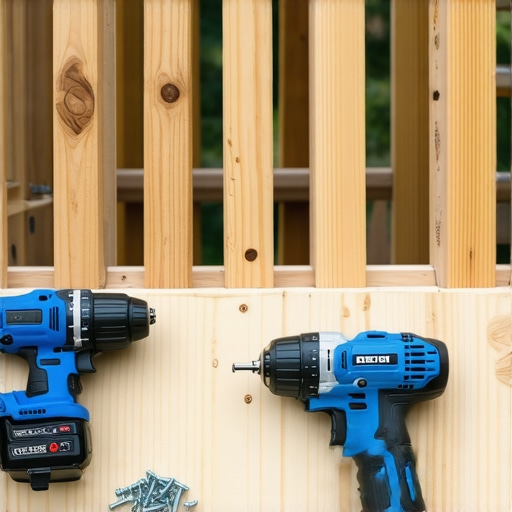
Position the slats evenly between the posts, maintaining a consistent gap for aesthetic appeal. Use spacers—either purchased or homemade—to keep the slats aligned. Drill pilot holes through the top and bottom of each slat into the railing frame, avoiding splitting the wood. Secure them with weather-resistant screws, preferably stainless steel to prevent rust. In my case, I used a cordless drill and a level to ensure perfect verticality. Applying a bead of exterior caulk at the ends can seal gaps and prevent water intrusion.
Handle Complex Angles and Curves
If your deck features curves or angles, cut the slats with a circular saw guided by a template for precision. For my semi-circular section, I traced the curve onto the cedar boards, then carefully cut along the line. Use a jigsaw for intricate curves—this technique ensures the slats fit tight against the railing, enhancing privacy and appearance.
Finish and Maintain Your Made-Over Railing
Apply a weatherproof finish to the new slats, sealing out moisture. Regular maintenance, like annual sealing or painting, prolongs their lifespan. During my project, I noticed that cedar aged beautifully with a natural gray patina, so I decided to wait before sealing. Keep an eye on screws to prevent loosening over time—re-tighten as needed, especially after harsh weather.
 When it comes to designing an outdoor space, many homeowners fall prey to myths that can undermine their project’s success. A frequent mistake is assuming that higher-priced materials always guarantee better durability. While premium composites like those discussed in composite decking trends offer excellent longevity, understanding the nuances—such as proper installation and climate suitability—is crucial for true durability. Skimping on foundation preparation or ignoring local weather patterns can cause even the fanciest decking to warp or degrade prematurely. Another misconception surrounds railing systems; many believe that standard bolt spacing suffices for all configurations. In reality, complex or high-traffic areas require custom solutions—like custom railing systems—to ensure safety and aesthetic coherence. Additionally, homeowners often overlook the impact of pergolas on their backyard ambiance. A common trap is choosing lightweight materials that succumb to wind or weight stress. For a durable, stylish pergola, exploring designs that elevate your garden can lead to long-lasting enjoyment.
A key advanced insight is that many DIYers underestimate the importance of proper expansion gaps. Without these, temperature fluctuations can cause boards to buckle or crack, especially on climates with significant seasonal shifts. Experts stress that understanding the micro-movement of materials prevents costly repairs. Don’t forget that using hidden fasteners might seem like a clean solution but can fail under heavy use if not installed with proper spacing and quality hardware. Mastering these subtleties transforms a good deck into a masterpiece that lasts decades.
Have you ever fallen into this trap? Let me know in the comments. Remember, successful backyard upgrades depend on understanding the hidden nuances rather than just following surface-level advice. Whether you’re planning a new deck or retrofitting your railing, paying attention to these details ensures your outdoor oasis is both beautiful and resilient.
Keep Your Deck in Prime Condition with the Right Tools
When maintaining or scaling your deck, having the right equipment makes all the difference. I personally swear by a high-quality cordless drill, like the Makita XFD11, which offers impressive power and battery life, essential for drilling pilot holes into composite or wood decking without frustration. For cutting, I prefer a fine-toothed circular saw with a adjustable angle and depth setting; it provides precise cuts, especially when working on curves or custom angles, saving time and ensuring a clean finish.
To ensure your old fasteners don’t cause issues, a magnetic screw starter is invaluable—it speeds up securing screws and reduces hand fatigue. For cleaning, I recommend a soft-bristled brush and a garden hose with gentle pressure. Never power wash a new deck; instead, opt for a manual cleaning method, as described in this guide. Proper cleaning prevents dirt buildup and mold, prolonging your deck’s lifespan.
Tools That Make Long-Term Maintenance Easier
Monitoring your deck’s health over time is crucial. A digital moisture meter helps me quickly detect areas where water might be trapping or causing rot—especially important for composite decking, which can hide fading or deterioration beneath its surface. I also keep a torque wrench for tightening railings and post bolts, maintaining structural integrity and safety.
Applying a quality, weather-resistant sealant or stain periodically is key. I recommend an airless paint sprayer for even application, which reduces time and avoids uneven patches. Regular inspection tools, like a small mirror and flashlight, help me catch hidden issues behind railings or beneath decking boards before they turn into costly repairs. For example, a quick check using these tools can reveal expansion gaps starting to close, which could lead to buckling if ignored.
Where the Future of Deck Maintenance Is Heading
Advancements in sensor technology may soon offer smart decks that alert you to potential issues via your smartphone—think moisture sensors integrated into the framing or composite materials with embedded health-monitoring capabilities. Staying ahead involves adopting these innovations early, ensuring your outdoor space remains safe and stunning for years to come.
How do I maintain my deck over time?
Consistent inspection, cleaning, and timely treatment are vital. Using the right tools, like a moisture meter or torque wrench, allows for precise diagnostics. Remember, tackling small issues before they escalate preserves your investment and enhances safety.
Experiment with applying one advanced maintenance trick—such as sealing expansion gaps with flexible caulk—to prevent buckling during temperature swings. This simple step, informed by expert advice, can save you from costly repairs later. So grab your tools, schedule regular upkeep, and watch your outdoor retreat stand the test of time—beautiful, safe, and long-lasting.
Lessons from My Deck Dilemmas That Changed Everything
- I used to believe that selecting the most expensive materials guaranteed durability, but I learned that proper installation and climate compatibility are equally critical—saving me time and money in the long run.
- Thinking that standard fasteners were sufficient led me to avoid hidden fasteners, which resulted in creaking boards and uneven surfaces. Now I understand that quality hardware and correct spacing are game-changers for longevity.
- Overlooking expansion gaps caused my deck to buckle during seasonal shifts. Experiencing this firsthand taught me the importance of micro-movement considerations in every project.
My Top Resources for Building a Lasting Outdoor Space
- Deck forger’s Guide to Composite Decking Trends: This resource keeps me updated on durable, weather-resistant materials that stand the test of time, ensuring my investment pays off.
- Transform Your Outdoor Space by Exploring Custom Railing Systems: I trust this because it offers practical solutions that balance safety and aesthetic appeal, helping me retrofit privacy slats effectively.
- Innovative Deck Design Ideas to Elevate Curb Appeal: Inspires creative concepts and modern styles that make my outdoor area genuinely unique and inviting.
Take Your Deck to the Next Level Today
Building or upgrading your outdoor space is more than just a project—it’s an investment in your happiness and relaxation. With the right knowledge and tools, you can create a safe, beautiful retreat that endures through seasons. Don’t wait to turn your vision into reality—start today, and enjoy the transformation.
What has been your biggest challenge when working on deck upgrades? Share your story below—I’d love to hear your experiences and tips!