
I was sitting out there last July, cold drink in hand, finally ready to enjoy the evening peace, when my neighbor’s golden retriever trotted across my deck boards. The sound that followed wasn’t a soft patter; it was a piercing, rhythmic screech that sounded like a rusty gate in a low-budget horror movie. Every single step triggered a groan from the wood. It is incredibly frustrating to invest time into a beautiful deck design only to have it sound like it’s a century old. If your outdoor space has started talking back to you every time you take a step, you aren’t alone, but you also don’t have to live with the noise. I’ve spent years troubleshooting these phantom noises, and I can tell you that a squeaky deck is usually a sign of a mechanical failure between the board and the joist, not a ghost. Today, I’m going to show you exactly how to find the culprit and silence the symphony for good.
Stop the Haunting Before You Lose Your Mind
My biggest mistake early on was thinking I could just hammer down every nail I saw. I spent an entire Saturday afternoon swinging a framing hammer, thinking more force equaled more silence. I was wrong. All I did was create a deck full of “shiners”—nails that missed the joist entirely—and within a month, the squeaks were back and louder than ever. Wood is a living material; it breathes, expands, and shrinks. According to the Forest Products Laboratory, wood can change dimensions significantly based on moisture content, which often causes fasteners to lose their grip over time. This friction between the board and the fastener is the root of that nails-on-a-chalkboard sound. If you are working with newer materials, you might even need a specific DIY solution for squeaky composite boards because they behave differently than traditional pressure-treated lumber.
Is this actually a structural problem?
It’s the question everyone asks me: Is my deck about to collapse? Usually, no. A squeak is rarely a sign of imminent structural failure, but it is a sign of wear. If you find that your boards aren’t just squeaking but are actually moving underfoot, you might be dealing with more than just a loose nail. Sometimes, the issue lies in the frame itself, and you may need to learn how to fix the bounce in over-spanned joists to truly solve the noise. If the noise is more of a vibration, you should look into how to stop your deck from rattling before you start pulling up boards. Have you ever felt like your deck was complaining about every step you took? Tell me about your most annoying deck noise in the comments below. We’re going to dive into the specific tools and techniques that actually work, moving beyond the hammer and into the world of specialized fasteners and joist tape.
Find the Ghost in the Boards
Before you touch a single tool, you need to map out the noise with surgical precision. Grab a piece of chalk and a volunteer to act as your ‘spotter.’ When I was fixing my sister’s wrap-around deck last summer, I had her walk ‘zombie style’—slow, heavy steps—across every square foot while I crawled underneath with a high-lumen headlamp. I marked every spot where the wood groaned with a big ‘X.’ Often, the sound isn’t just a loose board; it’s the friction of two pieces of wood rubbing together like a violin bow on a string. If you notice the noise is concentrated near the house wall, it is worth inspecting the ledger connection, as the ledger gap fix that prevents house siding rot often addresses the structural shifting that causes those early-morning squeaks. Use your ears to distinguish between a sharp ‘crack’ (usually a fastener) and a low ‘moan’ (usually a joist rubbing a beam).
Ditch the Hammer and Use Structural Screws
The ‘shiners’ I mentioned earlier happen because hammers are imprecise and blunt. To truly silence the deck, you must replace the old, smooth-shank nails with high-quality, coated structural screws. Think of a nail like a temporary handshake; a screw is a permanent embrace. For the best results, I always use the jig I use for consistent deck screw depth to ensure every fastener is driven perfectly flush. If the screw is too shallow, it becomes a trip hazard; if it is too deep, it creates a pocket for water to pool, which eventually rots the core of your board. Like a poorly tensioned cable railing system, a deck board without the right fastener tension will vibrate and hum under the slightest pressure.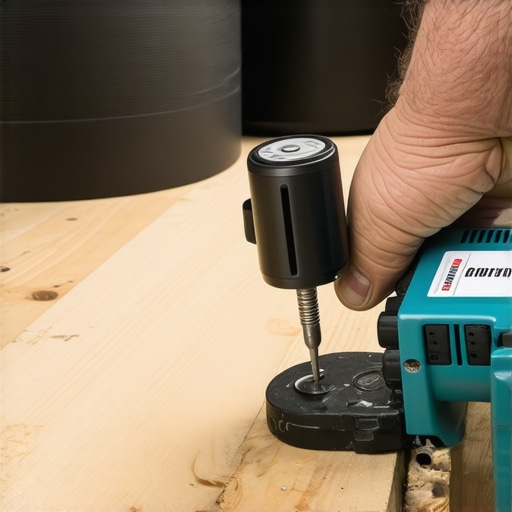
Stop Friction at the Source
Sometimes the board itself is perfectly secure, but the joist underneath has slightly crowned or twisted over the years. This creates a tiny air gap between the timber and the decking. When you step on the board, it deflects downward just a fraction of an inch, rubbing against the side of a rusted nail or the joist itself. This is where joist tape becomes your best friend. Applying a butyl-based tape acts as a gasket, cushioning the connection and preventing that wood-on-wood friction. I have seen this simple addition double the life of a frame, and understanding why your deck joists need tape to prevent rot is a lesson most homeowners learn only after the screeching becomes unbearable. It is the same principle used when builders add rubber spacers to a pergola design to prevent beams from rattling in the wind.
Handle Composite and Wood Differently
If you have upgraded to a modern, low-maintenance surface, remember that composite expands and contracts along its length much more than natural lumber does. This thermal movement can actually shear off cheap fasteners or cause hidden clips to ‘pop’ out of their grooves. I once worked on a project where the homeowner used standard wood screws on high-end capped boards, and by mid-July, the deck sounded like a bowl of Rice Krispies every time the sun hit it. You need a specific DIY solution for squeaky composite boards that accounts for this movement. Because why pressure-treated wood still warps under composite decking is a common reality, your fasteners must be strong enough to resist the underlying frame’s desire to twist while allowing the surface boards to slide slightly as they heat up. These composite decking secrets for longevity often boil down to managing that hidden friction between the two different materials.Most homeowners believe that hidden fasteners are the gold standard for a premium finish, but I am going to challenge that common belief right now. While they look sleek, hidden clips often create a ‘floating’ effect that allows for more lateral movement than traditional face-screwing. In my experience, this is the number one reason why high-end installs start groaning within two seasons. If your deck sees a lot of foot traffic or is located in a region with extreme temperature swings, you will likely find that why hidden fasteners fail on high traffic areas is due to the mechanical strain on the clip’s single screw point. When those clips lose their bite, the board begins to ‘hunt’ for a stable position, resulting in that annoying rhythmic clicking every time you walk. If you are noticing a slight dip in the surface, it might even be because why your composite boards feel spongy under heavy furniture, which is a symptom of inadequate joist spacing rather than a fastener issue.
Why Tightening Your Railing Might Actually Be Making It Sag
The most common ‘oops’ factor I see with DIYers involves cable railing systems. When the lines start to sag after a cold winter, the gut instinct is to grab a wrench and crank the tensioners as tight as they will go. This is a massive mistake. Over-tensioning doesn’t just stress the cable; it actually pulls your end posts inward, creating a permanent bow in the wood that ruins your perimeter’s structural integrity. You need to understand the 3 mistakes that make your cable railing sag every winter before you inadvertently compromise your safety. A study by the North American Deck and Railing Association (NADRA) highlights that nearly half of all deck failures are related to railing and connection points, often due to improper tension or fastener fatigue. To prevent this, I always use the double nut secret for rock-solid railing posts, which ensures the hardware cannot vibrate loose even under heavy use.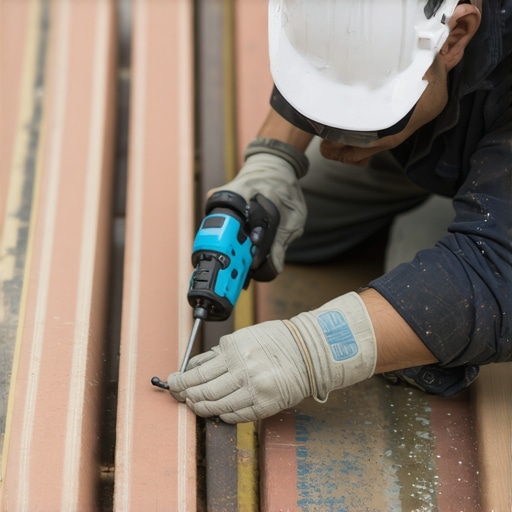
Detect the Difference Between Surface Noise and Frame Failure
It is easy to get hyper-focused on the squeak, but you must look at the bigger picture. If your deck feels loose, perform the 3-second push test for wobbly railing systems. If there is more than an inch of play, your fasteners aren’t just squeaking—they are failing. This often happens because the underlying frame is working against your surface material. For instance, why pressure-treated wood still warps under composite decking is a reality that most builders ignore. The frame wants to twist while the composite stays flat, and that tug-of-war is what creates the friction noise. Have you ever fallen into the ‘more is better’ trap with your fasteners and ended up with more noise than you started with? Let me know in the comments below. We need to move beyond the quick fix and start looking at how these materials interact over decades, not just weeks. By using specialized gaskets and high-torque screws, you can finally turn your deck back into the quiet sanctuary it was designed to be.
The Precision Tools That Separate Pros from Amateurs
I have learned the hard way that a standard drill/driver just isn’t enough for high-end deck work. When I am hunting down squeaks or securing a heavy-duty pergola design, I exclusively use a high-torque brushless impact driver. The rapid-fire concussive force seats the screw without the cam-out that ruins the head and your weekend. To ensure I am not just guessing, I always employ the jig I use for consistent deck screw depth. This tool is essential because it stops the drive at the exact millimetre required to let the wood breathe without becoming loose. If you are dealing with a frame that has seen better days, I recommend using the string line trick for leveling deck joists before you even think about laying your final boards. A level frame is a quiet frame, and skipping this step is how you end up with those annoying gaps that grow every winter.
How do I keep my deck silent and safe for the next decade?
Consistency in maintenance is the only way to avoid a full-scale teardown. Every spring, I perform a ‘Deck Audit’ that starts with the ice pick test for checking joist strength on any exposed timber. It might feel like overkill, but the American Wood Council’s DCA 6 (Design for Code Acceptance) technical documentation emphasizes that lateral load connections are the most vulnerable to moisture-driven fastener fatigue. By catching soft spots in the joist early, you can apply the joist tape secret for doubling your deck’s life to the affected area. If you find your boards are already starting to cup, don’t panic; you can often reverse the damage if you know how to stop deck board cupping by adjusting the fastener tension and improving airflow underneath with the rubber spacer trick for better airflow.
Smart Tech and the Future of Outdoor Construction
Looking ahead, the industry is moving toward ‘intelligent’ outdoor spaces. I predict that within the next decade, we will see composite materials with embedded moisture sensors and fasteners that utilize memory-metal alloys to self-tighten as the wood frame shrinks. Until that tech hits the local lumber yard, your best bet for a future-proof build is to focus on moisture management. For those building shade structures, always use the 10-degree miter cut that stops pergola water traps, which prevents the internal rot that eventually causes the structure to moan and shift in the wind. I want you to try one thing this weekend: get under your deck and look at the joist ends. If they are exposed to the elements, implement the PVC trim move for protecting exposed deck joist ends. It’s a 20-minute fix that can save you thousands in structural repairs down the road. Keep your tools sharp and your fasteners tighter, and your deck will finally stop talking back to you.”,”image”:{“imagePrompt”:”A close-up, high-angle shot of a professional carpenter’s hand using a brushless impact driver to drive a structural screw into a dark grey composite deck board. A specialized depth-setting jig is attached to the driver, ensuring the screw head is perfectly flush with the surface.”,”imageTitle”:”Professional Tooling for Deck Fastening”,”imageAlt”:”A professional impact driver with a depth jig being used on composite decking to prevent squeaks.”},”categoryId”:0,”postTime”:””}
The Hardest Lessons I Learned on the Joist Line
The biggest lightbulb moment in my career was realizing that “tightness” isn’t always synonymous with “silence.” I used to believe that if a board squeaked, I just needed to drive more screws into it until the wood surrendered. In reality, over-fastening can actually restrict the natural thermal expansion required for composite decking secrets for longevity, causing the boards to “pop” against the fastener heads like a drum. Another myth is that the surface is always the culprit; often, the groan is coming from the frame itself where a beam might be slightly over-spanned. Lastly, never underestimate the power of moisture. If you haven’t mastered the joist tape secret for doubling your deck’s life, you’re leaving the door open for wood-on-wood friction that no screw can fix once the rot sets in.
The Small Tools That Make a Massive Difference
I don’t just guess when it comes to structural integrity. While I keep the American Wood Council’s design guides handy for code-compliant spacing, my day-to-day work relies on tactile precision. I never start a repair without the jig I use for consistent deck screw depth to ensure a perfectly level surface that won’t catch a toe or a rain puddle. For those dealing with wobbles rather than squeaks, I swear by the double nut secret for rock-solid railing posts, which prevents the hardware from vibrating loose during high winds or heavy gatherings. These tools turn a frustrating DIY project into a professional-grade renovation that actually stays quiet.
Take Back Your Quiet Summer Evenings
Your outdoor space should be a place of relaxation, not a source of mechanical frustration every time the dog walks across the boards. By taking the time to address the friction between your boards and your frame, you aren’t just fixing a noise—you’re extending the life of your entire deck design for decades to come. Reclaiming your evening peace is worth the extra effort of crawling into the crawlspace or swapping out those old nails. Don’t let a few groaning boards keep you from enjoying your sanctuary. Does your deck squeak more in the morning chill or the heat of the afternoon? Let me know in the comments below, and let’s figure out which part of your frame is acting up!