
I remember the first time I installed what I thought was the ‘perfect’ composite deck for a neighbor. It looked stunning in the sun—deep, rich tones and a grain that looked like it came straight from an old-growth forest. Then the first spring rain hit. I stepped out to say hello, and within seconds, I was flat on my back, staring at the clouds and wondering where I went wrong. I had prioritized the look in the showroom over the reality of a wet Tuesday. That was my ‘aha’ moment: those tiny samples you get at the hardware store are lying to you. Even the most expensive boards can be treacherous if the embossing isn’t right. [IMAGE_PLACEHOLDER]
Stop Relying on Small Samples and Start Testing Real Life
When you are trying to maximize outdoor living with low-maintenance composite decking, the ‘low maintenance’ part won’t matter much if you’re afraid to walk on it. My big mistake early on was thinking that ‘slip-resistant’ on a label meant the same thing for every brand. It doesn’t. You need to see how the board reacts when it’s actually messy. That’s why I started using the Wet-Sand Test. It is a simple, slightly messy way to see how a board handles the two biggest complaints: slipperiness and trapped dirt. If you choose a board that’s too smooth, you’re looking at one of the 7 reasons your composite decking looks like plastic and performs like ice. According to the National Floor Safety Institute, falls account for over 8 million hospital emergency room visits annually, making traction a non-negotiable feature for any outdoor surface. Have you ever felt like you were walking on a skating rink after a light drizzle on your deck? If so, you know exactly why the texture is more important than the color.
Does a Realistic Texture Make the Deck Impossible to Wash?
The biggest pushback I get from homeowners is the fear of maintenance. They worry that a deep, realistic grain will just become a magnet for pollen and grime. It is a valid fear. I have seen decks where the owner chose a beautiful, rugged texture only to find that it required a pressure washer just to get the morning dew off. However, you can find a middle ground by looking for 5 colors of composite that hide dirt the best and pairing them with a medium-embossed grain. The goal is to find a board that has enough ‘tooth’ to catch your shoe but enough ‘flow’ to let the garden hose do the work. Today, I am going to show you exactly how to run the Wet-Sand Test so you do not end up with a beautiful, expensive, and dangerously slick backyard. We will dive into the specific grit levels and why my ‘pour and scrub’ method is the only way to be 100% sure before you sign that five-figure contract.
Grab a Handful of Sand and Let’s Get Messy
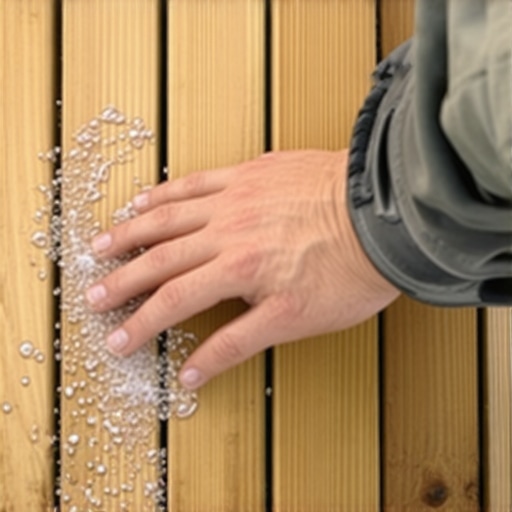
To run the Wet-Sand Test correctly, you need to treat the sample board like it’s already part of your backyard, not a museum piece. I always tell my clients to imagine their deck is a giant kitchen floor that never gets swept. Get a cup of fine play sand and a gallon of water. Lay the board flat on a hard surface—not grass, because you need the resistance. Pour the sand on and use your hand or a spare piece of lumber to grind that grit into every single crevice of the grain.
This is where you see the truth. Some boards have such deep grain patterns that they act like tiny canyons, swallowing the sand whole. If the sand disappears, so will the pollen, dog hair, and dirt. On the flip side, if the board is too flat, the sand just rolls off, which usually means your feet will too the second it gets wet. While you’re at it, check the density; understanding why solid core composite is worth the extra bulk helps you realize that a sturdier board won’t just hold up better structurally, but it often holds these textures more consistently across the entire run.
The Slide Test That Saves Your Tailbone
Once the sand is ground in, pour your water over the board until it’s soaking wet. Now, take a shoe with a standard rubber sole and try to push it across the surface with about 20 pounds of downward pressure. You want to feel a distinct ‘bite.’ If the shoe glides across like it’s on a shuffleboard court, reject that brand immediately. I remember a project in a high-humidity area where we skipped this and went with a ‘high-gloss’ finish the owner loved. We ended up having to install specialized grip strips three months later because their golden retriever couldn’t make it to the stairs without sliding. It looked like a DIY disaster. To avoid that, you need to prioritize these composite decking secrets and longevity tips that actually focus on the daily usability of the space.
Can You Actually Wash This Texture Without a Scrub Brush?
The final phase is the ‘Hose-Only’ cleanup. Without using your hands, try to spray that sand out of the grain using a standard garden hose nozzle. If the sand stays trapped in the deep grooves despite the water pressure, you’ve found a maintenance nightmare. You don’t want a deck that requires a toothpick to clean. This test also reveals how the material handles abrasions. If the sand leaves permanent white scratches, you’ll need to know how to fix scuffs on dark composite boards with a heat gun, which isn’t something you want to be doing every Saturday morning.
During a particularly messy build last summer, we accidentally knocked over a bucket of stone dust on a freshly laid floor. Because we had selected a board with a ‘flowing’ grain pattern—one where the grooves aren’t closed off at the ends—a quick blast with the hose cleared it in seconds. This same logic applies to spills; knowing how to clean red wine stains off composite decking fast is much easier when the texture doesn’t provide a million little pockets for the liquid to hide in. If you are following composite decking trends and durable solutions, you’ll see the industry moving toward these ‘micro-textured’ surfaces that balance grip with easy drainage.
Consistency is key during the actual build, too. Just like you test your boards for grit, you should be using the jig I use for consistent deck screw depth to ensure that even the fasteners don’t create little wells where water and dirt can collect. Every detail, from the grain of the board to the depth of the screw, dictates whether you’ll be relaxing on your deck or power-washing it until your back hurts.
Most homeowners—and quite a few contractors I have mentored—obsess over the ‘skin’ of the deck while completely ignoring the ‘skeleton.’ You can buy the most expensive, slip-resistant boards on the market, but if you do not understand why your pressure-treated frame is pulling your composite apart, you are just building an expensive countdown timer. A common belief is that if you use high-end composite, the deck will last 30 years regardless of what is underneath. In reality, the ‘oops’ factor here is ignoring the physics of movement. Wood and composite expand at different rates; while wood swells with moisture, composite reacts to temperature. This mismatch creates massive stress on fasteners. I always advocate for the joist tape secret for doubling your deck’s life because it prevents the rot that typically starts where the screws penetrate the wood, especially when you realize why dark composite boards need extra expansion space during the dog days of summer.
The 4-Inch Post Myth for Pergolas and Decks
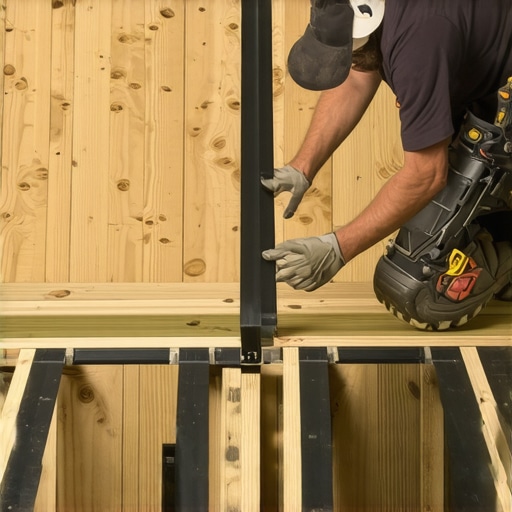
Everyone says that a 4×4 post is strong enough for a standard pergola, but in my experience, that is the quickest way to end up with a structure that sways in a light breeze. I have seen too many DIY projects fail the ‘lean test’ because they skimped on the uprights. That is why your pergola posts need to be 6×6 minimum for stability. It isn’t just about weight; it is about the torque and leverage that wind applies to the upper canopy. According to the North American Deck and Railing Association (NADRA), structural failures often stem from inadequate lateral bracing and undersized support members. If you are looking to maximize outdoor living with low-maintenance composite decking, you cannot ignore the foundation. Have you ever fallen into the ‘cheap frame’ trap only to have your boards warp? Let me know in the comments.
Will Your Railing Tension Survive the Next Big Storm?
When we talk about advanced mistakes, railing systems are the most common culprit. People assume that once a cable railing is tight, it stays tight. However, the sheer force applied to the end posts is immense. Understanding why cable railing tensioners fail and how to prevent it is what separates a professional build from a weekend project. If you do not reinforce those end posts with extra blocking, the wood will eventually bow, the cables will sag, and your safety barrier becomes a liability. I always recommend the 3-second push test for wobbly railing systems before you sign off on any project. By following these composite decking secrets and longevity tips, you ensure that the sophisticated look of your backyard matches its actual durability. Don’t let a beautiful design hide a structural ‘oops’ that could have been avoided with a bit of extra blocking and the right post size.
Even the best-laid plans fail if your tools can’t handle the physics of wood and composite. One of the most common frustrations I see with DIY builds is trying to force a bowed pressure-treated board into place with nothing but a hammer and a prayer. It is an exercise in futility. Instead, I rely on a heavy-duty deck board straightener. You need to use the clamp and lever move for straightening bowed 2x10s to ensure your frame is perfectly square before the first deck board even touches the joists. Without this mechanical advantage, you’re essentially fighting the natural memory of the timber, and the timber will eventually win, causing your composite boards to pull and gap over time. 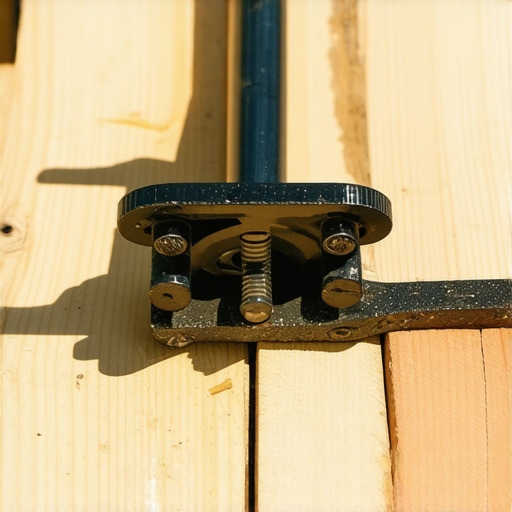
Your Hands Aren’t Strong Enough for Warped Joists
When you are ready to maximize outdoor living with low-maintenance composite decking, the quality of your installation tools is just as important as the boards themselves. For example, I have seen so many installers use standard drill bits that tear through the protective cap of a board, leaving a jagged edge that catches dirt. I strictly use high-speed steel countersink bits designed specifically for composites. It’s a small detail, but it prevents the material from ‘mushrooming’ around the screw head. According to the American Wood Protection Association (AWPA) Standard U1, the chemistry of your pressure-treated frame needs to match its specific environment; if you use ‘above ground’ rated lumber where ‘ground contact’ is required, no amount of high-end composite will save the structure from rot.
How do I keep this space from aging faster than I do?
Maintenance is the part of the blog where everyone wants to hear there is ‘zero work.’ That is a myth. While you won’t be sanding and staining every two years, you do need a proactive strategy. If you drop a hot coal from the grill or drag a heavy planter, you need to know how to fix scuffs on dark composite boards with a heat gun. It sounds intimidating, but with the right temperature setting, you can literally blend the scuff back into the grain. For organic messes, knowing how to clean red wine stains off composite decking fast is a lifesaver during hosting season. I always tell my clients to perform the ice pick test for checking joist strength on older decks every spring. If the wood feels soft, the ‘low maintenance’ dream is about to turn into a renovation nightmare.
The 2025 Shift Toward Modular Outdoor Systems
Looking ahead, I predict we are going to see a massive move toward fully integrated modularity. We are already seeing elevate your backyard innovative deck design ideas for 2025 that include built-in sensors to detect moisture levels in the framing. The industry is moving away from purely aesthetic choices and toward ‘smart’ durability. By following these composite decking secrets and longevity tips, you aren’t just building a platform; you’re building a resilient piece of infrastructure. If you want to keep up with composite decking trends and durable solutions, start thinking about your deck as a living system. Go ahead and grab a screwdriver or an ice pick this weekend and test three different spots on your current ledger board—it is the fastest way to know if your foundation is as solid as you think it is.
I have spent years under the sun, and if there is one thing I have learned, it’s that the best decks aren’t just built—they are engineered for the local climate. One major lightbulb moment was realizing that composite decking isn’t a ‘set it and forget it’ product; it is a premium material that requires a solid foundation. If you are still on the fence about materials, I can tell you from experience why professional builders prefer capped composite over wood for almost every residential application. Another hard truth: Water always finds a way. Even if your boards are waterproof, your frame is likely pressure-treated pine. If you skip the joist tape secret for doubling your deck’s life, you are essentially putting a 30-year board on a 10-year frame. Lastly, never underestimate the power of the sun. I have had to explain to many homeowners why black aluminum railings get hotter than you think, which often changes their choice of top-rail material at the last second.
[IMAGE_PLACEHOLDER]
The Gear That Never Leaves My Truck
To get professional results, you need to stop using tools designed for framing houses and start using tools designed for finish carpentry. I always recommend these three essentials for any DIYer or pro looking to maximize outdoor living with low-maintenance composite decking. First, a high-quality lever-action board straightener is non-negotiable for keeping your lines crisp and gaps uniform. Second, I swear by the NADRA Deck Safety Manual—it is the gold standard for ensuring your structure meets modern safety codes. Third, you must use a dedicated composite countersink bit; using a standard wood bit will ruin the clean look of your boards and potentially void your warranty. If you are still deciding on the aesthetic, check out the composite decking trends and durable solutions predicted for the coming year to ensure your project stays modern.
Your Future Backyard Is Waiting for the First Board
Building a deck or a pergola is more than just adding square footage; it is about creating a space where memories happen. Whether you are figuring out how to select the perfect railing system for every deck or simply laying out your first joists, remember that every detail matters. Don’t be afraid to get your hands dirty and run the tests we discussed, like the Wet-Sand Test for traction. You have the knowledge now to avoid the ‘oops’ moments that trip up most builders. Go out there and build something that lasts a lifetime. What’s the one thing holding you back from starting your deck project? Let me know in the comments below!