
I remember the exact moment I realized my ‘perfect’ deck was actually a liability. My father-in-law, a man who doesn’t mince words, walked across the cedar planks with a plate of ribs and asked if I had built a bouncy castle instead of a patio. Every step he took caused a ripple effect that made the patio furniture rattle. It was embarrassing. I had spent weeks on the deck design strategies, obsessed over choosing railing systems, and even picked out the best deck colors. But underneath? I had missed the one framing move that makes a deck feel like a concrete slab. Today, I am going to show you how to stop that vibration for good, because nobody wants a deck that feels like a diving board. [image_placeholder]
How I Finally Killed the Trampoline Effect Beneath My Feet
We often focus on the pretty stuff—the modern pergola trends or how to space railing balusters. But if your foundation is springy, nothing else matters. Early in my DIY journey, I made the classic mistake of thinking that as long as my joists met the minimum building code, I was golden. According to the American Wood Council’s Span Tables, meeting the minimum L/360 deflection limit keeps the structure safe, but it does absolutely nothing to stop the annoying bounce. I learned the hard way that fixing the bounce in your over-spanned joists requires more than just more screws. You need lateral stability to prevent the joists from twisting when you walk.
Is mid-span blocking really worth the extra lumber?
You might think adding small blocks of wood between your joists is just busy work. I did too. I figured the decking boards themselves would tie everything together. But modern materials, especially if you do not use solid core composite, are quite flexible. Have you ever felt that annoying vibration when someone walks on the other side of the deck? That is joist rotation. By installing what I call the Mid-Span Lock, you force the joists to act as one single, rigid unit. It is the difference between a floor that feels flimsy and one that feels permanent. If you have ever wondered why your composite boards feel spongy, this is almost certainly the culprit. Have you ever stepped on a deck board and felt that heart-sinking dip? Tell me about your bouncy horror stories—I have lived them too, and there is a better way.
Stiffen the Frame Before You Lay the First Board
Think of your deck joists like a deck of cards standing on their edges. Individually, they are strong vertically, but they want to tip or twist the moment you apply weight. This twisting is what creates that ‘trampoline’ sensation. To kill the bounce, you have to install solid blocking at the mid-point of your span. I call this the Mid-Span Lock. By wedging a piece of framing lumber—cut to the exact width of your joist spacing—between every single joist, you create a continuous line of resistance. It forces the entire frame to move as a single 1,000-pound unit instead of twelve individual boards. If you skip this, learning how to stop your deck from rattling when people walk becomes a nightmare of retrofitting later.
The Clamp and Lever Move for Stubborn Joists
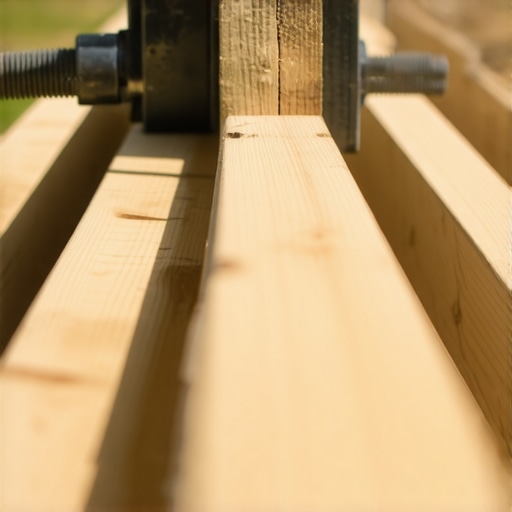
Real-world lumber is rarely straight. When I was building my own backyard retreat, I had three joists that were so bowed they looked like hockey sticks. I couldn’t get my blocking to fit because the gap was too narrow at the top. Instead of giving up or shaving the blocks down—which weakens the structure—I used the clamp and lever move for straightening bowed 2x10s. I hooked a heavy-duty bar clamp across the two joists, cranked it until the gap was perfectly square, and then hammered the block home. The result was a frame so tight you could play a game of basketball on it without a single vibration. This is often the structural reason your deck needs a mid-span beam or additional blocking to stay true over time.
Seal the Tops for Silence and Longevity
While you have the frame exposed, do not forget the friction points. Squeaks are just as annoying as bounces. I learned the hard way that wood-on-wood or wood-on-composite contact eventually leads to chirping sounds every time you take a step. This is where the joist tape secret for doubling your decks life comes into play. Applying a butyl-based tape to the top of every joist provides a rubbery cushion that kills noise and prevents rot. If you are going for a high-end look, why you should paint your deck joists black under composite is a pro move that hides the pressure-treated green from peeking through the gaps. It is a small detail, but it prevents the ‘DIY look’ and addresses how to stop your deck from squeaking when you walk before it ever starts. If you are also planning a shade structure, remember the hidden blocking move for supporting heavy pergola beams to ensure the weight does not crush your newly stiffened floor.
Composite Decking Isn’t Actually Bulletproof
The biggest myth I see circulating in DIY forums is that low-maintenance composite decking means ‘zero maintenance’ or ‘indestructible.’ In reality, the more high-tech the material, the more it demands a precise environment. While capped composite is preferred by pros for its stain resistance, it has a physical quirk wood doesn’t: extreme thermal expansion. I once saw a beautiful wrap-around deck where the owner hadn’t accounted for the gaps near the house. Come July, the boards expanded so much they buckled, leading to a frantic search for how to fix gaps between composite boards and your house. If you are using deeper tones, remember that dark composite boards need extra expansion space because they can reach surface temperatures of 160°F, expanding significantly more than their lighter counterparts.
Why did my high-end railing sag after the first winter?
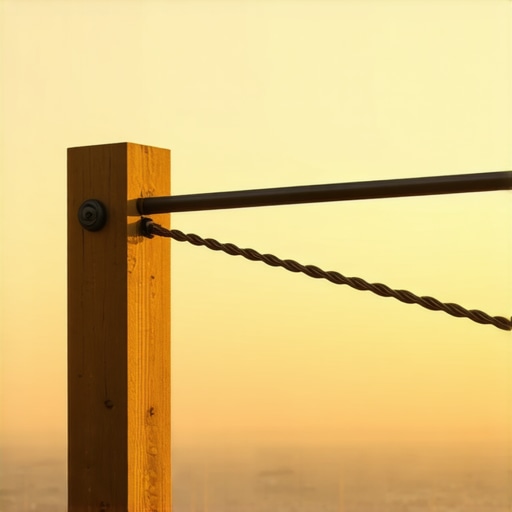
This is a question that haunts many who invest in choosing railing systems for safety and style. You spend thousands on high-tension cable, only to find it drooping like a wet clothesline by March. The common mistake isn’t the cable itself; it’s the post-structural support. When temperatures drop, metal cables contract and apply hundreds of pounds of additional force to your end posts. If you haven’t used the hidden bracing move for rock-solid corner posts, the tension literally pulls the posts inward. According to structural assessments shared by the North American Decking and Railing Association (NADRA), failing to account for these load changes is a leading cause of cable railing tensioner failure. It is an ‘oops’ factor that usually requires a complete teardown of the railing section to fix properly.
The Hidden Thermal Trap That Pops Fasteners
Everyone loves the clean look of a deck without visible screws, but hidden fasteners can be a trap if you do not understand the physics of your local climate. In regions with high heat swings, I have seen clips literally shear off because they could not handle the board’s lateral movement. This is exactly why hidden fasteners pop up in extreme summer heat. If you are dealing with wider boards, the torque is even higher, which is why hidden fasteners fail on wide-profile boards more often than standard widths. To avoid this, I always recommend the ‘double-screw’ method on the board ends or using high-quality clips specifically designed for high-movement zones. Have you ever fallen into this trap and had to replace a row of boards? Let me know in the comments—I am curious to see how many of you have battled the elements and won.
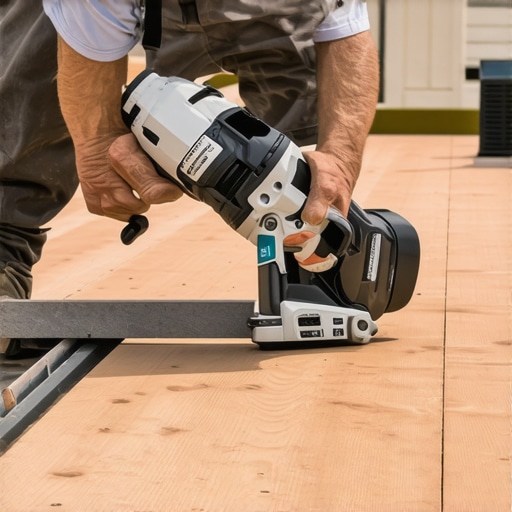
I didn’t realize how much the right gear mattered until I was halfway through a wrap-around project and my hand started cramping from sheer repetition. After four hundred screws, I was no longer precise; I was just tired. That is when I switched to using the jig I use for consistent deck screw depth. It was a game changer. When you are working with low-maintenance composite decking, if you sink a screw even an eighth of an inch too deep, you create a tiny reservoir that catches water. Over time, that water and sun exposure will cause the material to mushroom around the fastener, making your expensive project look like it was built in a hurry. Precision tools aren’t a luxury; they are the only way to ensure composite decking longevity.
How do I maintain my deck’s look for decades?
Maintenance is often misunderstood as ‘scrubbing’ when it should be about ‘prevention.’ People often ask me if they can just blast their deck with a pressure washer to get it clean. My answer is always a hard no. In fact, knowing why you should never use bleach on composite decks is the first step to preserving the warranty. Bleach can break down the UV inhibitors in the capped layer, causing it to fade and turn chalky. Instead, I stick to mild soap and a soft-bristle brush. If I am dealing with a party spill, I follow my own guide on how to clean red wine stains off composite decking fast using a simple vinegar solution. It is also vital to keep an eye on your hardware; according to the FastenMaster Technical Bulletin LOK-01, structural fasteners should be inspected annually for signs of corrosion, especially if you live in a coastal area. This prevents small issues from becoming structural failures.
Looking ahead, I see the industry moving toward much more integration. We are already seeing modern pergola trends that incorporate automated louvers and built-in sensor lighting. The future isn’t just about a static wooden platform; it is about an interactive environment. For example, lighting for modern outdoor kitchens is now moving toward app-controlled zones that can change the mood of the backyard with a single tap. This shift toward ‘smart’ outdoor spaces means that your initial deck design needs to account for hidden wire runs and accessible panels from day one. If you want to stay ahead of the curve, always leave yourself more room for expansion than you think you need. Before you start your next season, I strongly suggest you grab a heavy-duty LED and try the flashlight trick for finding hidden joist rot at night—it is the easiest way to catch decay before it compromises your entire structure.
Hard-Won Truths from a Decade in the Woodchips
Building to code is the floor, not the ceiling. I used to think the inspector’s sign-off meant quality, but I realized that true comfort comes from over-engineering the tiny details. Meeting minimum requirements keeps the structure safe, but it doesn’t guarantee the luxury experience you expect from high-end materials. Thermal expansion is the most underestimated force in backyard construction; it is not a suggestion, it is physics. If you do not account for it, the sun will eventually win. I have also learned that fastener choice dictates your next ten years. Cheap screws are a debt you will pay back in labor later, usually when you are trying to figure out how to fix scuffs on dark composite boards with a heat gun because the hardware failed and scratched the surface. Finally, the ‘feel’ of a deck is subjective but vital. If the frame doesn’t feel like a concrete slab, you simply won’t enjoy the space as much as you should.
The Gear That Saved My Sanity on the Job Site
I never start a project without a digital mockup anymore; utilizing the layout move that saves 15 percent on lumber waste is my first priority to keep costs down and precision high. For the actual build, a speed square and a high-visibility chalk line are my best friends. Never trust your eye for squareness; instead, always rely on the 3-4-5 triangle move for squaring up a new deck frame to ensure your corners are a perfect 90 degrees. I also swear by butyl joist tape as the cheapest insurance policy you can buy. If you ignore the joist tape secret for doubling your decks life, you are essentially building a clock that is ticking toward rot beneath your beautiful boards. Finally, invest in a high-torque impact driver specifically for structural screws; it prevents stripped heads and ensures every connection is rock solid.
Stop Overthinking and Start Sawing
Building your own outdoor sanctuary is one of the most rewarding things you can do for your home. While the technical details of composite decking secrets and longevity tips might feel overwhelming at first, each step is just a small puzzle to solve. Your future self—the one sitting on a rock-solid chair with a cold drink—will thank the version of you that decided to do it right today. Take the time to transform your home with stunning deck design strategies that reflect your lifestyle. Don’t let the fear of a little bounce or a tricky railing stop you from creating a space where memories are made. What is the one thing that is making you hesitate on your deck project right now—the frame, the railings, or something else? Let me know in the comments.