
I remember the exact moment my heart sank. It was our first big neighborhood cookout of the season, and I was proudly showing off our new outdoor space. Then, it happened: a juicy, grease-laden burger patty escaped the spatula and landed with a sickening thud directly onto the middle of my pristine boards. I watched in slow-motion as a dark, glistening ring of oil began to seep into the grain. For a second, I thought I had just permanently scarred a five-figure investment. I scrambled for the heavy-duty cleaners, but honestly, my first instinct was my biggest mistake. I nearly reached for the power washer, which according to experts at the InterNACHI, can actually permanently damage the surface fibers of composite materials if the PSI is too high. Instead, I discovered that the most effective weapon against those terrifying grease spots wasn’t a high-tech chemical—it was a simple kitchen sponge and a specific approach to dish soap.
That Greasy Splat That Nearly Ruined My Sunday
In my early days of DIY, I assumed that modern materials were invincible. I fell for the trap of thinking low-maintenance composite decking meant ‘no maintenance.’ Boy, was I wrong. I once tried to scrub a similar spot with a stiff wire brush and a splash of bleach, which is a massive no-no. If you want to know more about what happens when you go nuclear on your boards, you should definitely read about why you should never use bleach on composite decks. It leaves a permanent faded halo that looks worse than the original stain. Today, I want to show you the gentle, ‘neighbor-approved’ method that lifts the oil out without stripping the color or ruining the texture. Whether you are dealing with burger grease, sunscreen drips, or even a splash of Merlot—and yes, I have a guide for how to clean red wine stains off composite decking fast too—this soap-and-sponge strategy is your first line of defense.
Will This Actually Work on Older Set-In Stains?
It’s the question I get most often from folks who didn’t catch the spill immediately. You might be skeptical that something as basic as Dawn dish soap can outperform a $30 bottle of ‘specialty deck restorer.’ But the chemistry of grease-cutting surfactants is actually perfect for the polyethylene or PVC used in these boards. Have you ever looked at your deck and wondered if that dark spot is there for good? Tell me in the comments if you’ve ever tried a ‘miracle’ cleaner that ended up making things worse. Before you go buying new boards, let’s talk about the specific circular scrubbing technique that saves your finish. While some colors of composite hide dirt better than others, oil is an equal-opportunity offender that needs a specific touch to disappear.
Break the Bond with Warm Suds and Patience
To get grease out of a capped composite board, you have to treat it like a greasy lasagna pan rather than a piece of sidewalk. The goal is emulsification—breaking the oil down so it can be suspended in water and wiped away. I learned this the hard way when I tried to clean a bratwurst drip with cold water and a rag. I ended up just smearing the pork fat into a three-foot streak that looked like a snail trail from a horror movie. The fat solidified instantly against the cool boards, making it nearly impossible to lift. Now, I start with a bucket of the hottest water my hands can stand and a generous squeeze of grease-cutting dish soap. This heat is critical because it keeps the oils in a liquid state while the surfactants in the soap surround the grease molecules. If you are working with solid core composite boards, the grease usually stays trapped in the outer ‘cap’ layer, but if you don’t use heat, you’re just moving the mess around.
Scrub in Circles to Protect the Texture
Once you have your hot, sudsy mixture, don’t just dump it and walk away. You need a soft-bristle nylon brush—the kind you’d use on your car’s tires, not the stiff wire ones you’d use on a grill. Using a circular motion is the secret. If you scrub back and forth along the grain, you risk pushing the grease deeper into the microscopic valleys of the wood-grain texture. Circles lift the oil up and out. I remember my neighbor watching me do this for twenty minutes on a particularly nasty bacon grease splash; he thought I was waxing the deck. But the effort paid off. By the time I was done, even composite colors that hide dirt best looked refreshed because I wasn’t just cleaning the stain, I was deep-cleaning the texture. 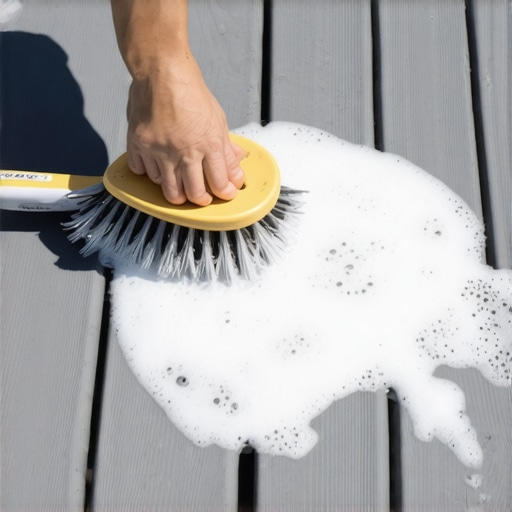
Flush the Grain Before the Soap Dries
The biggest mistake people make is letting the soapy, greasy slurry sit on the deck while they go grab a beer. As the water evaporates, the concentrated soap and the suspended grease will settle back into the pores, creating a sticky residue that attracts even more dirt later. You want to flush the area with a low-pressure garden hose immediately. Think of it like a railing system install; if you don’t get the alignment right before the fasteners are tight, you’re stuck with a crooked mess. For the best results, use a leaf blower to dry the spot instantly. This prevents the ‘water halo’ effect that happens when minerals in your tap water dry on the surface. Following these composite decking secrets for longevity will ensure your boards don’t just look clean, but stay structurally sound without the need for harsh chemicals. If the board still feels a bit ‘grabby’ or tacky to the touch, repeat the hot water soak one more time. Patience here is what saves you from having to research the simple DIY solution for squeaky composite boards or, worse, replacing a permanent-looking eyesore in the middle of your party zone.While keeping your boards clean is one thing, I have realized that the most frustrating problems usually start six inches below the surface. Most homeowners assume that if they buy the most expensive boards, the deck will naturally last forever. But here is the truth: your deck is a living system that reacts to its environment every single hour. A common belief in the industry is that hidden fasteners are the absolute pinnacle of innovative deck design, providing that seamless, high-end look. I disagree. In my years of building, I have seen these systems fail more often than traditional color-matched screws when installed in extreme climates. If you live in an area with high temperature swings, you might find that hidden fasteners pop up in extreme summer heat because the boards physically have nowhere to expand. Have you ever noticed your boards creaking or seen a fastener sticking up like a sore thumb after a heatwave? Have you ever fallen into this trap? Let me know in the comments.
Why are my gaps suddenly wider than they were last winter?
This is the advanced question I get from folks who did everything ‘by the book’ but are now seeing structural shifting. The nuance lies in the thermal expansion coefficient. According to research by the American Wood Council, while traditional timber movement is primarily driven by moisture content, composite movement is almost entirely thermal. If you do not use the joist tape secret for doubling your deck’s life, you are inviting two different materials to fight one another in a slow-motion tug-of-war. The pressure-treated wood frame underneath is absorbing moisture and expanding while the composite on top is heating up and expanding at a much faster rate. This conflict is exactly why your pressure treated frame is pulling your composite apart. 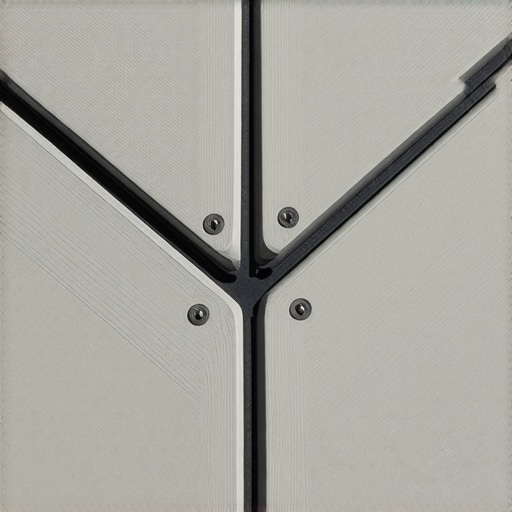
The Structural Trap Most Builders Ignore
Another hidden nuance involves the sub-structure spacing and how it affects the ‘feel’ of your space. Most people follow the 16-inch-on-center rule, but if you want to maximize outdoor living with heavy features like a stone-clad grill station or a large hot tub, that spacing is simply insufficient. This is why your composite boards feel spongy under heavy furniture—the boards themselves aren’t failing, but the support system wasn’t designed for the localized load of modern outdoor appliances. To avoid this, I always recommend a tighter 12-inch joist span for high-traffic zones. It adds a bit to the lumber bill, but it eliminates that ‘bouncy’ plastic feel that makes people say composite decking looks like plastic. Finally, don’t overlook your railing selection. A common mistake is choosing a system that looks great in a catalog but fails in reality under stress. I have seen beautiful installs ruined because the owner didn’t know how to select the perfect railing system for their specific wind load, leading to a permanent, annoying rattle. If you are aiming for true composite decking secrets for longevity, stop looking at the boards and start looking at how those boards interact with the elements and the frame below.Building your outdoor sanctuary is the sprint, but keeping it beautiful is the ultimate marathon. Once you have navigated the structural nuances of joists and expansion, you enter the phase where most homeowners lose their way. I have seen stunning builds look decades old in just three years simply because the owner didn’t have the right tools in their shed. My absolute secret weapon for composite decking isn’t a high-pressure hose; it is actually a professional-grade heat gun. It sounds counterintuitive, but learning how to fix scuffs on dark composite boards with a heat gun has saved me thousands in replacement costs. When you drag a heavy metal chair across a dark board, you aren’t removing material—you are just displacing the plastic. A quick, controlled pass with heat allows the polymer to ‘memory-reset’ back to its original shape.
Erase Board Scuffs Without Replacing the Plank
I use a variable-temperature gun because you have to be precise; too much heat and you will melt the texture, too little and nothing happens. This is the level of detail that separates a ‘nice’ deck from a professional-grade installation. I also swear by using a high-powered leaf blower twice a week. It sounds like overkill, but preventing organic debris from sitting in the gaps is the only way to avoid the ‘black sludge’ that eventually rots your pressure-treated frame from the top down. 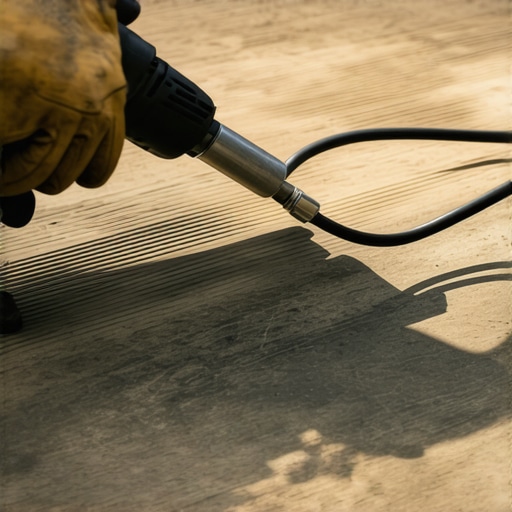
Why You Need a Laser Level for Every Pergola Post
When I scale up to larger structures like a sanctuary-style pergola, I ditch the traditional spirit level. Gravity is a cruel mistress over ten years, and even a quarter-inch of sag in a beam will become a structural nightmare later. I personally use the level and laser method for setting pergola heights alone to ensure my cross-beams are perfectly true. If your beams aren’t level, water will pool in the miter joints, leading to premature failure even in the best wood species.
How do I keep my outdoor space structural for the long haul?
Maintenance isn’t just about cleaning; it is about inspection. I perform what I call the ‘Midnight Walk.’ Grab a high-lumen LED and use the flashlight trick for finding hidden joist rot at night. The side-angle of the light reveals shadows and texture changes that you simply cannot see in the midday sun. According to technical bulletins from the North American Deck and Railing Association (NADRA), over half of the 60 million decks in the U.S. are in need of repair or replacement. Following their 10-point safety check is my non-negotiable annual ritual. I also recommend performing the 3-second push test for wobbly railing systems every spring. If there is even a millimeter of play at the base of your posts, that movement will eventually shear the bolts through the wood grain. I predict the future of this industry lies in ‘smart’ decking—composites with embedded moisture sensors that alert your phone before rot starts. For now, go grab your flashlight tonight and check those joist connections; it is the single best thing you can do for your home’s value.
Why I Stopped Chasing the Myth of Zero Maintenance
The hardest lesson I ever learned was that ‘low maintenance’ doesn’t mean you can just ignore the structural health of your home. I once focused so much on the surface boards that I missed a ledger gap issue that was slowly rotting my siding. Real wisdom in this trade comes from realizing that your deck is an ecosystem; when you stop looking for perfection and start looking for small structural shifts, you save yourself the stress of a total rebuild. This shift in mindset changed how I build everything from simple platforms to complex pergola designs. Remember, a deck that lasts isn’t the one that is never used, but the one that is consistently checked.
The Three Essentials in My Deck Care Bucket
Beyond the soaps and the heat guns, there are three specific resources I trust for keeping any build in peak condition. First, I always keep a bottle of Dawn Platinum for those grease spills we discussed—it remains the gold standard for emulsification on plastic-capped boards. Second, I rely on the 3-second push test every single spring to ensure my railing systems are rock-solid before hosting season starts. Finally, if you are looking to take your space to the next level, I highly recommend looking into a hidden gutter system for the area under your deck; it is the ultimate way to create a dry, usable sanctuary even during a downpour.
Your Journey to a Maintenance-Free Mindset
Designing a high-end outdoor space is a rewarding challenge, but the real victory is sitting there ten years from now with the same level of pride you have today. By utilizing innovative deck design strategies and following a few simple composite decking secrets for longevity, you’ve created more than just a deck; you’ve built a sanctuary for your family. Don’t be afraid to get your hands dirty once in a while to keep the beauty alive. Have you ever discovered a maintenance trick that worked better than the store-bought chemicals? Let me know your best ‘hacks’ in the comments below!