
I was sitting on my deck last Sunday, finally ready to enjoy a quiet morning with a cup of coffee and a book. Then the wind picked up. Instead of the peaceful rustling of leaves, I heard it—that rhythmic, metallic clink-clink-clink coming from my railing. It sounded like a percussion section was practicing under my nose. If you have ever felt that sudden surge of annoyance when your expensive outdoor oasis starts sounding like a bucket of loose bolts, you know exactly why I jumped up, spilled half my coffee, and started shaking every individual spindle. We spend so much time obsessing over durable composite solutions and picking out the perfect colors, but we rarely talk about the acoustics of a deck. Today, I am going to show you how to silence those chattering balusters for good in less time than it takes to brew another pot of coffee. Have you ever found yourself hunting down a mysterious deck noise only to realize it was just a loose spindle? [IMAGE_PLACEHOLDER]
That Annoying Sound is Driving You Crazy
It is easy to ignore a loose baluster for a week or two, but eventually, the noise becomes a psychological itch you can’t scratch. When I built my first railing system years ago, I made the classic rookie mistake of thinking that “snug” was good enough. I didn’t account for how temperature swings make materials expand and contract, or how a slight breeze creates just enough resonance to turn a loose fit into a constant headache. I actually ended up stripping the heads off several screws trying to force a tighter fit, which is a nightmare when you’re working with custom railing systems. The reality is that most rattles happen because the pre-drilled holes or the plastic inserts have just a millimeter of play.
Is a little rattle really worth the effort to fix?
You might wonder if you are just being oversensitive. Is it really worth crawling around on your knees for a few clicks? Absolutely. Beyond the sheer annoyance, a rattling baluster is a sign of movement, and movement leads to wear. Over time, that constant vibration can enlarge the holes in your rails or wear down the finish on your spindles. Even the straightest, most plumb posts won’t save you from the degradation caused by thousands of tiny impacts every day. Interestingly, studies by the International Association of Certified Home Inspectors (InterNACHI) suggest that while minor rattling isn’t always a structural failure, it is one of the primary reasons homeowners lose confidence in the safety of their structures. You want your deck to feel like a fortress, not a toy. If you’ve been debating round vs square balusters, know that both can fall victim to the “death rattle” if you don’t use the right dampening technique. Let’s look at why those gaps exist in the first place and how we can fill them without taking the whole railing apart.The most effective way to kill that vibration is to introduce a dampening agent at the contact points. Think of your balusters like the strings of a guitar; if they have any room to move, they will vibrate at their resonant frequency. To stop this, you don’t need to rebuild the whole section. A simple tube of high-quality, clear exterior silicone is your best friend here. Last summer, I was helping a neighbor with a ‘ghost deck’—every time the wind blew, it sounded like someone was tapping on the windows. We found that about a dozen balusters had a hair-thin gap in their base shoes. A tiny, pea-sized dab of silicone at the bottom of each spindle where it met the rail acted as a microscopic shock absorber. Within thirty minutes, the house was silent, and the fix was completely invisible to the naked eye. 
Silence the Metal Screech with Clear Silicone
When you apply silicone, the trick is to get it inside the shoe or the pre-drilled hole rather than smeared around the outside. If you are working with how to select the perfect railing system for every deck, you might notice that higher-end kits come with rubber gaskets specifically for this reason. If yours didn’t, you are essentially creating your own gasket. Material expansion is the silent enemy of a quiet deck. During my first big build, I didn’t realize that metal and composite expand at different rates. I finished the railing on a 90-degree afternoon, and it felt solid as a rock. By October, when the temperature dropped to 40, the metal contracted just enough to leave gaps in every single hole. This is why you need a flexible fix like silicone rather than a rigid one like wood glue; you need a material that can breathe with the seasons.
How to Apply the Dampening Agent Correctly
Use a toothpick or a small syringe to inject the silicone directly into the gap. This is especially important for the modern farmhouse deck black railings and light wood where any mess or smearing will show up immediately against the light timber.
Check Your Spacing and Those Sneaky Railing Shoes
Often, the rattle isn’t the baluster itself but the decorative shoe at the bottom. These little caps are designed to hide the hardware, but if they aren’t snug, they become tiny cymbals. I once spent an hour chasing a squeak only to realize the shoe was just bouncing on the composite board. If you used the drill guide hack for centered baluster holes, your spindles should already be aligned, which makes seating these shoes much easier.
Dealing with Decorative Caps and Base Plates
A tiny bit of the same silicone or even a small piece of weather-stripping foam tucked underneath will solve this. If you’re currently in the design phase and want to maximize outdoor living with low-maintenance composite decking, keep in mind that darker colors fluctuate in size more significantly due to heat absorption. This movement can eventually wiggle even the best-installed balusters loose over a few seasons.
Adjust the Tension for a Rock-Solid Rail
If the noise is more of a ‘thunk’ than a ‘click,’ the issue might be structural. Your entire railing section could be loose. This often happens because the hidden bracket trick for perfectly rigid railing posts wasn’t followed, or the mounting screws have backed out slightly. Check the brackets connecting your rails to the posts. For those with cable systems, learning how to tension cable railings without specialized expensive tools is vital because cable sag is a primary cause of noise. Even on traditional systems, using the shim trick for leveling a railing on a sloped deck can help realign a section that has warped, putting enough pressure on the balusters to keep them from moving.Most people assume that if a railing is making noise, it just needs a few more turns of a wrench. This is where most DIYers—and even some pros—go wrong. If you keep cranking down on those fasteners, you are likely to strip the housing in your aluminum rails or, worse, crack the finish on your composite boards. In my experience, a ‘tight’ connection that doesn’t allow for thermal movement is a ticking time bomb. The American Wood Council (AWC) notes that materials expand significantly based on environmental factors, but it is the differential between metal balusters and composite rails that causes the most friction-based noise. You have to account for the fact that capped polymer composite stays cooler than traditional materials, yet it still moves differently than the metal balusters it holds. If you lock them into place with zero tolerance, the expansion will eventually force the fasteners out or cause buckling. This is why hidden fasteners can be a maintenance nightmare if you do not understand how they react to temperature. 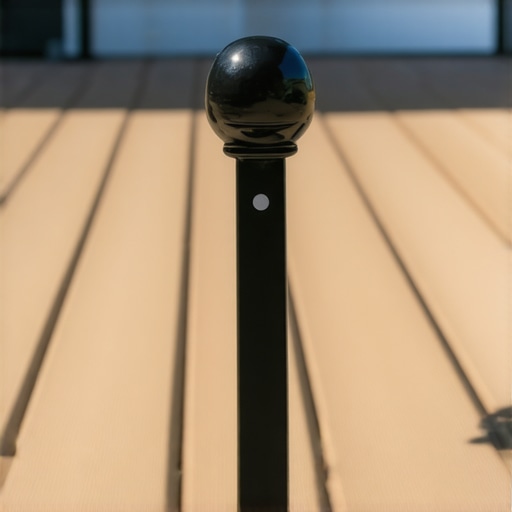
Why do some rattles only show up during the winter?
Cold air causes materials to shrink, but they do not shrink at the same rate. Your aluminum spindles will contract much faster than your deck posts. This creates a ‘looseness’ that did not exist in July. If you are seeing this happen, you might want to look into composite decking secrets and longevity tips that focus on seasonal stability. Also, consider why your black aluminum railing gets too hot to touch—darker colors undergo more extreme cycles of expansion, which accelerates the wear on the ‘seat’ of the baluster over time.
Don’t Mistake a Structural Shift for a Simple Rattle
The biggest trap is ignoring the ‘structural groan.’ A light click is usually just a loose baluster, but a deep, resonant groan when you lean on the rail often means your ledger board or post mounts are shifting. This is a safety issue, not just an acoustic annoyance. Before you spend hours with a silicone gun, do a heavy-pressure test on the entire section. If the noise is coming from the base of the post, your problem isn’t the baluster—it is the foundation. Have you ever fallen into this trap and spent a weekend fixing the wrong thing? Let me know in the comments.
Once you have identified whether you are dealing with a simple baluster rattle or a deeper structural groan, you need the right arsenal to make the fix permanent. I keep a specific ‘acoustic kit’ in my workshop that has saved me more weekends than I can count. Most people grab a standard hammer and whatever screws they find in the junk drawer, but that is how you end up with stripped heads and cracked composite. I personally swear by a sub-compact impact driver—something like the Milwaukee M12 Fuel—because it gives you the finesse to seat a screw perfectly without the bone-shaking torque that snaps delicate hardware. When you are working on custom railing systems for safety and style, precision is your best friend.

Grab These Specific Tools to Finish the Job Right
Beyond the driver, you need a high-quality, non-staining exterior silicone. Avoid the cheap ‘all-purpose’ stuff; you want a neutral-cure silicone that won’t react with the metallic finishes on your spindles. This is critical when you want to maximize outdoor living with low-maintenance composite decking. I also keep a set of plastic shims and a long-nose applicator for my silicone gun. This allows me to reach into the tight gaps of a bottom rail without making a mess. If you have ever struggled with why hidden fasteners can be a maintenance nightmare, you know that access is everything. I have found that using a syringe to inject the dampening agent is the only way to get a clean result on the modern farmhouse deck black railings and light wood where every smudge is a glaring eyesore.
How do I keep my deck quiet and stable over time?
Maintenance is not a one-and-done event; it is a seasonal rhythm. Every spring, I perform the 15-minute deck inspection every homeowner should do. I walk the perimeter and give every post a firm shake. If I hear a click, it gets a dab of silicone. If I feel a sway, it is time to check the lag bolts. According to the American Wood Council (AWC) NDS 2018 Edition, fasteners in outdoor environments are subject to ‘wet-service’ factors that can reduce their holding power over time. This is why I suggest retightening your primary bracket screws every two years. If you are noticing persistent issues with your railing posts, you might need to revisit the hidden bracket trick for perfectly rigid railing posts to ensure your foundation is actually as solid as you think it is.
The Next Generation of Noise-Free Outdoor Living
Looking ahead, I predict we will see more ‘smart’ railing systems that utilize internal rubber dampeners built directly into the extrusion. We are already seeing composite decking trends and durable solutions moving toward materials with lower thermal expansion coefficients, which will naturally reduce the frequency of these rattles. In the meantime, don’t let a small noise ruin your peace. My challenge to you: grab a tube of clear silicone this weekend and spend twenty minutes silencing just three of your noisiest balusters. Once you hear—or rather, don’t hear—the difference, you’ll be hooked on the quiet.
Lessons from the Quietest Deck on the Block
Over the years, I have learned that the difference between a frustrating deck and a sanctuary often comes down to the smallest details. One of the biggest revelations for me was realizing that brute force is almost never the answer when it comes to metal balusters. If you try to screw them into submission, the materials will just fight back during the next temperature swing. Instead, I learned to embrace flexibility. Using dampening agents allows the longevity tips for a lasting deck to actually work in your favor. I also discovered that “ghost noises” often originate from the decorative shoes, not the spindles themselves. Always check the easy fix before you start taking apart the whole section. Finally, remember that a quiet deck is a safe deck; it means your connections are stable and not vibrating themselves into a premature failure.
Gear That Makes Silent Railings a Reality
You do not need a massive trailer full of tools to achieve a professional, rattle-free finish. I always keep a few specific items in my “hush kit.” First, a high-quality, clear, neutral-cure silicone is non-negotiable—it provides the dampening you need without damaging the finish. Second, I rely on a sub-compact impact driver for precise torque control. Third, never underestimate the power of a simple plastic shim for those awkward gaps. For those who want to dive deeper into technical standards, I highly recommend checking out the International Association of Certified Home Inspectors (InterNACHI) guidelines on deck safety. If you find that the noise is coming from the post-to-frame connection, you should definitely revisit the hidden bracket trick for perfectly rigid railing posts to ensure your foundation is solid.
Claim Your Peaceful Morning Back
You deserve an outdoor space that enhances your relaxation rather than interrupting it with every gust of wind. Fixing those annoying clicks and clunks is one of the most rewarding afternoon projects you can undertake. It is about more than just acoustics; it is about taking pride in the craftsmanship of your home. By following a regular 15-minute deck inspection, you can stay ahead of these issues before they become headaches. If you ever feel overwhelmed or run into a structural problem that seems beyond a simple fix, don’t hesitate to reach out for professional advice. Now, go grab that silicone and reclaim your quiet retreat with a rock-solid set of railing systems. [IMAGE_PLACEHOLDER]
Have you ever found a rattle that seemed impossible to track down? Drop a comment below and tell me where it was hiding!