
You step outside with a fresh cup of coffee, ready to enjoy a quiet morning on your beautiful outdoor oasis. Instead of looking at the sunrise, your eyes immediately lock onto it: a weird, zigzagging gap between your boards that looks like a snake trying to squeeze through a fence. It is incredibly frustrating. You paid a premium for composite decking to avoid the headache of warping wood, yet here you are, staring at uneven gaps that seem to change size depending on the hour of the day. I know that feeling of instant regret all too well because I made a massive rookie mistake on my very first build. I laid down the boards on a scorching July afternoon, spacing them tightly as if they were traditional timber, totally oblivious to how modern materials actually behave. Today, we are going to fix this eyesore once and for all by diving into the physics of your deck and getting those lines perfectly straight again.
The Silent Enemy of Straight Lines
I used to think that once a composite deck was screwed down, it was locked in place forever. But composite materials are a mix of wood fibers and plastic, meaning they are highly sensitive to thermal expansion and contraction. According to technical data from the American Society for Testing and Materials (ASTM), certain composite formulations can expand up to 1/16 of an inch for every 20-degree temperature fluctuation. If you do not account for this natural movement during installation, your deck ends up looking like a wavy rollercoaster. Sometimes, the boards push so hard against each other that they buckle, or they pull away and leave gaping chasms. If you are noticing uneven gaps, there is a very high probability that you are dealing with why your composite decking is expanding more than the manual says.
Is Composite Decking Actually Worth the Hype and Hassle?
You might be asking yourself if you bought into a marketing lie. After all, if the boards move this much, shouldn’t you have just stuck with pressure-treated pine? The short answer is yes, it is absolutely worth it—if you know the secrets to installing it correctly. Wooden decks split, rot, and require annual staining, while composite simply needs a bit of smart engineering to handle the elements. Have you noticed your deck gaps shifting wildly between the morning chill and the afternoon heat? Drop a comment below and let me know. To prevent these shifting boards from pushing against your home’s exterior, you really need to understand the simple way to stop composite boards from expanding into your house siding so your framing stays perfectly protected and your lines stay visually flawless.
How to Reset and Align Your Warped Composite Decking
To fix those frustrating, wavy gaps, you need to understand that your deck is essentially a giant accordion. It breathes with the weather. Fixing it requires a methodical approach of releasing tension, resetting the boards at the right thermal baseline, and locking them down so they can only expand where you want them to. Let me walk you through the exact process I used on my neighbor’s deck last spring after a brutal winter left his outer perimeter looking like a jagged set of teeth.
Release the Trapped Tension
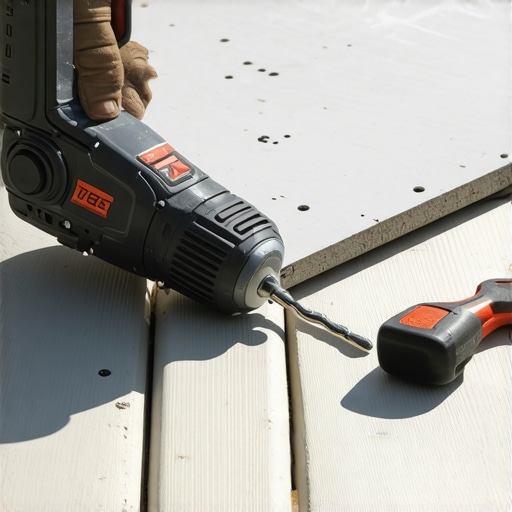
First, you cannot force a warped board back into alignment while it is still under extreme pressure. Grab your impact driver and back out the screws or loosen the hidden fasteners on the problematic boards. When I did this on my neighbor’s deck, the moment we backed out the third row of fasteners, the boards literally jumped half an inch with a loud pop. That is how much lateral force was trapped inside the deck. Take the boards completely up, inspect the joists underneath, and clean out any trapped organic debris that might be restricting natural airflow.
If you find that your joists have suffered from dampness during this process, it is the perfect time to apply the joist tape secret for doubling your decks lifespan. Protecting those joists now ensures your subframe stays flat and true, preventing the wood from crowning and pushing your composite boards upward. Once the frame is clean and protected, lay your boards back down without fastening them yet so they can acclimate to the ambient temperature of the day.
Find Your Temperature Baseline Before Fastening
Never install or fasten composite boards during the absolute hottest part of the afternoon or the coldest freeze of the morning. If you lock down a board when it is freezing cold, it will have nowhere to go but upward when summer hits, causing unsightly buckling. I recommend installing when the temperature is right around 60 to 70 degrees Fahrenheit. This represents a perfect middle ground, allowing the material to expand and contract equally in both directions.
Use dedicated plastic spacers to keep your gaps uniform. If you are working on a hot day, space them tightly because the boards are already fully expanded. If it is cold, leave a wider gap. Do not rely on your eyes; human vision is notoriously bad at estimating fractions of an inch over a long span. If your boards have already popped up completely and damaged their locking mechanisms, you will need to apply some specific repair strategies. Learn how to fix a deck board that has popped up to ensure your fasteners hold securely this time around.
Lock the Center and Guide the Movement
The secret weapon of professional deck builders is called “center-pinning.” Because composite boards expand from the center outward toward both ends, you want to force that movement to happen symmetrically. To do this, place a face screw directly through the exact center of the board’s length, right into the joist. This acts as an anchor point. Now, when the board heats up, it will expand outward toward the ends rather than shifting entirely to one side and ruining your outer margins.
For the remaining joists, use high-quality hidden fasteners. These fasteners are designed to act as little tracks, allowing the board to slide smoothly back and forth through the clip as the temperature changes. However, if you notice your clips are failing during seasonal shifts, you might be dealing with why your hidden fasteners are popping up in heat, which often comes down to over-tightening or using the wrong clip style for your specific brand of composite decking.
Most backyard DIYers and traditional carpenters will tell you that a mitered corner is the hallmark of a high-end, premium deck. I used to believe this myth myself, spending hours perfecting precise 45-degree cuts on my composite deck corners. But in my experience, traditional woodworking rules fail miserably when applied to modern composite engineering. Treating composite boards like hardwood is the fastest way to ruin your beautiful new build.
Why Do Beautiful Mitered Corners Always Gap and Fail Over Time?
The hard truth is that composite decking expands and contracts along its length, not its width. When you join two boards at a 45-degree angle, they slide past each other in opposing directions as the temperature changes. According to architectural building standards published by the International Code Council (ICC), plastic-composite materials require specialized gapping parameters that standard miter joints simply cannot accommodate. Within a single season, your beautiful joint will warp, push apart, or buckle. That is why mitered corners are a mistake for high-traffic decks and sunny outdoor areas. If you want seamless, crisp lines that actually last, you should use a picture-frame border layout with butt joints or utilize specialized transition boards.
If you have already cut your miters and are dreading the inevitable gap, there is a professional workaround that can save your design. You can master the pvc glue trick for gap-free composite miters to chemically bond certain capped composite cores before they have a chance to drift apart. But the absolute best strategy is to plan your layout correctly from day one. Have you ever fallen into this mitered-joint trap or noticed your corners splitting? Let me know in the comments below.
This same principle of thermal movement applies to your entire outdoor space, especially if you are building an overhead structure. If you are integrating a custom shade system, you cannot simply bolt rafters together and hope for the best. Overlooking structural movement leads to sagging and system failure. Make sure you understand why your pergola rafters are sagging and how to shore them up so your entire outdoor retreat remains structurally sound and visually stunning for decades to come.
When you move past the initial build, you realize that keeping a premium deck looking flawless is all about having the right gear and keeping up with seasonal shifts. Over the years, I have thrown out dozens of cheap plastic layout jigs and stripped-out driver bits. If you want to stop chasing alignment issues and actually enjoy your outdoor space, you need to treat your deck like the precision engineering project it is.
How Do I Maintain My Composite Deck Structure Over Time?
Long-term preservation goes far beyond a quick spray with a garden hose in the spring. You need to focus on protecting the hidden subframe and hardware that keep those expensive boards from shifting. For my annual checks, I swear by a bright, high-intensity LED inspection headlamp and a simple moisture meter to check the wood framing from underneath. If you catch moisture buildup early around your ledger, you can easily save yourself thousands in structural repairs. I also recommend checking the tension of your perimeter railings every autumn, especially if you have modern wire systems, as understanding how to stop cable railing from sagging over time will keep your entire perimeter safe and taut.
As the industry evolves, we are seeing incredible advancements in smart building materials. I predict that the next generation of outdoor products will feature self-regulating thermal polymers that drastically limit expansion rates. Until then, we rely on smart design strategies. Incorporating a beautiful border using innovative deck design ideas that elevate your homes curb appeal not only masks natural expansion gaps but also makes your backyard look like a high-end resort. If you have a custom shade structure overhead, always ensure you use high-quality hardware. Taking the time to master how to hide the structural hardware on your pergola keeps your framing looking clean and prevents industrial brackets from rusting in the open air. This year, I challenge you to try the center-pinning technique on just one shifting board—it will completely change how you look at composite deck movement.
What Experts Won’t Tell You About Designing with Modern Materials
The single biggest mistake most homeowners make when starting their outdoor projects is treating modern synthetics like old-school timber. Over my years of building, I have learned that composite decking secrets are not about preventing natural movement altogether; they are about designing around it. If you build with a rigid mindset, the climate will always win. Your deck, your railing, and even your shade structures are dynamic systems that expand, contract, and settle continuously. Planning for this movement from day one is the difference between a structure that looks beautiful for three seasons and one that remains pristine for thirty years.
- Plastics behave like plastics: Wood fibers shrink as they dry, but the plastic binders in composite expand as they absorb ambient heat.
- Substructures need breathing room: Tight framing is actually your worst enemy. Leaving micro-gaps at joist intersections allows airflow that keeps the structure dry and stable.
- Always look at the overall layout: When planning a layout, always integrate border boards. Incorporating some of the most innovative deck design ideas for 2025 can actually help you naturally hide necessary expansion joints while dramatically boosting your home’s aesthetic appeal.
My Essential Toolkit for Perfect Outdoor Construction
You do not need an entire warehouse of tools to keep your project aligned, but investing in a few specialized items will save you hours of frustration. These are the exact items I keep in my truck for every single deck check and adjustment.
First, I highly recommend a set of heavy-duty, consistent gap spacers rather than relying on loose carpenter pencils or scrap wood. These ensure your layout remains perfectly uniform. Second, a high-quality impact driver with a depth-setting nosepiece is essential. This prevents you from over-tightening hidden fasteners and stripping the threads. Finally, always keep a reliable layout string line and a framing square on hand. If you are integrating guardrails, having the right railing systems for safety and style is crucial, and utilizing a string line ensures your structural posts align perfectly from one corner to the other without any unsightly zigzagging.
Take Back Control of Your Outdoor Sanctuary
Do not let uneven, gapped boards ruin the peaceful mornings on your backyard patio. With the right thermal baseline, smart pinning techniques, and a layout designed for natural movement, you can easily restore those clean, crisp lines you paid for. If you are ready to expand your outdoor living space even further, consider how different elements work together. You can browse through various pergola design inspiration ideas to see how to pair beautiful overhead shade with your newly straightened composite decking for the ultimate backyard retreat. Now is the perfect time to grab your impact driver, check those center fasteners, and bring your deck back to its original glory.
Have you ever noticed your composite deck boards shifting or buckling during a heatwave? Let me know in the comments below!