
I stood there with a handful of parched cedar splinters and a water bill that looked more like a monthly car payment. My backyard wasn’t a sanctuary; it was a battlefield. The relentless, unforgiving desert sun had turned my “dream” cedar deck into something resembling an old, weathered shipwreck in the middle of a dust bowl. It was hot, it was thirsty, and it was structurally failing. That was the moment I realized that trying to maintain a lush, wooden oasis in a high-heat, low-water environment wasn’t just difficult—it was a fool’s errand. I needed a deck that embraced the arid reality of my climate, not one that fought against it every single day. I wanted to spend my Friday evenings with a cold drink in my hand, not a power sander and a gallon of expensive, doomed-to-fail stain.
Why Gravel and Composite are the New Desert Power Couple
[image] I’m going to show you how to ditch the high-maintenance grass and the rot-prone wood for a system that actually survives the sun. We are talking about the desert-style deck: a clever, beautiful fusion of decorative gravel beds and high-performance composite boards. This isn’t just about saving water; it’s about reclaiming your free time. When I first started experimenting with xeriscaped deck designs, I made a massive mistake that cost me a lot of sweat—I thought I could just throw some rocks down and call it a day without checking my levels or airflow. I quickly learned why built-in deck planters are a rot risk when they are placed directly against a wooden frame without a proper moisture barrier. These days, I swear by using composite decking secrets like selecting capped polymer boards that don’t shrink, warp, or crack when the humidity drops to single digits. Natural wood is a living thing that gasps for air in the desert; composite is the armor your backyard actually needs.
Will Gravel Just Make My Backyard Look Like a Construction Site?
I get the skepticism. I really do. You’re worried your yard will end up looking like a highway project or a dry, dusty creek bed instead of a cozy outdoor retreat. But when you maximize outdoor living with low-maintenance composite decking, the gravel actually acts as a sophisticated, architectural frame. It highlights the clean lines of the deck and provides the drainage secret for decks built close to the ground that traditional mulch or grass just can’t offer. Instead of puddles and pests, you get a clean, breathable base that keeps your substructure dry. According to the Environmental Protection Agency (EPA), a well-executed xeriscape design can reduce outdoor water use by up to 50% to 75% in arid regions. That is money back in your pocket every single month. Have you ever felt like you were a slave to your backyard maintenance, dragging a hose around until your back ached? I certainly have, and it’s why I finally made the switch. We can even dive into how to build a low-profile deck on uneven ground to ensure your new desert oasis looks intentional, professional, and built to last for decades.
Prep the Ground to Avoid an Underground Swamp
Building a deck in a dry climate doesn’t mean you can ignore water; it means you have to manage the rare, torrential bursts of rain that the hard-packed desert soil won’t absorb. I start by excavating about four inches of dirt and replacing it with a heavy-duty weed barrier and a thick layer of crushed stone. This provides the drainage secret for decks built close to the ground that prevents moisture from sitting against your joists. I remember my first desert build—I skipped the heavy-duty fabric and within one monsoon season, I had desert weeds punching through the gravel like they were on a mission. It looked like a neglected parking lot within six months. Now, I always layer the stone and then how to hide ugly concrete footers with river rock to make the transition from the structure to the ground look like a high-end resort. 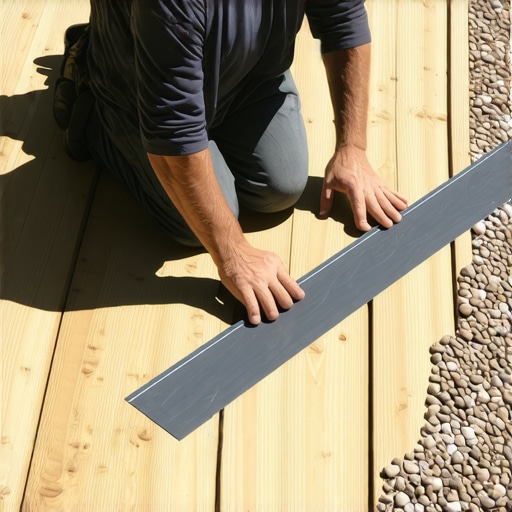
Wrap Your Framing in a Moisture-Proof Shield
Even though you are using low-maintenance composite decking, the frame underneath is usually pressure-treated lumber. In the desert, the extreme cycle of bone-dry heat followed by sudden rain makes wood expand and contract violently. Think of it like a sponge that’s been left in the sun; it gets brittle and cracks. To prevent this, I use the flashing tape move that doubles the life of your joists. This butyl tape acts as a raincoat for your lumber, sealing around every screw hole so water can’t find a way in. While you’re at it, don’t skimp on the support. I’ve found that why 6×6 posts look better than 4x4s on any outdoor structure isn’t just about aesthetics; the extra mass resists the twisting and warping that happens when the humidity hits zero.
Stop the Sun from Ruining Your Barefoot Walk
Not all composite is created equal when the thermometer hits 110 degrees. You need to look for materials specifically designed for heat dissipation. I learned the hard way after choosing a dark charcoal board for a south-facing project. By noon, you could practically fry an egg on it. That’s why black composite decking burns your feet and why I now steer clients toward lighter tans and greys. Specifically, why capped polymer composite stays cooler than wood plastic is a detail you can’t ignore. Capped polymer doesn’t have the wood fibers that trap heat like a thermal battery. It’s the difference between walking on a cool sidewalk and stepping on a hot asphalt road.
Give Your Boards Room to Breathe
The biggest mistake I see DIYers make in arid climates is ignoring the expansion gap rule that stops boards from buckling. In the desert, a board installed at 6:00 AM when it’s 60 degrees will be significantly longer by 2:00 PM when it’s 105. If you butt them tight against each other, the boards will have nowhere to go but up, resulting in a wavy, dangerous surface. Use a spacer tool to ensure consistent gaps, and always follow the manufacturer’s specific temperature-based spacing charts. It feels tedious in the moment, but it’s the only way to keep your deck surface perfectly flat for the next twenty years.While the basics of ground prep and expansion gaps get you started, let’s talk about the nuances that separate a DIY weekend project from a professional-grade oasis. Everyone tells you that hidden fasteners are the only way to go for a ‘modern’ look, but I’m going to be the contrarian here: in extreme desert climates, why hidden fasteners can be a nightmare is a reality you need to face. When boards expand and contract significantly every single day, those tiny plastic clips can fail or cause the boards to ‘walk’ out of position. I often recommend a hybrid approach—using hidden fasteners for the main field but securing your perimeter with color-matched screws. This is one of those composite decking secrets that ensures your deck stays put when the mercury hits 110 degrees. 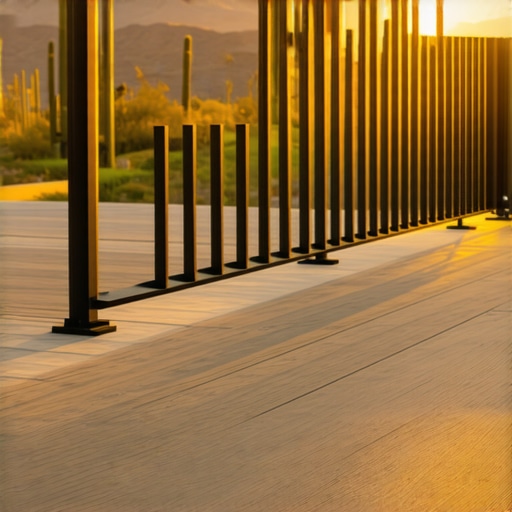
Can Your Railing System Handle 115-Degree Afternoons?
Many homeowners choose sleek black metal for their custom railing systems because it looks incredible against a desert sunset. But there’s a massive ‘trap’ here: why your black aluminum railing gets too hot to touch. In the high desert, dark metal can reach temperatures that cause skin discomfort or worse. If you have kids or pets, this isn’t just an inconvenience; it’s a safety hazard. I always suggest a ‘cocktail rail’—which is essentially a flat composite board mounted on top of the metal railing. It gives you a place to set a drink and, more importantly, a surface that stays touchably cool. When you select the perfect railing system, you have to think about thermodynamics, not just aesthetics.
Don’t Let Your Pergola Do the Desert Sway
Another subtle mistake is the assumption that a pergola attached to your house is inherently stronger. Actually, the ledger-free pergola—why freestanding is often better is a rule I live by in arid regions. Homes in dry climates often experience significant settling, and a ledger-attached structure can pull on your siding over time. Plus, if you don’t install it perfectly, why your pergola needs knee braces becomes painfully obvious the first time a monsoon wind kicks up. Without that diagonal bracing, your beautiful shade structure will start to lean or shimmy. According to the North American Decking and Railing Association (NADRA), structural failure is often a result of ignoring these lateral loads and environmental stress. I’ve personally seen 4×4 posts twist so hard they cracked the concrete because the builder skipped the bracing. Have you ever fallen into this trap or noticed your deck ‘shifting’ over the years? Let me know in the comments below.
Beyond the structural frame, I’ve found that my ‘maintenance-free’ life only works if I have the right arsenal in my garage and the right mindset during the build. I no longer guess where a post goes or how many boards I need to order. Before I ever pick up a saw, I spent time in the digital world. You should really understand why you need a 3D model before buying a single deck board; it allows you to visualize the shade patterns of your pergola and ensures you aren’t over-ordering expensive materials that will just sit and bake in the sun. For the installation itself, I’m obsessed with precision. Using a dedicated template isn’t just for pros—the drill guide hack for centered baluster holes is my secret weapon for making a DIY railing look like a million-dollar custom job. It prevents that ‘shaky’ look that happens when hand-drilled holes are even a fraction of an inch off.
How do I keep my desert deck looking brand new for twenty years?
The desert is brutal on surfaces, but most people actually damage their decks by over-cleaning them. I have seen homeowners take a high-powered spray to their boards, only to realize too late why you should never use a pressure washer on composite. The intense pressure can etch the polymer surface, creating tiny grooves that trap desert dust and make the deck look permanently dirty. Similarly, avoid the temptation to reach for the jug under the sink; why you should never use bleach on your composite deck is a lesson in chemistry—it can break down the UV inhibitors and leave your boards looking chalky and old. Instead, I stick to a soft-bristle brush and a mild dish soap twice a year. 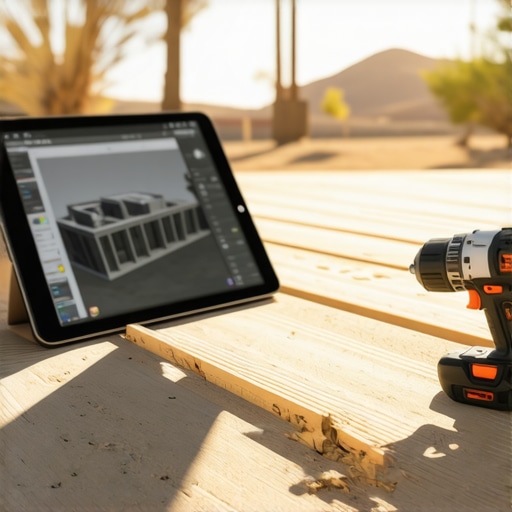
While the surface stays pretty, you have to be the guardian of what’s underneath. I make it a habit to perform the 10-minute flashlight test for finding hidden ledger rot every spring. In dry climates, we often forget that the few rains we do get can be the most damaging if they get trapped behind the house-to-deck connection. If you are worried about the overall health of an older structure, knowing how to test your deck for structural fatigue can save you from a dangerous collapse. According to technical documentation from AZEK Building Products, capped polymer materials are engineered to resist the ‘thermal cycling’ of the desert, but they still rely on a healthy, ventilated frame to perform at their peak. Looking ahead, I predict we are going to see a massive shift toward ‘smart’ outdoor living—think integrated sensors in your joists that alert your phone if moisture levels rise or if a beam starts to sag. For now, my best advice is to start with a digital plan. I highly encourage you to try the 3D modeling phase for your next project; it’s the single most effective way to eliminate ‘builder’s regret’ before the first screw even goes in.
The Hardest Lesson I Learned About Arid Decking
If there is one thing I’ve learned after years of fighting the relentless sun, it’s that ‘low maintenance’ doesn’t mean ‘no attention.’ I used to think I could just install the boards and walk away, but I quickly realized that the desert forces you to be far more strategic about the details. For instance, I’ve seen countless DIYers fall for the trap of using budget clips, which is exactly why hidden fasteners can be a maintenance nightmare when the boards start expanding and contracting aggressively during thermal cycles. Another lightbulb moment was realizing that even the best composite needs a solid, ventilated foundation, which is why I now share composite decking secrets with every homeowner I consult. It’s about working with the environment, not against it, and recognizing why composite decks are the better choice for high-traffic areas where extreme heat and constant use are the norm.
My Essential Toolkit for a Cool Desert Deck
To get professional results, you need more than just a hammer and a level; you need a digital-first mindset. I swear by starting with a virtual plan. You really need to understand why you need a 3D model before buying a single deck board because it prevents expensive waste and ensures your layout accounts for the sun’s trajectory. For long-term health, I recommend performing the 15-minute deck inspection every homeowner should do every spring. This simple habit is the difference between a minor seasonal tweak and a major structural failure down the road. Finally, always check resources that help you identify high-quality capped decking so you aren’t stuck with materials that fade or chalk in extreme UV radiation.
Your Turn to Reclaim Your Backyard
Building a desert oasis isn’t just a home improvement project; it’s an investment in your quality of life. There is something deeply satisfying about watching a sunset from a deck that isn’t cracking, splintering, or peeling under the weight of the sun. By embracing these innovative deck design ideas that elevate your homes curb appeal, you are creating a sanctuary that welcomes you rather than demanding your labor. It’s time to stop sanding and start relaxing in the shade. Have you ever dealt with a deck that felt like a literal frying pan in the middle of summer? Let me know your survival stories in the comments below!