
I remember the first time I felt a railing ‘give’ under my hand. It was a humid July afternoon on a deck I’d finished only two years prior. I had used some leftover zinc-plated screws from an interior cabinet project because, at the time, I thought a screw was just a screw. That sickening crunch of rusted metal snapping under the weight of a guest was my wake-up call. I was lucky nobody ended up in the bushes below, but the embarrassment—and the immediate realization of my own negligence—stayed with me much longer than the repair job did.
Those Shiny Zinc Screws Are Secretly Destroying Your Hard Work
If you are currently looking at a box of multi-purpose indoor screws and wondering if they will work for your new railing system, please, put them back on the shelf. I made that mistake early in my DIY journey, thinking I was saving twenty bucks. In reality, I was setting a timer on my deck’s structural integrity. Indoor fasteners are typically made of steel with a thin zinc plating that is designed for dry, climate-controlled environments. Once they meet rain, humidity, or the chemicals in pressure-treated lumber, they begin to corrode from the inside out. According to engineering studies on galvanic corrosion, the high concentration of copper in modern treated wood actually accelerates the decay of standard steel screws, leading to a phenomenon known as ‘hydrogen embrittlement’ where the screw head simply snaps off without warning. Today, I am going to show you why choosing the right hardware is the difference between a lifetime of memories and a costly, dangerous renovation.
Is this just a way for hardware stores to charge me more?
I get the skepticism. It feels like every aisle in the big-box store is trying to upsell you on ‘premium’ coatings and fancy packaging. But this is not about vanity; it is about the chemistry of your composite decking or wood project. When those indoor screws fail, they often leave behind dark, ugly streaks of iron oxide that permanently stain your beautiful boards. Even worse, a wobbly railing post is usually the first sign that your fasteners have already given up the ghost. Have you ever noticed your railing feeling a bit ‘crunchy’ or loose after a particularly wet winter?
The Hidden Chemical War Inside Your Deck Posts
When you drive an indoor screw into pressure-treated lumber, you are essentially putting a piece of sacrificial metal into a battery. The moisture and the chemicals in the wood create an electrolytic environment that eats away at the fastener. This is exactly why my first railing failed. I did not respect the science of the outdoors. If you want to avoid the headache of drilling out snapped-off screw shanks in three years, you need to understand which coatings actually stand up to the task. We are talking about hot-dipped galvanized or stainless steel, specifically designed to handle the expansion and contraction of your custom railing systems. Don’t let a small piece of metal ruin a big investment.
Choose Your Metal Like Your Life Depends on It
To stop your deck from becoming a literal hazard, you have to match the metal to the wood. Pressure-treated lumber is packed with copper, and when that copper gets wet, it wants to eat your screws. This is why hot-dipped galvanized (HDG) fasteners are the industry standard. They are dipped in molten zinc, creating a thick, sacrificial layer that fights off the copper. However, do not confuse these with ‘electro-galvanized’ screws, which are just shiny imposters that will rust in a single season. I once spent an entire Saturday trying to save a staircase because I ignored the stringer notch hack for squeak-free deck stairs and used standard deck screws where I should have used structural lag bolts. Halfway through, a screw head popped off like a champagne cork, leaving the shank buried deep in the lumber. I had to spend two hours with a plug cutter just to get it out. 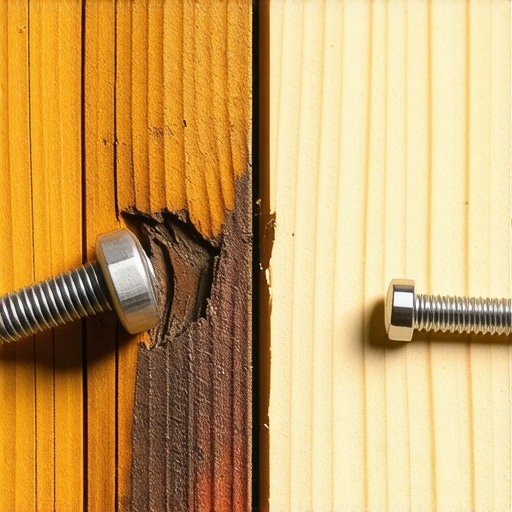
Stainless Steel is the King of Coastal Zones
If you live within twenty miles of the ocean, even hot-dipped galvanized hardware won’t save you. Salt spray is a relentless corrosive agent. For these environments, 304-grade or 316-grade stainless steel is your only real defense. It is more expensive, but it doesn’t rely on a coating; the metal itself is resistant to the salt. When working with metal railing posts, using stainless steel prevents the unsightly brown streaks that eventually lead to structural failure.
Lock Down Your Frame with the Right Force
It is not just about the chemistry; it is about the physics of the load. Deck screws are designed to pull two boards together, but they are terrible at resisting ‘shear’—the force that wants to slide one board past another. If you are attaching a ledger board or a heavy railing post, you need structural screws or carriage bolts. I learned the hard way about shear strength on a project in 2018 when I used three-inch deck screws to mount a heavy wooden planter to a rim joist. Two months later, I found the planter on the lawn because the screws had simply snapped under the weight. Now, I always use the 20 bracket that fixes wobbly railing posts fast to ensure the connection is mechanical, not just friction-based.
Prevent the Snap During Deep Freezes
Have you ever wondered why your deck screws are snapping in cold weather? Wood expands and contracts significantly when the temperature drops. If you use cheap, brittle screws, they can’t handle the movement and will shear off under the pressure of the shrinking wood. High-quality fasteners are engineered with a bit of ‘give’ and often feature a wax coating to reduce friction during installation. To further protect the most vulnerable parts of your frame, always apply the flash and tape method. This prevents water from sitting in the screw holes, which is where the rot usually starts. By sealing the top of the joist with butyl tape before you drive your screws, you are creating a watertight gasket that keeps the wood dry and the metal protected from the ‘battery’ effect of the treated lumber.Let’s dig deeper into a mistake I see even seasoned installers make: the belief that more hardware always equals more strength. In my years of building, I’ve realized that over-fastening is a silent killer of structural integrity. When you drive five heavy-duty screws into the same small area of a post base, you aren’t making it stronger; you’re effectively perforating the wood like a sheet of stamps. One significant impact, and the entire section can shear off along the line of those holes. This is why I always lean on the double rim joist secret for rock solid deck edges instead of just adding more bolts. It creates a massive, stable surface area for the load to distribute naturally across the frame. I also have to address the biggest ‘vanity’ trap in the business: mitered corners on your top rails. Everyone thinks they look great for innovative deck design ideas that elevate your homes curb appeal, but they are a ticking time bomb in most climates. Because wood and composite materials expand and contract linearly, those beautiful 45-degree angles will inevitably open up over time, creating a sharp, ugly gap that catches debris and moisture. I’ve reached the point where I tell clients why mitered corners are a mistake for high-traffic decks and suggest a simple butt joint with a decorative cap instead. It’s less ‘fancy’ on day one, but it looks identical ten years later while keeping the structure dry.
Does adding more brackets actually fix a bouncy railing?
Surprisingly, the answer is often no. Most homeowners try to fix a shaky rail by cranking down on the post-to-deck connection, but the real culprit is usually ‘joist roll.’ If your joists are twisting even slightly under your feet, no amount of expensive hardware on the post will stop the vibration you feel in your hand. This is where the simple blocking move that stops your deck from shaking when you walk becomes your best friend. By installing solid wood blocks between the joists, you turn a series of individual ribs into a rigid diaphragm. According to the American Wood Council’s Design for Code Acceptance (DCA) 6, lateral load resistance is far more dependent on the integration of the entire frame than on the individual fastener’s tensile strength alone. 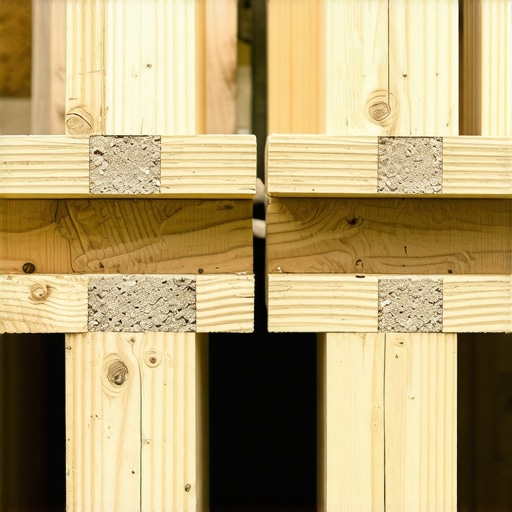 The ‘oops’ factor I see most often involves the transition from the frame to the finish. People get so focused on the 3-4-5 rule for squaring your deck frame every time that they forget how composite decking secrets longevity tips for a lasting deck apply to the substructure. If your frame is perfectly square but your joists aren’t crowned correctly, your beautiful expensive boards will look like a roller coaster within six months. Have you ever fallen into the ‘more is better’ trap with hardware or found yourself staring at a miter joint that just won’t stay closed? Let me know in the comments below; I’d love to hear how you handled it.
Stop Rot Before It Starts with One Simple Gap
After you have spent thousands on high-end materials, the biggest threat to your investment is actually the house it is attached to. I have seen perfectly good frames rot out in less than five years because the builder ignored the drainage behind the ledger board. This is where the 2-inch gap rule for preventing rot behind your deck ledger comes into play. It creates a space for debris to fall through and air to circulate, ensuring that the critical connection point stays bone-dry. I also swear by the joist tape secret for doubling your decks lifespan. By applying a butyl-based flashing tape to the top of every joist before the boards go down, you are shielding the most vulnerable wood from standing water. I once inspected a deck where the owner hadn’t used tape, and the screw holes had turned into tiny wells of rot that effectively ‘melted’ the joists from the inside out. 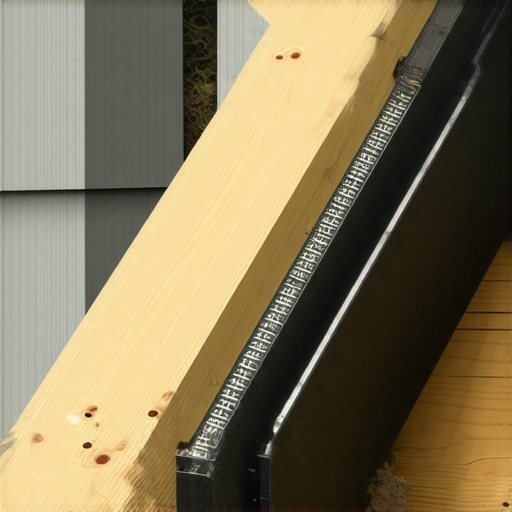
The Specialized Tools That Actually Earn Their Keep
If you are still using a standard cordless drill for an entire new railing system, you are punishing your wrists for no reason. I personally never step onto a job site without a high-torque impact driver and a set of cobalt bits. When you are dealing with aluminum or stainless steel, standard high-speed steel bits will burn up in seconds. I’ve found that the secret to drilling through metal railing posts without breaking bits is a combination of low-speed pressure and a drop of cutting oil. It sounds like overkill until you have to fish a broken bit out of a powder-coated post. For precision, I also recommend a dedicated stair gauge for your framing square. It’s the only way to avoid the dreaded ‘uneven step’ that leads to why your deck stairs feel like a workout and how to fix the rise issues later.
How can I ensure my railing stays solid through the seasons?
Maintenance is not just about cleaning; it’s about inspecting the tension. If you have a cable system, why your cable railing sagged over winter is usually due to the thermal contraction of the metal. I recommend a mid-spring check using a tension meter. According to the Simpson Strong-Tie Engineering Technical Bulletin (T-F-CORROSION24), the chemical interaction between fasteners and wood is a 365-day-a-year process. You need to look for why your railing post sleeves are cracking at the base, as this is often the first sign that the wood underneath is swelling or the hardware is failing. If you notice the color starting to slip, learning how to restore the color of a faded composite deck early can save you from a full replacement. Looking forward, I predict we will see more ‘smart’ fasteners integrated with sensors that can alert your phone if a structural connection is losing its torque. For now, the best tech you can use is a simple torque wrench to meet the manufacturer’s exact specifications. This weekend, I challenge you to grab a roll of butyl joist tape and apply it to just one section of your frame—you will immediately see why it is the gold standard for pro longevity.
The Hard Truths About What Actually Holds a Deck Together
After two decades of building and inspecting outdoor structures, I have realized that the fasteners are not just hardware; they are the structural insurance for your home. I have seen beautiful projects crumble because of a five-cent difference in screw price. One lightbulb moment for me was realizing that over-tightening is just as dangerous as under-tightening. When you bury a screw head too deep into the wood, you create a cup that catches water, speeding up the rot cycle. Another hard lesson? Never trust a ‘multi-purpose’ label when it comes to why you should never use standard screws for coastal decks. If the box does not explicitly state it is rated for ACQ (Alkaline Copper Quaternary) lumber, it has no business being in your frame. Finally, remember that the most expensive fastener is the one you have to replace three years later. Spend the money upfront, or spend your weekends in the crawlspace later. #IMAGE_PLACEHOLDER_E#
The Reliable Gear I Keep in My Truck
I do not get paid to promote specific brands, but I do get paid to build things that last. My first essential tool is a high-torque 18V impact driver. Unlike a standard drill, it uses a hammer-and-anvil mechanism that prevents the bit from slipping and stripping the head of your expensive stainless steel screws. I also rely heavily on The American Wood Council’s Code Guides; they are my ‘bible’ for ensuring every connection meets safety standards. For the physical build, I never start a job without a roll of butyl joist tape and a set of cobalt-tipped bits, which are vital for the complete guide to choosing railing systems for safety style. These tools transform a frustrating DIY project into a smooth, professional-grade installation.
Give Your Family a Structure They Can Trust
Your deck is more than just a collection of boards and bolts; it is the stage for your family’s best memories, from summer BBQs to quiet morning coffees. By choosing the right metals and following the science of structural integrity, you are building a legacy of safety. Do not be afraid to dive into the technical details, like the permit checklist what most diyers forget to ask, because that knowledge is what separates a shaky platform from a rock-solid investment. Take your time, use the right hardware, and enjoy the peace of mind that comes with a job done right. Have you ever noticed your railing feeling perfectly solid one day and suddenly wobbly the next? Let me know in the comments below!