
It was 5:00 AM in the middle of January, and the air was so crisp it felt like it might shatter. I stepped out onto my deck, coffee in hand, and leaned slightly against the handrail to look at the frost on the trees. *Crack.* That sound—a sharp, metallic snap—is something you never want to hear in the dark. I looked down to find a pile of grey metal shards on the deck boards. My railing bracket hadn’t just failed; it had essentially exploded. If you have ever walked outside after a deep freeze only to find your handrail wobbling or hardware lying on the ground, you know exactly how frustrating and dangerous this is. Today, I am going to share exactly why this happens and how you can stop your custom railing systems for safety and style from becoming a winter liability.
Winter Shouldn’t Turn Your Deck into a Danger Zone
I’ve spent years building and repairing decks, and I’ll be the first to admit that I made some major mistakes early on. I once thought a bracket was just a bracket. I bought the cheapest ‘zinc-alloy’ options from the big-box store, thinking I was being savvy. But those cheap alloys are exactly what lead to disaster. When the temperature drops, materials undergo a process of thermal contraction. Wood, composite, and metal all shrink at different rates. If your hardware is brittle and doesn’t have the ‘give’ to handle that movement, it’s going to snap. This is often why you see cable railing tensioners fail or brackets shear off entirely. By following a few longevity tips for a lasting deck, you can avoid the headache of mid-winter repairs. Have you ever found a broken bracket on your deck after a particularly cold night? I’d love to hear which part of your railing gave out first in the comments.
Is the cold really enough to break solid metal?
You might be skeptical that ‘just some cold’ can break metal. However, the science is pretty clear. According to the American Society of Civil Engineers, many low-grade cast metals undergo a ‘ductile-to-brittle transition’ at low temperatures. This means a metal that is tough and flexible in July becomes as fragile as a tea cup in January. When your deck frame shifts—even by a fraction of an inch—that brittle metal can’t absorb the stress. This is a common issue when people are elevating their backyard with new designs but forget to upgrade the structural hardware to match the environment. We need to look at the ‘Why’ behind these failures before we can jump into the fix.
Choose Hardware That Won’t Turn Brittle
Think of your railing hardware like the ligaments in your knee. If they’re stiff and brittle, something is going to tear. When you’re looking at custom railing systems for safety and style, you have to prioritize 304 or 316-grade stainless steel or powder-coated thick-gauge aluminum. Zinc-alloy, which is what most of those ‘mystery metal’ brackets are made of, is essentially the glass of the metal world. It’s strong under static pressure but shatters under the dynamic stress of freezing and thawing. I learned this the hard way on a project in late 2018. We had installed thirty brackets on a wraparound porch, only to return in March to replace twenty-two of them because the casting literally crystallized and snapped. Now, I never use anything that isn’t rated for structural temperature swings.
Stop Trusting Single Bolts at Your Corner Posts
Your railing is only as strong as the post it’s attached to. Most DIYers—and even some ‘pros’—just lag a post into the rim joist and call it a day. But a single bolt acts like a pivot point. In the winter, as your wood frame dries out and shrinks, that bolt loses its bite. I always advocate for the double-nut secret for rock-solid railing posts. By using through-bolts with a locking nut on the inside of the joist, you create a mechanical squeeze that no amount of frost-heave can loosen. I remember a particularly nasty job where the railing was so wobbly you could move it four inches with one finger. We went back in, added internal blocking, and converted the lags to through-bolts. It transformed the deck from a liability into a fortress. 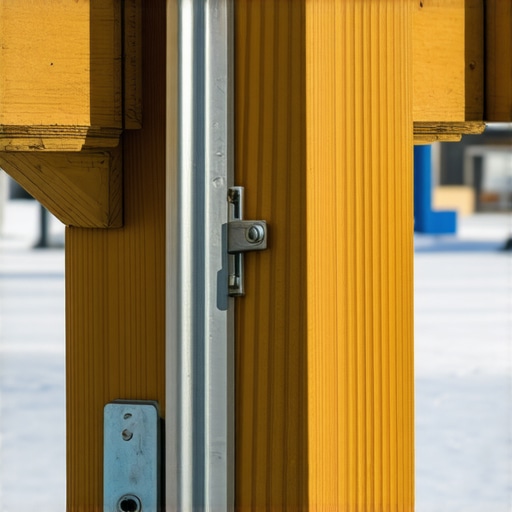
The Secret to Tension That Doesn’t Sag
If you’ve opted for the modern look of cables, you’ve probably noticed they get ‘soft’ in the summer and then tighten up like guitar strings in the winter. This is the primary reason why cable railing tensioners fail. If you over-tighten them in July, the metal contraction in January will pull the hardware right through the post. To avoid this, you need to master the secret to installing cable railings without losing tension: always leave two threads of ‘play’ in your adjusters for seasonal movement. Think of it like a bridge expansion joint—it needs room to breathe.
Give Your Composite Room to Move
Finally, remember that your deck surface is a living, moving thing. Maximize outdoor living with low-maintenance composite decking by respecting the gap. I’ve seen beautiful miter joints turn into buckled messes because the builder didn’t realize why dark composite boards need extra expansion space. Dark colors soak up heat, and when that heat vanishes in winter, the boards can shrink up to 1/8th of an inch. If your railing posts are pinned tight against those boards without a buffer, the deck will literally try to push your railing off the frame. Use the 3-second push test on every post before the first snow hits to ensure everything is seated and secure.
A common mistake I see most homeowners—and even many seasonal contractors—make is the belief that a ‘perfectly rigid’ deck is a safe deck. In my experience, if your structure doesn’t have a calculated amount of micro-flex, the winter freeze will find the weakest point and create a fracture. We often focus so much on the complete guide to choosing railing systems for safety and style that we forget the structural skeleton underneath is actually a moving, breathing entity. If you lock everything down with zero tolerance, the expansion force of ice and the contraction of metal will inevitably shear your bolts.
The Hidden Conflict Between Your Frame and Your Composite
One of the biggest ‘traps’ in modern building is installing high-end composite boards over a wet, pressure-treated frame without a secondary barrier. According to the USDA Forest Products Laboratory, Southern Yellow Pine (the most common framing lumber) can shrink significantly as its moisture content drops from ‘green’ to its equilibrium state. This is exactly why your pressure-treated frame is pulling your composite apart. As the frame twists during a dry winter freeze, it puts immense lateral pressure on your railing posts. This is why I always use the joist tape secret for doubling your deck’s life; it acts as a small gasket that allows for slight movement without sacrificing the grip of your fasteners. Have you ever fallen into this trap where your boards started gapping after the first year? Let me know in the comments.
Why does my pergola feel less stable when the temperature drops?
If you have a pergola integrated into your deck, you might notice a slight sway in January that wasn’t there in July. This is usually because most DIY structures fail to account for ‘uplift’ and wood shrinkage at the post-to-beam connection. I’ve found that why your pergola posts need to be 6×6 minimum for stability becomes painfully obvious during a winter storm. A 4×4 post can actually bow under the weight of a snow load, whereas a 6×6 has the cross-sectional density to resist that ‘cold-creep.’ To prevent this, you should look into how to stop a free-standing pergola from shifting during storms by using notched beams rather than just bolting them to the sides of the posts. This mechanical ‘seat’ ensures that the weight is carried by the wood, not just the hardware that is currently shrinking in the cold.
Stop Your Railings from Rattling Once and For All
Finally, let’s talk about that annoying winter rattle. When the plastic components in your railing spacers shrink, your balusters can become loose. Instead of just caulking them—which will peel in six months—you need a more permanent solution. Understanding how to stop your deck from rattling when people walk involves using EPDM rubber shims. Unlike standard plastic, EPDM remains flexible down to -40 degrees. This keeps your custom railing systems for safety and style feeling solid and premium regardless of the thermostat. When you combine this with longevity tips for a lasting deck, you aren’t just building for the summer; you are building a structure that survives the decade.
I’ve spent too many hours chasing a ‘perfectly level’ beam only to realize my 4-foot bubble level was slightly out of whack. If you’re serious about high-end results, you have to stop relying on gravity-based tools for large-scale structures. I personally switched to a green-beam rotary laser for every single project because, in my experience, a bubble level is only as good as your eyesight at ten feet. When you are using the level and laser method for setting pergola heights alone, you eliminate the margin of error that causes those annoying 1-inch slants across a twenty-foot span. It’s the difference between a deck that looks ‘okay’ and one that looks like it was precision-machined.
Precision Jigs Beat Hand-Eye Coordination Every Time
Consistency is what separates a DIY job from a professional masterpiece. I never drive a screw into a deck board without a depth-control jig. I use the Smart-Bit Depth Setter because it ensures every single fastener is seated exactly 1/16th of an inch below the surface. This isn’t just about looks; it’s about structural integrity. Over-driving screws creates a ‘cup’ where water sits, leading to the exact kind of rot we talked about earlier. By using the jig i use for consistent deck screw depth, you ensure the cap layer of your composite isn’t compromised. This works hand-in-hand with the 3-4-5 triangle move for squaring up a new deck frame. If your frame isn’t square from the first joist, your railing brackets will never align, and you’ll be fighting the geometry of the house for the rest of the build.
How do I keep my deck looking brand new for twenty years?
Maintenance isn’t a once-a-year power wash; it’s a proactive strategy. Most people wait until they see a problem to act, but by then, the damage is subsurface. According to the American Wood Council (AWC) in their DCA6 Prescriptive Residential Wood Deck Construction Guide, the ledger-to-house connection is the most frequent point of catastrophic failure. I check my ledger flashing every spring using the flashlight trick for finding hidden joist rot at night. For the surface, I stick to simple solutions. You don’t need harsh chemicals; the soap and sponge fix for oil stains on composite decking is usually enough to keep the warranty intact. If you have an accidental spill during a summer BBQ, knowing how to clean red wine stains off composite decking fast can save you from a permanent purple reminder of your last party. Following these composite decking secrets longevity tips for a lasting deck ensures your investment doesn’t fade into a maintenance nightmare.
#IMAGE_PLACE_HOLDER_D#
The Next Frontier of Outdoor Living
Looking ahead, I predict a massive shift toward ‘smart’ outdoor structures. We are already seeing composite decking trends durable solutions for modern outdoor living that include built-in sensor arrays for detecting moisture buildup in framing. In the next five years, your deck won’t just sit there; it will alert your phone if the joists are damp or if a cable railing tensioner has lost its spec. We are moving away from heavy, high-maintenance materials toward systems that prioritize modularity. If a board gets scratched, you’ll be able to ‘un-clip’ it and swap it in minutes. To stay ahead of the curve, I highly recommend you master how to stop your deck from squeaking when you walk now by using subfloor adhesive on your joists before the decking goes down. It’s a small step today that prevents a massive headache five years from now. I challenge you to try the laser-level method on your next post install—you will never go back to a bubble level again.
Hard-Won Truths from a Decade of Deck Building
Over the years, I’ve realized that the biggest enemy of a deck isn’t the rain or the sun—it’s the silent, invisible force of thermal expansion. I used to think I could out-tighten nature, but I quickly learned that if you don’t build in some ‘breathing room,’ the ice will do it for you, usually by snapping a bracket. Another lightbulb moment was realizing that why cable railing tensioners fail is almost always due to over-tensioning during the initial installation phase. Finally, never underestimate the power of a proper alloy; zinc might look shiny in the store, but it’s a liability when the frost hits and you realize 3 mistakes that make your cable railing sag every winter are often rooted in material choice.
My Toolbox for a Deck That Defies the Elements
If you want to build a deck that outlasts the mortgage, you need the right gear. I never start a project without my Rotary Green-Beam Laser for leveling—it makes a bubble level look like a toy when you’re working across long spans. For structural guidance, I always keep a digital copy of the AWC DCA6 Guide nearby to ensure every connection meets modern safety codes. When it comes to longevity, I swear by 316-Grade Stainless Steel for any hardware exposed to the air and the joist tape secret for doubling your deck’s life to protect the underlying frame from moisture traps. These aren’t just tools; they are my insurance policy against mid-winter repairs.
Your Next Weekend Project Just Got Safer
Building a great deck is about more than just aesthetics; it’s about creating a space where you feel completely secure regardless of the weather. By focusing on these structural details now, you can enjoy your low-maintenance composite decking for decades without worrying about the next deep freeze. Don’t let a few brittle brackets stand in the way of your peace of mind. You’ve got the knowledge now—go out there and build something that lasts. Have you ever heard that gut-wrenching metallic ‘snap’ on a freezing winter morning? Let me know in the comments below!