
I was sitting out there, feet up, admiring the way the warm glow hit the custom railing systems I’d just finished installing. It was supposed to be the perfect summer evening. Then the first moth hit me square in the forehead. Five minutes later, my ‘relaxing’ sanctuary looked like a scene from a low-budget horror movie, with every insect in a three-mile radius descending on my deck. I’d made the classic mistake: I chose my lights based on how they looked to me, completely ignoring how they looked to a mosquito. It felt like a betrayal of my hard work on the deck design strategies I’d bragged about to my neighbors. Today, we’re going to fix that. I’ll show you how to reclaim your outdoor space without living in the dark, using the same hard-earned lessons I learned the night I was forced to retreat into my kitchen.
Stop Inviting Every Bug in the County to Your Backyard
When I first started experimenting with 7 lighting ideas for modern outdoor kitchens, I thought more light was always better. I installed these massive, high-intensity cool-white LED floods. Big mistake. I didn’t realize that I was basically broadcasting a ‘free buffet’ signal across the neighborhood. Most people think bugs are just a part of nature you have to tolerate, but that’s a myth. The truth is, your lighting choices are likely actively recruiting them. It’s not just about the brightness; it’s about the spectrum. I spent weeks perfecting my pergola trends research, only to ruin the vibe with a lighting setup that acted as a beacon for every beetle in the zip code.
Are ‘Bug-Proof’ Bulbs Just a Marketing Gimmick?
It’s a fair question to ask because we’ve all been burned by products that don’t live up to the hype. You might think it’s all a scam to get you to buy more expensive yellow bulbs. However, the science behind it is pretty solid. According to a study published by the American Association for the Advancement of Science, insects are significantly less attracted to warm-toned LED lights that lack UV and blue light wavelengths. I learned this the hard way after spending a fortune on high-output ‘daylight’ bulbs that turned my outdoor space into a literal magnet for pests. Tell me, have you ever had to retreat indoors because your new lighting setup felt more like a bug trap than a feature? It’s frustrating, right? But once you understand how light temperature affects insect behavior, you can design a space that stays bright for you and boring for them. We are going to look at exactly how to swap those ‘blue’ magnets for something much more human-friendly.
Swap the Spectrum to Keep the Swarm Away
When you are standing in the hardware store aisle staring at a wall of lightbulbs, ignore the ‘super bright’ labels and look for the Kelvin rating. This is the temperature of the light. For a deck that doesn’t feel like a bug magnet, you want to stay in the 2000K to 3000K range. I call this the ‘Golden Rule’ of outdoor lighting. Think of high-Kelvin, blue-white light like a loud, high-pitched whistle for every flying pest in the woods. They can’t resist it. By switching to warm-toned LEDs or actual ‘bug bulbs’—which are just yellow-coated bulbs that filter out the blue light—you are effectively turning off that whistle. I remember helping a buddy install a lighting kit on his new maximize outdoor living with low-maintenance composite decking project. He initially went with those bright white shop lights because he wanted to see his steaks clearly while grilling. Within ten minutes of sunset, we couldn’t see the meat for the moths. We swapped those for 2200K warm strips under the eaves, and it was like someone put up an invisible shield. The difference wasn’t just aesthetic; it was the difference between eating outside and retreating to the living room.
Focus on Indirect Glow Instead of Beacons
Stop pointing your lights out into the yard. If you have a floodlight mounted high on your house aiming toward the center of your deck, you’re creating a stage for a pest performance. Instead, use your deck’s architecture to hide the source. This is where how to select the perfect railing system for every deck becomes a tactical decision. By installing small, downward-facing lights under the top rail of your custom railing systems, you illuminate the walking surface without broadcasting light into the sky where the bugs are circling. It’s the difference between a lighthouse and a nightlight. One is designed to be seen from miles away; the other is designed to show you where you’re stepping. 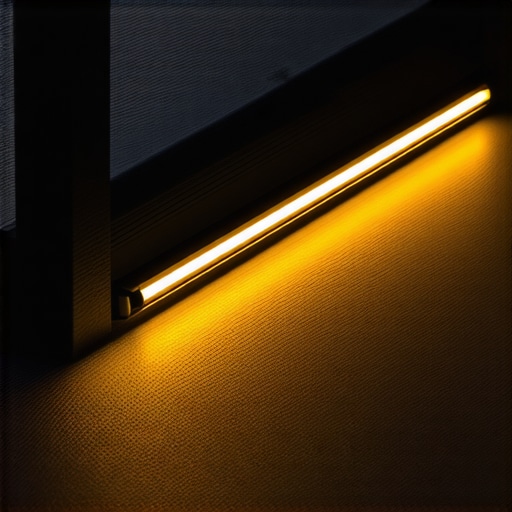
Position Your Light Traps Strategically
If you absolutely need bright, white light for tasks like cleaning the grill or searching for a dropped earring, put those lights on a separate switch and move them at least 20 feet away from your primary seating area. I call this the ‘Decoy Method.’ On my own deck, I have a single high-intensity light mounted on a fence post way out in the perimeter. When we have guests, I turn that on first. It draws the initial wave of bugs away from our table. It’s a simple trick that works because insects are competitive; once they find a high-energy light source, they tend to stick to it. While they are busy partying by the fence, we are enjoying our meal under the soft, amber glow of the pergola trends lighting I integrated into the rafters. Using the spacer hack for perfectly aligned pergola slats allowed me to hide the wiring for these low-voltage LEDs perfectly, making the light feel like it’s coming from the wood itself rather than a bulb.
Don’t Let Your Railings Become Heat Sinks
It is a lesser-known fact that some bugs are attracted to heat as much as light. If you are using old-school incandescent bulbs, they get incredibly hot. This is a double whammy: you’re providing a visual signal and a thermal one. This is particularly problematic if you have dark-colored components. Since why black aluminum railings get hotter than you think is already a factor in the summer, adding heat-generating bulbs just compounds the issue. Stick to LEDs. They run cool and don’t emit the IR radiation that many biting insects use to find their next meal. I learned this when I used a the flashlight hack for finding railing bracket alignment during a late-night repair; the heat from my old halogen work light had a cloud of gnats around it in seconds, while the nearby LED post cap lights were completely ignored.Just like the wrong light spectrum turns a sanctuary into a bug buffet, there are invisible mechanical forces that can turn a high-end deck into a structural headache. I see it all the time: homeowners spend a fortune on maximize outdoor living with low-maintenance composite decking, only to treat the installation like a standard wood project. It’s a recipe for disaster. The biggest trap is the ‘set it and forget it’ mentality. If you aren’t accounting for the physical nuances of synthetic materials, you’re essentially building a ticking time bomb. Let’s dig deeper into the mistakes that even the most seasoned DIYers—and a few pros—regularly make.
Why Hidden Fasteners Aren’t Always the Gold Standard
The common wisdom in innovative deck design ideas that elevate your homes curb appeal is that hidden fasteners are the pinnacle of quality. They look clean and feel great underfoot, but here is the contrarian view: they can be a nightmare for structural longevity. In regions with massive temperature fluctuations, hidden clips can struggle to keep up. I’ve seen countless projects where why hidden fasteners fail on wide profile boards becomes painfully obvious after just one season. The boards expand and contract with such force that they actually shear the clips or pop out of the grooves. If you are using wider boards or living in an area with extreme heat, face-screwing with color-matched plugs might actually be the smarter, more durable move.
Why do my composite boards feel spongy even with the right joist spacing?
It’s a question that keeps many builders up at night. You spaced your joists at 16 inches on center, just like the manual said, but the deck still feels ‘soft’ when you walk. This is where why your composite boards feel spongy under heavy furniture comes into play. Most people don’t realize that standard joist spacing is often the bare minimum. According to research from the Forest Products Laboratory, the modulus of elasticity in wood-plastic composites (WPC) is significantly lower than that of pressure-treated lumber. This means the boards naturally flex more under load. If you want a deck that feels like a solid floor, you need to tighten that spacing to 12 inches on center, especially if you’re installing boards on a 45-degree angle. 
Stop Ignoring the Invisible Force of Thermal Expansion
One of the most overlooked composite decking secrets longevity tips for a lasting deck is the necessity of an expansion joint. I once watched a beautiful deck literally push the siding off a house because the builder didn’t leave enough room for the boards to grow in the sun. This is particularly true for darker colors. Understanding why dark composite boards need extra expansion space is critical because they absorb more UV radiation, leading to significant linear expansion. If you butt them tight against your home’s foundation, that energy has to go somewhere—usually outward, causing the boards to buckle or warp your complete guide to choosing railing systems for safety style as the posts are pushed out of plumb.
Don’t Let Your Joists Rot from the Top Down
The biggest ‘oops’ factor in modern builds is thinking the frame will last as long as the composite surface. It won’t. Water gets trapped between the non-breathable composite board and the top of the wood joist, creating a permanent moisture sandwich. I’ve started using the joist tape secret for doubling your decks life on every single project. It’s a simple butyl tape barrier that prevents the screws from pulling moisture into the wood fibers. Without it, you’re just putting a 25-year board on a 10-year frame. Also, be prepared for the physics of your material; why your composite deck is statistically likely to static shock you is a real phenomenon caused by the plastic content rubbing against the air and your shoes. It’s these tiny, overlooked details that separate a ‘good enough’ deck from a masterpiece. Have you ever fallen into this trap or noticed your deck ‘growing’ in the summer? Let me know in the comments.I spent years struggling with uneven screw depths and wobbly railings before I realized that the right fifty-dollar tool is worth more than five thousand dollars in frustration. If you’re serious about your project, you need to stop eyeballing the finish. I personally swear by a specialized driving jig. It is the jig i use for consistent deck screw depth because it ensures every single fastener sits exactly one-eighth of an inch below the surface without marring the board. Without it, you end up with proud screws that catch your socks or recessed holes that collect water and gunk. When I am working on custom railing systems, I never touch a drill without the simple jig for drilling straight baluster holes. It is the difference between a railing that looks professional and one that looks like a DIY disaster after a few months of shifting. 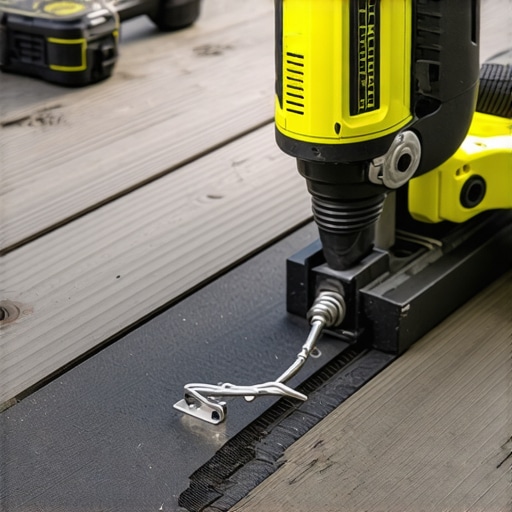
Where the Industry is Heading by 2025
We are moving toward the smart deck era faster than you might think. I am already seeing elevate your backyard innovative deck design ideas for 2025 that incorporate automated sensors into the actual joist structure. Imagine a pergola trends shift where slats close the second they feel a raindrop or LED lighting that shifts to a bug-deterrent amber spectrum automatically at sunset. We are also seeing a massive push toward why professional builders prefer capped composite over wood because the technology in the protective cap layer has finally solved the fading and scratching issues that plagued the early 2000s builds.
How do I keep my deck looking new for decades?
Maintenance is the part everyone ignores until the first green mold starts to creep in around the edges. First rule of thumb: why you should never use bleach on composite decks is a lesson you do not want to learn the hard way. Bleach is a harsh oxidizer; it will eat the pigments right out of your expensive boards and leave them brittle and chalky. Instead, I use a simple pH-neutral soap and a soft-bristle brush. If you had a barbecue mishap, the soap and sponge fix for oil stains on composite decking is your best friend for long-term preservation. Beyond the aesthetics, you need to perform a the structural vulnerability assessment for checking deck joist rot at least once a year. The North American Deck and Railing Association (NADRA) emphasizes that nearly half of all existing decks in the U.S. are past their useful life and structurally suspect. I take an ice pick and poke the joists where they meet the ledger board; if it sinks in like butter, you have a problem that a new coat of stain won’t fix. Do not wait for a board to snap to check your frame. This weekend, I want you to go out and perform a simple push test on your railings. If there is more than an inch of play, it is time to tighten those carriage bolts and secure your investment.
The Hard-Earned Lessons That Saved My Second Build
Looking back, my biggest mistakes weren’t about the wood I chose, but the physics I ignored. One of the most painful lessons was watching a frame rot because I didn’t use the joist tape secret for doubling your decks life. It’s a simple fix that prevents a moisture sandwich from forming between your boards and the joists. I also learned that your approach to how to select the perfect railing system for every deck needs to account for expansion and vibration, or you’ll be tightening bolts every single spring. Finally, never underestimate the power of the sun; learning how to stop composite deck boards from expanding into your siding is a must for anyone building in a climate with extreme temperature swings.
My Personal Toolkit for a Flawless Finish
If you want a deck that feels solid and looks professional, you have to invest in the right process. I always start by using the string line trick for leveling deck joists before decking to ensure the surface is perfectly flat. When it comes to the actual installation, I never work without the jig i use for consistent deck screw depth because it ensures every fastener sits exactly right without damaging the board surface. For ongoing maintenance, I keep it simple but thorough; performing the ice pick test for checking joist strength on older decks once a year is the best way to catch structural issues before they become dangerous. These tools and habits are what separate a weekend project from a lifetime investment.
Build a Space That Lasts Decades
By staying ahead of the latest composite decking trends durable solutions for modern outdoor living and using the right lighting spectrum, you can turn a basic backyard into a high-end sanctuary. It’s all about the details—the hidden tape, the correct bulb temperature, and the right joist spacing. Don’t be afraid to take your time and get it right the first time. Have you ever noticed your composite boards shifting or making strange noises during a heatwave? Let me know in the comments below, and let’s figure out how to fix it together!
#IMAGE_PLACE_HOLDER_E#