
It was a sweltering Tuesday in August when I heard it. A sharp, plastic crack echoed through the backyard like a distant gunshot. I ran outside to find my expensive “luxury” composite deck literally buckling upward against the house. The boards, which I had so carefully laid flush against the ledger for that “seamless look,” had expanded in the 95-degree heat and were now trying to crawl under my vinyl siding. It looked like a slow-motion car crash. I felt like a total amateur. I had spent thousands on low-maintenance composite decking only to realize I had built a ticking time bomb. The truth is, composite is a marvel of engineering, but it is not a static material. It breathes. It moves. And if you do not respect that movement, it will punish your home’s exterior. Today, I am going to show you exactly how to prevent this “thermal creep” from turning your backyard oasis into a structural headache. We will dive into the physics of why this happens and, more importantly, the how to fix gaps between composite boards and your house before they become a five-thousand-dollar siding replacement project.
Stop the Summer Squeeze Before It Ruins Your House
That is the thing about composite—it is fantastic because it does not rot, but it moves more than a toddler on a sugar rush. If you do not account for thermal expansion, you are not just looking at a cosmetic issue; you are looking at potentially permanent damage to your home’s weather barrier. My biggest mistake early on was thinking I could outsmart the material with extra screws or tighter fits. Spoilers: You cannot win that fight. Composite expands roughly 1/32 of an inch for every 10-degree temperature change per 10 feet of length. On a 20-foot run, a jump from 50°F during installation to 100°F in the afternoon sun means nearly a quarter-inch of movement. According to the North American Deck and Railing Association (NADRA), improper spacing is one of the leading causes of premature deck failure and subsequent house-siding rot. This is why why dark composite boards need extra expansion space compared to lighter tones—they soak up more UV rays and grow even larger. Have you ever noticed your siding looking wavy or heard your deck “clicking” on a hot afternoon? If so, you are likely already dealing with board expansion.
Will a visible gap make my deck look unfinished?
I get it. You want that tight, clean line where the deck meets the house. You fear that a quarter-inch gap will look like a mistake. But trust me, a uniform gap is a sign of professional craftsmanship, while a buckled board is a sign of a DIY disaster. We can actually use the ledger gap fix that prevents house siding rot to make that space look intentional and clean. By following a few composite decking secrets regarding installation temperatures, we can ensure your deck stays flat and your siding stays straight, no matter how high the thermostat climbs.
Let the Boards Slide with Hidden Fasteners
Thinking you can pin a composite board in place with sheer force is like trying to hold back the tide with a bucket. When those boards heat up, that energy has to go somewhere. If you face-screw every board tight, the composite will either shear the screw heads off or buckle in the middle. This is precisely why hidden fasteners pop up in extreme summer heat; they are designed to hold the board down while allowing it to slide along its length. I once helped a neighbor, Greg, who thought he was being ‘extra secure’ by double-screwing every joist on a 100-degree afternoon. By the time October’s first frost hit, his deck sounded like a bowl of Rice Krispies every time he walked on it because the boards were literally snapping against the rigid screws as they contracted. Using a high-quality clip system acts like a sliding track, giving the material the freedom it needs to grow and shrink without tearing your frame apart.
Master the Art of the Quarter-Inch Gap
The most critical area for protection is where the deck meets your home’s exterior wall. You should never, ever install a board flush against the house. I aim for a minimum of a 1/4-inch to 3/16-inch gap, depending on the ambient temperature during the build. If it is freezing out, leave a larger gap because those boards are at their smallest. If it is a scorcher, you can tighten it up slightly. Keeping this space clear isn’t just about expansion; it’s about airflow. Without it, leaves and debris get trapped, holding moisture against your rim joist. This is where the ledger gap fix that prevents house siding rot becomes your best friend. It ensures that even when the boards expand to their maximum length, they never actually touch the siding, maintaining a channel for water to escape. 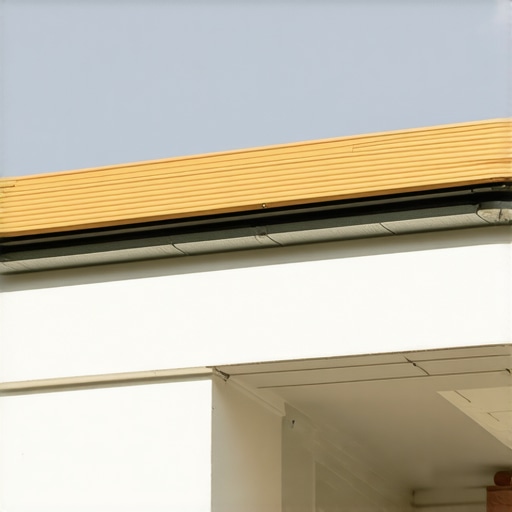
Stop Moisture Dead with Proper Flashing
While we are focusing on physical movement, we cannot ignore what happens underneath those moving parts. As composite boards expand and contract, they can rub against the wood framing. Over time, this friction can wear down the pressure-treated lumber, especially since why pressure-treated wood turns gray faster than you think and loses its structural resilience when exposed to constant dampness. I always implement the drip edge trick for protecting deck ledger boards to guide rainwater away from the house and over the ledger. To take it a step further, applying the joist tape secret for doubling your decks life provides a lubricated, waterproof barrier between the joist and the deck board. This not only prevents rot but also eliminates the annoying ‘squeak’ that happens when composite moves against dry wood. It turns a potential structural nightmare into a silent, long-lasting outdoor living space that respects the laws of physics.
Common wisdom in the DIY community suggests that if you buy the most expensive materials, your deck will naturally last thirty years. I am here to tell you that is a flat-out myth. In fact, some of the high-end features people obsess over can actually accelerate failure if you don’t understand the underlying mechanics. Take hidden fasteners, for instance. Everyone wants that perfectly smooth surface, but many homeowners don’t realize why hidden fasteners fail on wide profile boards. When you use 8-inch wide planks, the sheer amount of lateral force generated by thermal expansion can snap those ‘invisible’ clips like toothpicks. It is the classic trade-off between aesthetics and engineering, and if you choose the wrong one, you’ll end up with a surface that looks like a roller coaster within two seasons.
The Structural Tug-of-War You Are Losing
The biggest trap I see pros and amateurs alike fall into is ignoring the ‘mismatch’ between the composite and the frame. Your pressure-treated joists expand and contract based on moisture, while your boards move based on heat. This is exactly why your pressure-treated frame is pulling your composite apart during the changing seasons. According to research from the Forest Products Laboratory, wood can lose or gain up to 10% of its dimension based on humidity, while composite stays relatively stable in the rain but grows in the sun. This creates a literal tug-of-war. If you don’t use high-quality joist tape or leave proper gaps, the frame will eventually win, and your boards will cup or crack. This is also one of the 7 reasons your composite decking looks like plastic and performs poorly; it is often a symptom of the material being stressed beyond its design limits.
#IMAGE_PLACE_HOLDER_C#
Why did my cable railing sag after only one winter?
I hear this question constantly from people who spent a fortune on modern aesthetics. The truth is, it’s rarely the cable’s fault. It is usually the result of 3 mistakes that make your cable railing sag every winter, specifically the lack of internal blocking in the posts. When the wood frame shrinks in the cold, it reduces the tension on the lines. Without a rock-solid, reinforced post-to-frame connection, that ‘tight’ cable system becomes a safety hazard by January. To avoid this, I always recommend looking into why solid core composite is worth the extra bulk when building surrounding structures, as it provides a much more stable base for high-tension hardware than the hollow-core alternatives. If you aren’t careful, you’ll also find why your deck joists are rotting underneath the tape if the tensioners have pulled the wood far enough to allow water to pool in new, unexpected crevices. Have you ever fallen into this trap or noticed your railing getting loose when the temperature drops? Let me know in the comments.
Precision is my obsession because composite material does not forgive laziness. If your frame is even an eighth of an inch out of level, the sleek, uniform lines of those expensive boards will highlight the error like a neon sign. That is why I never start a layout without using the string line method for perfectly level deck surfaces. It sounds old-school, but in an age of cheap lasers that can lose calibration after one drop, a high-tension nylon string never lies. To keep the aesthetic perfect, I rely heavily on the jig i use for consistent deck screw depth. If one screw is sunk a millimeter deeper than the next, it creates a tiny shadow pocket that collects dirt and eventually ruins the ‘hidden’ effect. According to the Trex Installation Guide, failing to maintain consistent drive depth can actually compromise the protective cap layer, leading to localized swelling. I have seen it happen, and it is a nightmare to patch.
How can I keep my deck looking brand new for decades?
The secret is not a magic chemical; it is actually about what you do not use. I always tell my clients: why you should never use bleach on composite decks. Bleach is an oxidizer that eats away at the UV inhibitors in the plastic, making your ‘espresso’ boards look like dusty cardboard in just three summers. Instead, I stick to the soap and sponge fix for oil stains on composite decking. If you do get a nasty mark from a dropped grill tool, you can often use how to fix scuffs on dark composite boards with a heat gun, though you have to be incredibly careful not to melt the grain pattern. 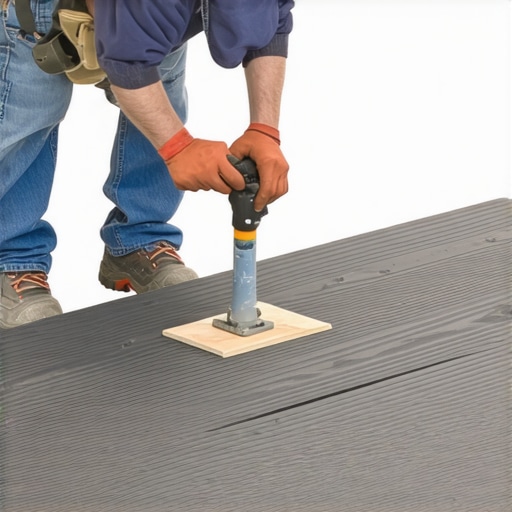 Looking ahead to 2025, I predict we will see a massive shift toward fully integrated ‘dry-zone’ tech. We are already moving past simple drainage to the hidden gutter system for keeping under deck spaces dry, allowing for finished ceilings and outdoor cinemas beneath the joists. If you want to build a deck that actually lasts thirty years, stop worrying about the brand of the board and start obsessing over the joist tape secret for doubling your decks life. My challenge to you: on your next project, spend the extra $100 on high-quality butyl tape and a string line. Your future self will thank you when the frame is still rock-solid in 2040.
Hard Lessons from My Backyard Disasters
Building with composite isn’t just about following a manual; it is about anticipating the environment. One of my biggest lightbulb moments was realizing that thermal expansion isn’t a suggestion—it is an absolute law of physics. If you ignore it, your deck will eventually fight back. I learned the hard way that why dark composite boards need extra expansion space isn’t just marketing; it is the difference between a flat floor and a tripping hazard. Another takeaway? Never assume your frame is perfect. Always verify your spans because composite decking secrets for longevity usually start with what is happening underneath the boards, not on top of them. Finally, remember that moisture is the enemy even for ‘waterproof’ materials—it’s the frame you are protecting, not just the plastic cap.
My Must-Have Tools for a Lifetime Build
If you want to move beyond the ‘DIY look’ and achieve a professional finish, you need more than just a drill. I never start a project without my ‘holy trinity’ of deck building. First, the joist tape secret for doubling your decks life is the single best investment you can make for under $100. It prevents the frame from rotting while your boards stay pristine. Second, I always keep a high-visibility nylon string line in my bag for checking joist planes before the first board goes down. Third, I highly recommend studying stunning deck design strategies used by high-end builders to see how they handle perimeter details and stairs. These resources transition you from simply building a platform to creating a true architectural feature.
#IMAGE_PLACEHOLDER_E#
Build Something That Outlasts the Seasons
At the end of the day, your outdoor space is an extension of your home and your hard work. Don’t let the fear of technical details stop you from starting your project. By respecting the physics of the material and accounting for movement, you can create a low-maintenance composite decking masterpiece that stays beautiful for decades. You have the tools, the knowledge, and the plan—now it is time to get outside and turn that backyard vision into a reality. Have you ever noticed your deck boards ‘creaking’ or moving during a particularly hot summer day? Let me know your experiences in the comments below!