
It was a sweltering Saturday last July, and I was finally showing off the new deck. I’d spent weeks agonizing over the aesthetics, eventually landing on a sleek, matte black aluminum railing that looked like it belonged in a high-end architectural magazine. I was handing a cold drink to my neighbor when his hand brushed the top rail. He let out a yelp that stopped the music. The railing wasn’t just warm; it was a literal griddle. I felt like a total failure. I’d focused so much on the safety and style of our railing systems that I completely forgot about the laws of thermodynamics. It’s a common mistake, but when your backyard oasis starts causing second-degree burns, the ‘modern look’ loses its charm pretty fast.
Your Sleek Black Railing is Basically a Space Heater
The science here is simple, even if it is frustrating. Dark colors, especially black, are incredibly efficient at absorbing solar radiation. While a white or light gray railing reflects a significant portion of the sun’s energy, that black powder-coated aluminum is soaking it all up like a sponge. In fact, research from the Lawrence Berkeley National Laboratory shows that dark surfaces can absorb up to 90% of the solar energy that hits them. This energy is converted into heat, and because aluminum is an excellent conductor, it moves that heat right to your palm the moment you touch it. I made the classic blunder of prioritizing my Pinterest board over the actual climate of my south-facing backyard. If you are struggling with a similar heat issue on the floor of your deck, you might want to see why black composite decking burns your feet too, because the physics is identical.
Is this modern look actually worth the pain?
You might be wondering if you’ve just made a permanent, expensive mistake. I certainly did. I sat there that evening, staring at my beautiful, untouchable railing, wondering if I’d have to tear it all out and start over. We are going to solve this today without you needing to call a contractor to demo your hard work. There are practical ways to mitigate the heat, from strategic shading to surprising top-rail swaps. When you look at how to select the perfect railing system, heat gain is rarely on the brochure, but it’s the first thing you notice in August. Have you ever had to warn guests not to touch your deck because it was simply too hot to handle? If so, you’re in the right place to find a real solution. If the heat is making your outdoor space unusable, feel free to reach out to us for a professional assessment on more heat-resistant materials.
How to Kill the Heat Without Killing the Aesthetic
Solving the ‘griddle rail’ problem doesn’t mean you have to rip out your entire investment. The most effective way to drop the temperature of your railing is to disrupt the path of the sun or the path of the heat itself. Think of your railing like a lightning rod for thermal energy; we either need to provide a shield or change the material that meets your skin. When I realized my own black railing was essentially a solar collector, I didn’t panic; I looked at how stunning deck design strategies use layering to manage microclimates. The first move is always about shade.
Turn Your Pergola Into a Heat Shield
If the sun can’t hit the metal, the metal can’t get hot. It sounds obvious, but the execution is where most people stumble. Installing a structure like a pergola provides intermittent shade that breaks the solar cycle. I remember one project where the client had a south-facing deck with black cables that were literally humming from the heat. We integrated a custom structure based on some modern pergola trends, using tight slat spacing. By the time we were done, the railing temperature dropped by nearly 30 degrees simply because the sun was only hitting it for minutes at a time rather than hours. If you’re building one yourself, remember to use the spacer hack for perfectly aligned pergola slats to ensure the shadow lines are consistent and aesthetically pleasing.
The Wood Cap Move for Instant Relief
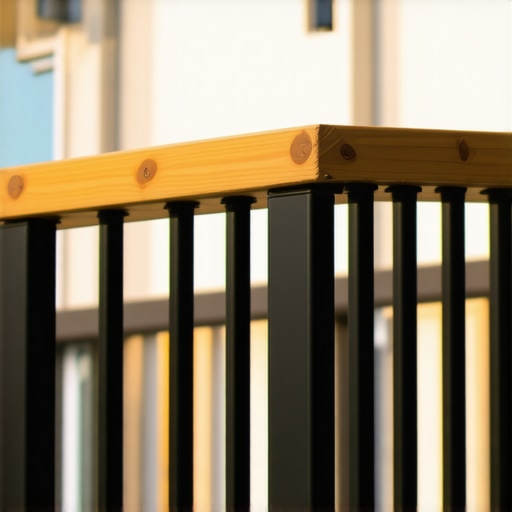
The most direct ‘pro’ fix is what I call the hybrid swap. You keep your sleek black posts and balusters—which look incredible—but you replace the very top rail with a material that has low thermal conductivity. Wood and certain high-end composites are the champions here. I once spent a grueling Sunday retrofitting a client’s burning railing with a Western Red Cedar top cap. I felt like a mad scientist drilling into that expensive powder-coated aluminum, but the result was transformative. We used a wide profile that allowed guests to lean their arms comfortably. If you choose this route, you might need to know how to fix a wobbly top rail after the swap to ensure the new wood piece is structurally sound. This ‘mixed material’ look is actually a major component of durable solutions for modern outdoor living, as it balances the industrial look of metal with the tactile comfort of natural materials.
Block the Heat Transfer with Thermal Breaks
Thermal conduction is like a relay race where the baton is fire. Metal is an elite sprinter; it passes heat from the surface to the core of the rail instantly. To stop this, you can use specialized heat-reflective tape on the underside of top rails or, more effectively, ensure there is an air gap or a non-conductive gasket between the metal rail and its mounting brackets. If you are struggling with similar issues on the floor of your deck, you should investigate low-maintenance composite decking options that feature ‘cool-deck’ technology. These materials are engineered with pigments that reflect infrared light. When you’re deep in the process of how to select the perfect railing system, always ask about the Solar Reflectance Index (SRI) of the finish. A high SRI means you can actually lean on your railing in July without a trip to the emergency room.
The Big Maintenance Lie Everyone Tells You
Common wisdom says that once you switch to composite, your deck-related chores are over. I fell for that hook, line, and sinker. The truth is, ‘maintenance-free’ is a marketing term, not a structural reality. If you ignore the specific needs of your deck, those expensive boards will eventually start looking like cheap plastic. One of the most overlooked composite decking secrets is that these materials are incredibly sensitive to the environment they sit on. While the railing might be the part you touch, the silent battle happening beneath your feet is what usually ruins the experience. Have you ever fallen into this trap of thinking your deck would take care of itself? Let me know in the comments.
Don’t Let Your Frame Kill Your Deck
The biggest ‘oops’ factor I see in the field is the mismatch between a high-end composite surface and a standard pressure-treated frame. We call it ‘differential movement.’ Wood and plastic expand and contract at completely different rates. According to a study published in the Journal of Architectural Engineering, moisture-induced swelling in wood frames can exert significant stress on plastic-composite fasteners, leading to loosening or even structural fatigue over time. This is often why your pressure-treated frame is pulling your composite apart. If you aren’t using joist tape or proper gapping, you’re essentially building a house on shifting sand. This tension is even worse when you add heavy railing systems that lack the proper blocking trick that stops railing post wobble.
Why Do I Get a Zap Every Time I Touch the Railing?
If you’ve invested in a sleek modern deck and find yourself getting shocked every time you reach for the rail, you aren’t crazy—it’s physics. This is a nuance most contractors won’t mention until the bill is paid. Composite materials are excellent insulators, and in dry, windy conditions, they build up a significant static charge. This is why your composite deck is statistically likely to static shock you, especially if you have a metal railing system that isn’t properly grounded. It’s a frustrating side effect of the very tech that makes these decks durable. When you are looking for durable solutions for modern outdoor living, you have to weigh these tactile trade-offs. I once had a client who thought their railing was electrified by a faulty wire, but it was just the friction of their footsteps on the high-density polyethylene boards.
The Hidden Danger of Hidden Fasteners
Everyone wants the seamless, fastener-free look. It’s the gold standard for innovative deck design ideas. However, I’ve started advising against them in certain high-heat or high-moisture climates. Hidden fasteners rely on a small flange to hold the board down; when those boards get as hot as the black railings we discussed earlier, they want to cup or ‘crown.’ Without a screw driven through the face of the board to provide vertical restraint, you’ll find that hidden fasteners fail on wide profile boards far more often than people realize. If you’re truly worried about the heat, remember to contact us so we can walk you through the ‘cool-deck’ pigments that actually work versus the ones that are just hype.
Stop Blasting Your Investment With High Pressure
Maintenance is where the fantasy of a ‘forever deck’ meets the reality of the elements. If you take one thing away from this guide, let it be this: put the pressure washer away. I’ve seen homeowners permanently etch their expensive boards because they wanted to blast off some spring pollen. I always advocate for why you should never use a pressure washer on composite. Instead, I rely on a simple household staple. I’ve found that the vinegar and water mix that cleans composite better than chemicals is the ultimate secret weapon for organic growth and hard water spots. It’s gentle, cheap, and won’t strip the protective cap of your high-end boards like harsh industrial degreasers can.
The Tool Kit That Separates Pros From Amateurs
When it comes to keeping everything aligned, I don’t guess. Precision tools are the only reason my projects don’t look like a DIY disaster three years later. For example, when setting up a structure, I swear by the level and laser method for setting pergola heights alone. It ensures that your beams are perfectly horizontal, which is vital for drainage and structural integrity. If you do get a minor scratch while moving furniture, don’t panic. You can actually learn how to fix scuffs on dark composite boards with a heat gun. It sounds intimidating, but when done correctly, the heat gently resets the polymer and makes the scuff virtually disappear.

How do I maintain my composite deck and pergola over time?
Long-term success is about observation, not just labor. I recommend a bi-annual structural audit. It sounds formal, but it’s really just you, a tool belt, and some curiosity. Start by performing the ice pick test for checking joist strength on older decks. If the wood is soft, your composite surface is at risk. Then, grab a high-powered beam and perform the 10-minute flashlight test for finding hidden ledger rot. This is where most decks fail—at the house connection. According to the American Wood Protection Association (AWPA) Standard UC4A, any timber in ground contact or high-moisture zones must maintain specific chemical retention levels; if your frame was built to a lower standard, you need to know now before the rot spreads to your home’s rim joist.
The Future of Smart Decking Systems
Looking ahead, the trend is moving toward ‘intelligent’ outdoor spaces. We are already seeing the integration of thermal-resistant pigments and built-in sensors that can alert homeowners to structural fatigue or moisture trapped behind a ledger board. When you are implementing composite decking secrets for longevity, you are essentially future-proofing your home against the increasing volatility of our climates. I predict that within five years, the ‘standard’ deck will include automated shading that reacts to the sun’s position to keep those black railings cool. For now, focus on the basics of solid framing and gentle cleaning. If you aren’t sure where to start with your audit, contact us today for a professional walkthrough. I want you to try the flashlight test tonight—it takes ten minutes and could save you thousands in future structural repairs.
Lessons Bought with Sweat and Second-Degree Burns
Building the perfect outdoor space is rarely a straight line; it is a series of pivots based on how the environment reacts to your choices. My biggest lightbulb moment was realizing that thermal mass is not just a textbook term—it is a physical reality that dictates how you use your home. If you choose a dark aesthetic, you are essentially signing a contract with the sun. You have to be prepared to mitigate that heat with shade or material hybrids. Another hard-won truth? The 10-minute flashlight test for finding hidden ledger rot is the most valuable habit you can develop. It is not about doing more work; it is about doing the right work at the right time to protect your investment for the long haul.
My Non-Negotiables for a Professional Finish
I do not step onto a job site without a few specific tools and strategies that ensure the deck lasts as long as the mortgage. First, the joist tape secret for doubling your deck’s life is a non-negotiable for me now. It is a small expense that prevents the catastrophic frame failure I see all too often in older builds. Second, I always carry a reliable laser for setting pergola heights alone. Precision is the difference between a structure that looks like a DIY project and one that looks truly professional. Finally, keep your maintenance simple; skip the harsh chemicals and stick to the vinegar and water mix that cleans composite better than chemicals to preserve the factory finish of your boards.
#IMAGE_PLACEHOLDER_E#
Ready to Take Back Your Backyard?
The transition from a burning, high-maintenance headache to a true backyard sanctuary does not happen overnight, but it starts with a single change. Whether you are swapping a metal top rail for a cooler wood cap or finally addressing that bouncy joist, every step forward makes your space more livable. We are seeing incredible shifts in durable solutions for modern outdoor living, and there has never been a better time to upgrade your experience. Don’t let a hot railing or a squeaky board keep you inside this summer. If you need a hand figuring out which heat-resistant material or design strategy is right for your specific backyard orientation, contact us and let’s get it sorted. Have you ever regretted a deck color choice after the first heatwave? Let me know in the comments below!