
I remember standing on my back porch three years ago, staring at a bottle of “ultra-strength” deck cleaner that cost me nearly fifty bucks and promised the moon. My composite boards were covered in that stubborn, grayish film that seems to appear overnight, and I was desperate to get back that rich, deep color I saw in the composite decking trends magazines. I scrubbed until my shoulders burned, but the results were… well, they were disappointing. The chemicals left a weird, iridescent haze that made my expensive boards look like cheap plastic. It was a total gut punch. I realized then that I was overcomplicating things. After a lot of trial and error (and one very big mistake involving a pressure washer that I still regret), I discovered that the absolute best cleaner for your deck isn’t sitting in the hardware aisle. It’s sitting right next to your salad dressing. Today, I’m going to show you how a basic vinegar and water solution can outperform those toxic chemicals and keep your outdoor space looking pristine for years.
Why I Dumped the Chemicals for Good
When I first started building, I fell for the marketing. I thought “more expensive” meant “more effective.” But here’s the truth: most heavy-duty cleaners are far too aggressive for the capped surface of modern boards. One of the 7 reasons your composite decking looks like plastic is actually the residue left behind by these very cleaners. They strip away the subtle textures and leave a film that actually attracts more dust. Early in my DIY days, I made the classic mistake of using a bleach-based solution. I thought I was being thorough, but why you should never use bleach on composite decks is a lesson you don’t want to learn the hard way; it can actually break down the UV inhibitors in the boards, leading to premature fading and brittleness. Vinegar, on the other hand, is a mild acid that cuts through the alkaline “hard water” spots and pollen without eating into the material itself. It’s the same reason why professional builders prefer capped composite over wood—we want materials that are easy to maintain, not materials that require a chemistry degree to keep clean. Have you ever spent a whole afternoon scrubbing only to feel like you made the mess worse?
Does a Kitchen Staple Really Have Enough Power?
I get the skepticism. We’re taught that “natural” means “weak,” but science says otherwise. According to research from the University of Florida’s IFAS Extension, the acetic acid in white vinegar is a potent antimicrobial that is remarkably effective at killing mold spores—the primary culprit behind those dark spots on your deck—without the environmental toxicity of chlorine. It’s why composite decking secrets and longevity tips almost always come back to gentle, consistent care rather than aggressive, one-time “shocks” with harsh chemicals. Vinegar is also fantastic at breaking down mineral deposits that make boards look dull. In the next section, I’ll break down the exact ratio I use to get that perfect, streak-free finish that looks better than any store-bought jug ever provided.
Nail the Mix Every Single Time
To get the results of a professional restoration without the professional price tag, you need to be precise with your chemistry. I always stick to a strict 1:1 ratio of white distilled vinegar to warm water. Think of this mixture like a gentle facial cleanser for your home; it’s strong enough to lift the oils and environmental grime but mild enough that it won’t strip the protective ‘skin’ or cap of your boards. If you’re dealing with a particularly stubborn area, you can add a single tablespoon of organic dish soap to help emulsify surface oils. This is particularly effective if you’ve recently had a backyard BBQ and need to know the soap and sponge fix for oil stains on composite decking before they set in deep.
Skip the Sun and Start with a Sweep
The biggest mistake I see DIYers make is starting their deep clean while the deck is baking in the afternoon sun. I remember one humid July morning when I thought ‘more is better.’ I dumped undiluted vinegar directly onto a hot board to tackle a stubborn grease mark. By the time I grabbed the hose, the sun had baked the acid into the grain, leaving a ghostly white haze that took three days of repeated rinsing to fade. It was a stressful reminder of why your composite decking is fading in patches—often it’s not the sun alone, but how chemicals react with heat. Always aim for a cool, overcast day or work in the early morning. Before a drop of water touches the surface, use a stiff outdoor broom to clear every bit of debris. Organic matter like wet leaves can tannin-stain your boards if they get trapped under the cleaning solution.
The Soft-Bristle Technique That Saves Your Back
Once your surface is clear, apply the vinegar solution in manageable 5×5 foot sections. You don’t want the liquid to dry before you’ve had a chance to agitate it. Use a soft-bristle nylon brush—never metal or stiff wire, which can permanently score the synthetic surface. Scrub in the direction of the grain, using long, rhythmic strokes. This mechanical action is what actually releases the mold spores that the vinegar has neutralized. If you hit a spot that looks like a spill from last night’s party, knowing how to clean red wine stains off composite decking fast with this same vinegar base will save you from reaching for the bleach bottle.
Rinse Like You Mean It
The final step is where most people get lazy, and it’s the most important for avoiding those annoying streaks. You must rinse the boards until the water running off the edge is crystal clear. I always perform the garden hose test for proper deck water runoff as I go; if the water is pooling or looks ‘sudsy,’ you haven’t rinsed enough. While it’s tempting to blast the dirt away, remember why you should never use a power washer on composite boards: the high PSI can drive moisture into the core of the board, leading to internal rot that you won’t see until it’s too late. A standard garden hose with a spray nozzle is all the pressure you need for this job. For long-term health, checking composite decking secrets and longevity tips will remind you that this gentle wash, performed twice a year, is more effective than any high-pressure blast.
Keeping your boards clean is only half the battle. In my years on the job site, I’ve seen homeowners spend thousands on premium materials only to have the entire project fail from the inside out because they ignored the ‘skeleton.’ A common myth is that because composite decking is ‘rot-proof,’ the rest of the deck is too. This couldn’t be further from the truth. In fact, your expensive boards can actually accelerate the decay of your frame if you aren’t careful. I’ve had to tear up decks only five years old because why your pressure-treated frame is pulling your composite apart became a structural nightmare that no amount of cleaning could fix. The reality is that composite acts as a giant vapor barrier, trapping moisture against the wood joists below.
Don’t Let Your Frame Kill Your Investment
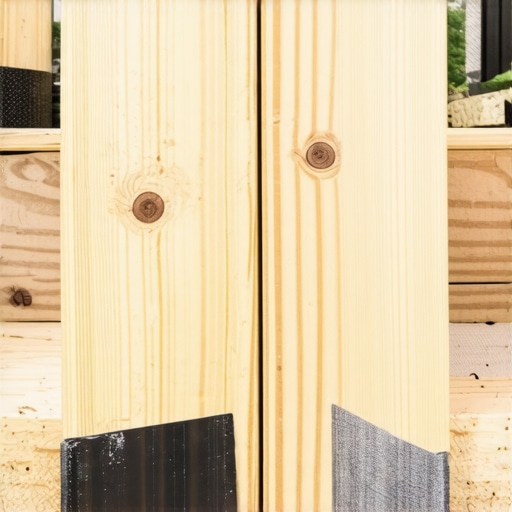
If you want your deck to last as long as the warranty on your boards, you have to address the moisture trap. A study by the American Wood Protection Association (AWPA) highlights that wood decay is significantly accelerated when moisture is trapped in the narrow space between the decking and the joist. This is where the joist tape secret for doubling your deck’s life comes into play. By applying a butyl-based flashing tape to the top of every joist, you create a waterproof seal that prevents the ‘sandwich effect’ of rot. I’ve seen DIYers skip this to save a hundred bucks, only to find their joists turned to mush while the composite on top looks brand new. It’s a heartbreaking and expensive ‘oops’ that is entirely preventable.
How Much Gap is Actually Enough for Thermal Expansion?
This is the question that separates the pros from the weekend warriors. Most people think a consistent 1/8-inch gap is enough for everything, but they forget that dark composite boards absorb incredible amounts of heat. On a 90-degree day, a dark board can reach 160 degrees and expand significantly. If you don’t account for this, you’ll end up with boards that buckle or pull away from the house. Knowing how to stop composite deck boards from expanding into your siding requires understanding that the boards move lengthwise, not just width-wise. I once saw a deck literally bow upward like a rainbow because the builder didn’t leave room for the material to ‘breathe’ at the butt joints.
The Structural Truth About Railing and Pergolas
When it comes to the finishing touches, most people prioritize aesthetics over engineering. I see it all the time with pergolas: they look beautiful in June, but they’re gone by October because why most diy pergolas fail the uplift test in storms is usually a matter of inadequate post-to-beam connections. Similarly, a ‘wobbly’ railing isn’t just annoying; it’s a failure of the blocking inside the frame. You can buy the most expensive kit in the world, but if you don’t pass the 3-second push test for wobbly railing systems, your deck isn’t safe. True expertise means looking past the color swatches and focusing on the ledger flashing and structural bracing. Have you ever fallen into this trap? Let me know in the comments.
After the sawdust settles and the last railing is bolted down, the real work of homeownership begins. I have seen too many beautiful builds turn into liability nightmares because the owner thought ‘low maintenance’ meant ‘zero maintenance.’ If you want to keep that magazine-ready look, you need a specific set of tools that go beyond a simple hammer and nails. When I’m scaling a project or just doing my annual walkthrough, I rely on precision instruments to ensure the expansion gaps and structural connections haven’t shifted an inch.
Stop Over-Driving Fasteners with a Professional Depth Jig
One of the most common ways a DIYer ruins a premium composite board is by driving screws too deep. This creates a small crater that traps water, dirt, and eventually mold. I personally never start a decking job without a dedicated depth-setting bit. It is the jig i use for consistent deck screw depth because it disengages the drive the millisecond the screw head is flush with the surface. This creates a uniform, professional finish that prevents the ‘dimple’ effect. If you’re working with hidden fasteners, you’ll also want to keep a rubber mallet handy to ensure why hidden fasteners fail on wide profile boards doesn’t happen to you; sometimes you need that extra nudge to get the board fully seated against the clip before the screw goes in.
How do I maintain structural stability over time?
Maintenance is a game of observation. Every spring, I perform a ‘structural physical’ on my deck. I’m not just looking for surface scratches; I’m looking for movement. According to the North American Deck and Railing Association (NADRA), over 50% of the 60 million decks in the U.S. are past their intended life span and require repair. To stay in the safe half of that statistic, I use the structural vulnerability assessment for checking deck joist rot to identify soft spots in the wood before they become catastrophic. I also check the ledger—the most critical connection point to your house—to ensure the ledger flashing mistake that causes interior house mold isn’t slowly rotting my kitchen wall from the outside in.
Identify Hidden Decay Before It Becomes a Hazard
You don’t need a degree in engineering to spot trouble, but you do need to know where to look. While most people only clean the top of their boards, I recommend getting underneath the frame at least once a year. I use the flashlight trick for finding hidden joist rot at night; the low-angle light reveals shadows in the wood fibers that indicate moisture penetration which you would miss in the bright sun. If you find a joist that looks questionable, don’t panic. Sometimes a simple addition of the staggered joist trick for ultra long deck spans or adding extra blocking can reinforce the area without requiring a full teardown. This proactive approach is the core of composite decking secrets and longevity tips that I share with every client.
The Future of Decking is Smart and Self-Sensing
Looking ahead, I predict we are going to see a massive shift toward integrated tech in outdoor spaces. We are already seeing ‘smart’ pergolas with sensors that close louvers automatically when they detect rain, and I believe the next step is embedded sensors in composite boards that can alert homeowners to moisture levels in the framing below. Until then, we rely on manual precision. I still use the level and laser method for setting pergola heights alone to ensure that settling hasn’t thrown my shade structure out of plumb. This season, I want you to go out tonight with a bright LED light and try that flashlight trick I mentioned—it might just save you from a massive repair bill next summer.
What Your Decking Contractor Might Forget to Mention
Over the years, I’ve realized that even the most expensive materials can’t save a project from poor planning. First, never underestimate the power of airflow; if you don’t use the rubber spacer trick for better airflow under joists, you’re essentially creating a sauna for mold under your boards. Second, remember that ‘maintenance-free’ is a myth. A simple vinegar wash twice a year is the difference between a deck that lasts ten years and one that lasts thirty. Finally, always account for how dark colors behave in the sun; why dark composite boards need extra expansion space is a physics lesson you don’t want to learn when your boards start to buckle during a July heatwave.
Tools That Save My Sanity Every Spring
If you’re serious about taking care of your investment, there are three things I never go without. I always have the jig i use for consistent deck screw depth in my tool belt to ensure a flush finish that won’t trap water. For structural checks, a high-quality LED flashlight is better than any fancy sensor for spotting early rot near the house wall. I also highly recommend browsing innovative deck design ideas that elevate your homes curb appeal if you’re looking to upgrade your current layout without a full teardown. These specific resources have saved me thousands in trial-and-error costs over the last decade.
#IMAGE_PLACE_HOLDER_E#
Turning Your Backyard Into a Lifelong Sanctuary
At the end of the day, your deck is where the best parts of summer happen. Whether you’re just starting to research composite decking trends or you’re out there with a bucket of vinegar cleaning your existing boards, the effort you put in now pays off for decades of enjoyment. You’ve got the knowledge, the ratio for the perfect cleaner, and the structural secrets to keep things safe. Now, go out there and make that outdoor space exactly what you’ve always wanted it to be. If you run into a snag or need professional eyes on a tricky frame, feel free to contact us anytime for guidance. Your future self will thank you for the extra care you take today.
What’s the one thing that surprised you most about using vinegar instead of store-bought cleaners for your outdoor surfaces? Let me know in the comments below!