
I still remember the smell of gasoline and the satisfying roar of my 3000 PSI pressure washer as it sputtered to life that Saturday morning. My wife had been asking me to clean the grime off our gray composite boards for weeks, and I, being the ‘handy’ neighbor, figured a quick blast of high-pressure water was the most efficient way to handle it. I pulled the trigger, swept the wand across the surface, and watched in horror as the water didn’t just lift the dirt—it lifted the fibers of the board itself. That fuzzy, splintered texture appeared instantly, a permanent scar on an investment that cost me thousands. I’d effectively ‘sandblasted’ the protective cap right off my deck. [image_placeholder_1]
Your Deck is Not a Sidewalk and You Shouldn’t Treat it Like One
Most of us buy low-maintenance composite decking because we want to spend our weekends grilling, not scrubbing. But here is the hard truth: composite is a sophisticated blend of wood fibers and plastic, and it’s surprisingly delicate under pressure. When you hit it with a concentrated stream of water, you aren’t just cleaning; you’re risking ‘delamination.’ I learned the hard way that once you compromise that outer shell, the board becomes a sponge for moisture. If you’re looking for longevity tips for a lasting deck, the first rule is to keep the heavy machinery in the garage. I once thought I could just ‘be careful’ by standing further back, but even then, the pressure can force water into the gaps where the boards meet the house, leading to the kind of ledger flashing mistakes that eventually cause rot inside your actual home. It’s a domino effect of DIY disasters.
Is a ‘Gentle’ Power Wash Really That Dangerous?
I get the skepticism. You see the pros doing it on YouTube, or you think your ‘Green’ nozzle is safe enough. However, many manufacturers explicitly state that using a power washer can void your warranty. In fact, according to the Building Science Corporation, pressurized water is one of the most effective ways to bypass a building’s water-managed system, often forcing liquid behind siding and into structural framing. This moisture then traps heat and can cause the boards to expand unevenly, leading to the very expansion issues most homeowners struggle with during the summer. I’ve seen neighbors try to fix the resulting ‘fuzziness’ by sanding it down, which only makes it worse. If you’ve already made this mistake, you might need to look into how to fix scuffs with a heat gun, but preventing the damage is much cheaper. Have you ever noticed your boards looking a bit ‘hairy’ after a deep clean? Drop a comment or reach out—I’ve likely been exactly where you are. While we’re talking about keeping things clean, remember that chemicals can be just as bad as pressure; you should never use bleach on composite decks because it eats away at the UV inhibitors. Today, I’m going to show you the ‘soft wash’ method I use now—it takes a little more elbow grease, but it keeps your deck looking like the day it was installed.
How to Master the Soft Wash Without Killing Your Warranty
Instead of thinking of your deck as a concrete driveway, treat it like a luxury car. You wouldn’t use an industrial pressure washer on your car’s leather interior, and your composite boards deserve that same level of care. Modern boards are often capped with a polymer shell. This shell is the only thing standing between your deck and the elements, which is exactly why professional builders prefer capped composite over wood. Once you blast through that cap, the core is exposed, and the board’s lifespan is cut in half. I once spent an entire afternoon trying to remove a stubborn grease stain from a burger flip gone wrong. By the time I was done with the power washer, the stain was gone, but so was the wood grain texture in a four-inch circle. Now, I use a process that relies on chemistry rather than brute force.
Ditch the Pressure for a Simple Garden Hose
The first step is a thorough pre-rinse using nothing more than a standard garden hose. You want to saturate the dirt and organic matter. While the water is running, it’s the perfect time to perform a quick safety check on your surroundings. I’ve made it a habit to check my railings every spring. During one cleaning session, I actually discovered a loose post just by leaning on it, which led me to use the 3-second push test for wobbly railing systems to ensure the whole perimeter was still secure. It’s much easier to tighten a bracket when the deck is already clear of furniture.
Choose Your Cleaning Solution Like You Choose Your Skincare
Most homeowners reach for the harshest chemicals they can find, but for composite, less is more. A bucket of warm water mixed with a pH-neutral dish soap is usually all you need. If you are dealing with specific environmental grime or localized messes, like bird droppings or oil, you should follow the soap and sponge fix for oil stains on composite decking rather than dousing the whole surface in bleach. Let the soapy mixture sit on the surface for about ten minutes. This allows the soap to break the bond between the dirt and the plastic cap, similar to how a pre-wash works on a dirty dinner plate. 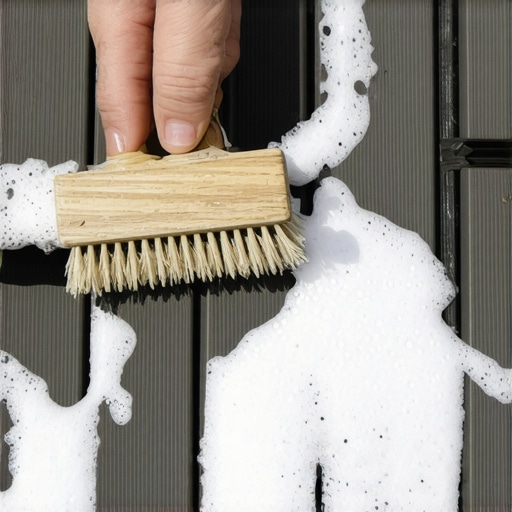
The Scrubbing Technique That Saves Your Finish
When it comes to the actual scrubbing, the tool matters more than the effort. Use a soft-bristled brush designed for delicate surfaces—never a wire brush or a stiff-bristled deck broom meant for concrete. Scrub in the direction of the grain to lift the debris out of the embossed textures. If your deck is particularly prone to showing every footprint, you might consider the future benefits of choosing 5 colors of composite that hide dirt the best for your next upgrade. Once you’ve agitated the entire surface, do a final rinse. I always use the garden hose test for proper deck water runoff to make sure the water is flowing toward the edges and not pooling against the house, which prevents the soapy residue from drying into an ugly film.While the soft wash keeps the surface pristine, there’s a much deeper nuance that many homeowners—and even some ‘pro’ contractors—miss entirely. It’s what I call the ‘surface-level trap.’ Everyone says that switching to composite means you’re done with deck repairs for twenty years, but in my experience, the opposite can be true if you ignore the chemistry of your framing. The framing under your deck is almost always pressure-treated lumber. This creates a hidden conflict: wood shrinks and expands based on moisture, while your boards expand and contract based on temperature. If you don’t account for this, you end up wondering why your pressure-treated frame is pulling your composite apart just three seasons in. It’s a physical tug-of-war happening under your feet every day.
The Structural Lie Most Homeowners Believe
The common myth is that ‘low maintenance’ means ‘no inspections.’ The reality? Because composite boards are so effective at shedding water, they often mask the slow decay of the joists below. I’ve seen decks that look brand new from the top, yet the ice pick test for checking joist strength on older decks reveals that the structure is essentially mulch. According to the North American Deck and Railing Association (NADRA), millions of decks in the U.S. are past their life expectancy, and the shift to composite hasn’t changed the fact that the wood skeleton is the weakest link. I learned this the hard way when I realized the joist tape secret for doubling your decks life wasn’t just a suggestion—it’s a requirement for anyone who doesn’t want to rebuild their entire frame in ten years. If you’re at the planning stage, transforming your home with stunning deck design strategies must include a plan for moisture management on the top of those joists. 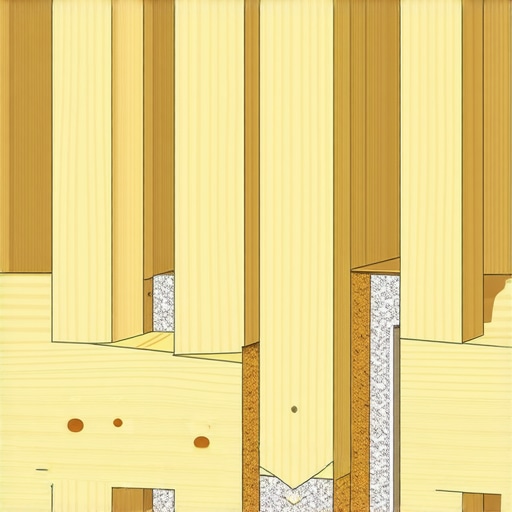
Why Does Your High-End Railing Still Feel Flimsy?
This is the most common ‘oops’ factor I see with advanced DIY projects. You buy the most expensive custom railing systems for safety and style, follow the instructions to a T, and yet the post still moves when you lean on it. The trap is thinking the bracket does all the work. Professional-grade stability comes from beneath the surface. Without the blocking trick that stops railing post wobble, you are essentially mounting a lever to a single piece of wood that wasn’t designed to handle lateral force. I’ve also seen people install glass and then wonder how to stop your glass railing from whistling in high winds. These are the nuances that separate a ‘nice’ deck from a masterpiece. Even the color of your hardware matters more than you think; for instance, why black aluminum railings get hotter than you think can catch you off guard during a July barbecue. Have you ever fallen into this trap of focusing on the ‘pretty’ boards while the frame was failing underneath? Let me know in the comments—I’m curious to see how many of us have had to learn these ‘hidden’ lessons the hard way. If you’re still in the design phase, make sure you’re looking at innovative deck design ideas that elevate your homes curb appeal with a critical eye for the structural bones first.
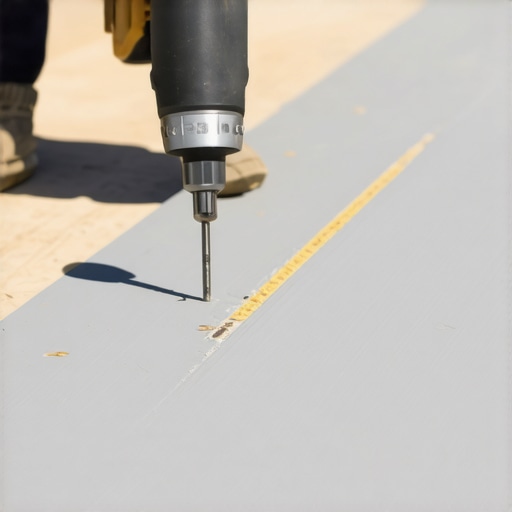
You can have the best intent in the world, but without the right hardware, you’re just guessing. I used to eyeball my screw depths until I realized I was creating tiny craters for water to pool in, which eventually leads to premature wear. Now, I never start a project without using the jig I use for consistent deck screw depth. It’s a game-changer for achieving that ‘factory finish’ look where every fastener is perfectly flush. If you’re expanding your outdoor space with a shade structure, don’t even think about setting your posts by eye. I swear by the string line move for perfectly plumb pergola posts because even a half-inch tilt looks like the Leaning Tower of Pisa once the rafters are installed. Accuracy at the start is the only way to avoid why most DIY pergolas fail the uplift test in storms.
As we look toward the next decade of outdoor living, I predict we’re going to see a massive shift toward ‘smart’ composites—boards with enhanced thermal stability that virtually eliminate the expansion gaps we currently struggle with. Manufacturers are already addressing the annoyance of why your composite deck is statistically likely to static shock you by integrating anti-static agents directly into the polymer cap. This evolution means our ‘low-maintenance’ decks will soon become ‘zero-interference’ spaces.
How can I ensure my deck stays safe for the next twenty years?
The International Residential Code (IRC) Section R507 provides the most rigorous standards for deck lateral load connections, and following these guidelines is the difference between a structure that lasts and one that becomes a liability. Beyond following code, it’s about the small, consistent habits. Every spring, I take a high-lumen flashlight and perform the flashlight trick for finding hidden joist rot at night. The shadows cast by the beam reveal cracks and softening that you’d miss in broad daylight. If you catch these early signs of moisture damage, you can still apply the joist tape secret for doubling your decks life to any newly exposed areas.
Scaling your design also requires specialized knowledge of your chosen materials. I recently worked with a homeowner who was frustrated by a constant humming sound on their balcony; we had to implement the fix for how to stop your glass railing from whistling in high winds by re-seating the rubber gaskets. It’s these tiny, specific tools—like a calibrated tensioning gauge—that prevent the 3 mistakes that make your cable railing sag every winter. If you want a deck that stands the test of time, you have to stop thinking like a weekend warrior and start thinking like a structural engineer. Go out there this weekend and perform a 3-second push test on your railings. If there’s even a millimeter of movement, immediately research the blocking trick that stops railing post wobble and fix it before your next gathering.
The Hard Truths About Living on Composite I Had to Learn the Hard Way
After years of trial and error, I’ve realized that a great deck isn’t just about the boards—it’s about the relationship between the materials. One of the biggest ‘lightbulb moments’ for me was realizing that why pressure-treated wood still rots under joist tape is often due to trapped moisture from over-cleaning or poor drainage. Here are a few other lessons I’ve tucked under my belt:
- The ‘Low Maintenance’ Trap: It doesn’t mean ‘No Maintenance.’ It means you trade heavy sanding and staining for a regular, gentle rinse and consistent inspection.
- Thermal Expansion is a Beast: If you don’t leave specific room for the boards to breathe, they will find a way to move—usually by buckling or shearing fasteners during peak summer heat.
- Safety is Invisible: The most important parts of your deck, like the ledger flashing and the joist-to-rim connections, are the ones your guests will never see until they fail. Trust the structure more than the aesthetics.
The Pro-Grade Kit I Actually Use to Save My Sanity
I’ve spent thousands of dollars on various gadgets, but only a few have earned a permanent spot in my garage for long-term care. To keep everything perfectly aligned during adjustments or repairs, I always fall back on the string line method for perfectly level deck surfaces. It’s low-tech, but it’s significantly more accurate than any cheap laser level I’ve ever bought at a big-box store. For those tricky evening inspections when I’m checking my hardware, the flashlight hack for finding railing bracket alignment is my secret weapon to ensure every post is rock solid and perfectly plumb. Finally, never underestimate a simple, high-quality pH-neutral dish soap; it’s the only chemical your composite cap ever truly needs to look like new.
Start Building Your Forever Sanctuary Today
Maintaining a deck can feel like a chore, but remember why you built it in the first place. Whether you’re trying to maximize outdoor living with low-maintenance composite decking or designing a brand-new space from scratch, the effort you put into the details now will pay off for decades. Don’t be afraid to take it slow, get the framing right, and treat the materials with the respect they deserve. If you ever feel overwhelmed by the technical side of things or need a second set of professional eyes on your design, feel free to contact us for guidance. Your dream outdoor space is well within reach—just keep that pressure washer in the garage! Have you ever accidentally ‘sandblasted’ your deck or found a structural surprise during a routine clean? Drop your story in the comments below—I’d love to hear how you handled it!