
I still remember the smell—that damp, earthy scent that belongs in a forest, not inside your kitchen wall. I was helping a friend replace a few boards on an old platform when my hammer literally sank into the house’s rim joist. It was like hitting a wet sponge. I’d seen it before because I’d lived it. Early in my DIY days, I figured that bolting a ledger board as tight as humanly possible to the house was the way to go. I thought “tight” meant “waterproof.” Boy, was I wrong. I created a vertical swimming pool against my house that couldn’t drain, and that’s exactly why your pressure treated joists are rotting faster than usual when they aren’t allowed to breathe. Today, I’m going to show you how the 2-inch gap rule—or more specifically, the strategic drainage offset—can save your home’s foundation from becoming mulch. We’re going to fix the most common point of failure in deck building once and for all.
Stop Letting Water Rot Your Home from the Outside In
Most people spend weeks picking out the perfect low maintenance composite decking, but they spend about five minutes thinking about the ledger. That’s the board that actually holds the deck to your house. If that connection fails, the whole thing goes down. The old-school way was to flush-mount it and pray the caulk held up. But caulk dries out, cracks, and eventually invites water in. The gap method is all about creating a chimney effect where air can circulate and water can drop straight to the ground instead of wicking into your house wrap. It sounds counterintuitive, but why your deck flashing is more important than the decking is because of this exact vulnerability. According to the structural experts at Fine Homebuilding, the ledger connection is the most common point of failure in residential decks, usually due to moisture. By integrating the hidden ledger trick for better house drainage, you aren’t just building a deck; you’re protecting your biggest investment. Have you ever noticed a weird stain on your basement ceiling right where the deck is attached outside?
Will My Deck Still Be Strong Enough?
I get this question all the time from neighbors who see me leaving a space between the house and the frame. They ask if that gap makes the bolts snap. It’s a valid fear. If you just leave a 2-inch void with nothing but a bolt, you’re creating a lever that could bend the hardware. However, when done correctly with structural spacers and the right flash and tape method for protecting deck joists, the connection is actually more resilient because it stays bone-dry. We aren’t just hovering the deck in mid-air; we’re using engineering to ensure gravity does the work of drying out your lumber. Stick with me, and I’ll show you the hardware that makes this gap both possible and incredibly rigid.
Cut Back the Siding for a Proper Foundation
I once worked on a renovation where the previous builder had simply screwed the ledger board directly over the vinyl siding. It looked okay for a year, but beneath that plastic, the house was literally drinking rainwater. By the time I arrived to install a new low maintenance composite decking surface, the OSB sheathing had the consistency of oatmeal. You have to be ruthless here. You need to cut a clean channel in your siding exactly where the deck will sit. Think of this as surgery; you’re removing the ‘skin’ to get to the bone of the house. Use a circular saw set to the depth of the siding only, and make sure your lines are perfectly level because this gap is the anchor point for everything else.
The Layered Defense of Flash and Tape
Once the house sheathing is exposed, you can’t just slap a board on it. You need a primary water barrier. I swear by the flash and tape method for protecting deck joists and house ledger connections. First, apply a high-quality self-adhering flashing tape directly to the house wrap, extending it several inches above and below where the ledger will sit. Then, install your metal Z-flashing. This metal lip acts like a tiny roof for your ledger, directing water away from the house and over the edge of the wood. If you skip this, why your deck flashing is more important than the decking becomes painfully clear the next time a heavy storm hits.
Create the Drainage Gap with Structural Spacers
Now comes the part that feels wrong but works perfectly: the offset. Instead of pulling the ledger flush against the flashing, you use structural spacers. I prefer stackable plastic spacers or specialized structural washers that create a 1/2-inch to 5/8-inch void. This is the hidden ledger trick for better house drainage that keeps the wood from staying saturated. It’s like putting your house on stilts at a micro-level. Water that sneaks behind the decking can now fall straight through to the ground instead of being trapped against the house by surface tension. 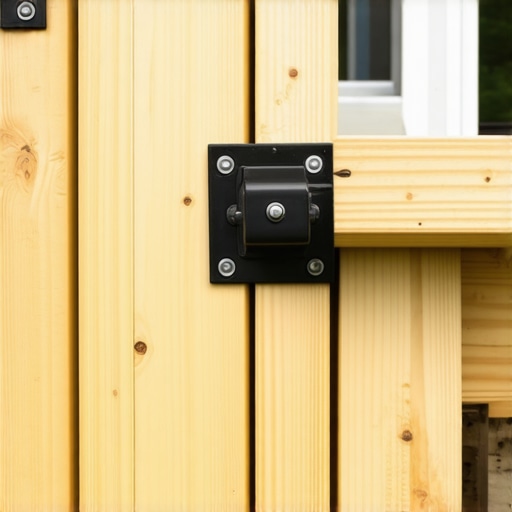
Why Hardware Choice Makes the Gap Safe
You cannot use standard lag screws for this. When you introduce a gap, you are increasing the shear force on the fastener. I always use 1/2-inch diameter structural screws designed specifically for ledger connections. These fasteners have the ‘bite’ and the tensile strength to hold the weight of a full party plus heavy snow loads without bending. While you are at it, consider the 2-degree slope trick for proper deck water runoff to ensure that even the boards themselves are working with gravity. I remember a client who insisted on using old-school bolts without spacers because he thought the gap looked ‘weak.’ Three years later, we were back there replacing pressure treated joists rotting faster than usual because the moisture had nowhere to go. Structural spacers turn a potential rot-trap into a ventilated, dry system.
I see it every summer: a homeowner drops fifteen thousand dollars on high-end boards, thinking they have finally escaped the cycle of sanding and staining. They believe the ‘maintenance-free’ marketing hook, hook, line, and sinker. But here is the contrarian truth that most contractors won’t tell you: your deck is only as durable as the skeleton supporting it. If you build a high-tech surface over a low-effort frame, you are essentially putting a Ferrari engine inside a rusted-out chassis. In my experience, why pressure treated wood still needs maintenance under composite is the single most misunderstood concept in modern deck design. The composite boards act as an umbrella, trapping moisture against the joists where it can’t evaporate, accelerating rot faster than if the wood were fully exposed to the sun.
Stop Treating Pressure-Treated Wood Like It Is Invincible
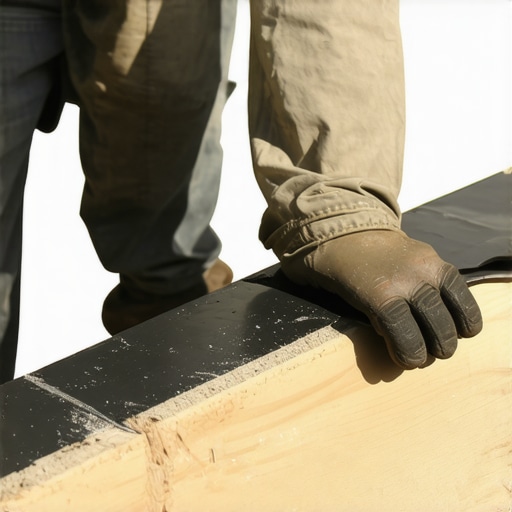
The biggest ‘oops’ factor I encounter is the belief that pressure-treated (PT) lumber is a ‘set it and forget it’ material. While the chemicals prevent bug infestations, they don’t stop the wood from checking, splitting, or absorbing water at the grain ends. If you are investing in composite decking secrets and longevity tips, you must address the joist tops. I always apply a high-quality butyl tape to the top of every joist before the decking goes down. This is the joist tape secret for doubling your deck’s lifespan because it creates a permanent gasket that seals around every screw hole. According to the North American Deck and Railing Association (NADRA), moisture-related structural failure is the leading cause of deck collapses in North America. By ignoring the interface between the board and the joist, you are gambling with the structural integrity of the entire build.
Does Summer Heat Really Snap Your Decking Fasteners?
Advanced DIYers often ask me why their perfectly straight lines look like a snake after one season. It’s not a framing issue; it’s a physics issue. Unlike wood, which expands mostly in width, composite decking expands significantly in length. If you pin a 20-foot board too tightly without accounting for the ambient temperature during installation, the sheer force of the expansion can actually snap stainless steel screws or cause the boards to buckle. This is why your composite decking is expanding more than the manual says in some cases—especially if you’re in a high-UV area. When you combine this with the wrong clips, you’ll find why your hidden fasteners are popping up in heat, which is a nightmare to fix once the deck is finished. Have you ever fallen into this ‘set it and forget it’ trap? Let me know in the comments. Building for the long haul means respecting the movement of the materials and the relentless nature of water. It isn’t just about the look; it’s about the science of the assembly.
The Right Gear Stops Headaches Before They Start
I never step onto a job site without my side-fastening guide and a high-torque impact driver. If you’ve wondered why your hidden fasteners are popping up in heat, it often comes down to the installation tool not setting the screw at the correct angle. I personally recommend the CAMO Marksman system because it forces the fastener through the corner of the board, leaving the surface pristine while allowing for that natural expansion we talked about. For the ledger itself, stop using standard sockets. A high-quality ratcheting wrench saves your knuckles and ensures those structural screws are seated perfectly against your spacers. Creating a professional-grade drainage gap requires precision, and a simple 1/2-inch shim won’t cut it—you need the torque to keep that connection rigid against the house.
How do I keep my deck looking brand new for a decade?
Maintenance on a modern build is less about ‘fixing’ and more about ‘preserving.’ First, you need to understand why you should never use bleach on your composite deck. Bleach is a harsh oxidizer that can actually eat away at the protective ‘cap’ layer of the board, leading to permanent discoloration and a loss of that wood-grain texture. If you’ve already noticed some dullness, learning how to restore the color of a faded composite deck starts with a thorough cleaning using a pH-neutral solution and a soft-bristle brush. According to the technical guidelines in the American Wood Council’s (AWC) DCA 6, the structural integrity of your deck depends entirely on the ‘load path’—which means you should be checking your ledger bolts and joist hangers every spring for any signs of loosening or corrosion. Use the simple spray test to see if your wood deck needs sealing on any exposed pressure-treated framing to ensure the water is still beading up rather than soaking into the grain. 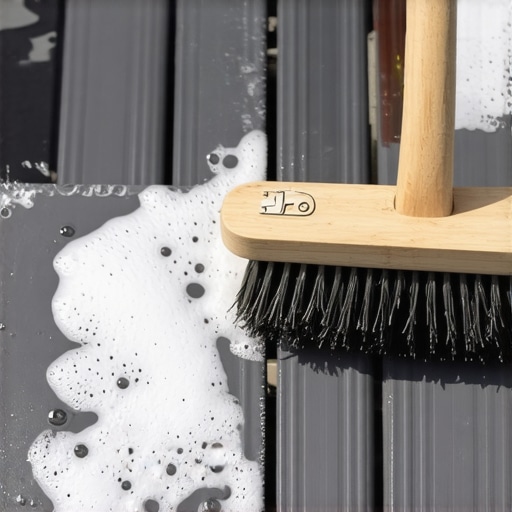
Smart Tech and Thermal Stability are the Future
I predict that within the next five years, ‘passive cooling’ technology will become the standard for all high-end composite decking trends and durable solutions. We are already seeing boards that incorporate infra-red reflective pigments to stay 30% cooler in direct sunlight. Beyond the boards, we’re moving toward integrated diagnostics. Imagine an outdoor space where your lighting system tells you exactly why your deck lighting transformers keep blowing via an app on your phone before the fuse even pops. If you have a rail that feels a bit loose after a rough winter, don’t ignore the wiggle. Usually, the $20 bracket that fixes wobbly railing posts fast is all you need to restore safety without a full tear-down. My best advice for the long haul? Treat your deck like a car. You wouldn’t drive a high-performance vehicle for five years without an oil change, so don’t expect your outdoor oasis to survive without an annual inspection. Check those composite decking secrets and longevity tips and keep your fasteners tight. I challenge you to go outside this weekend and try the spray test on your joists—you might be surprised by how much water your ‘treated’ wood is actually drinking.
The Hardest Lesson My Spongy Rim Joists Taught Me
If there is one thing I have learned after years in the mud and sawdust, it is that moisture is a patient thief. You might think your ledger is secure because it is bolted tight, but that tightness is often what invites the rot to stay. I remember the lightbulb moment when I realized that ‘sealed’ usually just means ‘trapped.’ By leaving that intentional space, you are giving the wood a fighting chance to dry out after a storm. Rot starts from the inside out, and by the time you can smell that earthy dampness, the structural damage is often done. Always remember that airflow is just as important as the hardware you choose. A $20 roll of butyl tape used as the joist tape secret for doubling your deck’s lifespan is the cheapest insurance policy you will ever buy. Don’t trust the ‘treated’ label blindly; it prevents bugs, but only proper drainage prevents biology from claiming your rim joist.
Gear That Actually Makes a Difference on Site
I never show up to a build without a few specific items that ensure these gaps and connections remain rock-solid. First, the CAMO Marksman system is a game-changer for maintaining consistent spacing while hiding fasteners. For the heavy lifting, a high-torque impact driver is non-negotiable to seat those structural screws through the spacers without stripping the heads. I also highly recommend keeping a copy of the NADRA safety checklists handy; they are the gold standard for residential deck inspections. Finally, when you are looking for composite decking secrets and longevity tips, invest in a high-quality Z-flashing that matches your house trim—it makes the layered defense look professional rather than like a DIY afterthought.
Your Foundation for Decades of Sunsets
Building a deck is about more than just lumber and screws; it is about the decades of quiet mornings and family sunsets you will spend out there. When you take the time to implement these advanced drainage strategies, you are gifting your future self total peace of mind. Your home deserves a foundation that breathes, and your family deserves a structure that remains safe year after year. If you find yourself overwhelmed by the technical specs, don’t be afraid to contact us for a professional perspective. Now is the time to take these innovative deck design ideas for 2025 and turn them into a reality that lasts. Have you ever found hidden rot in a place you thought was perfectly waterproof? Let me know in the comments below!