
It happened last Tuesday after a light morning drizzle. I stepped out onto my back porch with my favorite mug, and before I could even take a sip of coffee, I was performing an uncoordinated, frantic dance just to stay upright. My feet were skating across those ‘premium’ boards like I was on a professional hockey rink. It was terrifying and honestly, a bit embarrassing. If you have spent any time trying to maximize outdoor living with low maintenance composite decking, you know the dirty little secret: when these boards get wet, they become incredibly slick. Today, I am sharing the one solution I have found that actually keeps you on your feet without ruining the look of your expensive deck.
My Morning Coffee Almost Ended in a Hospital Visit
I will be the first to admit that I made a massive mistake when I first noticed this problem. I ran to the local big-box store and grabbed the first ‘clear grip’ spray I could find. It was a total disaster. Within a few weeks, the coating began to peel off in ugly, milky flakes that looked like my deck was suffering from a bad case of sunburn. Not only was it an eyesore, but the peeling edges actually trapped moisture against the surface. I learned the hard way that protecting your structure is about more than just the surface; for instance, the deck joist tape test shows us how moisture is the silent killer of any outdoor build. According to the National Floor Safety Institute, falls account for over 8 million hospital emergency room visits every year, and wet outdoor surfaces are a primary culprit. Have you ever had one of those heart-stopping moments where you felt your feet slip away on your own deck? I would love to hear your horror stories in the comments below.
Is This Grip Coating Actually Worth the Effort?
You are probably skeptical, and I do not blame you. We have all been told that composite decking is non-porous and will not ‘take’ a coating. While that is true for traditional oil-based stains, modern transparent anti-slip treatments use a specialized bonding agent designed specifically for capped polymers. We are not talking about a thick, goopy paint. We are talking about a microscopic grit that provides traction without hiding the beautiful wood grain you paid for.
Why Most Generic Solutions Fail Your Composite Boards
Many homeowners try to solve this with those black adhesive ‘grip strips’ usually found on industrial stairs. Please, do not do that to your home. They look like a commercial loading dock and the adhesive eventually fails, leaving a sticky residue that is nearly impossible to clean. If you are already dealing with maintenance issues, like wondering why your deck stairs are squeaking and the fast fix for it, you do not want to add ‘peeling tape’ to your Saturday chore list. The key is a liquid-based, high-performance coating that creates a uniform, slip-resistant profile across the entire surface while remaining virtually invisible to the naked eye.
Scrub Away the Scum Before You Start
Before you even think about applying a grip coating, you have to realize that your deck is likely covered in a microscopic layer of ‘biofilm’—a fancy word for the slippery gunk created by pollen, dust, and moisture. If you skip a deep clean, your expensive anti-slip coating will just bond to the dirt and peel off within a month. I recommend using the vinegar and water mix that cleans composite better than chemicals to break down this organic layer. It is gentle enough not to strip the finish but effective enough to leave the surface ‘squeaky’ clean. Whatever you do, put the power tools away; why you should never use a pressure washer on composite boards is a lesson in permanent damage, as the high-pressure stream can etch the plastic surface and create permanent ‘furring’ that actually makes cleaning harder later.
Conduct a Surface Porosity Check
Not all composite is created equal. You need to know if you are working with first-generation uncapped boards or modern capped polymer. If you are unsure, you can learn how to identify high quality capped decking from the cheap stuff by looking at the end grain of the boards. Capped polymer boards are much denser and require a specific ‘adhesion promoter’ included in the anti-slip kit. If you apply a standard grip paint to a high-end capped board, it will slide right off like water on a freshly waxed car.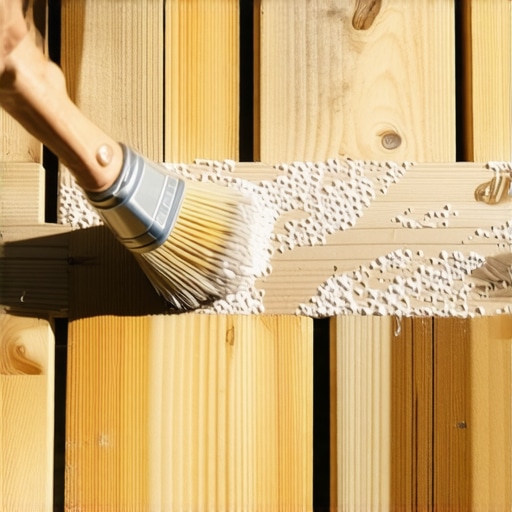
Apply Thin Coats Like You Are Painting Fine Furniture
The biggest mistake people make is pouring the coating directly onto the deck and spreading it around. This leads to pooling in the wood-grain indentations, which dries cloudy and looks terrible. Think of it like applying a clear coat to a car; you want thin, even passes. I learned this the hard way two years ago when I decided to tackle my deck on a breezy Saturday in May. I was rushing because I had a BBQ planned for that evening. Halfway through, I realized the wind was blowing tiny seeds from my neighbor’s maple tree directly into the wet coating. I ended up with a deck that felt like 40-grit sandpaper and looked like a fuzzy green carpet. I spent the next three days scrubbing it off. Now, I always wait for a calm, overcast day when the surface temperature is moderate, as why capped polymer composite stays cooler than wood plastic affects how fast the product sets.
The Stirring Rather Than Shaking Secret
Anti-slip coatings contain suspended grit—usually clear glass beads or translucent polymer granules. If you shake the can, you introduce air bubbles that will dry as tiny white spots on your dark boards. Instead, use a flat stir stick and move in a figure-eight motion every ten minutes during the application. This keeps the ‘grip’ evenly distributed so one section of your deck isn’t as slick as ice while another is like a pumice stone. While you are down there working, it is the perfect time to perform the 15 minute deck inspection every homeowner should do to ensure your fasteners are still tight and your structural integrity is solid before you lock everything under a new protective layer.Everyone says hidden fasteners are the only way to achieve a professional, modern look. I disagree. While they offer a clean surface, I’ve spent more hours fixing loose boards on hidden-clip systems than on traditional face-screwed decks. The nuance most people miss is that composite decking expands and contracts significantly more than wood. If you aren’t careful, you’ll find out why hidden fasteners can be a maintenance nightmare during a heatwave. When those clips lose their bite because the board has shrunk in the cold, you’re left with ‘walking’ boards that click and clack with every step. Have you ever fallen into this trap? Let me know in the comments.
Why do your expensive boards look like a roller coaster after one season?
The answer usually comes down to thermal physics. According to the North American Deck and Railing Association (NADRA), composite materials can expand significantly depending on the ambient temperature. If your installer ignored the expansion gap rule that stops boards from buckling, your deck has nowhere to go but up. It is a common ‘trap’ to think tight seams look better; in reality, they are a recipe for structural warping that no amount of anti-slip coating can hide. The ‘Oops’ factor doesn’t stop at the surface. I see homeowners spend thousands on premium boards but pennies on the frame. If you want composite decking secrets longevity tips for a lasting deck, look at the joists. Applying the flashing tape move that doubles the life of your joists is the difference between a 30-year deck and a 10-year rebuild. Without it, the screw holes in the joists act like tiny funnels for rainwater, rotting the wood from the inside out while the plastic boards on top stay perfectly fine. Stop relying on flimsy metal brackets for your garden structures. Most people assume brackets are the strongest connection point, but they actually allow for ‘racking’ or swaying. Instead, the notched rafter secret for a pergola that never wobbles provides a mechanical connection that resists wind much more effectively than screws alone. It takes an extra hour of layout, but it prevents that unsettling ‘lean’ that develops over time. If you’re building soon, check out elevate your backyard innovative deck design ideas for 2025 to see how these structural nuances are becoming the new standard for luxury builds.
Stop Fighting Your Materials with the Right Gear
I have spent years fumbling with standard carpentry tools on plastic-heavy builds, and the biggest lesson I have learned is that you cannot treat polymer like pine. You can’t just use a standard carpenter’s pencil on charcoal-colored boards; you will lose your mind trying to find your marks in the sun. I swear by the pencil trick for marking dark composite boards—using a white wax pencil or a specialized mechanical silver lead ensures your cuts are frame-perfect every time. When you are struggling with a warped board that refuses to seat into its hidden clip, don’t reach for a pry bar. Instead, use the soap slippage method for pulling composite boards tight. A tiny drop of dish soap in the groove acts as a lubricant, letting the board glide home without marring the expensive finish. For vertical accuracy, I never trust my eyes; the simple tool for making sure your railing posts are plumb is a dedicated post-level that straps onto the 4×4 or 6×6, freeing up your hands to drive the structural screws.
How do I maintain my deck’s structural integrity over time?
While ‘maintenance-free’ is a popular marketing term, ‘low-maintenance’ is the honest reality. Every spring, I perform the 10 minute flashlight test for finding hidden ledger rot. You are looking for water staining or soft wood where the deck meets the house. This is where the International Residential Code (IRC) Section R507.9 becomes your best friend; it outlines the exact bolt spacing and flashing requirements needed to prevent the entire structure from pulling away from your home. If you live in a climate with heavy winters, remember that metal shovels are your deck’s worst enemy. I’ve found that the best way to handle snow removal on composite decks is using a heavy-duty plastic shovel with a rubber leading edge to prevent deep gouges in the capping. You should also regularly check the spacing between boards; knowing how to stop moss from growing in the gaps of your deck will prevent that slippery biofilm from forming and rotting your substructure from the top down.
The Secret to a Rock-Solid Overhead Structure
Don’t neglect the verticality of your backyard space. If you notice your pergola swaying in a light breeze, you need to identify the structural reason your pergola is leaning before a summer storm turns it into a pile of scrap. I have started implementing the steel bracket move for high wind pergolas on every project because it provides a rigid ‘moment connection’ that standard wood screws simply cannot match. To keep your vision unobstructed while maintaining safety, look into how to tension cable railings without specialized expensive tools; it is all about using clever turnbuckle placement hidden inside the posts to keep those stainless lines taut and professional.
What the Future Holds for Your Backyard Sanctuary
Looking toward 2025 and beyond, I predict we will see the rise of the ‘Smart Deck.’ We are already seeing prototypes for moisture sensors embedded directly into the joists that sync with your phone to alert you of potential rot before it becomes a hazard. Furthermore, the industry is shifting toward fully circular polymer chemistry, meaning your future deck will likely be 100% recyclable. If you are planning a build soon, I challenge you to try the ‘soap slippage’ trick on just one stubborn board; you will never go back to manhandling your composite again. For any specific questions about your layout or to get a professional look at your plans, feel free to contact us directly.
What Five Years of Slippery Boards Taught Me
Reflecting on my journey from that terrifying morning slide to a rock-solid, high-traction surface, I have realized a few things that the brochures never mention:
- Safety is an aesthetic choice; a deck you are afraid to walk on is never beautiful, no matter the color.
- The ‘maintenance-free’ label is the biggest hurdle for new homeowners because it leads to neglect. Real longevity comes from active care, like following composite decking secrets longevity tips for a lasting deck.
- Your foundation matters more than your finish. If your joists are rotting because you skipped the tape, no grip coating in the world will save your investment.
The Toolbelt Additions That Save My Sanity
I do not get paid to recommend these, but after dozens of projects, these are the items I always have on hand:
- A white mechanical wax pencil for dark boards—it is the only way to see your marks.
- A high-quality stir stick to ensure anti-slip granules are perfectly suspended during application.
- A dedicated post level, which is vital when you are choosing railing systems for safety and style.
#IMAGE_PLACEHOLDER_E#
Reclaim Your Backyard Sanctuary Today
Your backyard should be a sanctuary, not a hazard zone. By taking these small, intentional steps—from deep cleaning with vinegar to applying a specialized grip coating—you can finally maximize outdoor living with low maintenance composite decking without the constant fear of a hospital visit. It is about more than just construction; it is about building confidence in your home. Whether you are implementing innovative deck design ideas that elevate your homes curb appeal or just trying to stay upright on a rainy Tuesday, you have the tools to do it right. Have you ever had a close call on a wet deck during a morning coffee run? Let me know in the comments below!