
I’ll never forget the look on my brother-in-law’s face when he stepped onto my brand-new composite deck with a cooler full of drinks. Instead of a solid, reassuring thud, the entire surface gave a rhythmic, hollow thud, and he wobbled like he was boarding a cruise ship in a gale. I had spent thousands of dollars and weeks of my life on what I thought was a masterpiece of modern outdoor living, only to realize I’d built a high-end trampoline. It was embarrassing, frustrating, and, frankly, it felt unsafe. I’d made the classic amateur mistake: I assumed that because composite boards are heavier than wood, they’d naturally be stiffer. Boy, was I wrong. If you’re feeling that same unsettling spring under your feet, do not panic. You haven’t ruined your home, but you do have a framing issue that needs a little tough love. [image_placeholder]
Your Deck Framing is Likely Crying for Help
The cold truth is that composite decking is basically a flexible noodle without the right skeletal support. When I built my first one, I spaced my joists 16 inches apart because that’s what I’d always done with pressure-treated lumber. But composite doesn’t have the same structural rigidity as a solid piece of cedar or pine. This is exactly why your composite deck feels spongy between joists. According to technical documentation from the American Wood Council, the allowable deflection for a joist span is often much tighter than what we assume for comfort. Many composite manufacturers actually recommend a 12-inch spacing for a truly rock-solid feel, rather than the standard 16. I ignored those guidelines and paid the price in a bouncy backyard. Today, we’re going to look at how to stiffen that frame and finally fix the bounce in your over-spanned deck joists without tearing the whole thing down.
Is it actually possible to fix a deck that is already built?
You might be sitting there thinking your bank account is about to take another hit or that you’ll have to rip up every single expensive board. I’ve been in those shoes, staring at my innovative deck design and wondering if I should just buy a pogo stick and lean into the theme. The good news is that most of the fixes are internal. You can often correct the give by adding mid-span blocking or sistering joists from underneath. Have you noticed the bounce getting worse in the heat of the day, or is it a constant wobble? Drop a comment and let me know—it helps me narrow down if your problem is thermal expansion or a structural span issue.
Stop the Sway with Better Internal Support
The most common culprit is a lack of lateral stability. Even if your posts are solid, the joists themselves might be twisting slightly as you walk. I found that using the framing move that stops deck boards from bouncing—which is essentially adding rows of solid blocking—makes a world of difference. It’s like tightening the laces on a boot; suddenly, everything moves as one unit instead of individual pieces of pasta. This isn’t just about the main floor, either. I’ve seen people build beautiful stairs only to realize why their deck stairs feel bouncy is the exact same lack of mid-stringer support. We are going to dive into the specific mechanics of blocking and bridging so you can walk across your deck with a full cup of coffee without wearing half of it.
Solid Blocking Acts Like a Backbone
Think of your joists like the ribs of a ship. Without cross-support, they want to twist or lean when weight hits them. Adding solid blocking—short pieces of joist material installed perpendicular between the long runs—forces the entire frame to share the load. I learned this the hard way when I tried to eyeball my blocks using leftover scraps. I didn’t cut them tight enough, and within a week, the deck didn’t just bounce; it groaned. For a truly rigid feel, you need to cut these blocks so they friction-fit perfectly. This is the framing move that stops deck boards from bouncing for good. Aim for a row of blocking every four to six feet along the span to eliminate that noodle-like flexibility.
Try the Staggered Pattern for Easier Nailing
If you try to put all your blocks in a perfectly straight line, you’ll find it impossible to drive nails through the joist into the end of the block because the previous block is in your way. Instead, offset them by the thickness of the lumber. This is the staggered joist trick for ultra-long deck spans that lets you drive face-nails directly into every single piece. It’s faster, stronger, and won’t leave you screaming at your hammer in frustration. 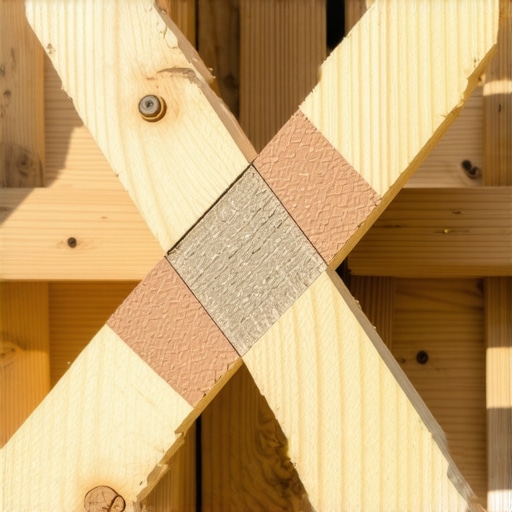
Double Up with Sistering When Spans Are Too Long
Sometimes, blocking isn’t enough because the lumber itself is undersized for the distance it’s covering. If your joists are 2x8s spanning 12 feet, they are simply going to flex. The sistering technique involves taking a second joist of the same size and bolting it directly to the existing one. It effectively doubles the stiffness of that specific run. When I did this on my brother-in-law’s deck, we used a heavy-duty construction adhesive between the two boards before through-bolting them. This prevents inter-joist friction, which is just a fancy way of saying it stops that annoying wood-on-wood squeak. While you’re at it, this is the perfect time to apply the joist tape secret for doubling your decks life, as it prevents water from getting trapped between your new double-joist sandwich.
Don’t Let Cheap Fasteners Ruin Your Hard Work
You might be tempted to grab whatever leftovers are in your toolbox, but composite-to-wood connections are picky. I once used standard deck screws for a framing repair, and within two winters, the heads had snapped off due to the expansion and contraction of the composite. It was a mess. Avoid the 3-inch screw mistake that ruins composite joists by using structural screws or galvanized nails designed for pressure-treated lumber. These fasteners are thicker and can handle the shear force of a shifting deck. If you’re working on an older frame, I always recommend the ice pick test for checking joist strength on older decks before you start sistering. There’s no point in bolting a new board to a rotten one; you’re just putting a band-aid on a broken leg. Following these composite decking secrets and longevity tips ensures that once the bounce is gone, it stays gone for the next twenty years.Everyone tells you that switching to composite is a one-and-done solution for a lifetime of relaxation. They call it ‘maintenance-free,’ but in my experience, that’s a marketing lie that leads to massive structural headaches. While you won’t be staining it every summer, composite is actually much more ‘active’ than wood when it comes to thermal expansion. I’ve seen beautiful installs ruined because the builder didn’t account for the way these boards grow and shrink. If you aren’t careful, you’ll find out why your composite boards are crowning and how to fix it before your first summer is even over. It isn’t just about the boards; it’s about how that movement fights against your rigid wooden frame.
Maintenance-Free Doesn’t Mean Worry-Free
The biggest trap I see is the ‘set it and forget it’ mentality. People assume that because the surface is plastic-capped, the skeleton is invincible. This leads to the most common ‘oops’ factor: ignoring the moisture trapped between the board and the joist. Even with a high-end low-maintenance composite decking, the wood underneath is still vulnerable. A study by the American Wood Council highlights that moisture trapped in restricted spaces is the primary driver of premature structural failure. This is exactly why your pressure-treated wood still rots under joist tape if the application isn’t perfect. You’re building a greenhouse for fungi if you don’t ensure proper airflow. 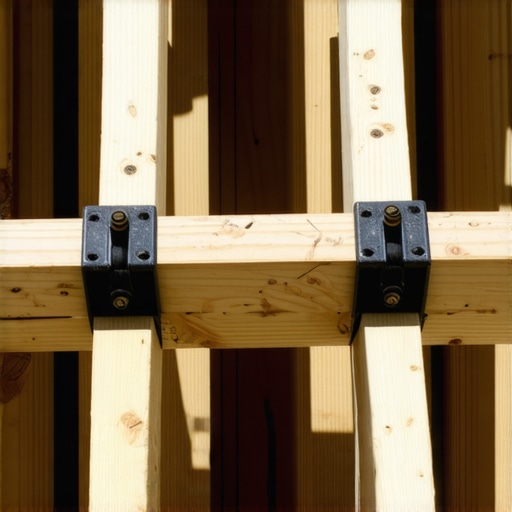
Why does my railing still wobble even after I tightened every single bolt?
This is the question that keeps DIYers up at night. You’ve cranked those carriage bolts until the wood groaned, yet the post still sways when a guest leans on it. The nuance here isn’t the bolt; it’s the lack of lateral load distribution. A post bolted only to the rim joist is just a long lever trying to peel your deck apart. You need to look into the blocking trick that stops railing post wobble by tying that post into the second and third joists back. Without that internal ‘anchor,’ you’re just waiting for a structural failure. Have you ever fallen into this trap of over-tightening bolts only to realize the wood was the weak link? Let me know in the comments, because I’ve snapped more than one bolt trying to fix a problem that required more lumber, not more torque.
The Myth of the Universal Fastener
Another advanced mistake is assuming that any ‘deck screw’ works for every part of an innovative deck design. Composite boards are dense, and they will shear the heads off standard screws during a cold snap. I always tell my clients to look at the chemistry of their materials. If you’re building near a garden, why you should avoid white railings near gardens becomes obvious the moment the organic tannins hit that porous PVC. It’s these small, environmental nuances that separate a ‘pro’ build from a weekend project that looks ten years old after only six months.I’ve realized over the years that the difference between a deck that lasts ten years and one that lasts forty is often found in the toolbox. Once you’ve mastered the framing, you have to nail the finishing touches to prevent the structure from eating itself from the inside out. For me, that meant finally investing in the jig I use for consistent deck screw depth. When you over-sink a screw into composite, you’re essentially creating a tiny bowl that collects stagnant water and organic debris, which eventually leads to mushroom growth right in your walking path. I also stopped struggling with invisible marks on dark walnut boards by using the pencil trick for marking dark composite boards. It sounds small, but accuracy is what prevents those ugly gaps that look like a mistake from ten feet away.
How do I keep my composite looking brand new without constant scrubbing?
Most people reach for the bleach or a high-pressure hose, but that’s the fastest way to ruin the protective cap of your boards. I’ve found that the vinegar and water mix that cleans composite better than chemicals is all you really need for seasonal upkeep. It’s gentle enough for the plastic but tough enough to break down pollen and bird droppings. You should also remember why you should never use a power washer on composite boards; the force can actually open up the pores of the material, making it more susceptible to staining later. According to technical bulletins from the North American Deck and Railing Association (NADRA), the leading cause of deck failure isn’t the boards themselves, but the hidden decay at the ledger and joist connections. This is why I perform the 10-minute flashlight test for finding hidden ledger rot every spring before the first BBQ. #IMAGE_PLACE_HOLDER_D#
The Future of Deck Longevity is All About Hardware
I’m predicting that within the next five years, we will see a massive shift toward aluminum framing systems even for residential decks. Wood is great, but as composite technology gets better, the ‘weak link’ is becoming the pressure-treated frame itself. If you’re sticking with wood for now, you absolutely must follow these composite decking secrets and longevity tips to keep the skeleton as healthy as the skin. Use the flashlight hack for finding railing bracket alignment to ensure your safety systems are perfectly vertical. If you do one thing this weekend, take a flashlight under your deck and look for those tell-tale signs of moisture stains on your ledger—it could save your entire project.
Why My First Deck Build Almost Ended in a Structural Disaster
Looking back at that wobbly project, I realize now that I was treating composite like it was just plastic wood. It’s not. It is an engineered system that demands respect for its unique physics. Here are a few ‘lightbulb moments’ that changed how I build:
- The frame is the true hero: No matter how expensive the boards are, if your joists aren’t perfect, the deck will feel cheap.
- Expansion isn’t optional: I once saw a deck literally buckle and lift off the frame because the boards didn’t have room to grow in the July sun.
- Tension matters: Railing systems aren’t just for safety; they act as a perimeter brace that ties the whole structure together.
The Gear That Saved My Sanity on the Job Site
If you’re serious about fixing the bounce and making your deck last, you don’t need a truckload of power tools, but you do need the right ones. I never start a repair without the joist tape secret for doubling your decks life, which acts as a gasket between the wood and the composite. For the finishing touches, I swear by the jig I use for consistent deck screw depth to avoid those unsightly ‘volcano’ holes in the boards. And for maintenance, skip the chemicals and stick with the vinegar and water mix that cleans composite better than chemicals—your garden and your deck boards will thank you.
Building a Foundation for Decades of Backyard Memories
A deck is more than just a platform; it’s where your family gathers for Sunday morning coffee and late-night stargazing. Taking the time to reinforce your frame and follow these composite decking secrets and longevity tips isn’t just about structural engineering—it’s about peace of mind. When you walk across that surface and it feels as solid as the ground itself, you’ll know all that effort was worth it. Have you ever felt that unsettling wobble on your own deck, or did you catch the framing error before the boards went down? Let me know in the comments below!