
I remember the exact moment I stopped believing the marketing hype about “perfect” outdoor materials. I was barefoot on a friend’s brand-new, expensive plastic-capped deck, and within ten minutes, I was practically sprinting back to the shade because my soles were sizzling. It looked like wood, sure, but it felt like a frying pan. That experience sent me down a rabbit hole. I wanted the look of real timber, the durability of a tank, and none of the constant sanding and staining that comes with pressure-treated pine or cedar. If you’ve been torn between the sleek convenience of modern composite decking and the soul of natural wood, you’re in the right place. Today, I’m going to show you why Ipe isn’t just another wood species—it’s the only natural material that actually goes toe-to-toe with premium synthetics. [IMAGE_PLACEHOLDER]
Stop Settling for Softwoods That Rot in Five Years
For a long time, I made the classic mistake of thinking all wood was basically the same if you just put enough sealer on it. I once bought “Brazilian Oak” thinking it was a cheaper shortcut to the same result. It wasn’t. Within four years, the boards were warped and punky. I spent a small fortune on that deck only to realize it looked like a million bucks for exactly one season. By the third year, I was losing every weekend to a power washer—which, by the way, is a great way to ruin your deck’s surface if you aren’t careful. I finally discovered Ipe, often called “Ironwood,” and it changed my entire perspective on building. It is so dense it literally doesn’t float in water, and it carries a Class A fire rating—the same as steel and concrete—according to the National Fire Protection Association. When you’re looking at high-quality capped decking, you’re usually paying for that “set it and forget it” longevity. Ipe offers that same 40-year lifespan but with a natural grain pattern that a factory press can’t perfectly replicate.
Does Real Wood Actually Last as Long as Plastic?
I know what you’re thinking because I thought it too: “It’s organic material; it has to rot eventually, right?” That’s the big fear that keeps most homeowners running toward PVC products. But Ipe is packed with natural oils and tannic acids that act as a built-in defense system against insects and decay. It doesn’t need chemicals injected into it to survive. Have you ever felt like you’re stuck in a loop of maintaining a deck that’s just falling apart anyway? If so, tell me—what’s been your biggest headache with wood in the past? We’re going to dive into how to bridge that gap between luxury and low maintenance without sacrificing the “barefoot” comfort that darker composite boards often lose in the summer heat.Working with Ipe is less like carpentry and more like precision machining. Because the wood is so dense, you have to approach the build with a completely different mindset than you would with cedar or pine. Think of your deck frame as the foundation of a skyscraper; it needs to be over-engineered because Ipe is heavy—significantly heavier than standard lumber.
Build a Frame That Can Actually Carry the Weight
When I first started working with hardwoods, I made the mistake of thinking 4×4 posts would cut it. I quickly learned that why 6×6 posts look better than 4x4s on any outdoor structure isn’t just about the aesthetics; it’s about the load-bearing capacity required for these massive boards. You also need to consider the structure’s longevity. If you’re investing in 40-year wood, your pressure-treated frame shouldn’t rot out in 15. I always apply a high-quality flashing tape to the top of every joist. The flashing tape move that doubles the life of your joists is the single most important step for protecting your investment from trapped moisture.
Don’t Even Think About Skipping the Pilot Holes
You cannot simply drive a screw into Ipe. If you try, you’ll either snap the head off the screw or smoke your drill motor. I remember my first Ipe project vividly because I snapped three expensive stainless steel screws in the first five minutes. It was a mess, and I felt like an amateur. Every single fastener requires a pilot hole and a countersink. To keep things looking clean, many people opt for hidden clips, but you should be aware that why hidden fasteners can be a maintenance nightmare is a real conversation we need to have. If a board warps slightly, a hidden fastener might not have the ‘grab’ to hold it down, leading to a bouncy surface later. 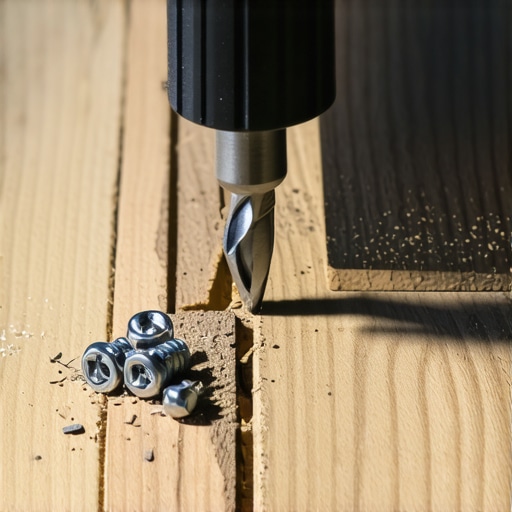
The Secret to Perfect Spacing Without the Stress
Wood breathes. Even wood as dense as Ipe will expand and contract as the seasons shift. If you butt these boards tight against each other, they will eventually buckle or trap debris that holds moisture. I use a 3/16-inch gap as my gold standard. Following the expansion gap rule that stops boards from buckling ensures that even during a humid July, your deck remains flat and functional.
Decide if You Want a Silver Fox or a Rich Brown Finish
One of the coolest things about Ipe is that it doesn’t actually need a finish to stay structurally sound. If you do nothing, the sun will eventually turn it a beautiful, weathered silver. However, if you want that deep ‘cherry’ look, you’ll need to apply a UV-inhibiting oil specifically designed for hardwoods. Unlike the thick stains used on softwoods, these oils are thin and soak into the tight grain. While why composite decks are the better choice for high traffic areas often comes down to zero-oil maintenance, many purists find the annual oiling of Ipe to be a therapeutic ritual that keeps the grain popping. Whatever you choose, make sure you seal the end grains of every board immediately after cutting; otherwise, you’ll see small cracks (called checking) start to form within days.Even with the best Ipe boards underfoot, I see so many people drop the ball when it comes to the “verticals.” Most folks think picking out a railing is just a matter of matching colors. That’s a dangerous assumption. In my experience, the prettiest railing on the market is worthless if you haven’t mastered the hidden bracket trick for perfectly rigid railing posts. Most DIYers—and even some pros—simply bolt the post to the rim joist and call it a day. But think about physics: a 36-inch post is a giant lever. When a 200-pound adult leans on it, that lever is trying to rip your outer joist right off the house.
How Can You Tell if Your Railing is Actually Safe?
According to structural studies by the American Wood Council (AWC), the connection between the post and the joist is the most frequent point of failure in residential decks. The International Residential Code (IRC) requires railings to withstand a 200-pound concentrated load at any point along the top. If you don’t have internal blocking or tension brackets, you aren’t meeting that standard, no matter how many screws you use. This is where the complete guide to choosing railing systems for safety and style becomes about more than just aesthetics; it’s about structural mechanics. Have you ever felt that slight “give” when you lean on a railing? That’s not normal—it’s the sound of your framing slowly fatiguing. Have you ever fallen into this trap? Let me know in the comments. 
Stop Assuming Your Pergola is Structurally Sound
Then there’s the pergola trap. I see people spend thousands on high-end lumber only to have the whole thing sway in a light breeze. Everyone tells you to just “beef up the beams,” but the real secret to a structure that doesn’t move is the notched rafter secret for a pergola that never wobbles. Without those notches, you’re relying entirely on hardware to fight lateral forces. While you’re at it, don’t forget the practicalities of material choice; why your black aluminum railing gets too hot to touch is a lesson many homeowners learn too late in August.
Can a Single Rainstorm Really Rot Your Entire House Frame?
If you’re building near the house, you should be hyper-focused on the ledger. The ledger board error that causes house leaks is the number one reason I see decks get torn down prematurely. Water gets behind the wood, rots your home’s rim joist, and suddenly you have a five-figure repair bill inside your kitchen. It’s why many experts now prefer the ledger-free pergola why freestanding is often better—it completely eliminates the risk of compromising your home’s envelope. If you do use a ledger, you must use a high-quality Z-flashing and integrate it with your house wrap. Finally, pay attention to the subtle signs of trouble. Knowing why your pergola shakes when the wind blows can save you from a catastrophic failure during a summer storm. By focusing on these hidden structural nuances, you transition from someone who just “built a deck” to someone who created a permanent extension of their home.Once that frame is rock-solid, you have to transition from a builder’s mindset to a machinist’s. If you treat Ipe like pressure-treated pine, it will punish you. I’ve seen DIYers ruin thousands of dollars in lumber because they tried to use a standard framing blade on their miter saw. Ipe is so dense that it will literally dull a cheap blade in five cuts, leaving you with burn marks that are a nightmare to sand out. I personally won’t touch a hardwood project without a high-tooth-count carbide blade; it’s the only way to get the crisp, factory-like edges that make a deck look like a piece of high-end furniture. And because the wood is so dark, I always rely on the pencil trick for marking dark composite boards to ensure my cut lines stay visible in the sunlight.
Invest in Steel That Actually Bites
Precision doesn’t stop at the saw. When you’re pre-drilling—and yes, you must pre-drill every single hole—cheap drill bits will snap off inside the wood, and once a bit is stuck in Ipe, it’s there forever. I recommend using smart-stop countersink bits that allow you to set a consistent depth for every screw. This consistency is what separates a pro job from a weekend project. If you find your boards are slightly bowed, don’t try to manhandle them; instead, use the soap slippage method for pulling composite boards tight—it works just as well for stubborn hardwoods and saves your knuckles from the strain. 
How Can I Maintain My Hardwood Deck Over the Years?
The biggest question I get is about the ‘silver’ look versus the ‘rich brown’ look. According to the USDA Forest Products Laboratory (FPL) in their comprehensive ‘Wood Handbook,’ high-density tropical species like Ipe possess a unique cellular structure that resists moisture naturally, but the UV rays will still break down the surface lignin. If you want to keep that deep color, you need a yearly application of a penetrating oil. For general cleaning, stay away from harsh bleach. I’ve found that the vinegar and water mix that cleans composite better than chemicals is surprisingly effective for removing surface grime without stripping the wood’s natural oils. You should also perform the 15-minute deck inspection every homeowner should do each spring to check for any loose fasteners or minor surface checking.
The Shift Toward Maintenance-Free Hybrids
Looking ahead, I suspect we are moving toward a ‘hybrid’ era of deck design. While I love the feel of real wood underfoot, the future is in combining these luxury hardwoods with powder-coated aluminum framing and railing systems to eliminate rot risks entirely. We are already seeing homeowners mix materials to get the best of both worlds—Ipe floors for beauty and composite accents for high-traffic zones where the scratch test for dog claws is a major concern. If you’re worried about the structure itself, always know how to test your deck for structural fatigue so you can catch issues before they require a full tear-down. I challenge you to try one advanced technique on your next project: incorporate composite decking secrets for longevity even on your wood builds to see just how long you can make that structure last.
The Reality of Choosing Natural Ironwood Over Synthetic Options
After years of building, I’ve realized that Ipe isn’t for everyone, and that’s okay. Here are a few things I’ve learned from being in the trenches: First, respect the weight. I once underestimated the sheer mass of a 20-foot Ipe board and nearly threw out my back; this wood demands a partner or a mechanical lifting strategy. Second, the tool cost is real. You have to factor in the price of five or six high-end drill bits and at least one specialized saw blade into your budget. Finally, perfection is a myth. Unlike modern composite decking, every board of Ipe has a unique personality. Some will be darker, some lighter, and that’s where the soul of the project lives.
Why Your Standard Toolkit Will Fail on an Ipe Job
If you’re going to tackle a project of this magnitude, you need more than just standard DIY gear. I swear by these three things: first, a wax-based end sealer to prevent those annoying end-grain cracks. Second, a high-quality hardwood oil—it’s the only thing that keeps the UV rays from winning the battle against the wood’s natural color. Lastly, don’t overlook your structural potential; using the built-in bench secret that saves space and adds storage can turn a simple seating area into a functional part of your structural plan while utilizing your leftover off-cuts effectively. [IMAGE_PLACEHOLDER]
Your Deck Is the Stage for Your Best Memories
At the end of the day, whether you choose the rugged permanence of Ipe or the low-maintenance ease of low maintenance composite decking, the goal is the same: creating a space where you actually want to spend your time. By focusing on innovative deck design ideas that elevate your homes curb appeal, you’re not just building a platform; you’re building a sanctuary. If you need help figuring out the logistics for your specific backyard, you can always contact us for a professional perspective. Have you ever tried to drill into a wood so hard it felt like metal? Let me know about your biggest hardwood headaches in the comments below!