
The first time I sat on my brand new beach-facing deck with a cold drink, I thought I’d made it. The view was perfect, the breeze was salty, and the wood smelled like a fresh forest. Fast forward eighteen months, and that ‘fresh’ wood looked like it had been salvaged from a shipwreck. I reached for a railing, and the wood literally crumbled under my hand. I’d made the classic mistake of thinking ‘weather-treated’ meant ‘salt-proof.’ It doesn’t. If you live within five miles of the ocean, the air isn’t just air; it’s a slow-motion corrosive acid. I learned the hard way that building by the sea requires a completely different playbook than building inland. Today, I’m going to show you exactly how to pick materials that won’t give up on you after a single season.
Why Salt Air Destroys Normal Decks So Fast
The problem isn’t just the water; it’s the chemistry. Salt is hygroscopic, meaning it acts like a magnet for moisture. When those tiny salt crystals get trapped inside your wood grain, they keep the fibers damp long after the sun comes out, creating a buffet for rot. I once made the mistake of ignoring the 15-minute deck inspection every homeowner should do, and by the time I noticed the damage, it was structural. According to the National Association of Corrosion Engineers, salt spray can accelerate the corrosion of common metals by up to ten times the rate of inland areas. This means your standard joist hangers and screws are ticking time bombs. Have you ever noticed your deck hardware turning into rust-colored dust, or is it just me?
Does Salt-Resistant Actually Mean Anything?
You’ll see a lot of products at the hardware store promising ‘extreme weather protection,’ but for a coastal environment, most of that is just marketing fluff. I used to be a skeptic myself. I wondered if the high price tag on marine-grade materials was just a ‘beach tax’ for people with too much money. It isn’t. I spent a whole summer watching my ‘premium’ pressure-treated boards start popping up at the ends because the salt-heavy humidity caused them to expand and contract too violently. If you’re worried about the cost, remember that the most expensive deck you can build is the one you have to build twice.
Choose Materials That Laugh at Salt Spray
When you are planning your deck design, you have to think like a shipbuilder. For the surface, identifying high-quality capped decking is the real game-changer. Unlike wood, these polymers don’t absorb salt, and they handle the abrasive ‘sandpaper’ effect of windblown sand much better. However, don’t get fooled into thinking the top is the only part that matters. A common mistake I see is installing beautiful composite over a cheap frame. Even with the best boards, pressure treated wood still needs maintenance under composite to survive the salt. I’ve started using flashing tape to double the life of my joists because there is nothing worse than a perfectly good deck surface sitting on top of a rotting skeleton. We need to look at the whole package, from the fasteners to the finish, to ensure your sanctuary doesn’t become a safety hazard.
Switch to Marine-Grade Hardware or Prepare for Failure
I once visited a client in Malibu who had spent a fortune on Ipe wood but saved $200 by using ‘coastal-rated’ galvanized screws from a big-box store. Within two years, the tannin in the wood reacted with the salt, and every single screw head had popped off like a champagne cork. In a salt-heavy environment, 304-grade stainless steel isn’t enough; you need 316-grade marine stainless. It’s the gold standard because it contains molybdenum, which resists the pitting caused by chlorides in the air. When you’re selecting fasteners, do the magnet test: a high-quality 316 stainless screw shouldn’t be magnetic. If your magnet sticks, your deck will eventually rust. I’ve found that using the stainless cable trick for views that never get blocked not only preserves your sightline but ensures your hardware doesn’t turn into a pile of orange dust.
Wrap Your Joists Like a Professional Shipwright
Think of your deck frame as the hull of a ship. Even if you use pressure-treated lumber, the salt air will find its way into every screw hole and check in the wood. I started using butyl-based tape on every single joist and beam after seeing a three-year-old frame rot from the top down. It acts as a gasket, sealing the wood around the fastener. You should absolutely make the flashing tape move that doubles the life of your joists a mandatory part of your workflow. I remember a project where we skipped the tape on a small landing because we ran out; six months later, I could already see moisture trapped in the grain. That tiny strip of polymer is the difference between a thirty-year frame and a ten-year teardown.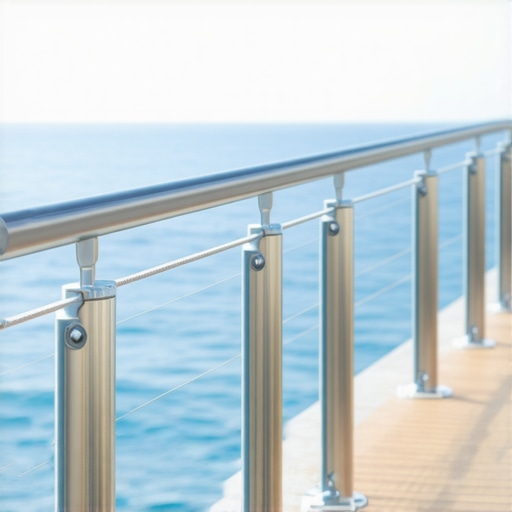
The Board Selection That Stops the Barefoot Burn
Coastal sun is brutal, and when you combine it with salt reflection, your deck can become a literal griddle. Many people jump into dark colors because they look high-end, but why black composite decking burns your feet and how to fix it is a real conversation you don’t want to have with your kids in July. For seaside builds, I lean toward capped polymers rather than wood-plastic composites. These boards have no organic wood fibers in the cap, meaning there is nothing for the salt to grab onto and nothing for mold to eat. If you want to maximize outdoor living with low-maintenance composite decking, you have to look for products that offer a 50-year fade and stain warranty. I once installed a ‘budget’ composite near the dunes, and the sand literally scoured the finish off the boards within two seasons—it looked like someone had hit it with a floor sander.
Keep the Air Moving to Fight Rot
Stagnant air is the primary ingredient for rot. In coastal regions, you want to avoid ‘skirting’ your deck with solid wood. Instead, use an open-lattice or horizontal slat design to allow the breeze to dry out the underside of the structure. I always follow the drainage secret for decks built close to the ground to ensure water doesn’t pool in the sand or dirt beneath the joists. If the air can’t circulate, the salt stays wet, and the wet salt eats the wood. I’ve seen decks where the owners installed solid privacy screens on all three sides, effectively creating a salt-trap sauna that killed their joists in record time. When you are looking at how to select the perfect railing system for every deck in a coastal town, always opt for styles like cable or glass that encourage airflow rather than blocking it.Let’s dig deeper into the ‘hidden’ side of deck building. Everyone gravitates toward hidden fasteners because they want that flawless, clean surface. I used to be a fan until I had to repair a coastal deck four years into its life. The contrarian truth is that why hidden fasteners can be a maintenance nightmare is a topic most contractors avoid. These clips create narrow channels where salt spray and fine sand collect, acting like an abrasive paste that eats into the joists. If you are dead set on this look, you must be meticulous about your frame protection. I always recommend the the deck joist tape test before you commit, because if you aren’t sealing those joist tops, you’re inviting rot to hide right under your beautiful expensive boards.
Tighten your joists to kill the ‘trampoline’ feel
Another nuance people miss is structural stiffness. Standard building codes might say 16 inches on center is acceptable for your joists, but in my experience, that is a recipe for disappointment near the water. If you follow that ‘bare minimum,’ you will likely find why your composite deck feels like a trampoline when you walk across it. For a truly high-end feel that matches the price of premium materials, 12-inch spacing is the professional’s choice. It reduces the slight flex that polymer boards naturally have, especially when they soften in the summer sun. 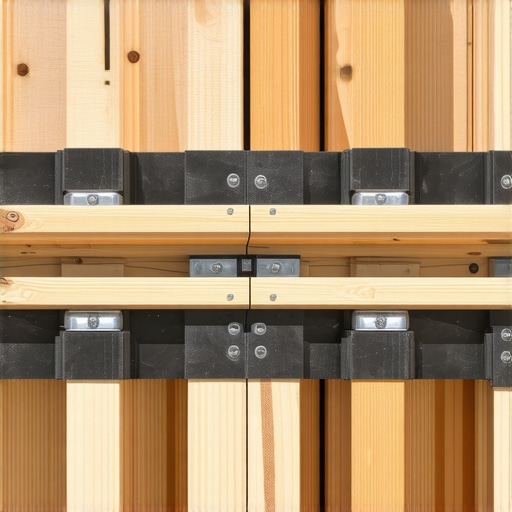
Does your specific micro-climate make standard expansion gaps useless?
This is an advanced question that separates the pros from the weekend warriors. Most manufacturers provide a generic chart for expansion gaps. However, according to the Forest Products Laboratory, the combination of high solar gain and humidity in coastal zones can cause composite materials to reach temperatures significantly higher than the ambient air. This results in ‘thermal creep’ that a standard 3/16th-inch gap can’t handle. If you don’t use the expansion gap rule that stops boards from buckling, you’ll end up with boards that physically push against each other until they warp. I’ve seen entire sections of decking lift off the frame because the installer didn’t account for the ‘sun-trap’ effect of a south-facing beach property.
The hardware trap that splits joists from the inside out
One ‘Oops’ factor that consistently ruins projects is the hardware choice for the underlying structure. I often see people use the wrong diameter fasteners or make the 3-inch screw mistake that ruins composite joists by driving large-diameter lags into the ends of joists without pre-drilling. In salty air, these micro-fractures in the wood become highways for corrosion. To really ensure your project lasts, you need to look at composite decking secrets and longevity tips for a lasting deck that go beyond the surface. Remember, even though the top is synthetic, pressure treated wood still needs maintenance under composite to prevent the skeleton from failing long before the ’50-year’ boards do. Have you ever fallen into this trap of over-investing in the surface while ignoring the bones? Let me know in the comments.After you’ve secured the skeleton, the focus shifts to the precision work that makes a deck feel expensive. I’ve seen DIYers spend $20,000 on materials and ruin the look because they eyeballed the railing spacing. Model your layout before you buy a single board to avoid common waste. I personally never start a job without a digital layout because why you need a 3d model before buying a single deck board is a lesson in avoiding frustration. It allows you to visualize exactly where your seams fall, which is crucial when you’re working with expensive materials that don’t take kindly to ‘oops’ cuts. When it comes to the actual assembly, the right tools change everything. I used to struggle with baluster alignment until I started using the drill guide hack for centered baluster holes. It’s a simple jig that ensures every hole is perfectly plumb and spaced. According to the American Wood Council’s DCA 6 (Prescriptive Residential Wood Deck Construction Guide), the structural integrity of your railing is only as strong as its attachment points. If you’re off by even a fraction of an inch, you’re creating leverage points that will loosen the hardware over time. For the finishing touches, I always keep a specialized marking tool on me because the pencil trick for marking dark composite boards is the only way to get a visible line on those charcoal-colored surfaces without scratching the finish.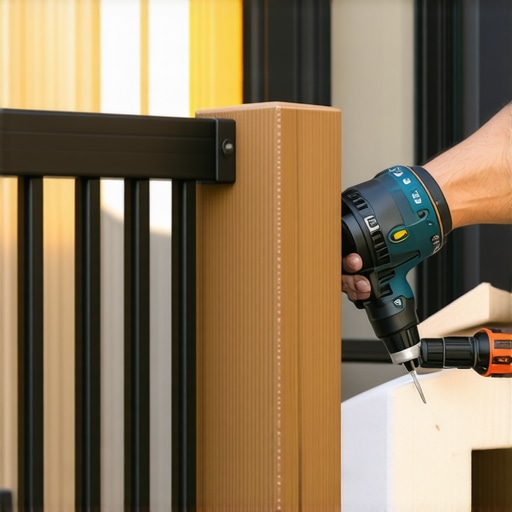
How do I maintain my seaside sanctuary over time?
Maintenance isn’t about working harder; it’s about working smarter. Many homeowners think a ‘deep clean’ involves high pressure, but why you should never use a pressure washer on composite is something I shout from the rooftops. That high-velocity water can actually open up the pores of the cap layer, making it easier for dirt and salt to get trapped. Instead, a simple solution of dish soap and water—and knowing how to stop moss from growing in the gaps of your deck—will keep the airflow clear and the rot away. I also recommend doing the 15-minute deck inspection every homeowner should do at the start of every season. Look for those tiny signs of rust on the 316-stainless hardware or any boards that are showing signs of thermal creep. Looking ahead, I see a massive shift toward ‘smart decks’ where sensors embedded in the joists can alert you to moisture levels or structural shifting before it becomes visible. For now, focus on the fundamentals. My challenge for you? Try applying composite decking secrets and longevity tips for a lasting deck by choosing one section of your existing structure—maybe the stairs or the high-traffic area near the sliding door—and upgrading the joist protection this weekend. You’ll be surprised how much peace of mind a little bit of butyl tape provides.
Mistakes That Taught Me Everything About Saltwater Resistance
I used to think that a standard deck was just a deck, regardless of the zip code. Living on the coast taught me that humility is the first material you need to bring to the job site. I learned that ignoring the microscopic world of salt crystals is like building a house on quicksand. One of my biggest lightbulb moments was realizing that ‘corrosion-resistant’ is a spectrum, not a binary choice. If you aren’t using 316-grade stainless, you’re essentially just slowing down the inevitable. I also found that maximizing outdoor living with low-maintenance composite decking isn’t just about saving time on staining; it’s about structural survival. The sand on the coast acts like a belt sander every time the wind blows, and only the toughest capped polymers can stand up to that kind of daily abuse without losing their finish. Unlike cheaper alternatives, high-end polymers don’t have organic fillers that the salt can degrade over time.
The Kit You Need for a Deck That Defies the Elements
If you’re heading out to build your seaside oasis, don’t leave home without these specific lifesavers. First, get a digital layout because why you need a 3d model before buying a single deck board is about more than just aesthetics—it helps you plan for the tight joist spacing required for salt-heavy climates. Second, keep a healthy supply of butyl flashing tape; it is the single cheapest way to ensure your frame doesn’t rot from the inside out. Finally, I highly recommend a dedicated 316-stainless hardware kit. I trust these specifically because they handle the chloride-heavy air without the pitting that ruins 304-grade steel. I also suggest following composite decking secrets and longevity tips for a lasting deck to ensure your fasteners aren’t reacting poorly with the tannins in your substructure. These tools turn a frustrating maintenance cycle into a project you only do once in a lifetime.#IMAGE_PLACEHOLDER_E#
Make the Choice to Build It Right the First Time
Your home by the sea should be a place of relaxation, not a source of constant repair bills. By choosing materials that are chemically designed to resist the ocean’s unique pressures, you are investing in decades of sunset views rather than weekends spent replacing rusted screws. Every time you follow the expansion gap rule that stops boards from buckling or use a specialized tool like the drill guide hack for centered baluster holes, you are moving one step closer to a deck that will outlast the mortgage. Coastal building is a challenge, but when you see that 316 stainless still gleaming after five years of salt spray, you’ll know it was worth every penny. Your composite decking project is a legacy of your hard work and smart planning—don’t let the salt take it away from you. Have you ever had a deck material fail on you because of the ocean air? Let me know your horror stories in the comments below!