
I’ll never forget the sound of my seven-year-old screaming. It wasn’t a splash of joy; it was the sound of a kid who had just stepped onto what felt like a hot cast-iron skillet. I had spent three weeks and a significant chunk of my savings installing a gorgeous ‘Modern Slate’ composite deck around our new pool. It looked incredible in the brochure—sleek, sophisticated, and perfectly matching our home’s trim. But by 1:00 PM on a Tuesday in July, that dark gray surface was basically a weapon. I made the classic rookie mistake of prioritizing aesthetics over physics, and I don’t want you to do the same. Today, we are going to dive into exactly why you should avoid dark decking near a sunny pool and how to select materials that keep your feet happy. [image_placeholder_1]
The Charcoal Trap You’ll Regret by Noon
We often get swept up in innovative deck design ideas that look great on Pinterest, but poolside reality is different. Dark colors, especially those deep charcoals and grays, have a high solar absorptance. In fact, research shows that dark surfaces can absorb up to 90% of the solar energy that hits them, making them significantly hotter than the ambient air temperature. When you’re barefoot and wet, your skin is even more sensitive to that heat transfer. I thought I was being smart. I wanted to maximize outdoor living with low maintenance composite decking, but I forgot that maintenance-free doesn’t mean heat-free. My biggest fail was not testing a sample board in direct sunlight for four hours before committing to the whole project. Now, I spend my summers laying down outdoor rugs just so we can reach the water without hopping like we’re on hot coals. If you are currently looking at composite decking trends, please, put down the dark gray swatch for your pool surround.
Is every dark color actually a burn hazard?
You might be wondering if you can get away with it if you have a pergola providing shade. While shade helps, the thermal mass of composite means it retains that heat long after the shadow moves. It’s like a battery for the sun’s energy. Have you ever felt like your deck was radiating heat back at you like an oven? That’s exactly what happens with dark grays. Before you buy, ask yourself: is the look of a dark floor worth the ‘ouch’ every time you step out of the pool? Tell me, have you ever felt the burn of a poorly chosen deck color, or are you just starting your design journey? Choosing the right material involves more than just color; you have to think about safety too. Many people forget to look for a non-slip coating that actually works on wet composite, which is even more critical when you’re dealing with splashed water. It’s about finding that balance between the perfect railing system and a floor that doesn’t blister your feet. Let’s look at the science of why this happens and what colors actually stay cool under pressure.
Pick a Palette That Refracts Heat Instead of Hoarding It
If you want to keep your soles from sizzling, you need to think like a physicist rather than a decorator. Most homeowners choose deck colors to match their shutters, but for a pool surround, you should be matching the clouds. Think of your deck like a giant battery: dark colors ‘charge’ with thermal energy and discharge it directly into your skin the moment you step out of the water. I once worked on a project where the client was dead set on a dark walnut finish for their wrap-around pool deck. To prove a point, we laid out a few test pieces in the July sun. Within two hours, the walnut board hit 155 degrees Fahrenheit, while a lighter sand-colored board stayed at a manageable 110. We eventually decided to how to create a mediterranean vibe with white composite and stone, and the temperature difference was life-changing. Light tan, soft greige, and misty grays are your best friends because they reflect the majority of the sun’s energy back into the atmosphere.
Map Out Where the Sun Hits Hardest
Before you drive a single screw, you must master the sun path rule for placing your deck furniture and selecting your board layout. I remember a messy installation in high-altitude terrain where the UV intensity was double what you’d find at sea level. We had to research the best decking material for high altitude sun exposure to ensure the boards wouldn’t degrade or become untouchable. By tracking the sun’s arc, we identified ‘heat zones’ and used lighter boards in those high-traffic areas, while saving slightly darker accents for the areas shaded by the house. We even integrated pergola designs that turn your garden into a sanctuary to create ‘cool corridors’ leading from the back door to the pool steps. 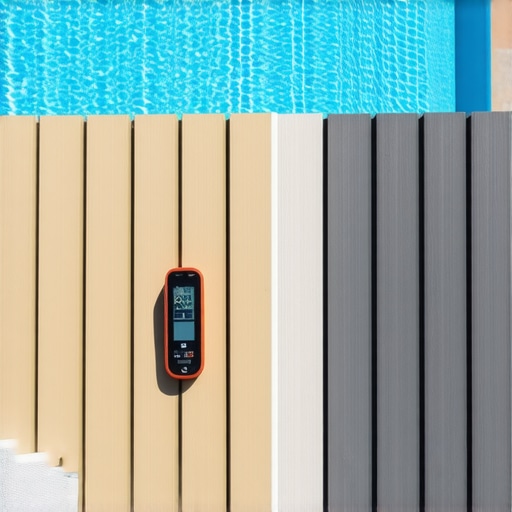
Stop the Slip Without the Burn
Texture and material composition matter just as much as the pigment. When composite decking gets hot, the surface resins can sometimes feel ‘slicker’ as they soften, which is a recipe for disaster near water. You should prioritize the non-slip coating that actually works on wet composite to ensure safety. In my own backyard, I discovered that deep embossing isn’t just for looks; it actually allows for better airflow under the sole of your foot compared to a flat, dark board. This is part of the secret to making composite decking look like real wood while maintaining high-performance safety standards.
The Heat Creeps Up the Railings Too
It is a common mistake to spend hours picking a cool floor only to install handrails that act like heating elements. I have seen children pull their hands back in genuine shock because their black metal railings are too hot to touch after a morning of direct exposure. If your heart is set on a dark aesthetic, use dark colors only for the vertical balusters and choose a light-colored composite or wood-alternative for the top ‘drink rail’ where people naturally rest their hands. This design choice balances that modern look with the basic human need to not get scorched while watching the kids swim.Most contractors and brochures will tell you that once the composite is down, your work is finished for the next thirty years. They are fundamentally wrong. In my experience, the biggest ‘oops’ in modern deck building isn’t the color of the boards—it’s the assumption that a high-end surface protects the structure. I’ve seen twenty-year-old composite planks sitting on a frame that was literally crumbling into mulch because the owner didn’t understand why pressure-treated wood still needs maintenance under composite. It is a classic contrarian truth: the more expensive and ‘permanent’ your decking material is, the more critical the skeleton beneath it becomes. According to studies by the American Wood Council, moisture trapped between a non-breathable composite board and a wooden joist creates a stagnant micro-climate that can accelerate fungal decay significantly faster than an old-fashioned exposed wood deck. 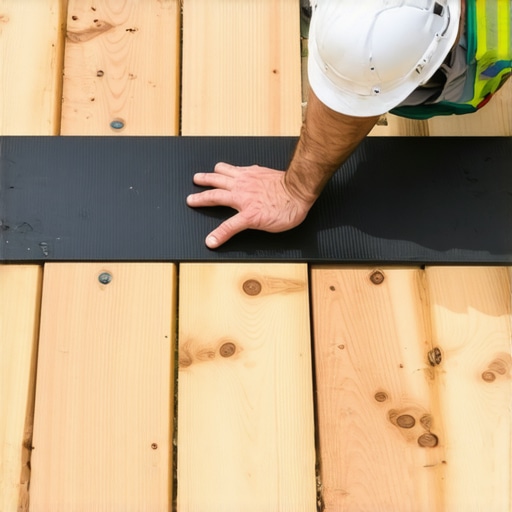
Your Frame is Rotting While Your Boards Look New
If you want your investment to actually last, you have to look at the joist tape secret for doubling your decks lifespan. By applying a butyl-based tape to the top of the joists, you create a waterproof barrier that prevents the ‘trapped water’ effect. Without it, your beautiful pool deck is a ticking time bomb. This is the level of detail that separates a DIY weekend project from a professional-grade installation that survives the humidity of a poolside environment. Another nuance people miss is thermal expansion. If you don’t account for why your composite decking is expanding more than the manual says, your boards will eventually buckle or ‘mushroom’ around the fasteners, destroying that sleek look you spent thousands to achieve.
Why does the whole structure sway when the kids run?
Even if your posts are deep in the ground, you might notice a subtle, annoying vibration or sway when there is high activity near the water. This is usually due to a lack of lateral bracing. Many builders skip the ‘blocking’ phase to save an hour of labor, but the simple blocking move that stops your deck from shaking when you walk involves installing small pieces of framing lumber between the joists in a staggered pattern. This transfers the energy across the entire deck frame rather than letting each joist flex individually. It’s the difference between a deck that feels like a solid floor and one that feels like a trampoline.
The Hidden Cost of Those Perfect Mitered Corners
We all love the look of a picture-frame border with crisp 45-degree angles, but poolside, this is often a recipe for disaster. I’ve learned the hard way why mitered corners are a mistake for high traffic decks near water. Because composite expands and contracts lengthwise, those beautiful mitered gaps will eventually open up, creating sharp ‘snag points’ for bare toes. If you are dead set on that aesthetic, you absolutely must use the pvc glue trick for gap-free composite miters to chemically bond those ends together. Even then, physics usually wins in the end. Have you ever fallen into this trap of ignoring the frame or the physics of expansion because the boards looked so good? Let me know in the comments below!
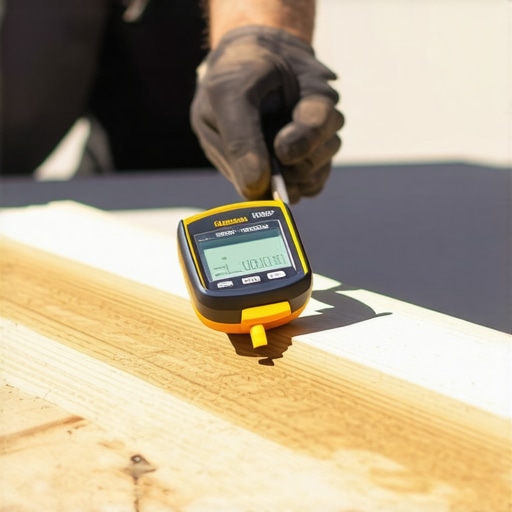
I’ve learned that the secret to a deck that still looks ‘magazine-ready’ ten years later isn’t just about the initial install; it’s about the tools you keep in your garage and the discipline to use them. While the industry pushes the idea of ‘set it and forget it,’ real pros know that environmental factors like pollen, tannins, and static are constantly at war with your boards. If you want to avoid the headache of a structural failure, you need to be proactive. I always recommend homeowners perform an annual ‘Walk and Knock’ inspection. This is where I take a rubber mallet and a moisture meter to the joists and posts. According to the North American Deck and Railing Association (NADRA), nearly half of the 60 million decks in the U.S. are past their useful life and in need of repair or replacement. By checking for soft spots and ensuring your hardware isn’t corroding, you’re not just maintaining a floor; you’re preventing a catastrophe.
The Gear That Actually Makes a Difference
When it comes to the physical upkeep, I swear by a two-bucket wash system—one for a dedicated composite cleaner and one for clean rinse water. One of my most hard-earned composite decking secrets longevity tips for a lasting deck is to avoid the pressure washer at all costs. I’ve seen too many people ‘fuzz’ their expensive boards by using too much PSI. Instead, use a soft-bristled brush on a long pole. If you’re dealing with stubborn organic stains, remember why you should never use bleach on your composite deck; it can eat away at the UV inhibitors and leave your deck looking blotchy. For the structural side, I always keep a high-quality impact driver and a box of structural screws handy. If a railing starts to wiggle, I don’t just tighten the old screw—I usually upgrade it using the 20 bracket that fixes wobbly railing posts fast. It’s a five-minute fix that makes the whole system feel rock solid again.
How can I keep my deck looking brand new for decades?
The trick is consistency and the right chemicals. For those of you with older installations, you might notice the luster fading. You can actually how to restore the color of a faded composite deck with specialized water-based revivers that don’t peel like traditional stains. Looking ahead, I suspect the next big trend will be integrated smart-sensors embedded in the joists to alert you to moisture levels before rot even begins. We are already seeing this in commercial builds, and it’s only a matter of time before it hits residential backyards. For now, the best ‘tech’ you can use is a digital plan; I always tell people why you need a 3d model before buying a single deck board so you can track where your utilities and drainage points are located years after they’ve been covered up.
My biggest piece of advice? Don’t wait for a squeak to take action. If you notice a board expanding weirdly, check the gaps. Understanding why your composite decking is expanding more than the manual says can help you trim a board before it buckles. I challenge you to go out this weekend and try one advanced move: grab a roll of butyl tape and apply it to any exposed ledger board or joist tops you can reach from underneath. This simple ‘flash and tape’ method is the single best way to ensure your frame outlives the boards it supports.
Three Hard Truths from a Sizzled Decking Veteran
If I could go back to that first afternoon with my screaming toddler, I would tell myself that a deck is a living system, not a piece of furniture. First, never trust a color swatch in a showroom; take a sample home and leave it in the direct sun for a full afternoon before committing. Second, the aesthetic appeal of your boards is irrelevant if the non-slip coating that actually works on wet composite isn’t there to prevent a dangerous fall. Finally, I have learned that the beauty of your surface is only as stable as the protection beneath it. Using the flash and tape method for protecting deck joists is the only reliable way to ensure your wooden frame does not rot while your expensive composite boards still look brand new.
The Only Tools I Trust to Stop Rot and Heat Damage
I do not keep a cluttered shed, but these four items are non-negotiable for my personal poolside maintenance routine. I always start every new project by verifying why you need a 3d model before buying a single deck board to visualize heat zones and structural support points properly. For ongoing safety, I keep a dedicated sprayer for textured treatments and a high-quality rubber mallet for my annual moisture inspections. If you are adding ambiance to your water-side retreat, please double-check why your deck lighting transformers keep blowing to avoid electrical headaches in the splash zone. These aren’t just gadgets; they are the insurance policy for your outdoor investment.
[image_placeholder_1]
Transform Your Backyard Without the Pain of Rookies
Building a poolside oasis should be about relaxation and family bonding, not a series of painful ‘ouch’ moments and expensive structural repairs. By choosing lighter tones that reflect the sun, protecting your frame from moisture from day one, and keeping a watchful eye on your hardware, you are setting yourself up for decades of summer fun. Do not let the fear of maintenance stop you from enjoying the incredible benefits of modern composite decking. Take it one board at a time, prioritize the safety of those little feet, and you will create a space that truly elevates your home and your lifestyle. Have you ever regretted a dark material choice after a summer heatwave, or are you planning your first light-colored escape? Let me know in the comments below!