
I remember the day I finished my first major view-focused project. I had spent weeks obsessing over composite decking secrets to ensure the foundation was bulletproof. I finally stood there, coffee in hand, ready to soak in the valley sunset. But instead of the rolling hills, all I saw was a grid of chunky, bright white pickets. It was a punch to the gut. I had essentially built a beautiful outdoor stage and then pulled the heavy velvet curtains shut before the show even started. I made the classic mistake of thinking the railing should stand out. Today, I am going to save you from that same disappointment by showing you how to pick a color that practically vanishes into the horizon. We are going to look at why contrast is the enemy of your vista and how the right [image placeholder] tone can transform your deck from a caged-in platform to a seamless extension of the landscape.
That Time I Accidentally Blocked My Own Million-Dollar View
Early in my building days, I thought matching the trim of the house was the golden rule. My house had crisp white trim, so naturally, I went with white railings. It looked great from the driveway, but from the lounge chair? It was a disaster. Every time I tried to look at the trees, my eyes would snap back to those bright white lines. It is a common trap. We get so caught up in matching your railing to your house siding that we forget the primary reason we built the deck in the first place: the view. According to research on visual perception from the American Psychological Association, the human eye is instinctively drawn to high-contrast, bright objects in the foreground. By choosing a bright color, I was literally forcing my brain to ignore the mountains and focus on the fence. I eventually tore those out and replaced them, a mistake that cost me a few thousand dollars and a lot of pride.
Will black railings make my deck look like a prison?
This is the number one fear I hear from homeowners. It sounds counterintuitive, but darker colors—specifically textured black or deep bronze—are actually the least intrusive. Think about a window screen. Is a white screen easier to see through, or a black one? The black one disappears because it doesn’t reflect light back at you. If you are worried about heat, you should check out why your black aluminum railing gets too hot to touch before you commit, but from a purely visual standpoint, dark wins every time. It is all about minimizing the ‘visual noise’ between your eyes and the scenery. Using something like the stainless cable trick combined with dark posts is usually the ultimate winning combo. Have you ever installed a railing only to realize it completely hijacked your favorite view? It is a frustrating realization, but one that is easily fixed with a bit of color theory.
Why Dark Colors Actually Provide More Visual Clarity
The magic happens when the railing color mimics the shadows in the distance. When you look out at a forest or a lake, there are natural shadows and dark tones. A dark bronze or black railing blends into those shadows, whereas a light-colored railing creates a hard line that your eye cannot skip over. I have found that selecting the perfect railing system often comes down to this single decision of light versus dark. We want to create a frame, not a wall. By the time we finish today, you will know exactly which swatches to hold up against your backyard backdrop to ensure your railing does its job of keeping you safe without stealing the show.
How to Pick the Tone That Actually Disappears
I used to tell clients to look at their siding when picking colors, but I’ve changed my tune. Now, I tell them to walk fifty feet into their backyard and look back at the house through a pair of sunglasses. What do you see? You see shadows and depth. To make a railing vanish, you need to mimic those natural shadows. I remember working on a project in a heavily wooded area where the owner was dead set on a “natural” tan color to match the bark. I took a spare piece of dark bronze railing and a piece of the tan, held them both up against the trees, and the tan stuck out like a sore thumb. The dark bronze? It vanished into the bark and the leaf-shadows immediately. If you want the scenery to pop, you have to treat the railing like a stage hand—it’s there to do a job, not to take a bow.
Forget the House and Look at the Horizon
When you are standing on your deck, your eye level is usually around five feet. Your railing is typically 36 to 42 inches high, which means the top rail is often cutting right through the most beautiful part of your view. If you have a white home, the instinct is to match the trim, but choosing the right deck color for a white house actually means creating a visual break between the bright siding and the darker landscape. You should use the simple tool for making sure your railing posts are plumb because even a slight tilt in a dark railing will catch the eye and ruin the illusion of transparency. Straight, dark lines are processed by the brain as a simple frame rather than a solid barrier.
The Texture Trick That Beats the Sun
Gloss is the enemy of visibility. A shiny black railing might seem like a sleek choice until the afternoon sun hits it and turns every baluster into a glowing white pillar of reflected light. This is why I always recommend a “textured” or “matte” finish for any railing system near a view. These finishes scatter light instead of reflecting it back at your eyes. I once had to swap out an entire high-gloss system for a client because the glare was literally blinding them during sunset dinners. We replaced it with a textured charcoal, and the difference was night and day. It was like someone had finally cleaned a dirty window they didn’t know was foggy. 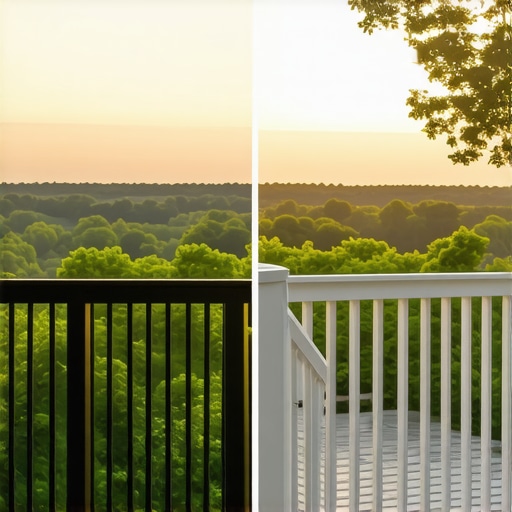
Sync Your Railing with the Rest of Your Build
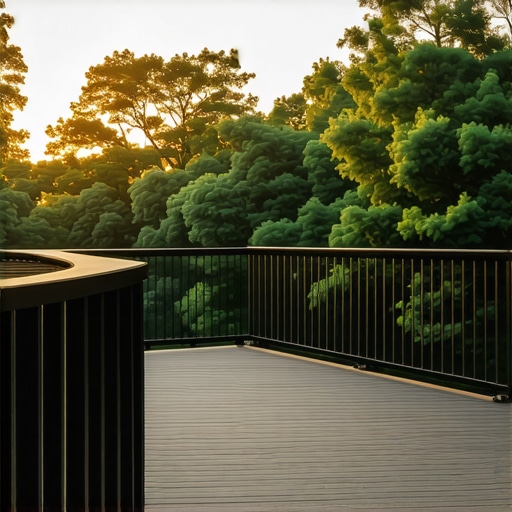
If you are planning a modern farmhouse deck with black railings, you are already on the right track for visual clarity. The contrast between light wood-look composite and dark railing creates a sophisticated boundary that doesn’t feel heavy or enclosed. To keep the look as clean as possible, utilize the hidden bracket trick for perfectly rigid railing posts so that no bulky hardware catches the light or distracts from the horizon. When you eventually have to choose between round and square balusters, keep in mind that thin, round balusters actually disappear more effectively from an angle because they have no hard edges to create a solid visual wall as you move across the deck.
Most homeowners believe that choosing a ‘natural’ tan or cedar tone for their railing will help it blend into the trees. In my experience, that is one of the biggest myths in outdoor design. Unless you are building in a desert, those warm wood tones actually stand out as bright, artificial lines against the deep greens and cool shadows of a forest or garden. If you really want to achieve that disappearing act, you have to look past the bark and focus on the voids. Shadows are dark, and to truly harmonize with a landscape, your railing needs to live in that same dark tonal range. While you are busy uncovering composite decking secrets for your floor, don’t forget that the vertical elements carry the most visual weight.
Stop Trying to Match the Trees and Start Matching the Shadows
The contrarian truth that most builders won’t tell you is that a brown railing is often more distracting than a black one. According to the International Association of Certified Home Inspectors (InterNACHI), the primary goal of safety structures should be functionality, but from a design standpoint, high-contrast colors create ‘visual friction.’ When you use a dark charcoal or bronze, you are mimicking the natural depth found in the distance. This is especially true when you use the stainless cable trick; the dark posts frame the view, while the thin cables vanish entirely. I have seen countless projects where the homeowner insisted on a light oak finish, only to realize it looked like a glowing cage once the sun started to set. Have you ever fallen into this trap? Let me know in the comments because I have been there too.
Why is your hidden fastener system suddenly failing in the summer?
As you move into more advanced territory like low-maintenance composite decking, you will likely be tempted by hidden fasteners. They look incredible, but they are the source of a major ‘oops’ factor if you don’t account for physics. Many DIYers—and even some pros—forget the expansion gap rule that stops boards from buckling. Composite materials expand and contract significantly more than natural wood. If you pin those boards too tightly without a 3D model or a plan for thermal movement, your hidden fasteners will pop up in the heat like piano keys. It’s a frustrating and expensive fix that can be avoided by simply respecting the material’s need to breathe.
The Pro Tip for Making Composite Look Authentic
If you are dead set on a wood look, the secret to making composite decking look like real wood isn’t in the color alone—it’s in the layout. I always suggest using the double joist trick for perfectly flush picture frame borders. This creates a finished, high-end look that hides the ‘plastic’ end-grains of the boards. Furthermore, if you are working on a smaller space, the diagonal board layout can trick the eye into seeing more square footage than actually exists. Whether you are selecting the perfect railing system or debating over round versus square balusters, remember that every choice should serve the horizon. Your deck should be a front-row seat to nature, not a barrier that keeps you from it.
Protect your investment with the right tools
Building a deck that looks incredible is only half the battle; keeping it that way for twenty years is where the pros separate themselves from the amateurs. I have learned the hard way that the prettiest layout is worthless if the skeleton starts rotting three years in. That is why I am obsessed with sub-structure protection. Before I even buy a single piece of lumber, I insist on visualizing the project; why you need a 3d model before buying a single deck board cannot be overstated. It allows you to see how the joists interact with your specific terrain, preventing the ‘oops’ moments that lead to structural failure later on. Once the boots are on the ground, the flash and tape method for protecting deck joists is my non-negotiable standard. I specifically use butyl-based tape because it self-seals around fasteners, creating a waterproof barrier that prevents the joist from becoming a sponge. According to technical bulletins from the North American Deck and Railing Association (NADRA), the majority of deck collapses are caused by failed ledger boards and rot in the underlying frame, not the surface boards themselves.
How do I keep my deck from falling apart in ten years?
Maintenance is where most homeowners fall off the wagon. The biggest mistake I see? Someone gets a little bit of moss or dirt on their beautiful composite surface and thinks a high-powered blast will solve it. I have to tell them that why you should never use a pressure washer on composite is essentially a rule for preserving your warranty. High pressure can etch the surface, creating tiny grooves where dirt will eventually settle permanently. Instead, I use a soft-bristle brush and a pH-neutral cleaner. If you live in a region with heavy winters, you need to be just as careful with the white stuff. Check out the best way to handle snow removal on composite decks to avoid using metal shovels that can gouge the ‘wood’ grain you worked so hard to pick out. 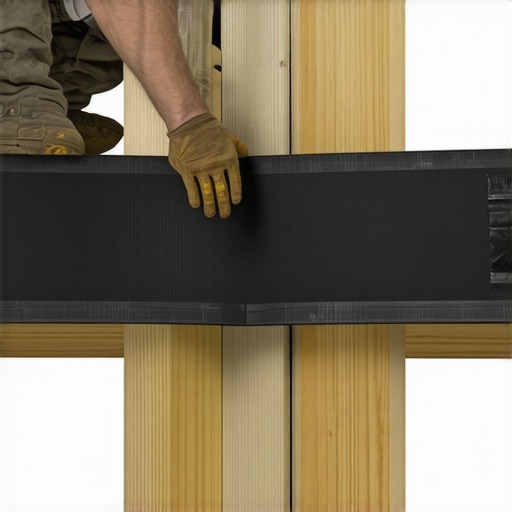
Look ahead to the next generation of outdoor living
The industry is moving toward materials that do more than just sit there. We are already seeing incredible advancements like why capped polymer composite stays cooler than wood plastic, which makes the barefoot experience much more pleasant in July. I predict that in the next few years, we will see ‘smart’ decking systems with integrated sensors that can monitor the moisture levels of your framing or the structural integrity of your pergola that never wobbles. For now, the best tool you have is your own eyes. Perform the 15-minute deck inspection every homeowner should do every spring. Check the connection points where the deck meets the house and look for any signs of wood checking or loose bolts. I challenge you to grab a flashlight this weekend and check your ledger board for any signs of water intrusion; catching a small leak now is the difference between a simple fix and a total rebuild ten years down the line.
Hard Truths from a Decade of Building Decks
One thing I realized after years in the field is that a railing isn’t just a safety feature; it’s a lens through which you view your world. When I first started, I ignored how much of an impact light reflection has on visual clarity. I’ve learned that textured finishes are non-negotiable if you want to avoid that ‘glare-blindness’ during the golden hour. It’s also vital to realize that your railing choice must work with your overall stunning deck design strategies. If the railing is too busy, it detracts from the quiet beauty of the landscape. Another lightbulb moment for me was realizing that the underside of the top rail should be dark too—lighter colors underneath can actually catch the sun and create a distracting halo effect right at eye level. #IMAGE_PLACEHOLDER_E#
The Toolkit Every Homeowner Needs Before Breaking Ground
Before you spend a dime, I highly recommend checking out these resources. First, never skip a design phase; I always advocate for why you need a 3d model before buying a single deck board so you can virtually ‘stand’ on the deck and see if your railing height slices your view in half. Second, look into NADRA (North American Deck and Railing Association) for the latest safety codes. Finally, grab a physical sample of a railing system for safety and style and hold it up against your specific horizon at dusk. No website can replicate how a color reacts to the specific greenery in your neck of the woods.
Stop Building Walls and Start Building Frames
Building a deck is a major investment, but the real return on that investment isn’t the wood or the composite—it’s the moments of peace you find looking out at the world. By choosing a railing color that yields to the horizon, you’re making a conscious choice to prioritize nature over architecture. Whether you are using low-maintenance composite decking or high-end hardwoods, the goal is always the same: a seamless transition between your home and the wild. If you’re still feeling stuck on the technical details or need a professional eye to check your plan, don’t hesitate to contact us for expert guidance. Your view is worth the extra effort.
Have you ever installed a railing color that you immediately regretted once the sun came out? Let me know your story in the comments below!