
It was a Tuesday evening, the sun was hitting the back of the house just right, and all I could see was a glaring mistake. I had just finished installing a gorgeous slate-gray siding, but I had kept the old, weathered wood railings. The result? It looked like I had run out of money halfway through the renovation. That clash was not just a minor eyesore; it was a total vibe-killer for my home’s exterior. I spent three weeks scouring catalogs, trying to figure out how to bridge the gap between functional safety and architectural harmony. We have all been there, standing in the driveway, realizing that the ‘good enough’ choice is actually dragging down the whole look of the property. Today, we are going to fix that. I am going to show you exactly how to coordinate materials and colors so your deck feels like an extension of your home, not an afterthought. We will look at everything from innovative deck design ideas to the specific textures that play well with different siding types.
Stop the Visual Noise by Planning Your Palette
Early in my DIY journey, I made the classic blunder of picking a railing based on what looked good in the store. I went with a stark white PVC because it was on sale. Big mistake. My house was a warm, earthy beige, and that railing practically glowed in the dark like a neon sign. It was too loud and felt completely disconnected from the landscape. I learned the hard way that you have to consider the undertones of your siding—is it a cool blue-gray or a warm tan? This is why I often suggest checking out how to select the perfect railing system for every deck before you pull the trigger on a purchase. Choosing a railing that complements those undertones creates a seamless transition. For instance, if you have a traditional brick or horizontal siding, a black aluminum rail often acts as a neutral frame that lets the house shine. On the flip side, you should be careful with certain trends; for example, I have found that you might want to learn why you should avoid white railings near gardens if your siding is a darker shade, as the contrast can be jarring.
Is all this color matching really necessary for a simple deck?
You might be thinking that a railing is just a safety feature, but the data says otherwise. According to the National Association of Realtors, high-quality curb appeal can increase a home value by up to 7%, and a mismatched railing is one of the first things a buyer notices. It is not just about vanity; it is about protecting your investment. Have you ever looked at your back porch and realized the colors just do not work together? I would love to hear about your biggest design ‘mismatch’ moment in the comments. Whether you are dealing with low-maintenance composite decking or traditional wood, getting the railing right is the final piece of the puzzle.
Master the 60-30-10 Rule for Your Exterior
Think of your home’s exterior like a tailored suit. Your siding is the jacket (60%), the deck boards are the shirt (30%), and the railing is the tie (10%). If your tie is screaming while your jacket is whispering, the entire look fails. When I was tackling that slate-gray siding project mentioned earlier, I realized my wood railings were like wearing a plaid tie with a striped suit—it was pure visual chaos. To fix this, you must start by grabbing physical samples. Never trust a digital swatch on a smartphone screen. I take my samples and literally lean them against the house for 48 hours to see how the morning sun and evening shadows change the hue. This is the only way to spot those weird undertones that make composite decking trends look either high-end or like cheap plastic depending on the light.
Let the Wet Sand Test Guide Your Texture Choice
Texture is the silent partner of color. If you have a very smooth, modern vinyl siding, a rugged, deeply embossed wood grain on your deck can feel completely disconnected. I once helped a neighbor who chose a high-gloss finish for his boards, and it looked like a skating rink next to his matte cedar siding. We used the wet sand test for choosing the right composite texture to find a board that had enough grip for safety but a subtle enough grain to mimic the natural wood of his window trims. This test involves applying a bit of moisture and grit to the sample to see how the ‘valleys’ in the grain hold onto debris. It’s about creating a visual bridge, not a barrier between your indoor and outdoor aesthetics. 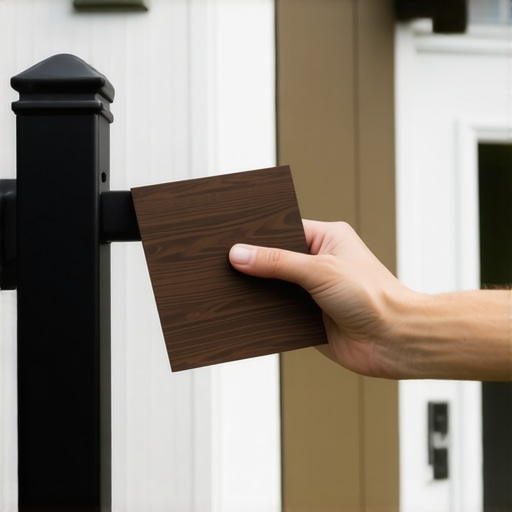
Kill the Wobble Before You Build the Beauty
You can have the most beautiful custom railing systems in the world, but if the post shakes when you lean on it, the illusion of quality is shattered immediately. I learned this during a frantic weekend build where I skipped the extra bracing because I was in a rush to see the finished product. I thought the lag bolts alone would hold. Three months later, that rail was swaying like a palm tree in a hurricane. Now, I always use the blocking trick that stops railing post wobble. It involves adding solid wood blocks between the joists right where the post sits, creating a rigid ‘box’ that locks the post in place. This transfers the weight to the entire frame rather than putting all the stress on a single rim joist.
Hide the Skeletal System for a Professional Finish
If you are installing a dark-colored deck, one of the biggest mistakes is leaving the bright, pressure-treated lumber visible through the gaps between the boards. It looks like a skeleton peeking through a dress. In my own backyard, I realized the bright green tint of the joists was ruining the ‘infinity’ look of my black composite boards. I eventually discovered that you should paint your deck joists black under composite. This simple move makes the gaps disappear into the shadows, making the entire structure look like a solid, cohesive piece of furniture rather than a raw construction site. It is these small, instructional details that separate a DIY project from a professional-grade renovation.
The Hidden Danger of Hidden Fasteners
Everyone tells you that hidden fasteners are the only way to get a clean, professional finish. I used to be one of those people. But here is the contrarian truth: for certain materials, they are a recipe for disaster. If you are working with wide-profile boards or dense tropical woods, these clips can actually snap or cause the boards to buckle because they don’t allow for the natural movement of the material. I have seen beautiful projects ruined because the homeowner did not realize why hidden fasteners are a bad idea for tropical hardwoods or why hidden fasteners fail on wide profile boards. In high-moisture environments, the tension is just too much. Sometimes, a high-quality color-matched screw with a plugging system is actually the ‘pro’ choice, even if it takes twice as long to install. Have you ever fallen into this trap of choosing aesthetics over structural physics? Let me know in the comments.
Don’t Let Physics Rip Your Siding Off
The biggest mistake I see advanced DIYers make is underestimating thermal expansion. Composite decking behaves like a living, breathing thing. On a 90-degree day, a 20-foot board can expand significantly. If you butt that board right up against your house without a calculated gap, it will literally push against your siding until something gives—usually your expensive J-channel or flashing. I learned this the hard way after a particularly hot July left my siding looking like a wavy bag of potato chips. You must master how to stop composite deck boards from expanding into your siding to avoid a multi-thousand dollar repair bill. According to a study by the North American Deck and Railing Association (NADRA), improper spacing and fastener failure account for nearly 15% of avoidable structural issues in residential decks. It is not just about the boards; it is about how those boards interact with your home’s thermal envelope.
Why does your brand-new composite deck feel like a trampoline?
You spent the money on the best 2025 materials, but every time you walk to the grill, you feel a slight ‘give’ under your feet. This isn’t usually a problem with the boards—it is a framing failure. Most builders use a 16-inch on-center joist spacing because it is the standard for wood, but composite is more flexible. If you do not account for this, you end up with that annoying ‘spongy’ feel. I always recommend checking why your composite deck feels like a trampoline and implementing how to fix the bounce in your over-spanned deck joists before you finish the surface. Adding mid-span blocking or tightening the joist spacing to 12 inches on-center can transform a cheap-feeling deck into something that feels as solid as a concrete slab. 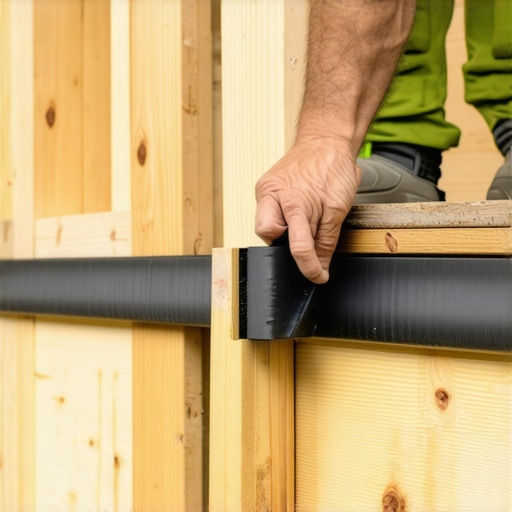
The ‘Oops’ Factor of Joist Decay
We talk a lot about the surface, but the real expertise shows in what you do to the wood you’ll never see again. I have seen ten-year-old composite decks that look brand new on top but are structurally condemned because the pressure-treated frame underneath rotted out. People think ‘treated’ means ‘invincible,’ but the reality is why pressure-treated wood still rots under joist tape if you do not manage water correctly. You have to be obsessive about the details, like using the joist tape secret for doubling your decks life and ensuring the drip edge trick for protecting deck ledger boards is executed perfectly. If you skip these ‘invisible’ steps, you are essentially building a beautiful house on a foundation of melting ice. Always remember that the longevity of your composite decking secrets starts with the skeleton, not the skin.I’ve spent far too many afternoons crawling under joists with a flashlight to fix mistakes that could have been avoided with the right gear. If you’re serious about a professional finish, you need to stop eyeballing your measurements. I personally swear by the jig i use for consistent deck screw depth. This tool is a lifesaver because it prevents ‘mushrooming’—that annoying bump of plastic that rises around the screw head on composite boards. Combine that with the level and laser method for setting pergola heights alone, and you’ll find that you can achieve a level of precision that makes your deck feel like a high-end interior floor. 
How do I keep my composite looking fresh without losing my weekends?
Maintenance is the most misunderstood part of the process. People buy composite because they want ‘zero maintenance,’ but that is a myth. You still have to deal with pollen, bird droppings, and the occasional grease spill from the grill. Instead of reaching for a power washer—which can permanently scar the surface—I always recommend the vinegar and water mix that cleans composite better than chemicals. It’s gentle, cheap, and won’t kill your lawn. If you have pets, learning how to stop your dog from scratching your composite boards through behavioral training and proper mat placement is far more effective than trying to buff out deep gouges later. As highlighted by the American Wood Council’s DCA 6 guidelines, keeping debris out of the gaps is critical for airflow, which prevents the moisture buildup that leads to ledger rot. For the long haul, these composite decking secrets longevity tips for a lasting deck are your best defense against the elements.
Forget Wood: Why Steel is the Future of Framing
Looking ahead to 2025 and beyond, I predict we are going to see a massive shift away from pressure-treated lumber for the structural skeleton. We are already seeing why your pressure-treated frame is pulling your composite apart; as the wood dries and twists, it forces the stable composite boards to move with it, causing pops and squeaks. Steel framing stays perfectly straight forever. When you combine steel with the steel bracket move for high wind pergolas, you’re building a structure that can outlast the house itself. It eliminates the risk of the ledger board error that causes house leaks because steel doesn’t shrink or pull away from the siding. I want you to try this right now: go outside and check your current ledger board with a flashlight. If you see even a hairline gap between the wood and the house, that’s your sign to act before the next rainy season.
Hard-Won Secrets From a Decade of Decking Disasters
One thing I learned the hard way is that your deck is a living ecosystem. If you choose the wrong color, 7 composite colors that look terrible under led lights can make your backyard look like a dim movie set at night. Also, be prepared for the physics of modern materials; knowing why your composite deck is statistically likely to static shock you is a real phenomenon that often surprises homeowners in dry climates. Finally, remember that ‘low maintenance’ is not a license to ignore your build; regular care using the vinegar and water mix that cleans composite better than chemicals is the difference between a deck that lasts a decade and one that stays beautiful for thirty years.
The Gear That Actually Earns Its Keep
I never start a job without the jig i use for consistent deck screw depth because it keeps the surface looking like a piece of high-end furniture rather than a DIY experiment. For the layout phase, I suggest you skip the guesswork and master the 3-4-5 triangle move for squaring up a new deck frame to ensure your corners are mathematically perfect. If you want to add vertical interest that ties your railing and siding together, I highly recommend browsing pergola design inspiration from modern to classic looks to find a structure that complements your home’s roofline. #IMAGE_PLACEHOLDER_E#
Stop Dreaming and Start Building Your Oasis
Your home does not end at the back door. By applying these composite decking secrets, you are not just building a wooden platform; you are extending your sanctuary into the fresh air. Don’t let the technical hurdles paralyze your progress—every master builder started with a single wobbly board and a vision. If you are feeling stuck on how to begin, look at some innovative deck design ideas to spark that initial momentum. What is the one thing holding you back from starting your deck renovation today—is it the color choice or the structural fear? Let me know in the comments below.