
I remember hosting my first big Fourth of July party after finishing what I thought was a masterpiece of a DIY project. The burgers were searing, the drinks were cold, and then my neighbor, Big Mike, walked across the boards. Every single glass on the patio table did a nervous little shimmy. It wasn’t an earthquake; it was my deck acting like a trampoline. I stood there, spatula in hand, feeling that tell-tale vibration right up through my boots. It was embarrassing, sure, but more than that, it was unsettling. I’d followed the basic guides, or so I thought. I quickly learned that why your composite deck feels like a trampoline usually boils down to math and physics rather than just loose screws. Today, I am going to show you exactly how to identify those structural weak points and turn that bouncy floor into a rock-solid foundation that doesn’t budge when the party gets going.
Your Deck Shouldn’t Double as a Gymnastics Floor
The primary culprit behind a springy deck is almost always ‘deflection.’ This is just a fancy engineering term for how much a joist bends under a load. When I first started building, I made the classic rookie mistake of pushing my joist spans to the absolute legal limit allowed by local codes. I figured if the book said I could span twelve feet with 2x8s, then twelve feet was exactly what I’d do. What I didn’t realize is that code-minimum often feels like walking on a diving board. According to the American Wood Council’s DCA 6, specific span limits are designed for safety, but they don’t always account for ‘user comfort.’ If you want a floor that feels like a slab of concrete, you have to overbuild. I found that the staggered joist trick for ultra long deck spans is a game-changer for stability. It’s not just about the size of the wood; it’s about how you distribute the weight across the entire frame. Have you ever felt that weird vertical ‘thud’ when someone walks past you? That’s your joists screaming for a little more support.
Is a Bouncy Deck a Sign of Impinent Collapse?
It is the question that keeps every homeowner up at night after a particularly rowdy backyard gathering. The short answer is: not necessarily, but you shouldn’t ignore it. A little bit of flex is normal in wood structures, but if you can feel the person next to you walking, you need to test your deck for structural fatigue sooner rather than later. In my early days, I ignored a slight bounce on a client’s project, thinking it was just the ‘character’ of the wood. Two years later, that bounce had turned into a significant sag. I ended up having to learn the simple way to fix a sagging deck beam the hard way—by crawling into a muddy crawlspace in November. We’re going to tackle the fix today by looking at mid-span blocking and ledger attachment, so you don’t have to repeat my damp, chilly mistakes.
Kill the Vibration with Solid Blocking
Think of your deck joists like a deck of cards held loosely in your hand. If you apply pressure to the top, they want to slide and tilt. In the deck world, we call this ‘lateral movement’ or ‘rolling.’ When you walk across a deck and feel that rhythmic bounce, it’s often because the joists are slightly twisting under your weight. The most effective way to kill this vibration is through solid blocking. This involves cutting short pieces of the same joist material and fitting them tightly between the long spans. I once spent three days on a project in the suburbs where the client’s main complaint was that her wine glass would tip over every time her Golden Retriever did a lap around the table. We didn’t need to rebuild the whole thing; we just installed a double row of solid blocking every four feet. The difference was night and day. It turned a wobbly frame into a unified, rigid grid. If you are doing this, make sure your blocks are a hair’s breadth larger than the gap so you have to tap them in with a mallet—that’s how you know they are actually providing structural tension. Interestingly, the blocking trick that stops railing post wobble uses this same physics to keep your safety barriers from feeling like cooked spaghetti.
Stop the Twist with Mid-Span Bridging
While solid blocking is the gold standard, some pros prefer bridging—the X-shaped braces you see in old floor joists. The goal is the same: force the joists to share the load. If one joist starts to deflect, the bridge transfers that weight to its neighbors. When I’m working with long-span low-maintenance composite decking, I lean toward solid blocks because composite is heavier than traditional cedar or pine and needs that extra beefiness underneath. 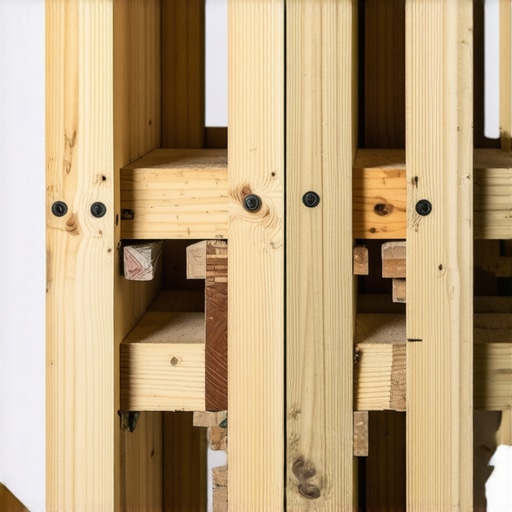
Sister Your Joists to Fight the Sag
Sometimes the math simply doesn’t work in your favor. If you have 2×8 joists spanning ten feet, they are technically safe, but they will always feel like a trampoline. In these cases, the fix is ‘sistering.’ This means you take a second joist and bolt it directly alongside the existing one. It effectively doubles the stiffness of that specific section. I remember a job where the original builder skipped the rim joist support entirely. We had to use the double joist trick for perfectly flush picture frame borders to not only add strength but to provide a wide enough surface for the decorative border boards to sit on without sagging. While you have the skeleton exposed, it’s the perfect time to apply the flashing tape move that doubles the life of your joists. It’s a five-minute task that prevents rot from taking hold in the new wood-on-wood contact points.
Upgrade Your Posts for Total Stability
If the floor feels solid but the whole structure seems to sway when you lean against the railing, the issue is likely at the ground level or the house connection. Check your ledger board first—this is where the deck meets your home. A loose ledger is a recipe for disaster and is often the result of the ledger board error that causes house leaks. If that’s solid, look at your support posts. Many older decks were built with 4×4 posts which are prone to bowing over time. Upgrading to a larger footprint is one of those ‘why didn’t I do this sooner’ moments. There is a clear reason why 6×6 posts look better than 4x4s on any outdoor structure—they provide a much broader base of support that significantly reduces the leverage force that causes swaying. By combining mid-span blocking with beefy support posts, you’re not just building a deck; you’re building a platform that feels like an extension of your home’s foundation.People often tell me they are switching to composite because it is ‘indestructible.’ Here is the cold truth from someone who has pulled up hundreds of failed projects: while the boards themselves might not rot, the wooden frame underneath is more vulnerable than ever. A common trap I see is homeowners spending a fortune on high-end boards but using the cheapest pressure-treated pine for the frame without any protection. You really need to dig into composite decking secrets and longevity tips for a lasting deck to understand that the marriage between the synthetic top and the organic bottom is where most decks fail. If you trap moisture between a plastic board and a wood joist, you have created a petri dish for rot. Everyone says hidden fasteners are the pinnacle of innovative deck design ideas that elevate your homes curb appeal, but I have actually started moving away from them on high-traffic builds. Why? Because why hidden fasteners can be a maintenance nightmare is a reality you only face three years later when you need to replace one single scratched board in the middle of the floor and realize you have to deconstruct the entire deck to get to it.
The Mathematical Error That Ruins Your Summer
The most expensive mistake you can make is ignoring thermal expansion. Unlike wood, which mostly moves with moisture, composite moves with heat. I have seen entire decks buckle and ‘hump’ because the builder didn’t follow the expansion gap rule that stops boards from buckling. In the peak of July, those boards can grow by an eighth of an inch or more. If they have nowhere to go, they will pop their screws or warp the frame. I once saw a DIYer make the 3-inch screw mistake that ruins composite joists by using standard deck screws that didn’t allow for this movement. The result? Every single board end sheared off by August. This is precisely why your deck boards are popping up at the ends and it is a nightmare to retro-fix once the hidden clips are locked in. 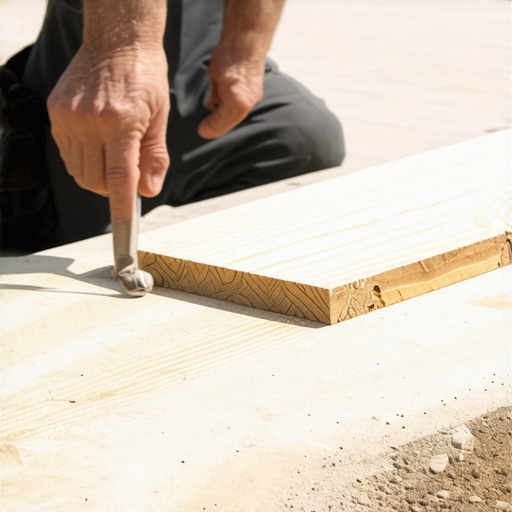
Can Your Pergola Handle the Lateral Force of a Summer Storm?
When we talk about ‘nuance,’ we have to talk about lateral load. A deck that doesn’t bounce is great, but a pergola that doesn’t sway is harder to achieve. According to technical bulletins from the International Code Council (ICC), most backyard structures fail not because of vertical weight (gravity), but because of ‘racking’ or sideways movement. This is why I always insist that the notched rafter secret for a pergola that never wobbles is the only way to build. If you are just toe-nailing your rafters to the top of a beam, you are relying on the shear strength of a few nails to hold up a thousand pounds of timber during a windstorm. It is a dangerous shortcut that looks fine until it doesn’t. Have you ever fallen into this trap of prioritizing aesthetics over the ‘hidden’ structural math? Let me know in the comments below, and let’s make sure your next build is truly rock solid.I’ve spent thousands of hours on my knees on various job sites, and if there’s one thing I’ve learned, it’s that the right gear turns a structural nightmare into a manageable Saturday afternoon hobby. When I’m setting up a perimeter, I never rely on a standard level alone. Using the simple tool for making sure your railing posts are plumb—specifically a dedicated post-level that straps onto the timber—is the difference between a professional finish and a deck that looks like it’s leaning into a stiff breeze. I also keep a specialized hydraulic tensioner in my kit; it’s absolutely essential for the tension cable move for modern railing looks. Without that specific tool, those cables will inevitably sag like old clotheslines within a single month of temperature swings. For driving those long structural screws, I’ve moved away from standard drills and exclusively use high-torque impact drivers with a depth-setting nosepiece. This prevents you from over-driving fasteners and crushing the cellular structure of your joists, which is a leading cause of localized rot.
How do I keep my deck from looking like a relic in five years?
The secret isn’t a magic potion or a $200-a-gallon sealant; it’s a consistent routine. I tell all my clients to perform the 15-minute deck inspection every homeowner should do every single spring. You need to look for those tiny, hairline gaps where the house meets the ledger and ensure you have the 2-degree slope secret for dry under deck storage working in your favor so water isn’t pooling against your foundation. When it comes to cleaning, stop buying the toxic, expensive jugs from the big-box stores. In my experience, the vinegar and water mix that cleans composite better than chemicals does a superior job of killing mold spores without stripping the UV protectants from your expensive boards. According to technical bulletins from the North American Deck and Railing Association (NADRA), nearly half of the 60 million decks in the U.S. are currently past their useful life due to neglected maintenance—don’t let your investment become a statistic just because you skipped a quick annual check-up. 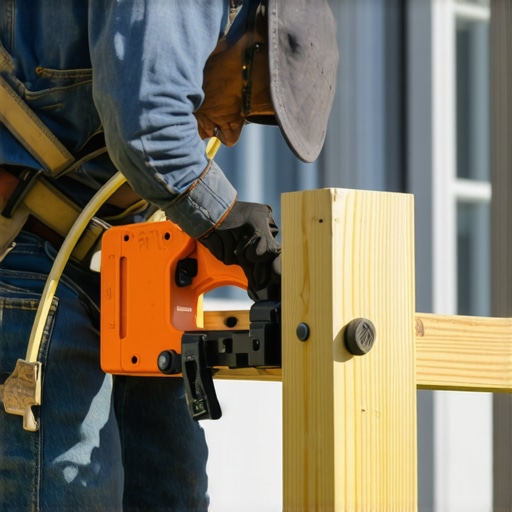
The Future of Framing is Metal
I’m calling it now: we are moving toward a world where wood frames will eventually become the ‘budget’ option rather than the industry standard. I’m seeing a massive uptick in light-gauge steel and aluminum framing in high-end builds. Why? Because metal stays perfectly flat, doesn’t rot, and eliminates that ‘trampoline’ bounce entirely because the material doesn’t flex or shrink like timber. While it costs about 20-30% more upfront, it solves the long-term warping issues that lead to homeowners complaining why black composite decking burns your feet and how to fix it, as metal frames allow for much better airflow and thermal dissipation under the boards. Before you buy any more expensive commercial deck cleaners, go into your kitchen pantry and mix that vinegar solution I mentioned; try it on a small, inconspicuous corner of your deck this evening and watch the winter grime disappear instantly.
Lessons My Calloused Hands Had to Learn
After years of sawdust and sunburns, I’ve realized that the ‘minimum code’ is often a recipe for a mediocre result. If you are diving into stunning deck design strategies, remember that stiffness is a luxury you pay for in the framing stage, not the finishing stage. I stopped trying to save a few dollars on lumber when I realized it cost me ten times that in reputation and repairs later. Also, never underestimate the weight of a crowd; your structure might feel fine for two people, but it needs to feel like a vault for twenty. Most importantly, I learned that a deck is a living breathing thing—it moves with the seasons, and if you don’t account for that movement, it will eventually fight back. #IMAGE_PLACEHOLDER_E#
The Toolkit That Separates Amateurs from Pros
To get the job done right, I always keep the simple tool for making sure your railing posts are plumb in my front pocket; it’s a dedicated post level that saves me hours of frustration and prevents that ‘leaning tower’ look. For those pursuing modern railing looks, do not skimp on a high-quality tensioning kit—the bargain versions will inevitably sag the first time the temperature drops. Finally, I highly recommend following the latest durable composite decking trends to choose materials that don’t just look good in the showroom but actually withstand the reality of your local climate and foot traffic.
Transform Your Vision Into a Lasting Reality
Building an outdoor space is about more than just structural math; it’s about creating a sanctuary where you can relax without a single worry about what’s beneath your feet. Whether you are installing complex railing systems or just refreshing a few boards, the effort you put into the foundation today will pay dividends for decades. You have the knowledge, the tools, and the plan—now it is time to get out there and build something that truly lasts. What is the biggest ‘wobble’ you have ever felt on a deck, and did you find the source? Let me know in the comments below!