
I remember it like it was yesterday—May of 2018. I was carrying a tray of marinated steaks out to the grill for the first cookout of the season. My foot hit that one specific spot near the railing, and instead of a solid, reassuring thud, there was a sigh. A literal groan from the wood that vibrated up my leg. My heart skipped a beat. It wasn’t just a loose board; it was the visceral feeling of structural fatigue. We often spend so much time worrying about the aesthetics, like composite decking secrets for longevity or finding the right pergola design inspiration, but we often ignore the bones of the structure. Structural fatigue isn’t always a snapped beam on day one. It is the slow, silent weakening of connections over years of rain, snow, and heavy foot traffic. Today, I am going to show you exactly how to vet your deck’s health before you host your next big gathering. We are going beyond a quick glance. I will teach you the methods I use to ensure my own family stays safe, starting with the most overlooked signs of wear and tear. Have you ever felt that unsettling ‘give’ when walking across your own deck? Drop a comment and let me know, because you definitely aren’t alone.
That Shaky Feeling Under Your Feet is a Warning
I will be honest with you: I made a massive mistake early on in my DIY journey. I used to think that if the surface boards looked clean and I had applied a fresh coat of stain, the deck was solid. I completely ignored the structural vulnerability assessment for my joists simply because they were hidden from view. It was not until I noticed why my deck stairs felt bouncy that I realized the pressure-treated wood underneath was actually failing at the connection points. It was a massive wake-up call; my deck looked pretty on top but was a disaster waiting to happen underneath. [IMAGE_PLACEHOLDER]
Can You Really Tell if a Deck is Failing Just by Looking?
A lot of folks are skeptical about this. They think a deck will give them a loud, clear warning before anything goes wrong. But structural fatigue is a sneaky beast. According to data from the North American Deck and Railing Association (NADRA), there are over 60 million decks in the U.S., and roughly half of them are past their useful life. That is a staggering number of potential failures hiding in plain sight. I have learned the hard way that you need more than your eyes; you need a process. We are going to use tools like the ice pick test for checking joist strength and the 3-second push test to get real answers. If your railing system feels even slightly loose, it is not just ‘loose’—it is a sign that the leverage of years of use is winning the battle against your fasteners. Before we dive into the nitty-gritty of the ledger board and the joist hangers, we need to understand exactly what we are hunting for.
Hunt for the Gap That Floods Your Kitchen
The ledger board is essentially the handshake between your home and your outdoor space. If that handshake is weak, the entire structure is compromised. One of the first things I look for is the ledger gap fix that prevents house siding rot. If you see even a quarter-inch space between the house and the deck, water is getting in. I once helped a neighbor who thought he just had a “sticky” sliding door, only to find out the deck-to-wall flashing mistake that causes kitchen rot had eaten through his rim joist. We had to tear out his kitchen flooring because the deck wasn’t shedding water properly. You want to see a clear, metal drip edge over that ledger; if it is just wood-on-wood, you are looking at a ticking time bomb.
Put Your Weight into the 3-Second Push
Your railing systems should feel like a stone wall, not a garden hammock. I use the 3-second push test on every single post. Grab the top rail and give it a firm, continuous shove outward for three seconds. If you see the base of the post move or hear the wood fibers stretching, the connection is failing. This often happens because builders skip the blocking trick that stops railing post wobble. I remember a job in 2019 where the railing looked pristine but because it was bolted only to the thin rim joist, it nearly gave way when I leaned on it. It is not just about the hardware; it is about the structural blocking behind it. 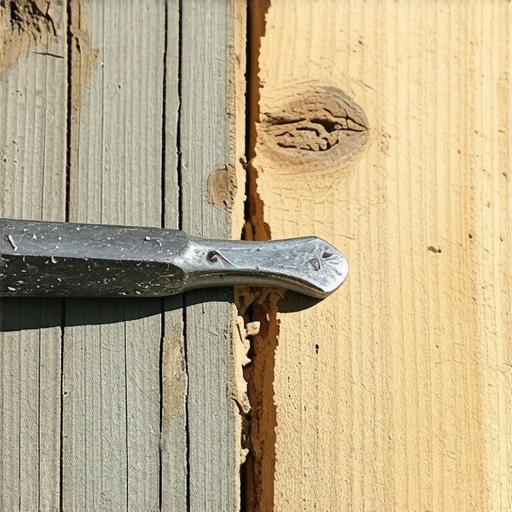
The Ice Pick Test Tells the Truth About Your Joists
Pressure-treated wood is great, but it is not invincible. It can rot from the inside out, looking solid on the exterior while the core becomes as soft as cork. This is why the ice pick test for checking joist strength on older decks is my go-to move. Take a standard ice pick or a flat-head screwdriver and jam it into the joist, especially near the hangers or where boards overlap. If the tool sinks in more than an eighth of an inch with little resistance, you have rot. I have seen decks with beautiful composite decking that felt firm underfoot, yet the joists below were decimated. If you find soft spots, it is time to look into how to fix the bounce in your over-spanned deck joists before you add heavy furniture. To prevent this on new builds, I always advocate for the joist tape secret for doubling your decks life, which keeps water from sitting on top of the beams.
Check for Spongy Spots Between the Ribs
Even if your frame is solid, the surface boards can hide their own secrets. If you have upgraded to modern materials, you might wonder why your composite deck feels spongy between joists. This usually is not a failure of the material itself, but a sign that the joist spacing was too wide for the specific brand of composite used. I once walked across a high-end deck that felt like a trampoline; the builder had spaced the joists at 16 inches on center when the manufacturer required 12 inches for a diagonal pattern. It is a subtle form of fatigue that wears down the fasteners over time. If you are seeing this, you need to add mid-span blocking to stiffen the field.One thing I hear constantly is that composite decking is ‘set it and forget it.’ I’m going to be the bearer of bad news: that mindset is exactly why so many premium decks fail within a decade. While the boards themselves won’t rot, the way they interact with your frame is a science most people ignore. I’ve seen homeowners drop twenty grand on materials only to have the deck buckle because they ignored how to stop composite deck boards from expanding into your siding. Composite moves much more than wood when the temperature shifts, and if you don’t account for that thermal expansion, the boards will literally pull the fasteners out of the joists.
The Maintenance-Free Label is a Dangerous Marketing Myth
Everyone says composite requires zero work, but in my experience, a ‘neglected’ composite deck looks worse than a weathered cedar one. If you aren’t using the vinegar and water mix that cleans composite better than chemicals, you’ll end up with a biofilm of pollen and dust that becomes a breeding ground for surface mold. The ‘oops’ factor I see most often is the assumption that the frame will last as long as the boards. It won’t. I’ve spent years shouting about why pressure-treated wood still rots under joist tape if you don’t ensure proper airflow. According to the American Wood Council’s Design for Code Acceptance (DCA 6), the substructure’s ability to shed water is the single most important factor in deck longevity, yet most DIYers focus entirely on the color of the plastic. 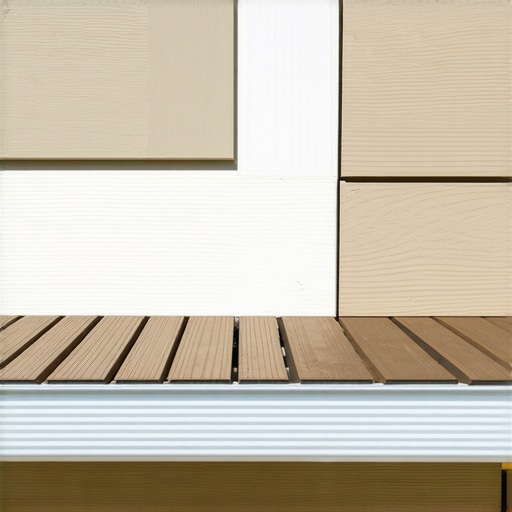
Why Does Your High-End Composite Still Look Like Plastic?
It’s a frustrating question many advanced DIYers ask after the first summer. You spent the extra money, but it lacks that high-end feel. Usually, this happens because of lighting or installation errors. There are 7 reasons your composite decking looks like plastic, and it often comes down to the repetitive grain pattern and poor fastener choices. I’ve found that why hidden fasteners fail on wide-profile boards is often due to the boards ‘cupping’ because they can’t breathe. Have you ever fallen into this trap? Let me know in the comments, because I’ve certainly made the mistake of over-tightening clips in my early days.
Don’t Let Your Wood Frame Destroy Your Composite Investment
The most sophisticated mistake I see involves the physics of the frame itself. You might have noticed why your pressure-treated frame is pulling your composite apart; it’s because wood shrinks as it dries, while composite expands as it heats up. They are working in opposite directions. To mitigate this, I’ve started using the rubber spacer trick for better airflow under joists. It creates a thermal break and allows the wood to breathe. Also, be careful with your aesthetics—I’ve seen 7 composite colors that look terrible under LED lights because the artificial light highlights the ‘fake’ sheen of the material. If you want a deck that actually lasts 30 years, you have to stop thinking about the surface and start obsessing over the physics of the frame.
To get that level of precision I’ve been talking about, I never start a project without the jig I use for consistent deck screw depth. It’s about more than just looks; when screws are driven too deep, they create ‘craters’ that trap water and debris, leading to localized rot even in high-end composite. If you’re working on a railing, I swear by the flashlight hack for finding railing bracket alignment. It sounds simple, but using a high-lumen beam to check the shadow-line of your brackets ensures they are perfectly plumb before you ever drive a pilot hole. This kind of accuracy prevents the stress on fasteners that leads to why your railing bracket keeps snapping in the cold. I’ve found that the difference between a deck that lasts fifteen years and one that lasts thirty is found in these tiny, obsessive details.
How do I keep my composite looking brand new after a decade?
Maintenance is where most people drop the ball. If you want to maintain that ‘just installed’ sheen, you have to ditch the pressure washer. I’ve seen countless boards ruined because someone thought a high-pressure stream was the way to go. Instead, stick to the vinegar and water mix that cleans composite better than chemicals. For those inevitable scratches from moving furniture or a dog’s claws, you can actually learn how to fix scuffs on dark composite boards with a heat gun. It sounds terrifying, but if you do it correctly, the heat draws the internal oils to the surface and effectively ‘heals’ the mark. I’ve also started using the copper cap trick for extending post life on every build. By shielding the end grain of your structural posts from direct UV and rain, you stop the ‘wicking’ effect that destroys wood from the top down.
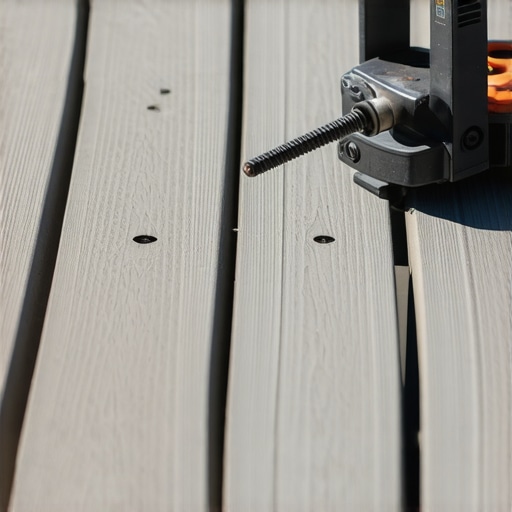
Looking ahead, I see a massive shift toward structural steel framing for residential decks. As the price of timber remains volatile and the demand for absolute longevity increases, the ‘mixed material’ approach is becoming the gold standard. According to the Simpson Strong-Tie Technical Bulletin T-C-DECKLAT19, lateral load connectors and tension ties are no longer just ‘good ideas’—they are essential for preventing the deck-to-house separation that causes catastrophic failure. We are moving away from simple wood screws and toward a system of engineered connectors that treat the deck as a rigid extension of the home’s foundation. If you’re worried about winter performance, specifically with cable systems, make sure you aren’t making the 3 mistakes that make your cable railing sag every winter. I want you to go out there this weekend and try the heat gun trick on a scrap piece of composite; once you see how the material responds to proper care, you’ll never look at deck maintenance as a chore again.
One of the biggest eye-openers in my decades of building was realizing that a deck can look perfectly safe while being structurally compromised from within. I used to focus almost entirely on the stain and the finish, but now I obsess over the skeleton. If you are dealing with an older structure, I highly recommend using the simple spray that identifies hidden rot on old deck posts before you decide to just paint over a potential problem. Also, remember that silence is a sign of structural strength; if you want to know how to stop your deck from squeaking when you walk, you usually need to address the friction between the joist and the board, not just drive in more screws. Finally, I have learned that the most important composite decking secrets for longevity often start with the airflow and drainage beneath the frame rather than the brand of the boards themselves.
Hard Lessons I Learned While Chasing the Perfect Finish
Through trial and error, I have developed a deep respect for the physics of outdoor structures. My lightbulb moment came when I realized that wood does not just rot; it fails at the points of highest stress. I now use the 3-4-5 triangle move for squaring up a new deck frame on every single project because even a half-inch of misalignment can cause fasteners to shear over time. I also swear by the habit of checking my ledger flashing every spring, as a single failed piece of metal can lead to thousands in interior water damage. Modern innovative deck design ideas that elevate your homes curb appeal are wonderful, but they must be built on a foundation that accounts for moisture management and thermal expansion.
The Non-Negotiable Tools in My Decking Kit
I never step onto a job site without a few specific items that ensure accuracy and safety. First, using the level and laser method for setting pergola heights alone has saved me hours of frustration and ensures my beams are perfectly flat across long spans. I also keep a digital copy of the DCA 6 Prescriptive Residential Wood Deck Construction Guide on my phone; it is the ultimate resource for ensuring your joist spans and fastener schedules meet the highest safety standards. For those working with modern materials, a high-quality heat gun is essential for minor surface repairs, and a dedicated ledger-fastening tool ensures every bolt is driven to the perfect torque without stripping the wood fibers.
Build Something That Outlasts the Seasons
Your outdoor space is more than just wood and screws; it is a sanctuary where your family makes memories and enjoys the fresh air. By focusing on smart engineering and high-quality materials, you create a structure that is both beautiful and incredibly secure for decades to come. If you ever feel overwhelmed by the technical details or need a professional eye to evaluate your frame, please do not hesitate to contact us for expert guidance. Craftsmanship is a journey, and every safe deck starts with a commitment to doing things right from the joists up. Have you ever discovered a hidden rot issue or a loose connection during a routine inspection? Let me know in the comments below.