
I’ll never forget the morning I walked out with my coffee and noticed my sliding glass door wouldn’t open more than an inch. I’d spent three weeks of my life and a small fortune on durable composite decking solutions, only to find the entire frame had heaved three inches toward the sky. I’d made the classic rookie mistake: I thought ‘good enough’ was deep enough for my footings. I was wrong. The frost doesn’t care about your hard work or how pretty your boards look; it only cares about the physics of freezing water. Today, I’m going to show you exactly why that depth is the difference between a lifetime of relaxation and a structural nightmare.
Keep Your Deck from Moving When the Ground Freezes
The soil beneath our feet isn’t just dirt; it’s a living, breathing reservoir for moisture. When the temperature drops and that moisture turns to ice, it expands with incredible force. If your footings are sitting in that ‘active’ zone, the earth will literally lift your entire structure. I learned this the hard way when my first DIY project ended up with bouncy, over-spanned joists that were being pushed out of level by the frozen ground. It doesn’t matter if you have the most innovative deck design ideas in the world; if your foundation is moving, your deck is failing. Have you ever noticed your deck stairs suddenly feel ‘off’ or start making noise after a hard freeze? You might be seeing the first signs of deck stair squeaking caused by foundation shifting.
Is Digging Three Feet Down Actually Worth the Sweat?
I get it. Digging 36 or 48 inches into rocky soil feels like a punishment. You start to wonder if those building inspectors are just trying to make your life difficult. But the International Code Council mandates these depths because they are the only proven way to reach ‘stable’ soil that stays at a constant temperature year-round. When I skipped the proper depth on a small shed project years ago, I spent the next five years shimmying the doors just to get them to close every February. If you want to avoid structural fatigue and ensure your composite decking lasts decades, you have to embrace the shovel. We are going to break down the mechanics of frost heave and why your local frost line is the most important number in your entire blueprint.
Stop the Heave with Proper Footing Depth
The secret to a deck that doesn’t groan every spring is simple: you have to outrun the frost. Think of your deck footings like the anchors on a massive ship. If the anchor doesn’t bite into the stable seabed below the churning waves, the ship is going to drift. In our case, the ‘churning waves’ are the top layers of soil that freeze and thaw. I remember building a small platform for a client in northern Michigan. I’d just come off a job in a warmer climate where 24 inches was the gold standard. I almost started pouring until a local old-timer pointed out that the frost line there was closer to 42 inches. If I hadn’t listened, that deck would have been a wavy mess within two winters. Before you even touch a shovel, you need to call your local building department to get the exact frost line depth for your zip code.
Digging the Perfect Bell-Shaped Hole
When you’re digging, don’t just make a straight cylinder. You want to flare the bottom out into a bell shape. This creates a physical wedge that prevents the earth from pushing the concrete ‘plug’ upward. It’s a lot like trying to pull a flared cork out of a bottle—the wider base provides massive resistance against the upward pressure of freezing soil. While you’re down there, make sure you aren’t just pouring concrete onto loose dirt. You need a compacted base. If you’re building something lighter, like a sunshade, you might look into how to anchor a pergola without digging massive holes, but for a full-scale deck, there is no substitute for depth and volume.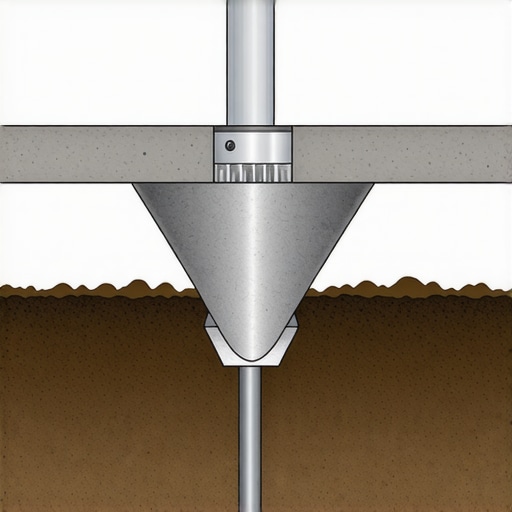
Squaring the Frame Before the Pour
There is nothing more frustrating than having perfectly deep footings that are six inches out of alignment. I always use the 3-4-5 triangle move for squaring up a new deck frame before I ever let a drop of concrete hit the ground. By setting up batter boards and string lines, you can ensure your posts will sit exactly where they need to. This precision is what prevents the dreaded ‘joist creep’ that ruins your composite decking secrets for longevity. Once your holes are dug and squared, you can start your pour. I prefer using wet-set post anchors rather than drilling into hardened concrete later. It creates a much stronger chemical bond and ensures you don’t have a railing post wobble because the base connection is weak.
Water Management at the Foundation Level
While the frost is the primary enemy, water is the accomplice. If water pools around the top of your concrete piers, it will eventually find its way into the wood grain of your posts, even if they are pressure-treated. I always slope the top of the concrete pier slightly away from the post anchor to shed water. This tiny detail prevents the kind of moisture buildup that leads to the deck to wall flashing mistake or localized rot at the base of your structure. It’s about creating a system where every drop of rain has a clear path away from your structural members.
Everyone tells you that composite decking is the ‘set it and forget it’ solution for modern backyards. While it’s true that you won’t be staining every summer, I’ve seen more composite decks fail in five years than old cedar decks do in twenty. The reason? People focus so much on the surface that they ignore the skeleton. There is a common myth that once you switch to durable composite decking solutions, your maintenance worries are over. In reality, the synthetic boards are actually more demanding of their substructure than wood ever was. If your frame isn’t perfectly stiff, those expensive boards will reveal every dip and crown in your joists.
Why Does Your Deck Feel Like a Trampoline?
If you have ever walked across a brand-new deck and felt a rhythmic bounce, you are likely a victim of ‘code-minimum’ syndrome. Many builders stick to the standard 16-inch on-center spacing for joists because that is what the building code allows. However, composite material is more flexible than natural wood. When I’m designing a high-end project, I almost always move to 12-inch spacing. This prevents that annoying ‘spongy’ feel and is one of the key reasons your composite deck feels like a trampoline. According to the North American Deck and Railing Association (NADRA), structural failures often stem from a lack of lateral bracing and over-extended spans that technically pass inspection but fail the ‘comfort’ test.
Stop Cleaning Your Deck with a Pressure Washer
Here is the ‘oops’ factor that ruins thousands of decks: the power washer. I have seen homeowners take a 3000 PSI stream to their boards to remove a little pollen, only to find they’ve permanently etched the surface or stripped the protective ‘cap’ layer. You should never use a pressure washer on composite because it forces water into the wood-fiber core, leading to internal rot that you can’t see until it’s too late. A simple garden hose and a soft brush are all you need. If you’re dealing with tougher grime, stick to a gentle solution like a vinegar and water mix rather than harsh chemicals that can bleach the pigments.
The Frame Is Your Real Enemy
The most sophisticated mistake I see involves the interaction between the pressure-treated frame and the composite top. Because these materials expand and contract at different rates, a frame that isn’t properly dried out can actually tear fasteners right out of the boards. This is why your pressure-treated frame is pulling your composite apart during the change of seasons. I always recommend using joist tape to create a barrier, but make sure you aren’t wrapping the entire joist; you need the wood to breathe on the sides, or you’re just creating a bathtub for rot. Have you ever fallen into this trap of over-engineering one part while ignoring another? Let me know in the comments.
I’ve spent thousands of hours on jobsites, and if there’s one thing that separates a ‘weekend warrior’ project from a professional-grade build, it’s the obsession with precision tools. I stopped using a standard 4-foot bubble level years ago for anything critical. Now, I swear by the level and laser method for setting pergola heights alone. Using a high-visibility green beam laser doesn’t just save time; it eliminates the cumulative errors that happen when you move a manual level from post to post. When you’re trying to achieve durable composite decking solutions, that 1/8th of an inch is the difference between a perfectly flat floor and a frustrating trip hazard. I also never start a board without the jig I use for consistent deck screw depth. If one screw is buried too deep and the next is sitting proud, your expensive boards will look like a hack job the moment the afternoon sun hits them. 
How do I maintain my deck’s look without ruining it?
Most people assume ‘low maintenance’ means ‘no maintenance.’ That’s a total lie. To keep your deck from becoming an eyesore, you need a routine that doesn’t involve high-pressure water or harsh bleaches. I always recommend the vinegar and water mix that cleans composite better than chemicals for general grime. For those accidental burger grease drops during a summer BBQ, I rely on the soap and sponge fix for oil stains on composite decking. But maintenance is also about checking the invisible skeleton. Once a year, I grab a spray bottle with a specialized reagent—the simple spray that identifies hidden rot on old deck posts—just to make sure the core of my support system isn’t being eaten from the inside out. These composite decking secrets for longevity are what turn a 10-year deck into a 30-year legacy.
Why Steel Framing Is the Future of Outdoor Living
Looking forward, the industry is moving away from pressure-treated lumber entirely for high-end projects. I predict that within the next decade, light-gauge steel framing will become the standard for composite installations. It doesn’t warp, it doesn’t rot, and it stays perfectly flat forever. According to the American Wood Council’s DCA 6 – Prescriptive Residential Wood Deck Construction Guide, wood is subject to natural checking and movement that can compromise lateral load capacity and fastener withdrawal resistance over time. Steel solves this by providing a dimensionally stable substrate that never moves. Until you’re ready to make the jump to metal framing, use the painters tape hack for cutting composite boards without fraying to keep your current build looking sharp. When it comes to railing, don’t just trust the screws that come in the box; upgrade to structural lags for the posts to avoid the blocking trick that stops railing post wobble from becoming a recurring safety issue. Avoid the 3-inch screw mistake that ruins composite joists and you’ll be miles ahead of most DIYers. Seriously, try the painters tape trick on your next cut—it’s the easiest way to get a professional, chip-free edge.
Why My First Deck Heaved (And Yours Doesn’t Have To)
If I could go back in time and talk to my younger self, I’d tell him that the ‘extra’ six inches of digging isn’t a chore—it’s an insurance policy. One of the biggest aha moments for me was realizing that why your composite deck feels spongy between joists often starts with a foundation that has slightly shifted, even if you can’t see the crack. Here are three things most pros won’t tell you right away:
- Clay is your enemy: If you have heavy clay soil, the frost heave is twice as aggressive. You might need to go even deeper than code requires.
- Expansion isn’t just vertical: When your frame moves, your gaps change. This is often why your pressure-treated frame is pulling your composite apart during the spring thaw.
- The ‘Good Enough’ Trap: Never settle for ‘close enough’ on a footing. If the laser says it’s off, fix it now, or you’ll be fixing the whole deck in three years.
The Resources That Saved My Sanity on the Jobsite
Building a deck that lasts requires more than just sweat; it requires the right data. I don’t go onto a site without these three things. First, the DCA 6 Guide from the American Wood Council—it is the ultimate roadmap for safe construction. Second, I always check the deck joist tape test results to decide which brand of protection to use on my frame. Finally, I recommend looking into the complete guide to choosing railing systems for safety and style before you finish your frame, as your post-blocking needs to be integrated early in the process. These tools turn a guessing game into a science.
Stop Planning and Grab the Shovel
The transition from a backyard dream to a physical reality is the hardest part of the journey. It’s easy to get paralyzed by choices, but once you have your frost line depth and your layout squared, the rest is just following the plan. Remember, the goal isn’t just to have a pretty surface, but to master the composite decking secrets for longevity that keep your family safe for decades. You have the knowledge now—it’s time to build. Have you ever encountered a ‘mystery’ squeak or a board that wouldn’t stay flat after a cold winter? Let me know your experiences in the comments below!