
I remember the Saturday morning clearly. The sun was hitting my expensive gray boards, highlighting every speck of yellow pollen and a stubborn patch of green mildew near the flower pots. I felt like a genius when I grabbed the gallon jug of bleach from the laundry room. I figured if it could make my white shirts sparkle, it would certainly handle a bit of garden grime. I was wrong. So incredibly, painfully wrong. Within twenty minutes, my beautiful, modern outdoor space looked like it had aged a decade. The vibrant color started to turn into a ghostly, chalky haze, and the surface felt rougher, almost brittle to the touch. I’d spent months researching composite decking secrets to ensure a lifetime of use, and here I was, melting the protective layer off with a five-dollar chemical. Today, I’m going to save you from that heart-sinking realization. We are going to look at why bleach is the absolute enemy of your deck’s longevity and how you can get that showroom shine back without the side of structural regret. Have you ever reached for the bleach because it was the easiest thing under the sink, or has a well-meaning neighbor suggested it for your spring cleaning? [image_placeholder]
The Day I Almost Melted My Outdoor Investment
My first big mistake was assuming that because composite is partly plastic, it’s essentially indestructible. I thought the capping was like a suit of armor. In reality, that capping is a sophisticated blend of materials designed to resist UV rays and moisture, but it is not designed to withstand high concentrations of sodium hypochlorite. When I scrubbed that bleach in, I wasn’t just cleaning; I was triggering a chemical reaction that stripped away the UV inhibitors. This is exactly why your composite decking is fading in patches or looking duller than it should. It wasn’t the sun doing the damage; it was my own cleaning supplies.
Is a little bit of bleach really that dangerous?
You might think that a diluted capful won’t hurt, but the cumulative effect is what gets you. According to the International Association of Certified Home Inspectors (InterNACHI), bleach can actually break down the lignin in wood fibers (if your composite is a wood-plastic blend) and compromise the polymer bonds in the capping. It’s like using sandpaper to clean a window—it works for a second, but you’ll hate the results. Instead of a harsh chemical bath, I eventually discovered that the vinegar and water mix is a much safer alternative that actually protects the material.
Your Deck Capping is Not as Bulletproof as You Think
Many homeowners transition to these materials to maximize outdoor living with the promise of low maintenance. But low maintenance doesn’t mean ‘zero care.’ When you apply bleach, it stays in the pores of the boards, continuing to eat away at the finish long after you’ve rinsed it off. I noticed that after my bleach disaster, the boards actually attracted more dirt because the surface had become more porous and ‘grabby.’ If you want to keep things looking sharp, you have to treat the material with respect. That also means putting away the power tools; I’ve seen people try to blast away the bleach damage only to find why you should never use a pressure washer on composite materials. It’s a slippery slope of damage that starts with one ‘simple’ cleaning shortcut. Let’s look at what actually happens to the molecules of your deck when bleach touches them.
Stop the Chemical Reaction in Its Tracks
The first thing you need to do is neutralize the surface immediately. Bleach doesn’t just dry and disappear; it crystallizes within the material. When I first made this mistake, I rinsed the deck with a standard garden hose for five minutes and thought I was safe. Three days later, a white, powdery film appeared like a ghost across the entire surface. I had to go back with a heavy-duty garden sprayer and saturate every board with a neutralizing agent to stop the microscopic eating of the plastic. This is a crucial part of composite decking secrets most people miss: you have to flush the pores, not just the surface. Think of it like washing salt out of a thick carpet; a quick spray won’t reach the base fibers where the real damage is happening.
The Vinegar Solution That Actually Works
Next, swap out the hardware-store chemicals for something you likely already have in your kitchen. The vinegar and water mix is the gold standard for restoring the pH balance of your boards after they have been scorched by bleach. I use a one-to-one ratio with a tiny squirt of pH-neutral dish soap. This breaks the surface tension of the water, allowing it to penetrate the ‘grabby’ texture of the boards. If your deck has a deep wood-grain texture, you’ll find that grime and bleach residue love to hide in the valleys of the grain. Using this acidic mix helps dissolve the alkaline bleach crystals that the garden hose missed. 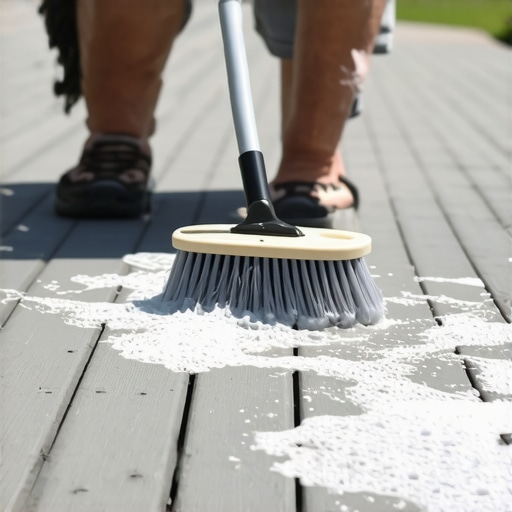
Keep the Metal Away from Your Boards
When you start the physical scrubbing process, the tool you choose is just as important as the solution. If you use a wire brush or anything too stiff, you will permanently scar the finish. I learned this the hard way on a small corner of my stairs; I thought a stiffer brush meant a faster clean, but I ended up creating microscopic scratches that made the deck look even duller than the bleach did. Now, I only use a soft-bristled brush—the kind you’d use on a luxury car’s paint. This protects the capping and prevents the damage often seen from dog claws or heavy furniture dragging. Slow, circular motions are much more effective at lifting the deep-seated residue than aggressive back-and-forth scrubbing.
Banish the Chalky Residue
If your boards already look pale and washed out, you are likely dealing with ‘chalking.’ This occurs when the oxidized plastic fibers rise to the top after being stripped of their protective coating. To combat this and maximize outdoor living enjoyment, you need to apply a composite-specific restorer. Please avoid anything oil-based or meant for natural wood; these will just create a sticky mess that attracts every leaf in the neighborhood. High-quality restorers are designed to fill the pores and bring back that deep, rich color. This is the only way to solve the mystery of why your composite decking is fading in patches after a chemical spill.
Inspect Your Joists for Hidden Chemical Rot
Finally, you have to look underneath. Bleach is a liquid, and it follows the path of least resistance, which usually means dripping through the gaps and sitting directly on your pressure-treated joists. This can cause the wood framing to rot or become brittle long before its time. I once noticed a weird ‘give’ in a single board during my spring cleaning. Upon inspection, the bleach had pooled on the joist below, softening the wood until the screw started pulling out of the grain. If your floor feels a bit weird or has a bounce it didn’t have last year, you might be discovering why your composite deck feels spongy between joists. Take a flashlight and look for white stains or crumbling wood on the framing below the bleached area.But the chemical breakdown of the surface is often just the tip of the iceberg when it comes to long-term ownership. While I was busy scrubbing away my bleach mistake, I completely ignored the physical reality of how these boards were attached. Everyone tells you that hidden clips are the pinnacle of composite decking trends because they provide a flawless, fastener-free finish. In my experience, however, this is a beautiful trap. Understanding why hidden fasteners can be a maintenance nightmare is a lesson usually learned too late. If a single board in the middle of your deck gets damaged by a falling grill tool or a stray ember, you often have to disassemble half the deck just to slide that one board out. It turns a ten-minute fix into a weekend-long ordeal.
Why does my deck feel like a trampoline in the heat of July?
This is a question I get from homeowners who followed every instruction on the box but still ended up with ‘waves’ in their floor. Most people assume plastic is static, but it is actually highly reactive to temperature. A study by the USDA Forest Products Laboratory highlights that wood-plastic composites exhibit significant linear thermal expansion—far more than traditional timber. If your installer didn’t strictly follow the expansion gap rule that stops boards from buckling, those boards have nowhere to go but up when the sun beats down. This physical stress is why your composite deck feels like a trampoline; you aren’t feeling a structural failure of the joists, but rather the tension of the boards trying to grow past their allotted space. 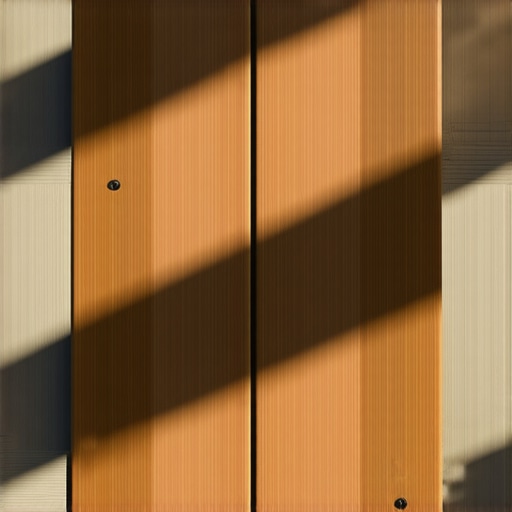
Stop Treating Your Pergola Like a Decorative Kite
We often focus so much on the deck surface that we neglect the structures standing on top of them. I’ve seen stunning pergola designs that turn your garden into a sanctuary fall victim to simple wind shear because they were built for aesthetics, not load-bearing physics. A common myth is that the weight of the pergola will keep it in place. In reality, a pergola acts like a giant sail. Without using the steel bracket move for high wind pergolas, you are essentially waiting for a summer storm to twist your beautiful cedar rafters into scrap wood. Finally, keep an eye on your hardware. One of the most expensive ‘oops’ factors I’ve encountered is the 3-inch screw mistake that ruins composite joists. Using standard wood screws that aren’t rated for the specific chemistry of your composite or the pressure-treated frame below can lead to galvanic corrosion, snapping the heads off and leaving your deck essentially floating on its frame. Have you ever fallen into this trap or noticed your boards moving in the heat? Let me know in the comments below.Thinking about the future of your deck can be overwhelming, but I’ve found that the secret to long-term success isn’t working harder; it’s working smarter with the right precision gear. One of the biggest shifts in my process came when I stopped sketching on napkins and started using digital layouts. I cannot stress enough why you need a 3d model before buying a single deck board. It isn’t just about the aesthetics; a model allows you to calculate exact load points and avoid the structural fatigue that leads to sagging beams later. When you see the structure in three dimensions, you realize how critical those small details are, like the flashing tape move that doubles the life of your joists. This tape acts as a secondary barrier that keeps the water from sitting in the screw holes, a tip often overlooked by DIYers but standard for pros who want their work to last forty years instead of fifteen. 
Precision Tools That Changed the Game for Me
I used to eyeball my railing posts, thinking my level was ‘good enough.’ Then I realized that even a quarter-inch lean becomes glaringly obvious once the top rail goes on. Now, I never start a railing project without the simple tool for making sure your railing posts are plumb—a dedicated post level that straps directly to the timber. It sounds basic, but it saves hours of frustration. For the intricate details, I’ve also adopted the pencil trick for marking dark composite boards using a white carpenter’s pencil. On dark grays and blacks, a standard graphite pencil is invisible, leading to ‘close enough’ cuts that ruin the the double joist trick for perfectly flush picture frame borders. If you want that high-end, custom look, your marks have to be surgical.
How do I keep my deck and pergola healthy over time?
The North American Decking and Railing Association (NADRA) suggests that a formal inspection should happen annually, and I’ve turned this into a ritual. I call it the 15-minute deck inspection every homeowner should do. I walk the perimeter looking for any signs of ‘mushrooming’ around fasteners or why your deck boards are popping up at the ends, which is usually a sign of poor ventilation underneath. For the pergola, I specifically check the rafters. I’ve learned the hard way why I stopped using pine for pergola rafters; it simply can’t handle the constant exposure without twisting. If you see a beam starting to move, you need to act fast. Use the notched rafter secret for a pergola that never wobbles to lock those overhead components into place permanently. Looking forward, I predict we will see more AI-integrated ‘smart’ decks that monitor joist moisture levels through embedded sensors—but until that technology becomes affordable, we rely on these physical best practices. I want you to go outside this weekend and perform that 15-minute inspection; catching a small fastener issue now will save you from a structural nightmare three summers from now.
The Hard Truth About Cutting Corners with Chemicals
After years of building and maintaining these spaces, I’ve realized that the most expensive mistakes aren’t made during construction, but during the first spring clean. One “quick fix” with a bleach bottle can undo thousands of dollars in engineering. I’ve learned that chemical resilience isn’t just a marketing term; it’s the lifeblood of your material. If you treat your boards like a lab experiment, they’ll eventually fail. I now view my deck as a living part of the home—it needs the right pH balance and the right physical care to stay vibrant. Most importantly, never ignore the “unseen” parts. While you’re focused on the color of the boards, the moisture trapped by improper cleaning can be silently rotting the joists underneath. It is always better to spend twenty minutes with a soft brush than twenty hours replacing a structural beam. I realized that composite decking secrets aren’t just about the boards themselves, but the chemistry you apply to them every season.
My Personal Kit for a Life-Long Deck
If you want to keep your outdoor space in showroom condition, you need more than just a garden hose. I swear by the pencil trick for marking dark composite boards whenever I’m doing repairs or adding features like a privacy screen—it prevents those messy, permanent marks that graphite leaves behind. I also keep a digital folder of my project; specifically, I always tell people why you need a 3d model before buying a single deck board because it acts as your “X-ray vision” for the structure years down the line. Finally, I follow the industry safety guidelines, which is why I swear by the 15-minute deck inspection every homeowner should do to catch chemical or structural wear before it becomes a hazard.
Build Your Sanctuary One Correct Choice at a Time
Your outdoor space should be a place of peace, not a source of constant anxiety. By ditching the harsh chemicals and embracing smarter maintenance habits, you ensure that your investment in composite decking remains the beautiful retreat you intended it to be. Whether you are adjusting your railing systems or planning a new pergola, remember that quality care is just as important as quality materials. You have the tools and the knowledge now—go out there and give your deck the respect it deserves so it can keep serving your family for decades to come. Have you ever noticed a strange film or fading on your boards after using a store-bought cleaner? Let me know in the comments below.