
I remember the exact moment I realized I had made a massive, expensive mistake. It was a scorching July afternoon, and I was on my hands and knees with a sanding block, trying to salvage the budget-friendly pressure-treated deck I’d built just three years prior. My knees were screaming, my back was shot, and the wood was still splintering enough to make it a hazard for anyone without shoes. I thought I was being smart by saving a few thousand dollars upfront, but looking at the gray, warped boards, I knew no buyer would see value—they’d see a weekend-killing chore. Today, we’re going to settle the score on the resale value battle between wood and composite upgrades. I’ve been through the ringer with both, and I want to help you avoid the savings trap that actually drains your home’s equity. [IMAGE_PLACEHOLDER]
Stop Thinking Like a Builder and Start Thinking Like a Homebuyer
When we build, we often focus on the immediate invoice. But when a potential buyer walks through your backyard, they aren’t looking at the receipts from five years ago; they are looking at the lifestyle they’re inheriting. A rotting wood deck says maintenance, while low maintenance composite decking says cocktail hour. I learned this the hard way when I tried to sell my first home. The inspector found hidden ledger rot that I could have easily prevented if I hadn’t been so focused on cutting corners. It’s not just about the boards under your feet, either. Selecting the right railing systems can make a basic deck feel like a luxury extension of the living room, which is exactly what modern buyers crave. According to the 2023 Cost vs. Value Report by Remodeling Magazine, homeowners often see a significant return on investment for composite materials, which frequently rival or beat traditional wood when you factor in the years of avoided staining costs.
Is that massive price tag actually worth the hype?
This is the question I get from my neighbors every single spring. They see the quote for high-end materials and choke a little. I get it. But here is the secret: composite decking secrets aren’t just about the plastic; they’re about the 25-year warranty that you get to hand over to the next owner. That peace of mind is a massive selling point. Early in my DIY journey, I made the classic blunder of thinking why pressure treated wood still needs maintenance was a myth if it was hidden under expensive boards. Spoiler alert: it does. I didn’t use joist tape, and I paid for it later. We’re going to talk about how to do it right so your investment doesn’t rot from the inside out. Before we dive into the specific ROI numbers, I have to ask: have you ever spent a beautiful Sunday afternoon power-washing gunk out of wood cracks instead of actually enjoying your yard?
Stop the Rot Before You Lay a Single Board
The biggest mistake I see homeowners make is spending $15,000 on premium composite boards and slapping them onto a standard, unprotected pressure-treated frame. Think of your deck frame like the foundation of your house; if the foundation crumbles, the granite countertops don’t matter. You have to realize that why pressure treated wood still needs maintenance under composite is because those joists are still vulnerable to vertical water penetration. Every time it rains, water sits on the flat top of the joist, soaking into the wood fibers and rotting the screws from the inside out. I started using the flashing tape move that doubles the life of your joists on every single build. It creates a waterproof seal that prevents the ‘black rot’ that eventually makes your expensive composite boards feel like they are floating on sponges. 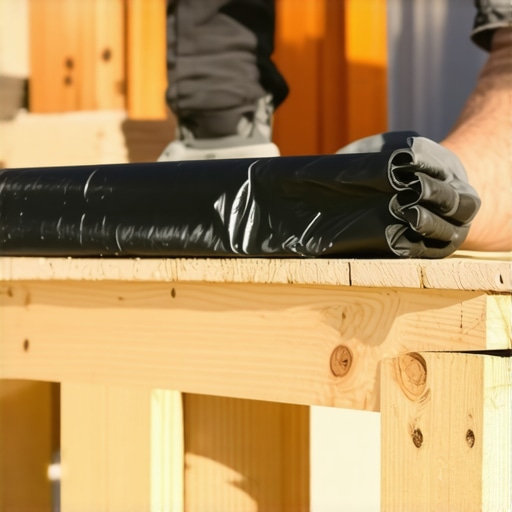
Give Water a Clear Exit Path
If you are building a low-profile structure or a second-story oasis, moisture management is your number one priority. For those second-story projects where you want dry storage underneath, you must follow the 2-degree slope rule for drainage under second story decks. Without that slight pitch, water will pool against your house, leading to the dreaded ledger board failure. If you’re building right against the dirt, you need the drainage secret for decks built close-to-the-ground to ensure air can actually circulate. I once ignored this on a small platform deck for a neighbor, and within two years, the underside was a literal mushroom farm. We had to tear the whole thing out because the humidity from the soil had no way to escape, warping the frame until it looked like a Pringle.
The Railing System is Your Home’s Smile
When a buyer pulls up to your house, they don’t see the joist hangers or the concrete footings—they see the perimeter. This is where you should invest your ‘visual’ budget. Learning how to select the perfect railing system for every deck is about balancing safety with sightlines. If you have a beautiful view of the woods, don’t kill it with thick wooden balusters. Modern buyers are obsessed with ‘indoor-outdoor’ transitions, and a clunky railing kills that vibe instantly. A sleek, black aluminum or cable system can make a small space feel twice as large.
Physics Always Wins the Gap Battle
I’ll never forget the first time I installed a dark grey composite deck in the dead of winter. I was so proud of the tight, seamless joints I had cut. Then August hit. Temperatures spiked to 95 degrees, and because I hadn’t respected the expansion gap rule that stops boards from buckling, those boards expanded and started ‘crowning’—literally popping up in the middle like a cheap accordion. I had to rip out and re-fasten nearly forty boards on my own dime. Composite materials move significantly more than wood throughout the seasons. If you don’t leave room for the material to breathe, it will eventually find its own room by shearing off your fasteners or warping your frame. Beyond just the gaps, if your frame isn’t perfectly stable, you’ll run into the structural reason your deck feels bouncy and how to fix it, which is a major red flag for any home inspector. Use the secret to a perfectly square deck frame by measuring your diagonals before a single screw goes in. If those two numbers aren’t identical, your boards will never run straight, and your ‘high-end’ upgrade will look like a DIY disaster.Everyone tells you that switching to composite means you’ll never lift a finger again. That’s the first big trap. In my experience, ‘low maintenance’ is a marketing term, not a physical law. If you ignore your deck, nature wins every time. You still need to know the vinegar and water mix that cleans composite better than chemicals because pollen and organic debris will eventually create a biofilm that turns your $20,000 investment into a slip-and-slide. The real nuance that pros know? It’s all about the ‘cap.’ Not all composite is created equal. You need to learn how to identify high quality capped decking from the cheap stuff before you sign that contract. The older generation of uncapped boards is prone to staining and fading, yet some contractors still push them to keep their quotes low. Don’t fall for it. 
Why does my ‘top-tier’ composite still feel like a trampoline?
One of the most common complaints I hear from homeowners who just spent a fortune is that their deck feels ‘bouncy.’ They blame the material, but the culprit is usually the framing. Composite boards aren’t as rigid as wood. If your contractor uses the standard 16-inch on-center joist spacing that works for wood, your composite is going to flex underfoot. For a truly rock-solid feel, you need 12-inch spacing. This is the structural reason your deck feels bouncy and how to fix it. According to the North American Deck and Railing Association (NADRA), nearly 30 million decks in the U.S. are past their useful life, often because they weren’t engineered to handle the specific weight and flexibility of modern synthetic materials. If you ignore this, you aren’t just losing comfort; you are risking structural fatigue over time. Another ‘oops’ factor? Choosing color over climate. You might love that deep charcoal look, but why black composite decking burns your feet and how to fix it is a lesson you don’t want to learn in August when your kids can’t walk to the pool without shoes.
Stop using pine for your pergola rafters
When it comes to the overhead structures, people often default to the cheapest pressure-treated pine. I used to do this too, until I realized why I stopped using pine for pergola rafters: the twist. Pine has a high moisture content and, as it dries in the sun, those long rafters will turn into pretzels. If you want that high-end look that lasts, you have to use the notched rafter secret for a pergola that never wobbles. It’s these small, technical details—the things most homeowners never think to ask about—that separate a ‘nice deck’ from an investment that actually adds significant value to your home’s appraisal. Have you ever fallen into the ‘maintenance-free’ trap or found a nasty surprise under your boards? Let me know in the comments.If you want to move beyond the “weekend warrior” phase and actually start building structures that increase your property value, you need to stop guessing. I used to spend hours at the hardware store staring at the lumber rack, trying to visualize how a pergola would sit against my roofline. It was a waste of time. Now, I won’t even buy a box of screws until I’ve run the project through a design suite. You see, why you need a 3d model before buying a single deck board isn’t about being fancy; it’s about spotting architectural catch-points. It helps you realize that a railing height might block your kitchen view or that a structural joist is going to land right in the middle of a dryer vent. Precision planning is the difference between a project that feels “added on” and one that looks like it was born with the house.
Precision Tools That Save Your Sanity
For my precision work, I’ve ditched the “eyeball it” method entirely. If you’re doing railings, use the drill guide hack for centered baluster holes. It’s a $20 tool that prevents you from ruining a $100 handrail. And when it comes to marking those dark grey or chocolate brown boards, forget standard graphite. I always use the pencil trick for marking dark composite boards—using a white charcoal pencil or soapstone—so I can actually see my cut line in the glaring afternoon sun. These small investments in accuracy prevent the “death by a thousand cuts” that happens when you have to keep returning to the lumber yard for replacement boards. 
How do I keep my composite deck looking brand new for decades?
The biggest lie in the industry is that composite is “set it and forget it.” If you want your investment to last, you need a routine. I perform the 15 minute deck inspection every homeowner should do every single spring. I’m looking for loose fasteners, checking for debris buildup in the gaps, and verifying that the ledger flashing is still diverting water away from the house. And for the love of all that is holy, why you should never use a pressure washer on composite is something I tell every homeowner. High pressure can etch the surface of the boards, creating microscopic pits where mold and mildew love to colonize. Instead, stick to a soft-bristle brush and a mild solution. According to technical bulletins from Simpson Strong-Tie, even the strongest structural connectors are only as good as the wood they are biting into; if you let moisture sit and rot the framing because you were too aggressive with a power washer, the most expensive boards in the world won’t save you from a structural failure.
Why Your Outdoor Space is About to Get a Whole Lot Smarter
I predict that in the next few years, we’re going to see a massive shift toward “smart” outdoor environments. We are already seeing “cool-deck” technology that stays 30% cooler in direct sunlight, but soon, I expect we will have integrated sensors embedded in the framing. These will alert your smartphone if a structural beam starts to sag or if moisture levels under the deck exceed safe thresholds for long periods. We’re moving toward structures that communicate their maintenance needs before they become safety hazards. My challenge to you is simple: before your next weekend BBQ, grab a screwdriver and a high-lumen flashlight. Go underneath your deck and check those joist hangers. If you see rusted nails, significant wood splitting, or daylight between the ledger board and the house, reach out to a professional immediately. Catching a small repair now is much better than dealing with a total collapse later.
What My Last Three Home Inspections Taught Me About Deck Integrity
Building several decks over the years has taught me that what happens beneath the surface is just as important as the color of the boards. First, never underestimate the power of a solid frame; even the most beautiful composite decking can’t hide a shaky foundation. I’ve learned to test your deck for structural fatigue every season because catching a loose bolt early is a $5 fix versus a $5,000 disaster later. Second, I realized that ‘over-engineering’ is actually a marketing feature. When I show a buyer that I used the deck joist tape test to prove the frame is rot-proof, their confidence in the home’s value skyrockets.
The Resource List That Saved My Budget and My Back
If you are serious about this upgrade, don’t go it alone. I swear by these three resources for every build. I always start with a digital layout to visualize flow; it’s why I recommend transforming your home with stunning deck design strategies before you cut your first board. For hardware, I strictly use stainless steel for anything near a pool or coastal air to prevent those ugly rust streaks. Finally, if you’re worried about the ‘DIY look,’ check out the secret to making your deck feel like a living room, which focuses on transition zones and lighting that truly elevate the space.
Take the Leap Toward a Backyard That Pays You Back
Investing in your outdoor space is one of the few home improvements that yields both high emotional joy and tangible financial returns. Whether you choose the rustic charm of cedar or the high-performance longevity of low maintenance composite decking, the key is intentionality and precision. Your home is your biggest asset, and a well-executed deck is its crown jewel. Don’t be afraid to start small, but always build for the long haul. If you’re feeling overwhelmed by the technical specs or local building codes, reach out to a professional who can help turn your vision into a structural reality. Are you leaning more toward the classic feel of wood or the durability of a composite upgrade for your next project? Let me know in the comments below!