
It was 6:00 AM on a Tuesday, and the snow was coming down in thick, heavy sheets that threatened to bury my sliding glass door. I grabbed my trusty old metal-edged shovel, the same one I’d used for a decade on my old pressure-treated wood, and took a massive swipe across my brand-new $15,000 composite deck. The sound was like nails on a chalkboard. I froze. When I looked down, a jagged white scar stared back at me, carved deep into the wood-grain texture I had spent months picking out. I felt like a total amateur. If you’ve ever winced at a scratch on your beautiful outdoor space, you know that sick feeling in your gut. Today, I’m going to make sure you never have to feel that again. We’re going to walk through the exact gear and techniques that keep your deck pristine while the neighbors are busy ruining theirs.
Stop Treating Your Deck Like a Concrete Driveway
[image] Composite boards are incredibly tough against rot and bugs, but they have a soft spot for sharp edges and harsh chemicals. I learned the hard way that some of the reasons your composite decking looks like plastic or gets damaged early are rooted in how we handle the first freeze. Most people treat their decks like an extension of their sidewalk, but that’s the fastest way to void your warranty. According to the North American Deck and Railing Association (NADRA), improper maintenance is a leading cause of aesthetic degradation in modern decking materials. You aren’t just clearing a path; you’re preserving an investment. Just as you should never use a pressure washer on composite during the spring clean, you have to be just as careful with your winter tools. It is about more than just the surface. If you don’t clear the snow properly, you might deal with weight issues or moisture trapped in ways that lead to spongy joists later on. Have you ever accidentally gouged your deck trying to get through a layer of ice? I’d love to hear I’m not the only one who’s had a major “oops” moment with a shovel.
Are These Specialized Snow Tools Actually Worth the Hype?
You might think that a shovel is just a shovel, but when it comes to low-maintenance composite decking, the material of your blade is everything. I used to think the “safe for composite” labels were just a clever marketing ploy to get me to spend an extra twenty bucks at the hardware store. I was wrong. The difference between a plastic blade and a metal-tipped one is the difference between a deck that looks brand new for thirty years and one that looks beat up by year three. We are going to dive into the specific types of ice melt that won’t leave those nasty white film stains and the one direction you should always shovel to avoid catching the edges of your boards. If you’ve ever worried about why your composite boards are crowning or showing premature wear, starting with proper winter habits is the most important fix you can make. It’s not just about the boards themselves; even your railing system needs protection from the salt spray and heavy snow piles that accumulate during a blizzard. Let’s get into the nitty-gritty of the gear that actually works.
Go with the Grain or Pay the Price
First, throw away that metal-edged shovel; it’s a jagged tooth waiting to bite into your surface. Think of your composite deck like a high-end luxury car; you wouldn’t use a wire brush to clear snow off the hood of a Porsche. A plastic or rubber-edged shovel is your only real option. 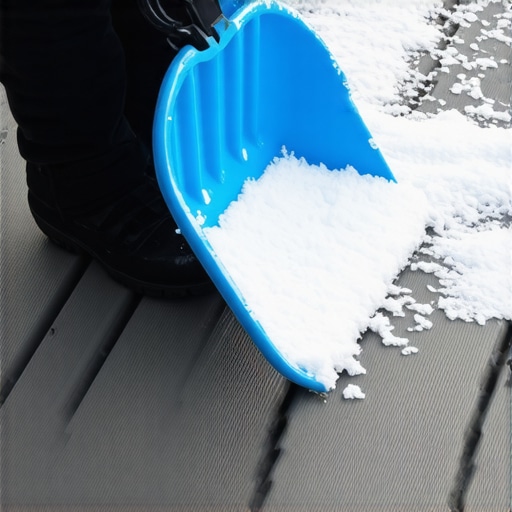 Even with a plastic blade, the angle of your attack matters more than the force you apply. Always shovel parallel to the deck boards. If you run your shovel perpendicularly across the seams, you’re essentially playing a high-stakes game of ‘catch the edge,’ which can lead to unsightly chips or even contribute to why your composite boards are crowning over time due to repeated physical trauma at the joints. I remember a particularly nasty Nor’easter back in ’19 where I was in such a rush to clear a path for the dog that I went diagonal across the grain. I felt the blade snag a slightly raised board end—likely from the 3-inch screw mistake that ruins composite joists by allowing too much movement—and it peeled back a sliver of the protective cap like an orange. I spent the rest of the winter staring at that scar through the window. Since then, I’ve been religious about the ‘parallel path’ rule.
The Chemical Cheat Sheet for Ice Removal
When it comes to ice, forget the rock salt. Sodium chloride is brutal on the finish and can even corrode the metal hardware holding everything together. Instead, look for ‘ice melt’ labeled specifically as calcium chloride. It’s effective at lower temperatures and won’t leave that chalky residue that forces you to hunt for the vinegar and water mix that cleans composite better than chemicals come April. You also need to watch your railings during the big freezes. I’ve seen homeowners pound on their balusters to break off icicles, only to find out why your railing bracket keeps snapping in the cold when the plastic becomes brittle. For a truly lasting deck, let the sun do the work on the vertical surfaces. If you must clear the stairs because they’ve become a skating rink, use the same parallel shoveling motion to avoid how to stop your deck from squeaking when you walk caused by shifted fasteners or loosened treads. Keep in mind that your deck acts like a lung, expanding and contracting with every temperature swing. Piling snow in massive drifts against the siding traps moisture and prevents this natural movement, leading to long-term warping. By maintaining a clear perimeter, you ensure the structure breathes correctly even in sub-zero conditions.
Why Your Maintenance-Free Deck is a Design Myth
Most contractors will sell you on the dream that once those boards are down, your work is done forever. I’m here to tell you that’s the most dangerous lie in the industry. Everyone says composite is ‘set it and forget it,’ but in my experience, the biggest threat to your investment isn’t the snow or the rain; it’s the physics of the frame underneath. What most people get wrong is the assumption that the deck boards and the wooden skeleton move in harmony. They don’t. According to technical data from the Forest Products Laboratory, pressure-treated lumber can shrink up to 6% in width as it seasons, while composite boards are virtually unaffected by humidity. This creates a massive internal conflict. This tension is exactly why your pressure-treated frame is pulling your composite apart, leading to those mysterious gaps or boards that suddenly start to pop. If you didn’t account for this during the design phase, no amount of careful shoveling will save you from structural shifting. For a truly lasting deck, you have to treat the frame as a living, breathing thing that needs to be stabilized before the first board ever goes down.
Do Hidden Fasteners Make Your Deck More Fragile?
I’ve had clients practically beg me for hidden fasteners because they want that seamless, ‘living room’ look. But here’s the nuance: while they look incredible, why hidden fasteners can be a maintenance nightmare is something most pros won’t mention until the repair bill arrives. In regions with heavy freeze-thaw cycles, those little clips can lose their ‘bite.’ Once a board starts to wiggle, it begins to wear down the joist underneath, eventually leading to why your composite deck feels spongy between joists. 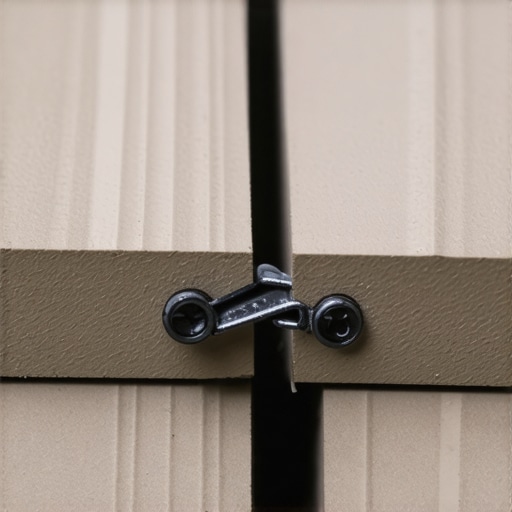 This brings me to the ‘Oops Factor’ I see all too often: the ‘over-span’ trap. Just because a board is rated for 16 inches on center doesn’t mean you should build it that way. If you want a premium feel, 12 inches is the real-world standard. Without the framing move that stops deck boards from bouncing, your high-end deck will always feel like a cheap trampoline. The same logic applies to your overhead structures. I’ve seen gorgeous timber frames lean over like the Tower of Pisa because the owner forgot why your pergola needs knee braces to fight lateral wind loads. These ‘invisible’ design choices are what separate a three-year deck from a thirty-year deck. Have you ever fallen into this trap of choosing aesthetics over structural reality? Let me know in the comments.
Get These Tools or Get Ready for a Sagging Surface
For years, I relied on my ‘calibrated’ eye to set post heights and screw depths, but that is exactly how you end up with a deck that looks like a topographical map of the Andes. These days, I do not move a muscle without the jig I use for consistent deck screw depth. It is a simple tool, but it ensures every single screw is perfectly flush, preventing those little puddles of water that sit on top of recessed heads and cause localized rot in the joists below. When I am setting up a vertical structure like a railing, the simple tool for making sure your railing posts are plumb—a dedicated post level—is non-negotiable. If you are tackling a shade structure by yourself, the level and laser method for setting pergola heights alone is the only way to avoid a crooked roofline that catches the wind. 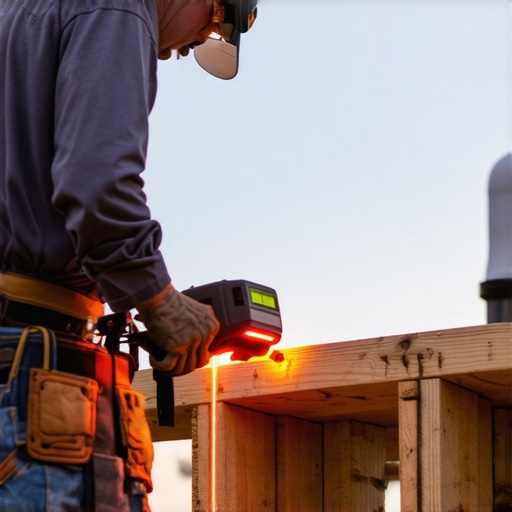 Looking ahead, I predict we are moving toward ‘Smart Decks’ where composite materials will eventually feature embedded thermal sensors to alert homeowners of moisture buildup or structural shifting before it turns into a costly repair.
How Do I Keep My Composite Deck Like New for Decades?
Beyond the obvious spring cleaning with the vinegar and water mix that cleans composite better than chemicals, the real pro move is checking the bones of the structure. You need to know how to test your deck for structural fatigue at least once a year. This is not just about jumping on the boards to see if they bounce; it is about a surgical inspection of the ledger connection. The American Wood Council’s DCA 6 (Prescriptive Residential Wood Deck Construction Guide) notes that ledger failure is the primary cause of deck collapses in North America. I personally use the 10-minute flashlight test for finding hidden ledger rot to ensure the connection to the house remains dry and secure. Also, don’t forget the shingle trick for protecting the top of your deck beam if you missed the chance to use modern joist tape during the initial build. This weekend, I challenge you to take a high-powered flashlight and crawl under your deck to check those ledger bolts—it is the single most important thing you can do for your home’s safety.
The Brutal Lessons I Learned So You Do Not Have To
Over the years, I have realized that the biggest mistake homeowners make is assuming composite is invincible. I once ignored a heavy ice build-up near my sliding door, only to find that the constant expansion and contraction actually started to pull the boards away from the house. I learned that small scratches from minor ice scraping can collect dirt and turn into permanent dark stains that ruin the composite decking secrets for longevity. If you have a pergola anchored without digging massive holes, pay extra attention to the snow load on the rafters; heavy slush acts like a giant weight that can compromise your structural integrity if left to sit. Also, winter is the ultimate test of your drainage. If your builder did not follow the 2-degree slope secret for dry under deck storage, you will likely see standing water turn into expansion-cracking ice right against your foundation.
My Must-Have Gear for a Damage-Free Season
To keep your outdoor space in top shape, you need a specific toolkit. First, invest in a high-quality rubber-edged snow pusher rather than a standard plastic shovel. While plastic is better than metal, rubber is the true gold standard to maximize outdoor living with low-maintenance composite decking without a single scuff. I also keep a copy of the NADRA Deck Safety Manual in my garage; it is an incredible resource for understanding how cold weather affects fasteners. Finally, always keep a sealed bucket of calcium chloride pellets near the door. Unlike rock salt, it melts ice at much lower temperatures and is far gentler on your railing systems and the protective cap of your boards. These small investments prevent the thousands of dollars in damage I have seen in neglected backyards.
Your Outdoor Space Deserves Some Winter Love
At the end of the day, your deck is more than just a pile of building materials; it is the stage for your family’s future summer memories. Taking twenty minutes to clear the snow the right way ensures that when the first warm day of spring hits, you are ready to grill rather than heading to the hardware store for repair supplies. Whether you are maintaining intricate railing systems or a simple platform, your effort now pays off in years of worry-free enjoyment. Protect your composite decking during the freeze, and it will remain the beautiful, durable anchor of your home for decades to come. Have you ever found a mystery scratch on your boards after the snow finally melted? Let me know in the comments below!