
I remember the spring of 2018 vividly. I walked out onto my deck, coffee in hand, and instead of the usual solid ‘thump-thump’ of sturdy wood, I heard a sickening, muffled ‘squish.’ I knelt down, pulled back a single board, and found a science experiment gone horribly wrong. Mold had colonized the tops of my joists like a fuzzy, green empire. It wasn’t just unsightly; it was a silent predator eating the structural integrity of my home’s outdoor sanctuary. I had spent thousands on modern composite decking but completely ignored the wet, dark world happening underneath. That single mistake nearly cost me the entire frame.
Stop the Rot Before it Starts Under Your Feet
That disaster happened because I thought innovative deck design ideas were only about the colors and the furniture. I was dead wrong. The secret to a deck that lasts thirty years—not ten—isn’t the price of the boards; it’s how you manage the water that falls between them. Today, I am going to show you the specific drainage move that would have saved me thousands in repairs and weeks of back-breaking labor. We are going into the mechanics of why your joists are likely a breeding ground for spores right now and how a simple adjustment to your frame’s pitch can change everything.
Is extra drainage actually worth the weekend of work?
You might think your deck is fine because the surface looks dry ten minutes after a storm. However, wood-decay fungi can begin to grow whenever the moisture content of the wood exceeds 20%, according to established research from the USDA Forest Products Laboratory. I made the classic rookie error of installing my boards with almost no gap because I wanted that ‘seamless’ luxury look. Instead, I created a series of tiny gutters that trapped organic debris and water. If you’ve noticed a lingering damp smell after it rains or seen your composite boards crowning, you are already in the danger zone. Have you ever stepped on a board and felt that suspicious, slight ‘give’ that wasn’t there last year? If so, you need to act before the rot reaches the ledger board. Using the 2-degree slope secret is the first step in ensuring your frame outlives your mortgage. Let’s look at how we can implement this without tearing the whole thing down.Think of your deck frame like the roof of your house. You wouldn’t build a flat roof in a rainforest, so why build a flat deck frame in a climate with four seasons? To fix the drainage issue, you need to master the 2-degree slope rule for drainage under second-story decks. This isn’t just about a slight tilt; it is about creating a gravity-fed highway for water. When I was rebuilding that rot-bucket in 2018, I used the string line trick for leveling deck joists before decking and realized my outer beam was actually higher than the ledger. I was literally funneling water toward my kitchen wall. By dropping the outer beam just a quarter-inch for every foot of span, I ensured that every raindrop had an exit strategy.
Set the Stage with a Gravity-Fed Slope
To achieve this, you cannot rely on your eyes; they will lie to you every time. You need a long level or a laser to ensure that the frame slopes away from the house structure. This prevents water from sitting in the gap between the house and the deck, which is the number one cause of catastrophic ledger failure. Even if you are building a ground-level platform, this slope is non-negotiable. If the water has nowhere to go, it will simply sit on top of the joist, and eventually, the wood fibers will give up the ghost.
Seal the deal with butyl armor
Once your slope is set, the next line of defense is the surface of the wood itself. Even the best-sloped joists have a flat top that likes to hold onto moisture through surface tension. This is where you apply the joist tape secret for doubling your decks life. Think of this tape as a raincoat for your lumber. It is a butyl-based adhesive that seals around every screw hole. Without it, every fastener you drive acts like a tiny straw, sucking water deep into the heart of the wood. 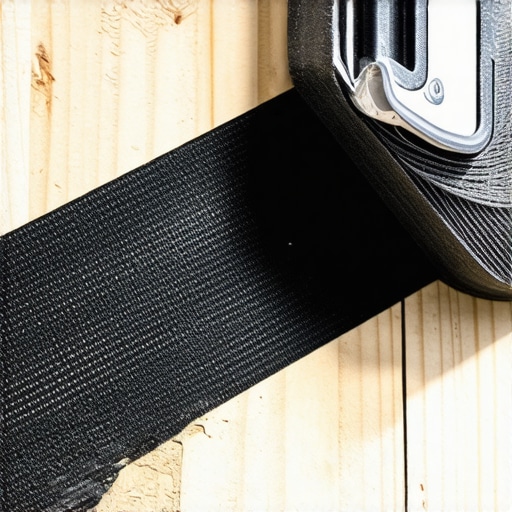 However, you have to be meticulous. I have seen homeowners slap this stuff on damp wood, which is exactly why your deck joists are rotting underneath the tape in some cases. The wood must be bone-dry before application. I remember spending a whole Saturday with a leaf blower and a heat gun just to make sure the joist tops were ready for the tape because a storm was rolling in. It felt ridiculous, but that deck is still standing perfectly today.
Does the water actually move?
Before you even think about laying those low-maintenance composite decking boards, you need a sanity check. I call it the Trial by Flood. Grab your garden tool and perform the garden hose test for proper deck water runoff. If you see water pooling or dancing on the joists instead of immediately sheeting off, your slope is not aggressive enough. I once spent four hours shimming a single corner because the hose test showed a dead spot where leaves would eventually collect and turn into a wet, rotting compost pile. It felt like overkill at the time, but three years later, that frame is as dry as a desert bone even after a thunderstorm. Check every single joist—do not just assume the whole frame is uniform. Wood is a natural product and it bows; you might have one joist that creates a belly and traps a gallon of water right in the middle of your seating area.
The biggest lie in the home improvement industry is the phrase ‘maintenance-free.’ While I love modern composite decking, thinking it requires zero effort is a recipe for a structural nightmare. Most people assume the boards are the stars of the show, but in reality, they are just the skin. The real tragedy happens when homeowners invest five figures in high-end materials but mount them on a frame that isn’t engineered for the specific weight and thermal properties of plastic-capped wood. If you aren’t careful, your pressure-treated frame is pulling your composite apart right now. Unlike wood, composite doesn’t grow or shrink with moisture; it moves with temperature. On a hot July day, a twenty-foot board can expand by as much as half an inch. If your fasteners aren’t designed to allow for that ‘breathability,’ you’ll see warping that no amount of screws can fix.
The Hidden Danger of the Pressure-Treated Tug-of-War
I have seen countless ‘pro’ installs fail because they ignored composite decking secrets for longevity. The most common ‘oops’ factor is using standard wood screws in composite boards. The core of a composite board is dense, and it will actually ‘mushroom’ around a standard screw head, creating a bump that looks like a zit on your beautiful floor. Even worse is the ‘wide board trap.’ I’ve learned the hard way that why hidden fasteners fail on wide profile boards is due to the sheer leverage a wider board exerts on those tiny clips. If you are using 8-inch wide planks, you need to rethink your fastening strategy entirely or prepare for a ‘bounce’ that makes your deck feel like a trampoline. According to the North American Deck and Railing Association (NADRA), nearly 50% of existing decks in the US are past their safe lifespan, and most of those failures happen at the structural level, not the surface level.
Can your chosen railing really stop a 200-pound fall?
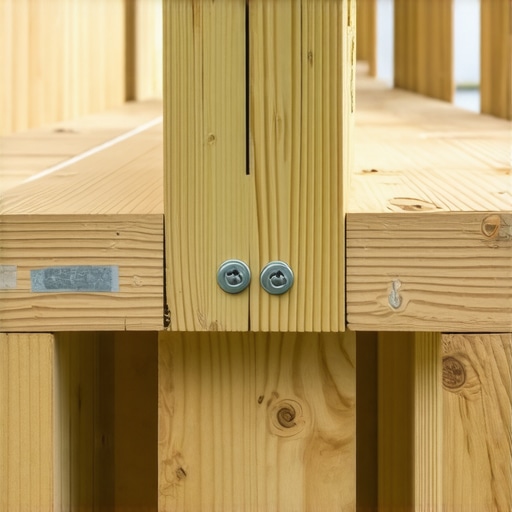
We often treat custom railing systems as a decorative accessory, like choosing curtains for a window. This is a dangerous mistake. An advanced builder knows that the railing is a safety device that must withstand 200 pounds of concentrated force at any point. I’ve walked onto many decks where the blocking trick for railing post wobble was ignored, and the post was simply bolted to the rim joist. That is a structural failure waiting to happen. You need internal blocking—extra wood sandwiched between joists—to transfer that force into the entire frame, not just the outer board. The same logic applies to overhead structures. People often skip the basics, but why your pergola needs knee braces becomes painfully obvious the first time a 50mph wind gust hits your backyard. Without that diagonal support, the whole thing will ‘rack’ and eventually lean like the Tower of Pisa.
Have you ever noticed your boards feeling a little ‘spongy’ between the joists? It’s a common symptom of over-spanned deck joists. Wood might handle a 16-inch gap between joists, but some composites need 12 inches to feel truly solid underfoot. Have you ever fallen into this trap or noticed a ‘soft’ spot on your deck? Let me know in the comments below. It’s better to add an extra joist now than to live with a deck that feels like a bouncy castle for the next twenty years. If you’re ready to fix these nuances and build something that truly lasts, check out my favorite deck design strategies to get started on the right path.
I’ve learned that a project is only as good as the precision of the tools you use. For my own builds, I stopped guessing. I rely on the level and laser method for setting pergola heights alone. When you’re working by yourself, a laser isn’t a luxury; it’s the only way to ensure your beam doesn’t end up an inch low on one side. I also never build without the jig I use for consistent deck screw depth. If you drive a screw too deep into composite, you break the protective cap, and that’s where the spongy rot begins in ten years.
Precision tools beat brute force every time
The American Wood Council (AWC) specifies in their DCA 6 guide that post-to-beam connections must be mechanically fastened to resist lateral loads, not just gravity. I’ve seen dozens of DIYers use standard wood screws where a heavy-duty structural connector was needed. Those are the decks that eventually lean and rack during high winds. By using the right hardware and verifying your heights with a laser, you aren’t just building; you’re engineering a structure that can handle the elements for decades.  Maintenance extends to your perimeter too. I check my balusters and bracket connections every spring. If you’re still in the planning phase, knowing how to select the perfect railing system for every deck can save you from the nightmare of rust or fading paint that requires constant attention later on.
How do I keep my outdoor oasis from aging prematurely?
Maintenance isn’t about hard work; it’s about the right chemicals—or the intentional lack thereof. I’ve seen homeowners destroy five-figure investments in a single afternoon with a $150 pressure washer. Stop right there. You absolutely must learn why you should never use a pressure washer on composite. The high pressure creates micro-fissures in the plastic cap that trap mold spores and moisture. Instead, I stick to the vinegar and water mix that cleans composite better than chemicals. It’s cheap, it’s safe for pets, and it actually kills the fungi rather than just pushing them deeper into the grain pattern.
The future of backyard living looks smarter and greener
Looking ahead, I see a massive shift toward integrated technology and extreme sustainability. We are rapidly moving toward innovative deck design ideas for 2025 where smart lighting, hidden heaters, and even solar-collecting tiles are becoming the standard. If you find a legacy issue with an older structure while upgrading, don’t think it’s a lost cause. You can often implement the simple way to fix a sagging deck beam without a full demolition, provided the core lumber is still sound. Go out this weekend and perform the garden hose test for proper deck water runoff; it is the single most effective way to diagnose if your frame is set up for a long life or a slow death by rot.
The Brutal Reality of What Actually Kills a Deck
After years of repairs, I’ve realized that the most expensive deck isn’t the one with the priciest boards; it’s the one you have to build twice. I learned the hard way that ignoring the substructure is like building a skyscraper on sand. One of my biggest lightbulb moments was discovering that rot doesn’t usually start on the surface; it starts at the connections. I highly recommend performing the 10-minute flashlight test for finding hidden ledger rot at least once a year to catch moisture traps early. It’s also vital to remember that composite is a skin, not a structural member. If you don’t master composite decking secrets for longevity, you’re essentially putting a tuxedo on a crumbling frame.
#IMAGE_PLACEHOLDER_E#
Gear and Guides I Use Every Single Time
If you want to move beyond the weekend warrior level, you need to stop guessing and start measuring. I never start a layout without consulting the American Wood Council’s DCA 6 guide; it is essentially the industry standard for safe residential deck construction. For the finishing touches, especially when trying to balance aesthetics and security, I often look for pergola design inspiration from modern to classic looks to see how others integrate structural beams into the overall backyard vibe. When it comes to safety, don’t skimp on the barriers. Reading the complete guide to choosing railing systems for safety and style changed how I approach post-to-frame connections entirely and eliminated the wobble that plague so many DIY builds.
Stop Planning and Start Your Backyard Legacy
There is a unique kind of satisfaction that comes from sitting on a deck you built with your own two hands, knowing that every screw was driven with precision and every joist is protected. Don’t let the fear of a perfect slope or the complexity of modern composite decking keep you from starting. The technology available today makes it easier than ever to build a structure that will host family BBQs for the next thirty years. Take it one joist at a time, tape every surface, and always trust the laser over your eyes. Your future self—the one relaxing with a cold drink on a rock-solid surface—will thank you for the extra effort today. Have you ever discovered a hidden rot issue while trying to make a simple repair? Let me know in the comments below!