
I still remember the morning after the first big storm following my ‘professional’ canopy DIY installation. I walked out with my coffee, expecting a fresh breeze, only to see a massive, sagging belly of water hanging from my rafters. It looked like a giant, clear grape waiting to burst over my expensive outdoor rug. I reached up with a broom to nudge it, and—splash—ten gallons of stagnant rainwater turned my pajamas and my morning mood into a soggy mess. It wasn’t just the drenching that hurt; it was the realization that my beautiful pergola designs were being strained to their breaking point. That much weight can warp wood and snap fasteners faster than you’d ever believe.
Stop the Sag and Save Your Structure
Water is deceptively heavy. According to the United States Geological Survey (USGS), a single gallon of water weighs approximately 8.34 pounds. When you see your canopy dip, you aren’t just looking at a minor puddle; you might be looking at 80 or 100 pounds of dead weight concentrated on a single square foot of fabric. This weight is exactly why your pergola canopy keeps tearing in small storms. If you are integrating this into innovative deck design ideas, you have to respect the physics of the setup before you fall in love with the Mediterranean look. I learned the hard way that ‘tight enough’ is never actually tight enough. In my early days, I made the mistake of thinking I could just use heavy-duty zip ties and a prayer. I thought if it looked flat and crisp on a sunny Tuesday, it would stay that way. But fabric stretches, especially under high heat, and those zip ties eventually snapped, leaving the fabric to flap and pool. Now, I always insist on using stainless steel turnbuckles. It’s the same logic we use when discussing the tensioner secret for tight cable railings—mechanical tension is the only thing that stands up to mother nature.
Is a fabric canopy actually worth the maintenance headache?
I get this question from skeptical homeowners all the time. They worry they’re just buying a future chore. They’ve seen the moldy, saggy messes in other backyards and decide it’s not worth it. But here is my take: a properly installed canopy is the difference between a deck you use once a year and one you live on every single day. If you apply the 2-degree slope trick for proper deck water runoff to your canopy’s pitch, the water simply doesn’t have a chance to settle and pool. When you combine that with a sturdy frame—perhaps using the notched rafter secret for a pergola that never wobbles—you create a structure that feels like a true extension of your home. Beyond just the angle, the material you choose plays a massive role. Many people opt for solid vinyl because it’s 100% waterproof, but that’s actually the most dangerous choice for a flat pergola because it creates a literal bucket. I’ve found that high-density polyethylene (HDPE) mesh is often a better recommendation because it allows air to circulate, similar to how to build a privacy screen that still lets the air flow. Have you ever found yourself standing on a chair in a rainstorm trying to poke water off your roof, or are you just starting your search to avoid my past mistakes? Let’s get into the mechanics of a dry deck.
Make Gravity Your Friend with a 2-Degree Pitch
The first rule of any overhead structure is simple: water needs a destination. If you give it a flat surface, its destination is the center of your fabric. I recommend implementing the 2-degree slope trick for proper deck water runoff even for your overhead canopy. By mounting one side of your support track just three inches higher than the other across a ten-foot span, you create a natural exit ramp for rainfall. This prevents the fabric from stretching under the weight of a ‘micro-lake’ and significantly extends the life of your shade system.
Why Tight Fabric Is Non-Negotiable
Loose fabric is a sail in the wind and a bucket in the rain. When I was building a custom retreat last summer, the homeowner insisted on a loose, ‘draped’ look. Within three weeks, the wind had whipped those folds so violently that the grommets ripped clean out. We ended up using the notched rafter secret for a pergola that never wobbles to ensure the frame was stiff enough to handle extreme tension. If your frame moves even a quarter-inch, your fabric will sag. This stability is the same foundation required for innovative deck design ideas that stand the test of time.
Swap Bungee Cords for Marine-Grade Hardware
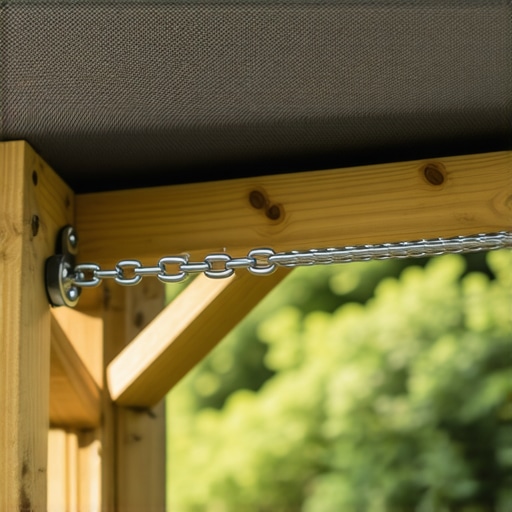
Most DIY kits come with cheap plastic clips or elastic cords. Throw them away. To maintain a professional look, you need mechanical advantage. I now exclusively use stainless steel turnbuckles. It is a direct carry-over from the tensioner secret for tight cable railings—you need to be able to ‘tune’ the tension as the seasons change. Fabric naturally expands in the heat and contracts in the cold; a turnbuckle allows you to take up that slack in thirty seconds without tools.
The Hidden Bracket Trick
When you are pulling that much tension, your mounting points become the weak link. I once saw a heavy-duty canopy pull a 4×4 post out of plumb because the installer used simple wood screws. For a lasting installation, use the hidden bracket hack for invisible pergola connections. These brackets anchor deep into the structural headers, ensuring that when you crank that turnbuckle tight, the fabric moves, not the wood. This is especially vital if you are working with composite decking secrets like using steel framing or reinforced posts to handle high-load accessories.
Protect the Frame from Standing Moisture
While you are focusing on the fabric, don’t ignore what’s happening underneath. A sagging canopy often dumps water directly onto the rafters or the deck boards below. To prevent rot in these high-splash zones, apply the joist tape secret for doubling your decks lifespan to the top of your pergola rafters. Even if you have a simple shade sail hack in place, the constant wetting and drying cycle will eventually split unprotected timber. Think of the canopy as a shield, but one that needs a solid, dry foundation to remain effective year after year.
While mastering your canopy tension is a huge win, it’s only one part of the puzzle. Most homeowners transition from fixing their shade to realizing the entire structure needs a closer look. I see a recurring mistake in the industry: the ‘set it and forget it’ myth regarding modern materials. Everyone tells you that moving to synthetic options means the end of your weekend chores, but in my experience, that mindset is exactly how beautiful projects turn into expensive repairs within five years.
Why Maintenance-Free Decking Is a Marketing Lie
We need to talk about the ‘low-maintenance’ label. While composite decking trends favor durability, ‘low’ does not mean ‘zero.’ The biggest trap I see is the ‘Oops’ factor of using the wrong cleaners. You might think a quick scrub with household chemicals is fine, but you should never use bleach on your composite deck. Bleach can break down the UV inhibitors in the plastic capping, leading to a dull, chalky finish that no amount of scrubbing can fix. Real composite decking secrets revolve around gentle pH-neutral soaps and consistent rinsing to prevent organic material from etching the surface.
Is Your Deck Frame Ready for a 25-Year Material?
This is the question that separates the pros from the amateurs. People spend thousands upgrading to premium boards but leave their old pressure-treated frame underneath. According to research by the Forest Products Laboratory (FPL), the interface between a non-breathable composite board and a wood joist creates a moisture-trapping micro-climate that can accelerate joist decay by up to 50% compared to traditional wood-on-wood setups. This is why pressure-treated wood still needs maintenance under composite. If you don’t use the joist tape secret for doubling your decks lifespan, you are essentially putting a 25-year roof on a 10-year house.
The Thermal Expansion Trap Most Pros Miss
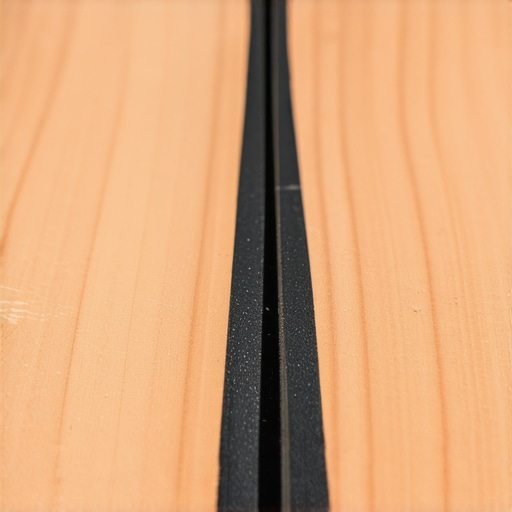
Another nuance that catches people off guard is physics. Wood expands mostly in width, but composite expands significantly in length. I’ve seen beautiful mitered corners pop open like a clamshell because the installer didn’t follow the expansion gap rule that stops boards from buckling. In extreme summer heat, your composite decking is expanding more than the manual says if you chose a dark color that absorbs high UV radiation. When this happens, the boards have nowhere to go but up, resulting in a wavy, ‘bouncy’ walk surface that ruins the high-end feel of your innovative deck design ideas.
Finally, don’t let your railings become an afterthought. While you select the perfect railing system, remember that the hardware mounting points are just as prone to water intrusion as your pergola rafters. I always suggest a quick check: Have you ever fallen into this trap of ignoring the sub-structure while focusing only on the pretty surface boards? Let me know in the comments. Let’s make sure your next build is actually built to last.
Visualize Your Build Before You Buy a Single Board
I cannot stress enough how much a digital blueprint saves you from future headaches. I personally never start a project without a detailed rendering because it allows me to spot structural conflicts before they become expensive mistakes. You really should consider why you need a 3d model before buying a single deck board. For example, if you plan to eventually add a heavy feature like a spa, you can pre-reinforce the joists now. I’ve had clients thank me years later because they could easily follow the plan for how to calculate footings for a hot tub on your deck without tearing up their existing composite boards.
How do I keep my composite deck looking brand new for decades?
The secret isn’t a magic chemical; it is consistency and the right tools. I recommend a soft-bristle brush and a dedicated composite cleaner every six months to prevent pollen and organic debris from creating a buffet for mold. If you inherited a deck that has seen better days, don’t panic. You can learn how to restore the color of a faded composite deck using specialized UV-inhibiting sealers designed specifically for capped synthetics. For day-to-day use, I keep a high-quality cordless leaf blower handy; removing dry debris before it gets wet and sticks to the grain is the easiest way to avoid deep scrubbing later.
Stop the Rattles and Keep Railings Cool
As the seasons shift, metal components expand and contract at different rates than your decking. This often leads to that annoying ‘clinking’ sound every time the wind blows. I’ve found that why your railing balusters are rattling and the 5-minute fix usually comes down to simple silicone grommets that have dried out. If you have dark aluminum, you already know why your black metal railings are too hot to touch in July. My trick is to integrate light-colored top rails or use a ‘cocktail rail’—a matching piece of composite decking installed on top of the metal frame—to provide a comfortable, temperature-stable place to rest your hands.

The Future of Smart Pergolas and Integrated Tech
The industry is moving toward ‘living’ structures. I’m seeing a massive spike in motorized louvered systems and integrated sensors that retract your canopy the moment they detect high winds. This technology mirrors the precision found in the American Wood Council’s (AWC) DCA6 Design for Code Acceptance, which now emphasizes the importance of lateral load connectors for all elevated structures. As we scale these designs, ensuring you have the complete guide to choosing railing systems for safety style is paramount for meeting these evolving building codes. To stay ahead of the curve, I suggest you take 15 minutes this weekend to perform the 15-minute deck inspection every homeowner should do. Look specifically at your ledger bolts and joist hangers; catching a loose connection now is the difference between a simple turn of a wrench and a structural failure. Which part of your deck feels the most ‘weathered’ right now? Let’s fix it before the next season hits.
3 Myths About Low-Maintenance Decks That Almost Cost Me Everything
I used to believe that once you upgraded to premium materials, your work was done. That is the biggest lie in the industry. First, never assume that high-end materials fix poor structural physics. Even the most expensive pergola designs will fail if you ignore gravity. Second, I learned that ‘hidden’ hardware isn’t just a cosmetic choice. Using the hidden bracket hack for invisible pergola connections actually protects your fasteners from direct rain, preventing the slow-burn rot that kills most decks from the inside out. Finally, stop thinking that ‘tight’ means ‘permanent.’ Wood moves, and fabric stretches. If you aren’t using the tensioner secret for tight cable railings or adjustable turnbuckles, you’re setting yourself up for a saggy, rattling mess by next season.
#IMAGE_PLACEHOLDER_E#
The Blueprint Resources I Never Build Without
Before you pick up a hammer, you need a plan that accounts for more than just aesthetics. I swear by 3D modeling because it reveals exactly why you need a 3d model before buying a single deck board—it’s about spotting joist conflicts before they become expensive errors. For hardware, I strictly recommend marine-grade stainless steel; understanding why you should never use standard screws for coastal decks will save you from unsightly rust streaks, even if you live miles from the ocean. Lastly, keep a digital copy of the 15-minute deck inspection every homeowner should do on your phone. Consistency is the only way to ensure your composite decking secrets actually result in a thirty-year lifespan.
The Backyard You Deserve Is Within Reach
Building a space that truly feels like an extension of your home isn’t about having the biggest budget; it’s about respecting the details. Whether you are installing a sleek new railing or mastering your canopy tension, every small win adds up to a structure that remains safe and beautiful for your family. Your outdoor oasis shouldn’t be a source of stress. When you combine innovative deck design ideas with a solid maintenance plan, you create more than just a deck—you create a sanctuary. Have you ever had a DIY project fail because of a small detail like water pooling or a loose screw? Let me know in the comments below!