
I stood there with a muddy shovel and a bruised ego, looking at the giant crater I’d just spent four hours digging. My wife wanted a cozy shade spot, but my backyard was starting to look like a construction site for a skyscraper. It was a classic DIY fail—I assumed sturdy always meant massive holes and tons of concrete. I actually made the mistake of trying to eyeball the post placement once; it ended up so crooked I had to tear the whole thing down. I even managed to nick a sprinkler line because I was digging so deep. That’s when I realized that if people can build entire skyscrapers on steel piles, I should be able to get a few pergola designs standing without turning my yard into a minefield. Today, I want to share the low-impact secrets I’ve learned. We are going to explore how to anchor your structure firmly to the ground using methods that won’t require you to rent a backhoe or spend a week at the chiropractor. Whether you are working with a slab or just want to save your grass, I’ve got you covered.
Ditch the Shovel and Save Your Lawn
Can a Pergola Really Stay Up Without Deep Footings?
The short answer is a resounding yes, provided you understand uplift. According to technical data from the American Wood Council (AWC), the primary force acting on a pergola isn’t the downward weight—it’s the wind trying to lift it like a giant kite. This is why many pros are moving toward helical piles or heavy-weighted base systems. By using the string line trick for perfectly plumb pergola beams, you can ensure your structure is balanced, which actually helps distribute those wind loads better than a crooked post in a deep hole ever could. If you are worried about aesthetics, you don’t have to see the hardware. You can easily find the best way to hide ugly concrete deck footings with stone or wrap your bases in trim that matches your pergola trends. It’s all about working smarter, not deeper.
Secure Your Structure to Existing Concrete
If you already have a patio, don’t even think about bringing out a jackhammer. You can treat your concrete slab like a rock-solid foundation by using heavy-duty wedge anchors or adhesive anchors. I remember a job in a tight suburban backyard where I had about two inches of clearance between the house and the new pergola. I used 5/8-inch galvanized wedge anchors. I drilled straight through the steel base plate into the concrete, tapped the anchors in, and torqued them down. It was rock solid in twenty minutes. The key here is ensuring your layout is perfect before you pull the trigger on the drill. I always use the 3-4-5 triangle move for squaring up a new deck frame or pergola footprint to make sure those holes are exactly where they need to be. If you’re off by even half an inch, your posts won’t sit flush, and you’ll be fighting the wood for the rest of the build.
Go Deep Without the Digging
For those of us working over grass or dirt, helical piles are the ultimate game-changer. Think of them as giant screws for your house. Instead of removing yards of dirt and replacing it with wet concrete, you use a specialized tool to twist these steel shafts deep into the earth. 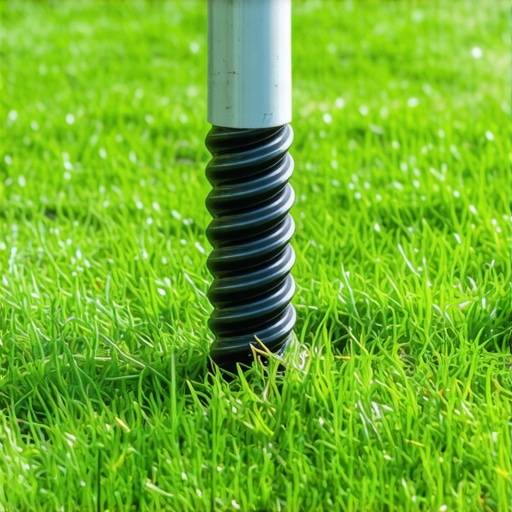 The beauty of this method is that the soil stays compacted, which actually provides better lateral stability than a loose hole filled with a concrete ‘plug.’ I once watched a crew install four of these in less time than it took me to finish my morning coffee. Because they reach below the frost line, you don’t have to worry about your structure heaving when the ground freezes. It’s a strategy often used in composite decking secrets longevity tips for a lasting deck because a stable foundation prevents the shifting that causes boards to pop or gap.
Keep Your Posts From Leaning
Once your anchors are set, you have to ensure the posts stay upright. Gravity is a relentless enemy, especially if you’re working solo. I’ve found that using the string line move for perfectly plumb pergola posts is the only way to stay sane. You want to brace each post in two directions. I learned this the hard way on a windy afternoon when a 6×6 post nearly took out my neighbor’s fence because I only braced one side. Now, I use the hidden bracing move for rock-solid corner posts to lock everything in place before I ever lift a beam into the air. If you’re managing this alone, the level and laser method for setting pergola heights alone will save you from having to climb up and down a ladder a hundred times just to check your work. Accuracy at this stage isn’t just about looks; it’s about structural integrity.Most people assume once the posts are anchored, the technical part of the job is finished. However, this is where I see the most expensive mistakes happen. Everyone says composite decking is a ‘set and forget’ solution, but in my experience, treating it exactly like wood is the fastest way to ruin a high-end investment. We need to talk about the physical reality of these materials. While wood tends to shrink as it dries, composite decking trends show that these engineered boards actually expand and contract significantly along their length. If you don’t account for this, you’ll end up with buckled boards or sheared fasteners. I once helped a neighbor fix a deck where the boards had actually pushed so hard against the house they buckled upward like a speed bump because they didn’t understand why dark composite boards need extra expansion space.
Stop Treating Composite Like Pressure-Treated Wood
Many DIYers believe that a tighter fit is a better fit. This is the ultimate ‘oops’ factor in modern deck building. If you jam your boards tight against the siding or the picture-frame border, you aren’t being precise—you’re creating a ticking time bomb. According to a study by the American Society for Testing and Materials (ASTM), wood-plastic composites can have a coefficient of linear thermal expansion up to ten times higher than natural timber. This means on a 100-degree day, a 20-foot board can grow by nearly half an inch. This is exactly how to stop composite deck boards from expanding into your siding before the damage is done. 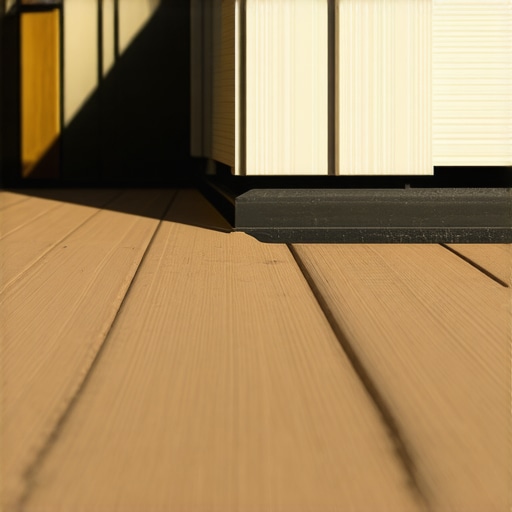
The Conflict Between Your Frame and Your Finish
Another hidden nuance is the material mismatch in your framing. You are likely using pressure-treated lumber for the joists, which is full of moisture and prone to twisting as it seasons. When you pair that with a stable, dry composite surface, the two materials fight each other. This is why your pressure-treated frame is pulling your composite apart. To mitigate this, I always use the joist tape secret for doubling your decks life. It doesn’t just prevent rot; it creates a small buffer zone that helps the fasteners stay seated when the wood underneath wants to go for a ride. I’ve seen beautiful projects ruined by ‘bouncing’ because the builder ignored the framing move that stops deck boards from bouncing. If your joists aren’t perfectly level before the first board goes down, no amount of expensive decking will hide those waves.
How Does Temperature Change Your Deck’s Structural Integrity?
Sophisticated builders know that temperature doesn’t just affect the gaps; it affects the entire load-bearing capacity of your ledger. If your ledger isn’t flashed correctly, thermal cycling can trap moisture against your house, leading to the ledger board error that causes house leaks. You have to think about the ‘breathability’ of the system. Even when you are learning how to fix gaps between composite boards and your house, you must ensure that water has an escape route. Have you ever fallen into the trap of over-tightening your fasteners only to find them popped out the following spring? Let me know in the comments.I’ve spent enough years on my hands and knees to know that the difference between a deck that lasts ten years and one that lasts forty is usually found in the toolbox. People often ask me why I’m so obsessed with precision, and it’s because I’ve seen what happens when you wing it. When I’m installing boards, I never leave home without the jig I use for consistent deck screw depth. It’s not just about the look; it’s about ensuring every fastener has the exact same holding power. If one screw is buried too deep and the next is proud, you’re creating uneven stress points that lead to those annoying squeaks. Speaking of noise, if you’ve already finished your build and it’s sounding a bit vocal, you should look into how to stop your deck from squeaking when you walk. Usually, it’s a sign that your fasteners are fighting the natural movement of the wood.
Stop the Sag and Protect Your Hardware
For those of you who went the extra mile with railing systems for safety and style, the maintenance doesn’t stop at the post. I always carry a flashlight for the ‘glow test’—it’s the flashlight hack for finding railing bracket alignment that ensures your hardware is perfectly centered. If you’ve opted for modern aesthetics, you have to be vigilant about tension. I’ve seen so many homeowners frustrated by 3 mistakes that make your cable railing sag every winter. It’s almost always a failure to account for how metal and wood react differently to freezing temperatures. According to the International Residential Code (IRC) Section R507, deck requirements are becoming increasingly strict regarding lateral load connections and specialized hardware. Following these codes isn’t just about passing inspection; it’s about ensuring your low-maintenance composite decking stays structural for its entire warranted life. 
How do I keep my composite deck looking brand new for decades?
The biggest myth in our industry is that ‘maintenance-free’ means ‘never touch it.’ To keep your space pristine, you need to avoid the ‘nuclear options’ for cleaning. I always tell my clients why you should never use a power washer on composite boards—it’s the fastest way to etch the surface and invite permanent staining. Instead, stick to the vinegar and water mix that cleans composite better than chemicals. It’s gentle, effective, and won’t kill your nearby hydrangeas. If you do run into a stubborn mess, like after a summer BBQ, the soap and sponge fix for oil stains on composite decking is your best friend. For those with wooden elements, remember that the copper cap trick for extending post life can save you thousands in structural repairs down the road.
Smart Decks and the Next Generation of Outdoor Living
Looking ahead, I predict we are going to see a massive shift toward ‘active’ outdoor structures. We’re already seeing composite decking trends incorporating integrated heating elements to melt snow and IoT sensors that can detect moisture levels in your joists. The days of guessing if you have rot are ending. We are moving toward a world where your deck tells you when it needs a check-up. Before you get to that futuristic stage, start with the basics of longevity tips for a lasting deck. My challenge to you this weekend is to go outside and perform the 3-second push test for wobbly railing systems. If there’s even a hint of a wiggle, it’s time to tighten things up before the next season hits.
The Hardest Lessons Learned from a Decade in the Dirt
Building isn’t just about following a manual; it’s about anticipating how materials fight back. I used to think I could out-think the weather, but nature always wins unless you work with it. One of the biggest shifts in my approach happened when I realized why hidden fasteners fail on wide-profile boards—it’s almost always about the lack of breathing room. I also learned that small shields matter; the shingle trick for protecting the top of your deck beam is a five-minute move that adds years to a structure’s life. Finally, never trust a ‘level’ eye when the string line method for perfectly level deck surfaces can give you the precision that makes a guest ask if a professional built it.
Gear That Earned Its Keep in My Toolbox
You don’t need every gadget in the hardware aisle, but you do need the right ones. For a perfect layout, I swear by the chalk line move for aligning hidden fasteners fast to keep everything looking symmetrical from the street. When I’m working solo, I rely heavily on the level and laser method for setting pergola heights alone because my back isn’t as young as it used to be. For maintaining that high-end look without the sweat, I always recommend the vinegar and water mix that cleans composite better than chemicals. It’s cheap, safe, and works better than the toxic stuff. If you want that uniform look on top, the spacer hack for perfectly aligned pergola slats is the simplest way to avoid a messy finish.
Build a Sanctuary That Stands the Test of Time
At the end of the day, these structures are the backdrop for your life’s best moments. Whether you’re experimenting with innovative deck design ideas or just trying to get a simple shade spot right, remember that a solid foundation is your best friend. Don’t rush the prep, respect the materials, and enjoy the process of creating something with your own two hands. Your future self will thank you for the extra effort when the seasons change and your space still looks brand new. What’s the biggest hurdle standing between you and your dream deck design right now? Let me know in the comments below!